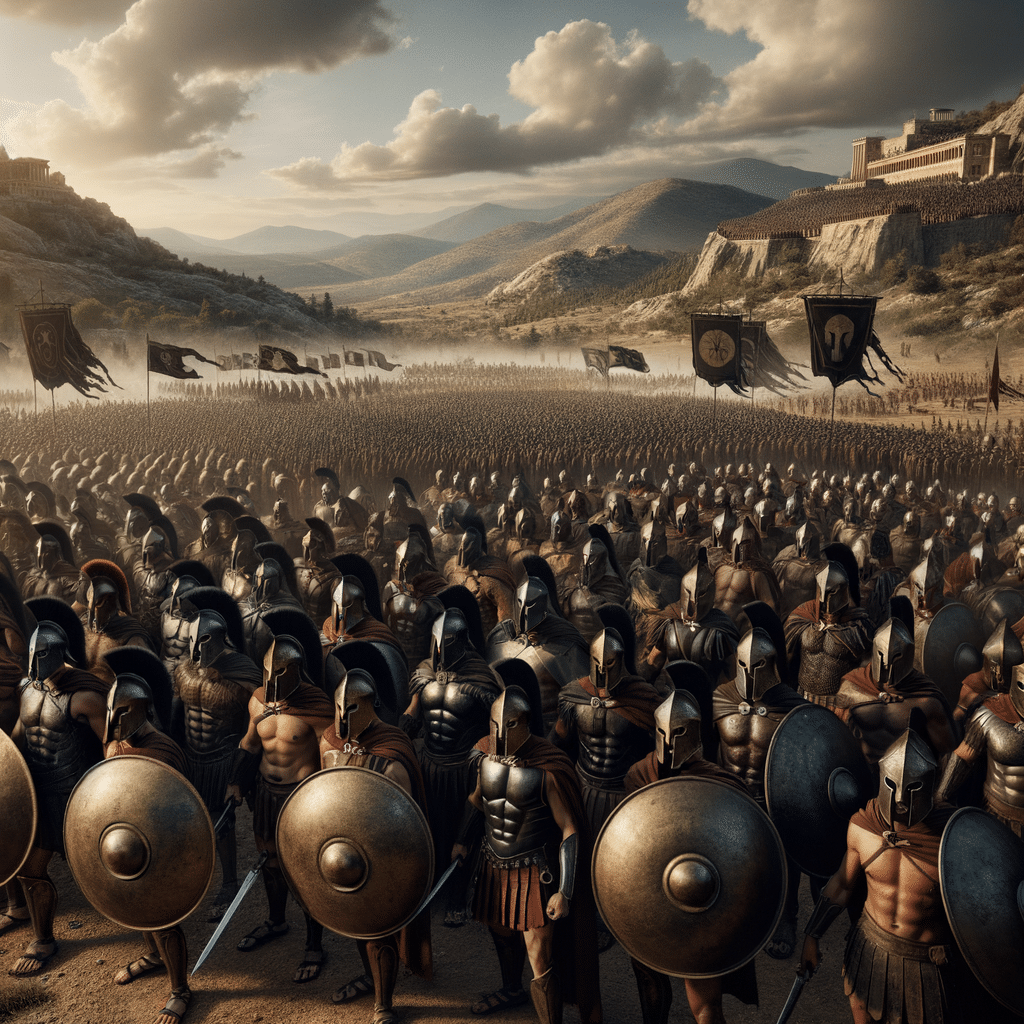
From the 9th century BC until their decline in the 2nd century BC, the ancient Spartans, who were known for their warrior culture and military skill, incorporated magical and supernatural beliefs into their martial traditions. Their culture, which was based on military prowess and uncompromising discipline, saw the paranormal as an essential part of combat and skillfully combined religious fervor with military tactics.
The Laconia region of ancient Greece gave rise to the Spartan culture, which evolved into a distinctive community focused on group power and military training. In addition to physical preparation, the agoge system, which prepared young boys to become warriors, also included religious rites and mystical techniques that were thought to improve their combat prowess. These customs included the wearing of talismans believed to offer heavenly protection in combat, certain prayers, and ceremonial dances.
Magic appeared in Spartan combat through a variety of rites and traditions. Spartan warriors would execute certain rituals prior to fights, such as offering animals as sacrifices in response to divine signs of success or defeat. They carried protective personal talismans and decorated their shields with symbolic motifs. Their belief in a supernatural influence on military success was seen in the frequent use of religious festivals and lunar phases to decide the scheduling of military battles (Parker, 2016).
The gods of war and triumph were especially important to the Spartans in their relationship with the Greek pantheon. In Spartan military culture, Ares, the god of war, and Athena, the goddess of strategic warfare, were particularly important. The religion of Athena Chalkioikos (Athena of the Bronze House) was essential to their war preparations, and the Temple of Ares in Sparta was a vital site for pre-battle ceremonies. Before and after conflicts, Spartan warriors would make special prayers and sacrifices to these deities (Richer, 2007).

Trojan War
Though it’s vital to remember that most of our knowledge is derived from later sources, especially Homer’s Iliad, which was written centuries after the alleged events, the Spartan participation in the Trojan War, which is traditionally dated around 1200 BC, provides an intriguing look into early magical-military practices (Raaflaub, 1998).
Helen, the Spartan queen whose kidnapping by Paris of Troy precipitated the war, was the main focus of the Spartan link to the Trojan War. Helen was seen by the Spartans as a semi-divine entity with magical connotations in addition to being a member of the royal family. Her abduction was viewed as a political and spiritual crisis, and her divine parentage, which connected her to Zeus, was recognized as a source of magical power for Sparta itself.
According to reports, King Menelaus’ Spartan army used a variety of supernatural techniques during the conflict. These included performing protective ceremonies prior to battle, using magical weapons (especially shields and spears blessed in particular ways), and using battlefield divination. In order to gain heavenly favor in combat, warriors would frequently offer sacrifices to both Ares and Apollo.
But it’s important to realize that the classical Sparta that developed centuries later was very different from the Sparta of the Trojan War era. The magical techniques ascribed to Spartan warriors during the Trojan War most likely combine Laconian customs from the Bronze Age with later literary embellishments from the Classical Period, when the stories were recorded and developed (Burgess, 2003).
Over time, the mystical aspects of Sparta’s participation in the Trojan War were incorporated into their subsequent military customs, helping to shape their unique warrior culture. Ancient magical beliefs changed and evolved over time, as seen by the evolution of these early magical activities into the highly organized religious-military system that defined classical Sparta.

Contrast with Other City-States
The magical and religious traditions of the Spartans remained essentially martial in nature, in contrast to their more philosophically inclined Athens neighbors. The majority of Spartan magical practices were focused on warrior culture and battle, whereas other Greek city-states included magic into every facet of daily life.
Including intricate divination rites at the Oracle of Delphi and lavish theatrical productions celebrating Dionysus, Athens placed a strong emphasis on both intellectual and artistic magical activities. Spartan magic, on the other hand, was centered on warrior protection, physical improvement, and battlefield success. Their customs were generally more pragmatic and austere, reflecting the principles of their society as a whole.
In the vast temple complexes of Corinth and Thebes, people used a variety of magic techniques for personal, professional, and agricultural purposes. Despite their significance, Spartan temples were mostly used for military purposes. With festivals and ceremonies intended to foster warrior unity and evoke military victory, the Spartans’ religious observances were more simplified.
Pre-battle divination was also done by other city-states, but Spartan military seers, or manteis, occupied particularly strong roles in their army. Military decisions were strongly impacted by the rites these seers carried out both before and during conflicts, such as the sacrifice of animals and the interpretation of natural events. Sparta was unique in this degree of unity between religious and military leadership (Cartledge, 1977).
In terms of healing magic, Spartan healing magic was mostly concerned with combat recuperation and preserving warrior vigor, whereas other Greek towns developed complex medical-magical procedures through temples of Asclepius. Instead than focusing on long-term therapeutic therapies, their techniques prioritized speedy recuperation and restoration to battle readiness.
The Spartans’ unique emphasis on military might sets them apart from their more varied Greek neighbors, and this is reflected in their approach to magic. Their distinct warrior culture, which still captivates academics and fans today, was developed and preserved in part by their specific use of magical techniques.
Conclusion
Numerous military traditions around the world exhibit contemporary influences of Spartan magical warfare. Mascots, emblems, and ceremonial practices that evoke the ancient Spartan belief in supernatural protection are frequently maintained by modern military formations. Though usually in a more ceremonial than literal sense, certain contemporary military groups nevertheless include religious or spiritual components in their ceremonies. Popular culture has also been impacted by the Spartans’ incorporation of supernatural beliefs into military practice, as shown in a number of ancient warfare-themed movies, literature, and video games.
The legacy of Spartan military magic shows how martial traditions and supernatural beliefs can become intricately entwined, influencing both cultural identity and military practice. The psychological and cultural effects of these antiquated techniques are still felt in modern military traditions and popular perceptions of ancient combat, even if magical beliefs have mostly disappeared from modern conflict.
References
Burgess, J. S. (2003). The tradition of the Trojan War in Homer and the epic cycle. JHU Press.
Cartledge, P. (1977). Hoplites and heroes: Sparta’s contribution to the technique of ancient warfare. The Journal of Hellenic Studies, 97, 11-27.
Parker, R. (2016). War and religion in Ancient Greece. In The Religious Aspects of War in the Ancient Near East, Greece, and Rome (pp. 121-132). Brill.
Raaflaub, K. A. (1998). Homer, the Trojan War, and history. The Classical World, 91(5), 386-403.
Richer, N. (2007). The religious system at Sparta. A companion to Greek religion, 236-252.



Leave a Reply