Ghosts and Glaciers: Key Points
-
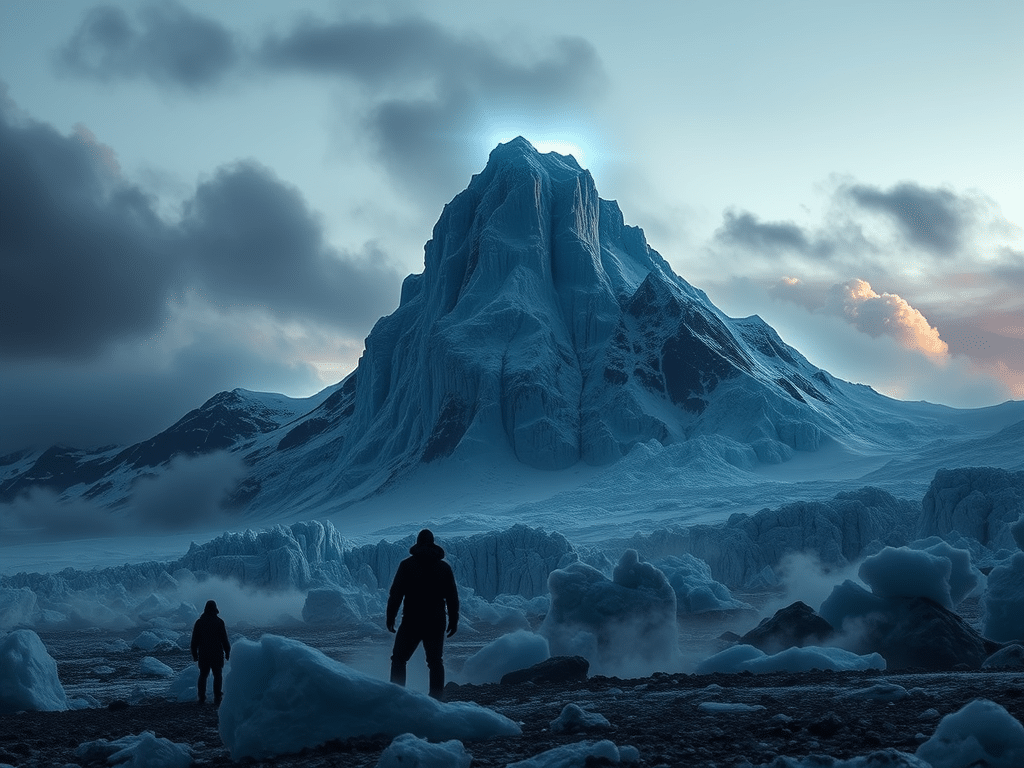
Glaciers are massive formations of ancient ice covering ten percent of Earth’s land surface, creating extreme isolated environments that have given rise to ghost folklore across cultures.
-
Mountaineers and explorers report hearing disembodied voices, seeing shadowy figures, and experiencing the “third man” phenomenon of sensing an invisible companion during dangerous conditions.
-
Glacier ghost folklore includes Europe’s “White Lady” who warns of avalanches; Arctic spirits dwelling within ice; and Himalayan tales of restless climbers’ ghosts haunting the peaks.
-
Scientific theories attribute paranormal experiences to hypoxia, sensory deprivation hallucinations, and infrasound from wind over ice causing unease and visual disturbances.
-
Skeptics argue experiences result from psychological stress and cultural expectations, noting the lack of conclusive evidence despite modern recording technology.
-
Glacier ghost stories encode survival wisdom, help process grief over lost climbers, and express respect for nature, though both glaciers and their folklore face threats from climate change.

Introduction
Ghosts and glaciers are two of nature’s most mysterious things. One is based on the supernatural world of human belief, and the other is based on the harsh physical reality of our planet’s cryosphere. Glaciers are huge rivers of old ice that have changed the way the land looks for thousands of years. Stories of strange things happening in these frozen areas have fascinated people from all over the world and throughout history. The convergence of these ostensibly unrelated topics elucidates how severe, isolated settings can generate ghost stories and legends, simultaneously prompting inquiries into the psychological impact of extreme conditions on human perception. This essay looks at the nature of glaciers, reports of ghostly encounters in glacial areas, cultural folklore about these icy spirits, and both the theories that try to explain these events and the skeptical views that question their existence.
Glacial Ghosts
Over hundreds or thousands of years, snow has built up and compacted into enormous, dense ice masses that slowly flow across land surfaces under their weight. Polar areas and high mountain ranges mostly host these frozen rivers. They cover about ten percent of the Earth’s land surface and hold about seventy-five percent of the world’s fresh water. Glaciers move very slowly, usually only a few inches or feet per year. However, their enormous power carves valleys, leaves behind sediment, and changes the land beneath them in a big way. Ice that is hundreds of thousands of years old can be found inside a glacier. This ice keeps ancient air bubbles and provides scientists important climate data. These formations make ecosystems that are frigid, have dangerous crevasses, have weather that is difficult to predict, and have a strange, otherworldly silence that is only broken by the sound of ice shifting (Benn & Evans, 2014).
For centuries, mountaineering expeditions, polar explorations, and indigenous communities living near these frozen landscapes have reported strange things happening on glaciers. Climbers and explorers have said that they heard disembodied voices calling their names across the ice, saw shadowy figures moving through whiteout conditions, and felt overwhelming fear or the feeling of being watched in places where no other living person could possibly be. Some climbers have discussed a “third man” phenomenon, in which they feel like they have an unseen companion with them during very difficult climbs or dangerous glacier crossings (Geiger, 2009). Researchers who work at remote polar research stations have seen unexplained footprints appear overnight in fresh snow, strange lights hovering over glacial fields, and the feeling of being watched in empty hallways. Witnesses say these experiences are very real and different from hallucinations, even though they often happen when people are under a lot of stress, alone, not getting enough sleep, or in harsh environments.
The stories about glacier ghosts are entirely unique in different cultures, but they often have the same themes of lost souls, frozen spirits, and supernatural guardians of the ice. In the Alps of Europe, there are stories about the “White Lady,” a ghostly woman in flowing white clothes who appears to warn climbers of avalanches or guide lost travelers to safety (Jegerlehner, 1926). However, some versions of the story say she is an evil spirit who leads people to their deaths in crevasses. Alaska and Arctic Native Americans have long believed that spirits live in glaciers. These spirits are said to be either ancient beings that predate humans or the souls of people who died on the ice. Inuit stories tell of the Qalupalik, creatures that live in icy waters and glacial areas. They were said to take people who got too close to dangerous ice formations. Sherpa communities in the Himalayas have told stories about spirits living in the high glaciers. These stories include spectral yetis and the ghosts of climbers who died on famous peaks like Everest and K2. Some people think that these spirits become restless and dangerous when their bodies are moved or disturbed on the mountain.

Analysis
There are several theories that try to point out paranormal events on glaciers without using supernatural explanations. Instead, they look at environmental and psychological factors that are specific to these extreme places. Hypoxia, or lack of oxygen at high altitudes where many glaciers are, can cause hallucinations, poor judgment, confusion, and changes in consciousness that may show up as ghostly visions or sounds (West, 2000). Glacial environments are very isolated and lack sensory input. A lack of oxygen can cause what psychologists call the “third man factor,” which is when the brain creates a comforting hallucination of a companion during life-threatening situations as a way to cope. Wind blowing over ice can make infrasound, which are low-frequency sound waves that people can’t hear. In a lab, studies have indicated that infrasound can make people feel uneasy and anxious, cause visual disturbances, and even create the sensation that someone is in the room (Erfani, Goodarzi, Ebrahim, & Roozbahani, 2021). The dull white landscape of glaciers can also cause a condition called “snow blindness” or “whiteout psychosis,” in which the lack of visual reference points and contrast makes it difficult to tell what is real and what is not.
Skeptics contend that the majority of glacier ghost narratives can be elucidated by a confluence of environmental stressors, psychological phenomena, and the human propensity for pattern recognition and narrative construction. They say that many paranormal events happen when people are very tired, cold, sick from being at a high altitude, or in danger of death, all of which are known to make thinking and seeing things much harder. Cultural expectations and the power of suggestion also play a role. People who have heard ghost stories about a certain glacier or area may be more likely to think that strange sensory experiences are paranormal instead of natural. Critics point out that even though thousands of people visit and work on glaciers every year with modern recording equipment, there has never been any conclusive photographic or video proof of glacier ghosts that stands up to scientific scrutiny. Skeptics also note that the way ghosts are seen often fits too well with local folklore, which suggests that these encounters are more cultural than real.
Glacier ghost stories have a cultural and psychological effect that goes beyond just being entertaining. They change how people act in these places and how they feel about death and the wilderness as a whole. Ghost stories are cautionary tales for mountaineering communities that encode the real dangers of glacial terrain into memorable stories. They help pass down survival wisdom from one generation to the next while also acknowledging the very real risks that have taken many lives. Many indigenous people believe that glaciers are powerful natural forces that should be treated with respect and caution (Remein, 2020). In today’s world, glacier ghost stories are part of adventure tourism. Some places use paranormal legends to draw in tourists who are interested in both natural wonders and supernatural mysteries. These stories also help people cope with grief and loss. For example, stories of spirits on glaciers can help families of people who died in mountaineering accidents feel better by suggesting that their loved ones are still there in the landscape they loved.
Conclusion
The encounter between ghosts and glaciers demonstrates the human mind’s ability to cope with extreme situations that challenge our physical and mental capabilities. People can see glacier ghost stories as proof of real paranormal events, as signs of how the environment and the brain affect how we see things, or as rich cultural stories that hold practical wisdom and spiritual beliefs. These stories remind us of the deep mystery that still exists in the wildest parts of the Earth. As climate change continues to shrink glaciers all over the world, these old ice formations and the stories that go with them may become ghosts of a world that is disappearing. This situation makes it more important than ever to document and understand glacier ghost traditions in order to preserve culture. The enduring fascination with paranormal experiences on glaciers speaks to fundamental human needs to find meaning in confronting mortality, to feel connected to forces beyond ourselves, and to transform the terror of nature’s indifference into stories that bind communities together and give shape to the ineffable experiences that arise when we explore the frozen heart of the planet.
References
Benn, D., & Evans, D. J. (2014). Glaciers and glaciation. Routledge.
Erfani, V., Goodarzi, K., Ebrahim, M., & Roozbahani, M. (2021). The effects of ultrasound, infrasound, and electroconvulsive stimulations on anxiety-like behavior in mice.
Geiger, J. (2009). The third man factor. Grand Central Publishing.
Jegerlehner, J. (1926). Alp legends. Sherratt & Hughes.
Remein, D. C. (2020). Paranormal Prose:“Para-Narrative” and Ice in the Icelandic Sagas. Paranormal Encounters in Iceland 1150–1400, 151.
West, J. B. (2000). Human limits for hypoxia: the physiological challenge of climbing Mt. Everest. Annals of the New York Academy of Sciences, 899(1), 15-27.
Leave a Reply