
Elemental and Ghost Differences: Key Points
-
Ghosts are spirits of deceased humans tied to personal identity and past lives, while elementals embody natural forces and were never human.
-
Ghosts haunt specific places from their human history, driven by emotion or unfinished business, while elementals inhabit natural landscapes and act according to natural balance.
-
Ghosts appear human-shaped or recognizable as specific individuals, while elementals appear as lights, shapes, or elemental manifestations like flames or swirling waters.
-
Theories about ghosts focus on consciousness surviving death with personal identity intact, while elemental theories view them as personifications of natural forces or collective archetypes.
-
Ghost beliefs shaped funeral rites to help spirits move on, while elemental beliefs influenced rituals to respect natural forces before activities like sailing or mining.
-
Ghosts are souls unable to move on from mortal existence, while elementals are eternal forces of nature that operate independently of human concerns.

Introduction
Throughout history, people have tried to explain things they couldn’t understand by attributing supernatural qualities to different entities. Elementals and ghosts are two separate categories often found in folklore and paranormal beliefs. Although both are considered non-physical beings existing outside the normal physical world, they differ significantly in their origins, nature, and relationship with humans. To fully understand these differences, we need to look at what each entity is thought to be, as well as the cultural backgrounds that created these ideas and how they still affect modern thinking.
Elementals and Ghosts
Elementals are supernatural beings believed to embody and control the classical elements of nature: earth, water, air, and fire. These beings were never human, as we understand it. Instead, they’re ancient spirits, forever bound to the elemental powers of nature, right from the very beginning. Elementals, as described in various traditions, are often represented by gnomes for earth, undines for water, sylphs for air, and salamanders for fire. Each of these beings is believed to have specific characteristics and abilities related to the element they represent. Elementals differ fundamentally from the spirits of the departed. They are, in essence, the living essence of nature, enduring forces that have been around far longer than humanity and will probably persist long after we’re gone.
Throughout history, the elements have been associated with symbolic meanings, which have influenced spiritual and paranormal beliefs in various cultures. Abramov (2023) explores how people perceive elements as essential to life, with water symbolizing vitality, earth representing stability, air associated with spiritual breath, and fire acting as a purifying force. This view of existence shows the significance of these elements in both the natural and supernatural worlds.
Within this framework, beliefs about entities related to these elemental forces have been classified as part of a larger set of paranormal beliefs. Mogi’s research (2014) identifies four main areas of paranormal beliefs: reincarnation, astrology, unidentified flying objects (UFOs), and psi phenomena. He examines how common these beliefs are, focusing on how they relate to perception and the possibility of illusion. This classification highlights how people’s understanding of paranormal events could be influenced by cultural stories and experiences related to fundamental forces.
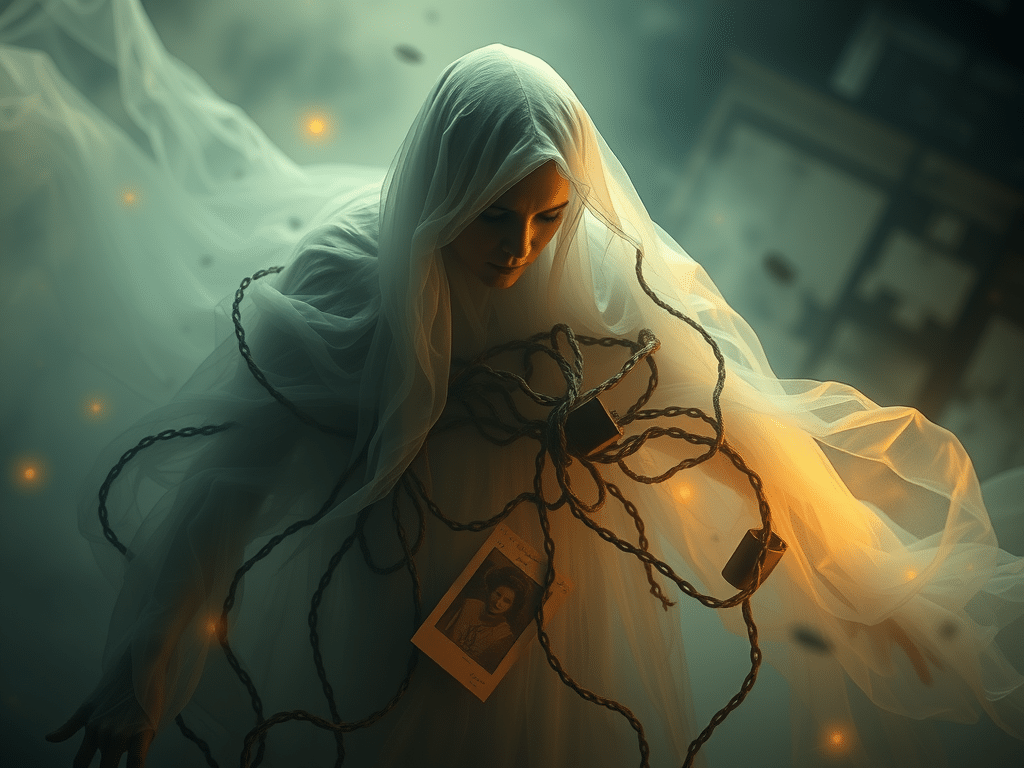
Ghosts are thought to be the spirits of people who have died but not yet moved on. These entities are fundamentally tied to personal identity and past lives, as they are believed to be individuals who once lived, breathed, and participated in mortal life, each with their names, histories, and relationships. Ghosts are often linked to specific places in their lives. These places can include their homes, the locations of their deaths, or sites where important events in their lives happened. Ghosts are a common feature in almost every culture, with different ways of appearing, what they want, and why they stay, but they always relate to human memory and the idea of death.
Ghosts are often portrayed as manifestations of unresolved issues or traumas from the past. Maulood and Barzani (2020) suggest that in some stories, like those in August Wilson’s plays, ghosts symbolize the lasting impact of past injustices. This implies that the “ghosts of the traumatic wounds” cause psychological suffering for those who once held power (Halim et al., 2024). This view aligns with the broader understanding that ghosts are not just imaginary but also cultural artifacts that reflect the beliefs and values of a society.
Moreover, Thoburn and his team (2012) illustrate this idea by depicting marginalized groups as ghost-like figures in their environments, emphasizing their psychological suffering and lack of a voice in society (Thoburn et al., 2012). This demonstrates how spectral entities can serve as a critique of societal structures that suppress individual voices, mirroring the way “ghost town” metaphors represent historical abandonment and emotional desolation.

Differences
Elementals and ghosts differ mainly in their basic nature and how they came to be. Elementals are forces that never existed as humans, while ghosts are souls that haven’t moved on from their earthly lives. Elementals are found in natural environments, such as forests, rivers, mountains, and areas affected by fire. They appear where their associated element is most prominent or powerful. Ghosts, however, are often connected to specific places related to their human lives. These locations include ancestral homes, battlefields, hospitals, and other places where their earthly experiences created strong emotional impressions. This fundamental difference means that interactions with elementals happen in wild or natural environments, where the elements themselves are in control. In contrast, ghost encounters are linked to places built by humans or to locations that have human significance and often involve sorrow.
These entities’ behaviors further distinguish them, reflecting their core characteristics. Ghostly appearances are often explained by emotional states or unresolved issues. These spirits might be trying to communicate, correct past wrongs, protect their loved ones, or, quite simply, be unable to accept their deaths. In contrast, elementals act according to natural balance, not human emotions. They respond to disturbances in their environments or the natural cycles without the personal motivations that are typical of ghostly actions. People who claim to have seen ghosts often describe their experiences as emotionally charged and meaningful. In contrast, encounters with elemental beings are usually described as witnessing forces that follow their own rules, showing no interest in human affairs unless the natural order has been disrupted.
The appearance of these entities also highlights the difference between consciousness that comes from humans and how it naturally exists. Ghosts often appear as people, sometimes looking exactly like they did when they were alive or showing signs of how they died. This distinction makes it easier for people who knew them or who have done research to recognize them. In contrast, elementals are usually considered lights, shapes, or elemental forms. These include things like flames that seem to dance, water that swirls, shadows that move in forests, or forms that resemble the wind. They almost never take on human characteristics, except in artistic representations. This difference in how they appear highlights that ghosts keep the personal identity and physical form they had when they were alive. In contrast, elementals show themselves through the materials and forces they represent.
Theories
Different theories have been proposed to point out elementals and ghosts, ranging from purely supernatural ideas to psychological and physical explanations. Some parapsychologists suggest that elementals, as people understand them, might represent archetypes from the collective unconscious. They could also be considered ways to personify natural forces, helping humans understand the raw power of the environment. Theories about ghosts include the survival hypothesis, which suggests that consciousness continues after death, keeping its personal identity. Another idea, the super-ESP hypothesis, proposes that living people unknowingly acquire information about the deceased and then project it as they see apparitions. Skeptics propose alternative explanations, such as misinterpretations of natural events, sleep paralysis, the effects of electromagnetic fields on the brain, and the influence of suggestion. These factors could potentially explain reported encounters with both types of entities, thus negating the need for supernatural causes.
Researchers have also looked into the psychological factors that make people believe in paranormal elementals. Demacheva and her team suggest that people who believe in the paranormal often misinterpret psychological studies, seeing them as real paranormal events even when they are told otherwise (Demacheva et al., 2012). This indicates a cognitive bias, where a person’s initial belief can cloud their judgment, thus affecting their ability to critically assess claims about the paranormal. The psychological mechanisms that underlie these experiences reflect broader ideas in cognitive psychology, particularly regarding attention, belief, and perception.
Furthermore, Manza and his team’s research highlights how educational experiences shape these beliefs. The research indicates that simply presenting scientific principles, without also encouraging reflective discussion about paranormal events, may only slightly reduce belief in such things (Manza et al., 2010). This highlights the importance of educational methods that combine scientific investigation with the study of cultural beliefs, which helps us understand how people interpret paranormal experiences.
Ghosts also play a crucial role in understanding psychological ideas. These elements often symbolize a person’s psychological state or the pressures of society, acting as metaphors for internal conflicts. Ghostly representations can be understood through various psychological theories. For example, reactance theory suggests that people resist perceived threats to their freedom. Psychological distress resulting from this resistance can manifest as ghostly images (Moreira et al., 2021).
Furthermore, the persistence of psychological profiles, including concepts like “psychogenic personalities,” resonates within ghost stories, illustrating how historical misunderstandings and societal biases can continue to affect people in the present (Gonzalez et al., 2016). This idea reinforces the idea that ghosts represent the lasting impact of personal and shared experiences, showing traits that are similar in different cultures.
Impact
The widespread belief in elementals and ghosts has had a significant cultural and psychological impact, and it continues to shape human behavior and artistic expression in different ways. Societal interactions with the natural world have been shaped by elemental beliefs, which have, in turn, given rise to practices designed to either honor or beseech these forces. Such practices encompass a range of activities, from the placement of offerings within sacred groves to the performance of rituals preceding endeavors such as sailing or mining, which directly involve elemental realms. Beliefs about ghosts have significantly affected how different cultures handle death, grief, and remembering the dead. These beliefs have led to the creation of complex funeral practices. These practices are designed to help spirits move on and to protect the living from potentially harmful spirits, which are thought to be stuck because of unfinished business from their lives. Literature, film, and other artistic forms have extensively explored both elements and ghosts. Elementals often symbolize humanity’s relationship with nature’s raw power. Ghosts, on the other hand, represent unresolved trauma, guilt, loss, and the idea of personal identity continuing after death.
People often use cultural stories about paranormal events to help them understand their experiences with the supernatural. Eaton’s study of how paranormal investigators interpret experiences in locations they believe to be haunted demonstrates that social interactions and dialogues significantly influence their perceptions of ghosts and other entities (Eaton, 2022). Both personal and societal beliefs shape the ongoing construction of meaning surrounding paranormal phenomena.
Additionally, folkloric traditions, such as animism—which posits that all beings and elements possess a spirit or soul—further enrich this discussion. Kostadinović’s observations about animistic beliefs highlight the lasting connection between specific cultural stories and the understanding of natural forces as spiritual beings (Kostadinović, 2020). These viewpoints emphasize the deep influence of folklore on current beliefs and experiences related to supernatural beings.
From a sociological perspective, ghostly figures often represent existential questions about a person’s place in society, especially in relation to trauma and memory. Maulood and Barzani (2020) suggest that the spiritual aspects of ghostly entities are significant, positioning them within African religious contexts. Halim et al. (2024) have also noted that these contexts employ such figures to emphasize collective memory and the pursuit of social justice. Consequently, ghosts serve as symbols for societal reflection, unveiling the intricacies of cultural identity and contributing to ongoing discussions about race, justice, and history. In addition, narratives like those presented by Maulood and Barzani demonstrate how these spectral figures function as channels for voices that have been historically silenced, thereby compelling readers to confront the psychological and cultural complexities inherent in these apparitions as they grapple with their pervasive influence (Halim et al., 2024).
Conclusion
Elementals and ghosts represent two different ways that humans have tried to understand things beyond our immediate experience. Elementals represent the living power of nature, while ghosts symbolize human memory and the idea of death. Elementals and ghosts, whether considered real beings, psychological ideas, or cultural symbols, reveal important aspects of human consciousness and our need to find meaning in experiences that can’t be easily explained. These ideas will likely continue to evolve as long as nature maintains its secrets and death remains a mystery. Ghosts will always be tied to our identity and history, while elementals will remain tied to nature’s forces and elements. Each of these reflects different aspects of the unseen world that influences our lives.
References
Abramov, P. (2023). Ontological and anthropological meanings of mythopoetic concepts of the elements. Bulletin of Chelyabinsk State University, 474(4), 20-29. https://doi.org/10.47475/1994-2796-2023-474-4-20-29
Demacheva, I., Martin, N. G., Steinberg, E., Pogossova, G., & Raz, A. (2012). The applied cognitive psychology of attention: a step closer to understanding magic tricks. Applied Cognitive Psychology, 26(4), 541-549. https://doi.org/10.1002/acp.2825
Eaton, M. A. (2022). Interacting with ghosts. Symbolic Interaction, 46(1), 117-120. https://doi.org/10.1002/symb.614
Gonzalez, J. S., Tanenbaum, M. L., & Commissariat, P. (2016). Psychosocial factors in medication adherence and diabetes self-management: implications for research and practice.. American Psychologist, 71(7), 539-551. https://doi.org/10.1037/a0040388
Halim, S., Jaashan, H. M. S., & Halim, T. (2024). Willing suspension of disbelief in august wilson’s ‘‘the piano lesson’’. International Journal of Literature Studies, 4(3), 55-60. https://doi.org/10.32996/ijts.2024.4.3.9
Kostadinović, D. (2020). Nuance of animism in the prose of živko čingo. Facta Universitatis, Series: Linguistics and Literature, 053. https://doi.org/10.22190/full2001053k
Manza, L., Hilperts, K., Hindley, L., Marco, C. D., Sant’Ana, A. M. d. S., & Hawk, M. V. (2010). Exposure to science is not enough: the influence of classroom experiences on belief in paranormal phenomena. Teaching of Psychology, 37(3), 165-171. https://doi.org/10.1080/00986283.2010.488554
Mogi, K. (2014). Free will and paranormal beliefs. Frontiers in Psychology, 5. https://doi.org/10.3389/fpsyg.2014.00281
Moreira, P., Inman, R. A., & Cloninger, C. R. (2021). Reactance and personality: assessing psychological reactance using a biopsychosocial and person-centered approach. Current Psychology, 41(11), 7666-7680. https://doi.org/10.1007/s12144-020-01310-1
Thoburn, J. W., Bentley, J. A., Ahmad, Z. S., & Jones, K. C. (2012). International disaster psychology ethics: a social justice model imbedded in a systems paradigm.. Traumatology, 18(4), 79-85. https://doi.org/10.1177/1534765612444880

Leave a Reply