Animal Familiars in Witchcraft: Key Points
-
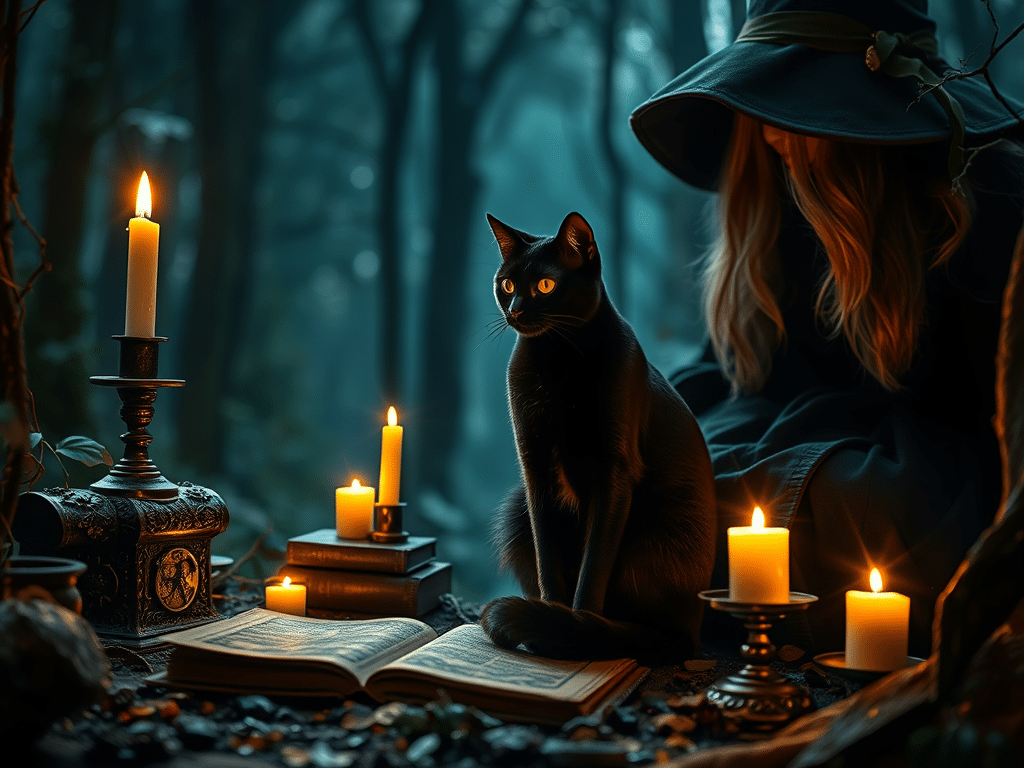
Animal familiars are supernatural entities in animal form that serve witches as magical assistants and spiritual guides through a deep bond.
-
Black cats, ravens, toads, and other mysterious animals became iconic familiars due to their associations with magic and the supernatural in cultural traditions.
-
Familiars provided enhanced magical power, protection, companionship, and helped witches navigate physical and spiritual realms effectively.
-
Witches found familiars through inheritance, spiritual recognition, or being chosen by the animal itself in a deeply personal process.
-
Familiars influenced witch trial persecutions and shaped popular culture representations of witches in literature, film, and modern media.
-
Theories view familiars as nature intermediaries, psychological projections, or tools for controlling independent women, reflecting humanity’s need for connection with nature.

Introduction
People have always been interested in witches’ strange animal familiars, which they use as both spiritual guides and magical helpers in their witchcraft. People often draw these things as cats, ravens, toads, or other animals. Folklore, spiritual belief, and cultural mythology, passed down from generation to generation and across countries, combine to form a fascinating mix. The idea that a witch is bound to a familiar spirit raises deeper questions about how people relate to nature and how people have thought about and feared magical powers throughout history. To understand what animal familiars do in witchcraft, we need to look at how they are traditionally used, what they mean symbolically, and how they have affected how we think about magic and people who practice it.
Historical Context and Traditional Understanding of Familiars
A close study of original sources such as trial records, pamphlets, and demonological texts sheds light on the idea of animal familiars, which became popular during the English witch trials. Putting together these different sources shows how complicated the connection between people and animals was during this time, which goes against the idea that familiars are only evil. In 2019, Parish did a critical study that showed the role of familiars in the larger context of witchcraft. They were shown as beings with free will and symbolic meaning, not just tools of witchcraft (Parish, 2019).
In witchcraft, a familiar is usually thought of as a mysterious being that looks like an animal and helps a witch or other clever person do their magic. Witches thought that these ghosts could help them cast spells, gather information, keep their witch safe, and sometimes even do bad things on her behalf. People thought that the familiar was more than just a pet; they saw it as an extension of the witch’s power and will, linked to her by blood pacts or magical practices. In European and colonial American historical records of witch trials, accusations of familiars are often mentioned. Suspects were questioned about their ties with strange animals or pets. The idea of familiars was so important to witches that having an animal friend, especially one that seemed extremely friendly or responsive, could be used as proof in witchcraft trials.
Murray writes in her important 1918 work that the usual idea of a witch’s familiar was a small animal like a cat, a mouse, or even a bird. People thought that these creatures did the witch’s work, and social fears made their scary image even stronger (Murray, 1918). Recent research supports this idea that animal familiars were used as symbols. It places their stories in the context of folklore and social norms of the time, connecting them to issues of gender and power (Arseneault & Collard, 2023).
Some animals were especially linked to the role of witch’s familiar because they were thought to be smart or because they were traditionally linked to magic and mystery. People still think of black cats as the most recognizable animals. This is because of medieval European beliefs that tied them to witches, the devil, and dark magic. Because they were smart, had black feathers, and were linked to death and battles in many mythologies, ravens, crows, and other corvids were thought to be familiars. In the English witch trials, toads and frogs were often used as familiars. This may have been because they were linked to transformation magic and were used in folk medicine and to make poison. Hares, owls, dogs, and even insects like flies and bees were also popular familiars. Each animal had its own magical skills that witches could use with it. Choosing a familiar often had to do with regional folklore. Depending on local beliefs and the animals that were present, some animals were more important in certain cultural settings.
They said that familiars helped witches in many ways, and these benefits met both the practical and spiritual needs of magical practitioners. People thought that familiars could boost a witch’s magical power by letting supernatural energy flow through them and making it easier to focus and direct spells. They were scouts and spies, and they used their animal forms to sneak around and gather information that would help their witch with both magical and everyday tasks. Many stories say that familiars were witches’ guardians who could tell them of danger, protect them from spiritual or physical harm, and show them the way safely through the spirit world. People also believed that familiars could offer mental support and company, which was especially important for practitioners who worked alone or who lived on the edges of society. The close connection between the witch and her familiar was a partnership that went beyond normal human-animal ties. It was a special way for the two to work together magically.
There are different ways that witches are said to find their familiars in both old and new witchcraft traditions. Some traditions stress that the familiar picks the witch, not the other way around. People who wrote about the past sometimes said that new witches were given familiars by the devil or by other witches as a way to welcome them into the group. In some traditions, a witch may get a familiar from a family member who died and also performed witchcraft. This keeps the magical knowledge and power alive. Modern practitioners often talk about a process called “spiritual recognition,” in which they meet an animal and feel an instant, unfathomable link with it that marks the start of a familiar relationship. Some witches think that familiars show up as spirit guides in dreams, meditations, or visions, while others say that a living pet can become a familiar by doing more magical work with it and becoming close to it. Finding a familiar is usually shown as a very personal process that can’t be rushed and needs the witch to be patient, open, and have a real spiritual link with the animal spirit.

Cultural Impact and Modern Representations
The idea of witch familiars has had a big impact on Western culture and society. It has changed how we think about witches and how they interact with nature. During the time of the witch trials, the belief in familiars led to the persecution and execution of thousands of people, mostly women, who were thought to be communicating with evil souls in animal form. This dark history shows how fear of familiars was a reflection of greater worries about women who were independent, didn’t follow the rules, and didn’t fit in with traditional social structures. In art and literature, “familiars” have come to mean magical power and witchy identity. They can be found in everything from Shakespeare’s Macbeth to modern fantasy books. Today, pictures of Halloween almost always show black cats with witches, which shows how deeply the familiar idea has become ingrained in people’s minds. From the talking cat Salem in Sabrina the Teenage Witch to the demons in Philip Pullman’s His Dark Materials series, familiars are still important parts of witch characters in movies, TV shows, and books. This shows that the idea of familiars has changed over time and still appeals to modern audiences.
Theoretical Perspectives and Psychological Analysis
Theories and studies have tried to explain why the familiar idea is still important in witchcraft beliefs and how it came to be that way. From an anthropological point of view, familiars are thought to be psychic attempts to understand and control the natural world, with animals acting as go-betweens between the human and nonhuman worlds. Psychologically, familiars are thought to be projections of the witch’s own power, unconscious mind, or dark self. The animal form gives the witch a safe way to show parts of her personality that other people might find scary.
Feminist scholars have looked at how charges of keeping familiars were often leveled against women who lived alone with animals, especially elderly women or widows. They say that these accusations showed that beliefs about familiars were ways to limit women’s freedom and punish those who didn’t follow the rules. From the point of view of spiritual ecology, familiars can be seen as ways that people show their deep need to connect with other species and the natural world, especially in societies that are becoming more urbanized and cut off from nature. In early modern Europe, social norms about how humans and animals should interact were challenged by people having strange pets or being close to their animals. This made these relationships suspicious and dangerous in the eyes of the authorities.
A lot of the time, familiars show how people felt about women and animals during the witch trials. The way witches were portrayed as people who talked to their familiars is similar to larger cultural concerns about women’s autonomy and how women’s and animals’ experiences are pushed to the edges of patriarchal systems (Parish, 2019; Arseneault & Collard, 2023). The mix of animal and human forms in witchcraft images added to the fear of the unknown and not fitting in, which made people more averse to witchcraft.
From a psychology point of view, the idea of animal familiars is related to bigger ideas about how people relate to animals. Animal interactions can help people feel more at ease, which may explain why witches were said to have had strong relationships with their “familiars” (Horn et al., 2012; Smith, 2014). Psychological contact with animals can lead to projections of personality traits and feelings, which supports the idea that these animals not only served as magical helpers but also as friends whose traits were valued by humans (Sweet et al., 2020).
According to the literature, animals can also tell the difference between humans they know and humans they don’t. This may help explain why people think a witch has a close relationship with her familiar. Studies show that this kind of familiarity and understanding of social norms may make the bond between witches and their helpers stronger (Wascher et al., 2012; Hill et al., 2016). These kinds of relationships show how friendship, loyalty, and free will are all fluid in witchcraft stories.
Conclusion
Witchcraft’s use of animal familiars shows important things about how people think about power, faith, and their connection to the world beyond humans. Whether you see familiars as a historical myth, a psychological symbol, or a real spiritual practice, they represent the idea that magic and knowledge can come from working together with other animals instead of controlling them. This idea has been around since the witch trials of the Middle Ages and is still used in popular culture and modern witchcraft. This shows that it really connects with people’s need for connection, meaning, and access to powers beyond the usual. As we continue to contemplate our role in the natural world and our relationships with other animals, the witch’s familiar remains a potent symbol of diverse perspectives, challenging the boundaries between humans and animals, the natural and supernatural realms, and serving as both a companion and a teammate.
References
Arseneault, J., & Collard, R. (2023). Crimes against reproduction: Domesticating life in the animal trials. Humanimalia, 14(1), 1–41. https://doi.org/10.52537/humanimalia.11727
Hill, H., Yeater, D., Gallup, S., Guarino, S., Lacy, S., Dees, T., Kuczaj, S. (2016). Responses to familiar and unfamiliar humans by belugas (Delphinapterus leucas), bottlenose dolphins (Tursiops truncatus), & Pacific white-sided dolphins (Lagenorhynchus obliquidens): A replication and extension. International Journal of Comparative Psychology, 29. https://doi.org/10.46867/ijcp.2016.29.00.09
Horn, L., Range, F., & Huber, L. (2012). Dogs’ attention towards humans depends on their relationship, not only on social familiarity. Animal Cognition, 16(3), 435–443. https://doi.org/10.1007/s10071-012-0584-9
Lewis, M. G. (1801). Tales of wonder. Bell.
Macbeth (play). (1606). William Shakespeare.
Murray, M. A. (1918). 61. Witches’ familiars in England. Man, 18, 101–103. https://doi.org/10.2307/2787283
Parish, H. (2019). “Paltrie vermin, cats, mise, toads, and weasils”: Witches, familiars, and human-animal interactions in the English witch trials. Religions, 10(2), 134. https://doi.org/10.3390/rel10020134
Pullman, P. (1995–2000). His dark materials [Book series]. Scholastic.
Sabrina the Teenage Witch (TV series). (1996–2003). Hartbreak Films; Viacom Productions.
Shakespeare, W. (1606). Macbeth [Play].
Smith, J. E. (2014). Human–animal relationships in zoo-housed orangutans (P. abelii) and gorillas (G. g. gorilla): The effects of familiarity. American Journal of Primatology, 76(10), 942–955. https://doi.org/10.1002/ajp.22280
Southey, R. (1798). A ballad, shewing how an old woman rode double, and who rode before her. In M. G. Lewis (Ed.), Tales of wonder (1801). Bell.
Sweet, F. S. T., Noack, P., Hauck, T. E., & Weisser, W. W. (2023). The relationship between knowing and liking for 91 urban animal species among students. Animals, 13(3), 488. https://doi.org/10.3390/ani13030488
Wascher, C. A. F., Szipl, G., Boeckle, M., & Wilkinson, A. (2012). You sound familiar: Carrion crows can differentiate between the calls of known and unknown heterospecifics. Animal Cognition, 15(5), 1015–1019. https://doi.org/10.1007/s10071-012-0508-8


Leave a Reply