Ghost Orb or Camera Malfunction: Key Points
-
Ghost orbs are mysterious spherical shapes of light that appear in photographs and videos, particularly at supposedly haunted locations, dividing believers and skeptics.
-
Witnesses report that orbs display apparently intelligent behavior, moving in purposeful patterns and responding to human presence or questions.
-
Paranormal theorists propose that orbs are visual manifestations of spiritual energy, representing ghosts, spirits, or other supernatural entities.
-
The scientific explanation attributes most orbs to the backscatter effect, where camera flashes illuminate dust particles, water droplets, or insects very close to the lens.
-
Scientific evidence strongly favors the camera distortion explanation, as experiments have successfully reproduced orbs and their frequency correlates with camera types prone to backscatter effects.
-
While most orb photographs can be pointed out by camera artifacts, a small percentage present anomalies that challenge simple explanations, ensuring the debate continues.

Introduction
People who study the paranormal talk a lot about ghost orbs. Pictures and movies often depict them as strange round patterns of light, particularly in haunted places. Many people have fought about these strange things. Some people think they are signs of spiritual activity, while others think they are just artifacts in pictures. For years, amateur ghost hunters, professional photographers, and scientists have debated about whether ghost orbs are true paranormal events or just camera problems. To understand these odd spheres, we must examine their traits and the various theories about their existence.
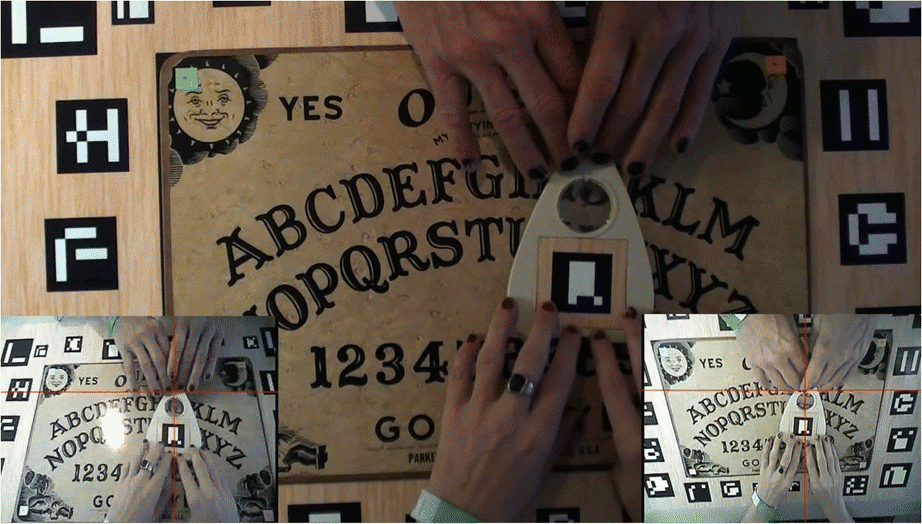
In contemporary Western civilizations, believing in and experiences with ghosts are widespread; these phenomena transcend mere “superstition” and are often linked to media consumption and activities such as ghost hunting. National surveys indicate significant belief and involvement among younger populations and casual individuals who integrate scientific discourse with religious or mystical frameworks (Baker & Bader, 2014). Fieldwork demonstrates that ghost hunting encompasses ritualistic practices, scientific and theological frameworks, and extensive technological tools to facilitate evidence collection, including the use of EMF meters, infrared cameras, and spirit boxes to capture and analyze potential paranormal activity. This information demonstrates that hauntings are both liminal and culturally produced (Baker & Bader, 2014).
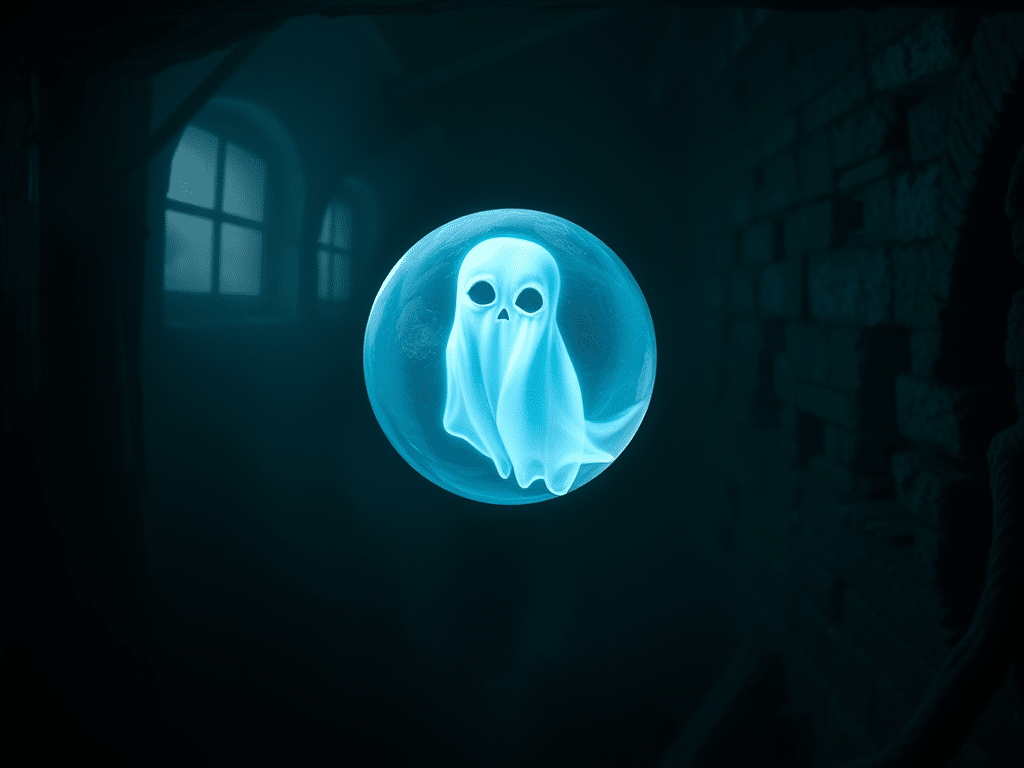
In movies and images, ghost orbs can look like clear, glowing, or semi-solid round or spherical entities (Steenhuisen-Siemonsma, 2022). They could be tiny, like little dots of light, or very large, like big spheres that take up a lot of space in a photograph. The orbs can be any color, like white, blue, or red, or a multicolored pattern. But most people report they see light blue and white. Some of them look like circles with sharp edges, while others look like softer, more spread-out forms that seem to fit in with the things around them. Some orbs appear like they have stuff inside of them. People who have seen them say they look like energy moving around inside the sphere, either in circles that are the same size or in geometric shapes.
The alleged behavior of ghost orbs makes this occurrence even more intriguing. A lot of research says that orbs move in ways that demonstrate intelligence or purpose, like going along diverse courses in space or seeming to respond to people (Goodwyn, 2011). Some individuals think that orbs are moving on purpose when they seem to be going in straight lines, making rapid turns, or whirling patterns. People who have seen orbs claim they show up when people are angry, in places where unpleasant things have happened, or in places where strange things have been reported. Some scientists believe that orbs will do what you ask them to do. They show up on film, for example, right after someone requests spirits to present themselves. Some people think that the fact that the orbs occasionally clump together or show up in the same places over and over again means that there is a lot of spiritual energy in that area (Sweet, 2004).
Competing Explanations: Paranormal Theories Versus Scientific Analysis
Paranormal theorists have put out several ideas on what ghost orbs are, saying that they are real events from another planet. The most common explanation is that orbs are signals of spiritual energy, which suggests that ghosts, spirits, or other things that aren’t physical are present. Some people believe that spirits don’t have the energy to show themselves fully, so they show up as balls of light or energy instead. Some paranormal researchers say that orbs are the first step in a full apparition. A full apparition is when a ghost is gathering energy before it shows up more fully (Desmoreaux, 2008). Some people believe that orbs represent the life force or soul energy of deceased individuals who remain connected to specific locations or are attempting to communicate with the living. Some people who believe in orbs think they might be spirits of nature, angels, or other non-human things, but not ghosts. Some experts who study the paranormal suggest that orbs might be psychic energy that people send out when they are furious, which makes things look different for a short period.
There are substantial alternative theories in both science and photography that focus on how cameras work and how the environment affects them. The “backscatter effect” is the most common way to talk about orbs. This occurrence happens when the flash of the camera hits dust, water droplets, pollen, or bugs that are very close to the lens but not on the focal plane. The flash makes these particles look like brilliant, round entities because they are so close to the lens that they form a big, fuzzy reflection. This occurrence is more likely to happen with modern digital cameras that have lights built in. The flash is more likely to reflect light back into the lens because it’s so close. When the air is damp, such as when it’s cloudy, drizzling, or humid, it’s easy to form orbs. This effect is because water droplets are very shiny and can be found in numerous places. People walking around, heating and cooling systems, or construction work can all make dust fly around inside. Lens flare can also happen when there are bright lights, and it can make spherical forms that look like orbs. Reflections in the camera could have similar effects.
A more in-depth look at glitches in digital media shows that some strange things, such as missing frames, color shifts, stuttering, and sensor noise, can take on symbolic meanings as “ghostly” beings in media. Research on glitch discourse from the mid-20th to early 21st centuries associates glitches with uncanny effects and the sensation of a “ghost” on the verge of recognition, occurring when individuals, hardware, and software collaborate (Csönge, 2019; Kane, 2019). Technical literature on rolling shutter artifacts suggests that camera movement and inaccurate sensor readings might create image distortions that resemble spectral phenomena during playback or narration. The methods for correcting rolling shutter effects demonstrate that these distortions are foreseeable and dependent on camera geometry and motion rather than resulting from supernatural phenomena (Qu et al., 2023; Rotenberg et al., 2012). Research on digital motion capture and virtual bodies illustrates a contemporary visual paradigm wherein “ghosts” can manifest from computational processes facilitating human movement and perception, highlighting that digital capture technologies can provoke unsettling agency within the gaze itself, rather than in external realities (Chang, 2019).
Philosophical discourse regarding ghosts and epistemology contends that, in the absence of genuine, reproducible proof, visual artifacts alone (such as purported ghost video stills or moving images) fail to substantiate belief in spiritual entities. They stress that pareidolia and perceptual biases could account for numerous ostensibly paranormal signals, and contemporary camera artifacts require stringent scientific examination to prevent misinterpretation (Johnson, 2022). It’s easy to make fake ghost images with today’s technology; therefore, camera evidence of ghosts isn’t reliable.

Evidence Supporting Camera Artifact Explanation and Anomalies
When you look at these two concepts side by side, the one concerning camera distortion seems more likely to happen than the one regarding the paranormal. Scientists have been able to produce orbs in controlled settings by putting dust or water droplets near camera lenses. This observation indicates that the event can happen without any help from the supernatural. The fact that orbs show up a lot more in pictures taken with flash than in shots taken with natural light strongly suggests that they have something to do with how flash interacts with adjacent particles. Camera and photography specialists have written down how things like focus duration, aperture size, and flash placement influence the number of orbs in ways that are consistent with how light works. Air currents that transfer particles across the camera’s field of vision can explain why orbs seem to be moving in recordings. When investigators see random motions as planned, it’s frequently a sign of confirmation bias, which means they think they’re doing the right thing. Around the same time that compact digital cameras became popular in the late 1990s and early 2000s, orb images started to grow considerably. The setup of these cameras’ flash and lens most likely causes them to exhibit backscatter effects.
But it’s too soon to declare that all orb sightings are really camera artifacts, as some of them have features that make simple photographic explanations difficult to believe. Only a few orb photos show oddities taken by multiple cameras at once and from different angles. This finding suggests that not all cameras had the same lens issue or particle reflection. Orbs appear in closed rooms or outside when it’s dry and calm, where dust or moisture shouldn’t be. Some reports depict spheres that look like they give out their light instead of just bouncing off of flashlights. You may see these orbs even when it’s dark. Sometimes, thermal imaging cameras and other non-photographic detecting technologies have uncovered strange things in places where visible orbs existed. Such evidence makes me suspect that something else other than optical phenomena could be going on. These rare encounters demonstrate that complex phenomena can arise from multiple sources and that each orb sighting may require a distinct explanation.
Cultural and Psychological Dimensions of the Ghost Orb Phenomenon
The cultural and psychological consequences of ghost orbs extend beyond the technical discussions regarding their origins. Many people who want to believe in life after death or spiritual dimensions see orbs as strong proof. They help individuals address their sadness or support their ideas about the supernatural by providing a tangible connection to the idea of spirits or the afterlife, which can be comforting during times of grief. It’s easier than ever to take images of orbs, which has made paranormal study more accessible to everyone. Anyone with a simple camera may now go ghost hunting and feel like they are part of a big group of people who believe in ghosts. But the fact that there are so many orb photographs that can be easily explained has also made real paranormal study less believable. Skeptics believe that the many inaccurate dust pictures show that ghost seekers aren’t very scientific. The orb phenomenon has made its way into pop culture, showing up in many movies, TV series, and online content about the paranormal. The argument has led to new ways to study, such as photography schools that use orbs to teach students about how cameras work, how light behaves, and how to think critically about pictures. The issue has also demonstrated the importance of scientific methods and the necessity of excluding conventional explanations prior to attributing events to anomalous entities.
Conclusion
There is still a lot of controversy about whether ghost orbs are real paranormal activity or just something that shows up in pictures. But the scientific evidence suggests that camera distortion is the cause in most cases. The capacity to consistently replicate orbs via understood optical and environmental systems offers a succinct explanation that obviates the need for reference to supernatural entities. But strange things keep happening, and many people discover meaning in their orb experiences, which means this conflict will continue. As technology becomes better and we learn more about photographic phenomena and supposed paranormal explanations, we may obtain clearer answers. Ghost orbs are a strange mix of technology, belief, and the human impulse to discover confirmation of things we can’t see. They remind us that the line between what we can explain and what we can’t often depends on how closely we look at the evidence we have.
References
Baker, J., & Bader, C. (2014). A social anthropology of ghosts in twenty-first-century America. Social Compass, 61(4), 569-593. https://doi.org/10.1177/0037768614547337
Chang, V. (2019). Catching the ghost: The digital gaze of motion capture. Journal of Visual Culture, 18(3), 305-326. https://doi.org/10.1177/1470412919841022
Csönge, T. (2023). Medium specific uncanny in contemporary video games. Acta Universitatis Sapientiae Film and Media Studies, 24(1), 185-202. https://doi.org/10.2478/ausfm-2023-0020
Desmoreaux, P. (2008). More cool careers for dummies: Ghost hunter. Skeptical Inquirer, 32(6), 57-59.
Goodwyn, M. (2011). Ghost worlds: A guide to poltergeists, portals, ecto-mist, & spirit behavior. Llewellyn Worldwide.
Johnson, D. (2022). On angels, demons, and ghosts: Is justified belief in spiritual entities possible? Religions, 13(7), 603. https://doi.org/10.3390/rel13070603
Kane, C. (2019). High-tech trash: Glitch, noise, and aesthetic failure. University of California Press. https://doi.org/10.1525/luminos.83
Qu, D., Liao, B., Zhang, H., Ait-Aider, O., & Lao, Y. (2023). Fast rolling shutter correction in the wild. IEEE Transactions on Pattern Analysis and Machine Intelligence, 45(10), 11778-11795. https://doi.org/10.1109/tpami.2023.3284847
Rotenberg, D., Chiew, M., Ranieri, S., Tam, F., Chopra, R., & Graham, S. (2012). Real-time correction by optical tracking with integrated geometric distortion correction for reducing motion artifacts in functional MRI. Magnetic Resonance in Medicine, 69(3), 734-748. https://doi.org/10.1002/mrm.24309
Steenhuisen-Siemonsma, M. J. (2022). Orbs in the skyscape: An exploration of spiritual experiences with anomalous light phenomena [Doctoral dissertation, University of Wales Trinity Saint David].
Sweet, L. (2004). How to photograph the paranormal. Hampton Roads Publishing.
Leave a Reply