Dracula’s Bride: Key Points
- Sarah Ellen Roberts, born in England in 1872, buried in Pisco, Peru, in 1913. Legend claims she was accused of witchcraft, murder, and vampirism before being sealed in a coffin.
- According to folklore, Sarah Ellen cursed her persecutors before death, promising to return eighty years later. Her husband supposedly transported her coffin to Peru after English cemeteries refused her burial.
- Known as Dracula’s Bride, Sarah Ellen was described as a beautiful, pale woman who practiced dark magic and drank blood. Her legend combined European vampire folklore with Gothic fiction.
- In 1993, thousands reportedly gathered in Pisco, fearing her resurrection on June 9. Residents purchased garlic, crucifixes, and wooden stakes, while ritual specialists performed protective ceremonies.
- Sarah Ellen never rose from her grave, but some believers credited holy water and protective rituals. Historical investigations found no evidence that she was a vampire or had been executed for witchcraft.
- Following the 1993 scare, Sarah Ellen gradually became a figure of popular devotion. Her grave attracted visitors seeking healing and protection, transforming a feared vampire into a local supernatural guardian.

Introduction
The year was 1993, and in the coastal city of Pisco, Peru, an ordinary cemetery became the focus of an exceptional vampire hysteria. Legend says that thousands gathered around the tomb of Sarah Ellen Roberts, an Englishwoman whose death in 1913 spawned a terrifying legend. Roberts was no average woman, the narrative said. She had been accused of witchcraft, murder, and vampirism before being buried far away from her native area. Her coffin was said to have hidden a terrible secret and believers worried she would return from the dead precisely eighty years after her burial. Local storytellers, newspapers, and frightened residents turned her burial into a location of uncanny expectation. The anticipated resurrection never took place, but the woman dubbed Dracula’s Bride became one of Peru’s more odd modern vampire tales. Her story is a reminder of how European ideas about the undead may linger in unlikely places, taking on new meanings as they intersect with local religious traditions, popular culture, and public interest with the supernatural.
The Historical Woman and the Vampire Legend
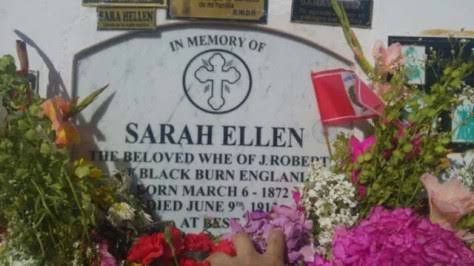
The tombstone of Sarah Ellen Roberts, who lived from March 6, 1872, to June 9, 1913, indicates her historical significance. Her grave names her as the devoted wife of J. P. Roberts, Blackburn, England. These facts demonstrate the existence of a real woman behind the mythology, but they do not substantiate the allegations that brought her fame. But the remaining evidence speaks to a far less nefarious life. Historical research in Blackburn discovered a newspaper death notice of the time that stated that Roberts had died in Peru, contradicting the story that she had been executed in England. It is important to distinguish between the documented woman and the supernatural character because the legend turned an otherwise obscure death into a tale of international persecution, forbidden magic, and revenge from beyond the grave (Blackburn with Darwen Borough Council, n.d.; Braid, 1993).
The most common version of the folklore has Sarah Ellen living in Blackburn with her husband, John Pryce Roberts. It is alleged she practiced occultism in its various forms, including witchcraft and black magic, and even murder, which scared her neighbors. Some stories accused her of consuming the blood of humans and another claimed that she was a member of a secret society of female vampires. Reports say she was eventually detained by officials and taken before a judge. She had committed horrible acts, and she was given an extreme penalty. She would be tied inside a lead-lined coffin and sealed alive, instead of being hanged or imprisoned. The lead was apparently to prevent her supernatural power from escaping; however, this explanation is in the logic of the narrative and is not substantiated in historical court documents (Blackburn with Darwen Borough Council, n.d.; Ministerio de Comercio Exterior y Turismo, n.d.).
The most scary incident in the story came on June 9, 1913. As her executioners were about to close the casket, Sarah Ellen is said to have uttered a curse on those who were guilty of her death. She swore she would return in eighty years to take her retribution. Her comments elevated what could have been a grisly execution to a supernatural menace throughout generations. The date was specific enough to recall and far enough in the future that the original witnesses would likely be dead by the time the curse was due. The condemned woman was subsequently sealed in her coffin, leaving her husband to deal with the dilemma of disposing of a body that neither religious authorities nor scared communities wanted to accept (Blackburn with Darwen Borough Council, n.d.).
John Roberts, it is believed, went from place to place looking for a location to bury his wife. Because of her reputation for witchcraft and vampirism, it was said that churches in England refused her remains consecrated ground. He shipped the casket across the seas, determined to find a resting place for good. Eventually he got to Peru, where he is said to have bought a burial spot in Pisco for himself for five British pounds. There, far from the English villages that had apparently condemned her, Sarah Ellen was finally put to rest. Her tombstone featured the usual epitaph of the dear wife, a sad contrast to the horrible atrocities with which she was charged in the narrative. The travel itself is a Gothic story in which a hazardous body travels the borders of countries delivering an old curse to a faraway community (Blackburn with Darwen Borough Council, n.d.; Ministerio de Comercio Exterior y Turismo, n.d.).
Story-tellers went further with Sarah Ellen’s otherworldly identity, linking her to Count Dracula. In one account she was Dracula’s lover or his wife, a woman who had visited him in Transylvania and engaged in illicit magical rituals. Other accounts had her as one of three female vampires, like the mystery women who live in Count Dracula’s castle in Bram Stoker’s novel. These associations bestowed upon an unknown Englishwoman a magical identity instantly recognizable. The moniker Dracula’s Bride suggested that she was more than ordinarily magical. In popular imagination, at least, she was one of the undead nobility, with the same powers, dangers, and seductions as the most renowned vampire in the world (RPP Noticias, 2017; Stoker, 1897).
Descriptions of Sarah Ellen’s physical appearance vary widely and illustrate how the mythology grew with each telling. She was usually portrayed as a beautiful European woman, not an ugly, decomposing corpse as in some of the older vampire tales. Some descriptions say she was a stunning blonde with white skin and a peculiar aura. Later accounts of Pisco tell of a beautiful woman clothed in white who appeared near the graveyard and who would approach unsuspecting men. They say under her beauty lay a deadly thirst for blood. These accounts are legend and there is no convincing evidence to suggest that the historical Sarah Ellen possessed any supernatural physical traits. Nevertheless, the combination of an attractive look and a deadly hidden nature made her a recognizable example of the alluring female vampire (Díez Cobo, 2019; Arries, n.d.).
The white clothes associated with some alleged sightings are particularly intriguing. White clothes in ghost stories frequently imply burial shrouds, innocence, or the lingering presence of the dead. But in vampire fiction a lovely woman in white can symbolize the fatal confusion of purity and depravity. These associations came together in Sarah Ellen’s imagined look. She could have been a gloomy ghost haunting the graveyard, but her perceived goals would be more like a vampiric predator. The tales sometimes omitted mentions of teeth, claws, or other horrific traits. Rather, the terror was that an apparently normal woman would harbor some monstrous identity and utilize her look to lure victims (Arries, n.d.; Stoker, 1897).
Her behavior altered, too, as the legend grew. In the oldest accounts, Sarah Ellen is mostly a witch and murderer, with magical powers that make her deadly even before her death. Later writings focused on her alleged connection to Dracula, vampirism, and blood consumption. With the expected resurrection approaching, attention turned to her coming forth from the tomb. Some believed she would be reborn in the body of a newborn infant or a young virgin. Others claimed she would literally rise from her coffin. This second possibility was extremely alarming, because it meant that the vampire might return without appearing to be an evident monster. A kid born at the incorrect time could become the conduit of a supernatural being seeking revenge (Braid, 1993; Ministerio de Comercio Exterior y Turismo, n.d.)
Sarah Ellen’s transition into Dracula’s Bride also displays the impact of European vampire literature. Stoker (1897) in Dracula had three female vampires living in the count’s castle and threatening the novel’s protagonist, Jonathan Harker. These women are attractive, seductive, and deadly. They seem sexy but also like scary predators. This has been a model for later vampire stories. One such case is the purported connection of Sarah Ellen to Dracula. Although she had no confirmed relationship to the mythical count, she was given a recognizable literary ancestry. The association helped her to be perceived by audiences as a mystical woman, exquisite but frightening, rather than as an anonymous corpse buried in a Peruvian cemetery.

The Vampire Panic of 1993
Sarah Ellen’s burial had stood in Pisco for decades, by the early 1990s, without receiving any unusual public attention. That changed when a Spanish-language television program connected to Cristina Saralegui featured a segment about her. She was labeled as one of several female vampires by a self-styled vampire expert, who predicted she would rise from the grave on the eightieth anniversary of her death. The tale was broadcast on television and published in newspapers and eventually made its way to Peru, where journalists found her tomb. June 9, 1993, suddenly assumed terrifying significance. A forecast that was reportedly made in England in 1913 seemed to be becoming real in a Peruvian graveyard (RPP Noticias, 2017).
The moment was particularly beneficial for the legend’s appeal. Francis Ford Coppola’s picture Bram Stoker’s Dracula had been released in 1992, reviving the imagery of Gothic vampires in the international popular culture. Its depiction of Dracula as a supernatural and romantic creature contributed to a culture more open to sensational vampire legends. What fiction could not provide, the Sarah Ellen legend did: a genuine grave, a known dead woman, and a certain date for anything out of the usual to take place. The audience may visit Pisco and experience the resurrection that had been foretold. Thus, the story blurred the line between Gothic entertainment and a reportedly verifiable supernatural event (Coppola, 1992; El Comercio, 2023).
By the ninth of June, some residents of Pisco were afraid. Residents reportedly bought garlic, crucifixes, wooden stakes, and other items traditionally linked with protection against vampires. Merchants sold unique vampire-defense equipment, including a hammer, stake, crucifix, and garlic. Some pregnant women were said to have left the city in fear that Sarah Ellen might return with their kids. There were also rumors of fissures emerging in her tomb, which believers took as plausible indication that the imprisoned vampire was ready to escape. It is not certain whether all incidents mentioned occurred exactly as described, but the contemporary articles in newspapers (Braid, 1993; El Comercio, 2023) confirm that the imminent anniversary caused genuine excitement and worry among the populace.
The spectacle turned into the cemetery itself. Journalists, photographers, camera crews, religious practitioners, and curious citizens gathered where Sarah Ellen was buried. Some came expecting to witness a spectacular supernatural event, others expecting to prevent it. Local healers and ritual specialists allegedly performed protective ceremonies; holy water was used. Some participants used such acts as an attempt to neutralize the alleged vampire before she could return. The meeting was a mixture of dread, curiosity, entertainment, and religious observance. For a short while, an ordinary burial became a worldwide tourist attraction, with crowds flocking to see if a woman dead for eighty years would actually emerge from her tomb (Braid, 1993; RPP Noticias, 2017).
The anticipated resurrection did not come. The clock struck past midnight, the day was over and Sarah Ellen was still in her tomb. No vampire rose from the grave; no documented magical transformation took place. The absence of an apparition was taken by some participants as proof that the protection rites had been effective. Others viewed the whole affair as a humorous example of public credulity. Eventually the journalists moved on, and behind them a cemetery that temporarily held the interest of the globe. The mythology did not die with the failure of the forecast. Rather, it contributed a new chapter to the story, enabling believers and doubters alike to see the same events differently (El Comercio, 2023; RPP Noticias, 2017).
European Folklore and Peruvian Traditions
The folklore has a few parallels to older European beliefs about vampires and the restless dead. In the classical folklore sense, vampires were thought of as dead people who returned to hurt the living, spread disease, or prey on relatives and neighbors. Communities often tried to prevent these returns through peculiar burial procedures, the placement of protective artifacts, or the disposal of suspected dead. Sarah Ellen’s reported entombment in a lead-lined coffin is a reminder of these attempts to keep dangerous deceased individuals from escaping. The retaliation she threatened also fits the classic pattern of a person whose death does not end a quarrel with the living. The distinction is that her mythology contains an exact date of resurrection and a connection to a well-known literary vampire, elements that helped make the story particularly attractive to modern audiences (Barber, 1988; Viera Mendoza, 2023).
The witchcraft accusation introduces another essential folkloric motif. In Europe, societies customarily linked witches with evil magic, secret meetings, and the power to make people sick or die supernaturally. In certain traditions it was not clear who was a witch and who was a vampire. Even in death a person believed to possess deadly magical powers could be feared. Sarah Ellen’s supposed sins thus blended two types of supernatural concern. She was meant to be a witch, a threat to the living. She became a vampire, whose death did not eradicate the threat. This combination allowed storytellers to explain why regular burial methods were insufficient and why special precautions were purportedly essential (Barber, 1988; Viera Mendoza, 2023).
The story also mirrors legends of returning harmful female spirits. European legend has magical ladies who appear as beautiful strangers and entice men toward death, disease, or misery. Sarah Ellen’s purported sightings as a pale woman in white follow this basic pattern. But her tale also includes the idea of rebirth, which sets it apart from many other European vampire stories. She might not just leave her coffin to attack the living. Maybe she would enter another body and prolong her existence through a new human life. This adaptation shows how folklore can blend distinct supernatural ideas when tales cross cultures (Díez Cobo, 2019; Viera Mendoza, 2023).
Peruvian religious traditions layered additional meaning on the story. Many of the locals were already familiar with Catholic rituals, such as holy water and crucifixes and prayers and sanctified places of burial. There were also local healing and protecting traditions that offered strategies of confronting supernatural danger. The 1993 gathering thus contained religious and ceremonial reactions that went beyond the traditional vampire-hunting imagery of European fiction. Some prayed for Sarah Ellen’s soul; some did ceremonies to ensure she didn’t come back from the dead. It was not a straightforward copy of European vampire folklore yet it was not a wholly indigenous innovation. It was a mixture of imported Gothic images, Catholic beliefs, and Peruvian supernatural traditions (Viera Mendoza, 2023).
Explanations and the Legend’s Lasting Impact
One hypothesis for the Sarah Ellen phenomena is that it is a modern urban legend based on a real historical person. Urban legends typically contain named individuals, identifiable locations, and events that sound as though they could be verified. Sarah Ellen’s burial furnished them all three. Visitors could read her name, verify the dates, and see that a woman had been buried there in 1913. The fictional parts of the story were more believable because of these real elements. But an actual grave doesn’t prove its occupant was a vampire or hanged for witchcraft. Part of the legend’s compelling power was the fusion of verifiable facts with supernatural assertions without any basis (Viera Mendoza, 2023).
Historical research offers a more mundane reason for Sarah Ellen’s presence in Peru. Research by Blackburn with Darwen Borough Council has revealed her maiden name as Sarah Ellen Gargett and that she married John Pryce Roberts in Blackburn on 1 March 1892. The couple were weavers and had children. John’s brother, Thomas, had moved to Peru for work, hinting at a possible family connection to the couple’s trip. Records show Sarah Ellen died in Pisco on June 9, 1913. Other accounts have linked an illness, probably related to childbirth, although the actual reason of death is not clear in the council’s own history. None of this information supports the claim that she was executed in Blackburn or transferred overseas as a condemned vampire (Blackburn with Darwen Borough Council, n.d.).
Another theory has to do with the influence of sensational television and newspapers in creating communal dread. The legend became a globally recognized one immediately after the television broadcast to a large audience. The reporters repeated the most alarming parts of it—the curse, the anniversary approaching, and the idea of reincarnation. Each new report raised the public’s consciousness and added to the story’s seeming veracity. Rumors of fissures in the grave and sightings of enigmatic ladies also led people to view everyday occurrences as indicators of otherworldly activity. This approach helps to explain how a relatively obscure cemetery might become the subject of immense international attention in a short period of time (Braid, 1993; Viera Mendoza, 2023).
The legend’s popularity may also have been due to commercial motivations. Businesses sold protective items, souvenirs, and other things related to the vampire hysteria. Visitors came to Pisco to see the grave, and local politicians saw the economic possibilities of the publicity. Contemporary reports mentioned a significant boost in tourists during the episode. The commercial aspect does not mean that everyone involved was necessarily trying to dupe the public. Some merchants may have seen the situation as an opportunity, while customers bought protective goods out of real fear. The same legend could be entertainment, business, and religious concern all at once (Braid, 1993; Blackburn with Darwen Borough Council, n.d.).
Psychological explanations are also relevant. If people expect the extraordinary, confusing details may take on special significance. A crack in a tombstone may be seen as supernatural pressure from within, but it is more likely due to decay. A strange woman near a graveyard could be a suspected vampire because there were already reports of a gorgeous ghost-like figure. These interpretations do not need to be fraudulent. Fear, persuasion, and selective attention can affect what people see and how they remember it. The panic of 1993 shows how a common expectation might lead people to link disparate incidents into a single supernatural story (Viera Mendoza, 2023).
Another, more speculative alternative is that Sarah Ellen’s curse was real, but protective ceremonies stopped it from coming true. Some of the ritual performers are said to have made this explanation when the expected resurrection did not happen. Others thought she had come back in another shape; therefore, it was not possible to know for sure she was dead by looking at the tomb. These allegations have not been independently confirmed. They do, however, reveal an important aspect of supernatural belief: a failed prophecy does not always kill a tale. Rather, believers may reframe the outcome so that the original claim still makes sense. For Sarah Ellen, the lack of a physical resurrection permitted other narratives of spiritual transformation and reincarnation to continue to circulate (Blackburn with Darwen Borough Council, n.d.; Viera Mendoza, 2023).
Sameshima (2019) situates Sarah Ellen in a gothic intermedial context inside three Donayre products and explores the renewal of the myth in a Peruvian story. She suggests that the Sarah Ellen figure serves as a vehicle for local Gothic sensibilities. This lends credence to the scholarly portrayal of Sarah Ellen as a literary-vampire figure in a Peruvian context. The research also mentions narrative specifics such as a variant in which Sarah Ellen is executed with two sisters for witchcraft and murder and a prophecy of return, revealing the mythological richness and numerous “versions” of the Sarah Ellen tale in these texts. This suggests subtle arguments or differences between sources about the specific fate and history of Sarah Ellen in this collection.
Perhaps the most surprising development came after the vampire scare was over. Sarah Ellen slowly got a different reputation among some of the Pisco people. Instead of being regarded only as a scary vampire, she was connected with healing, protection, and amazing graces. People started placing flowers, prayers, and words of thanks at her grave. Her image evolved from the object of dread to the subject of popular worship. Díez Cobo (2019) has discussed this metamorphosis as a rare case of a Gothic vampire assimilating into Peruvian religious culture. Viera Mendoza (2023) also recorded variants of the mythology in which Sarah Ellen is a healer or saintlike character.
The change was notably evident after the terrible earthquake that devastated Pisco in August 2007. The rest of the cemetery’s structures were damaged, but Sarah Ellen’s supposed gravesite was allegedly preserved—something some believers saw as a sign of spiritual protection. Later, her grave became a more spectacular memorial and a major stop for travelers. Flowers, plaques, and inscriptions asking her for favors replaced most of the older iconography of stakes and garlic. To some admirers, the woman formerly dreaded as Dracula’s Bride had become a source of solace and aid. Her fluctuating reputation shows how communities can reinterpret supernatural characters through the lens of their shifting experiences and demands (Díez Cobo, 2019; RPP Noticias, 2017).
The mythology also influenced Peruvian literature. In 2009, Carlos Calderón Fajardo analyzed Sarah Ellen’s narrative in El viaje que nunca termina (The True Narrative of Sarah Ellen). Other writers created fictional versions of the woman vampire, stretching her story beyond newspaper reporting and oral tradition. Through Gothic motifs, these works explored the topics of identity, death, sexuality, and the intersection of historical memory and fabrication. The actual Sarah Ellen left behind a comparatively sparse record of biographical facts, allowing writers wide latitude to construct her experiences and motivations. Her ambiguous biography was an advantage for literature since authors could create multiple stories without the constraints of a long recorded life (Calderón Fajardo, 2009; Díez Cobo, 2019; Viera Mendoza, 2023).
Sarah Ellen’s legacy is not only in literature but also in preserving local folklore. Her tale is particularly captivating since its evolution can be traced through present newspaper reporting, television coverage, historical investigations, and interviews with people. Researchers can compare what people thought in 1993 to the accounts reported decades later. Such comparisons reflect changes in the vampire’s claimed look, conduct, supernatural powers, and moral character. The legend also shows that modern folklore does not necessarily die out when a prediction fails or when historical study contradicts its basic assertions. Stories can live on for several reasons: they entertain, express cultural issues, or become tied to key places and rituals (Viera Mendoza, 2023).
The mythology also contains an ethical dimension. Sarah Ellen Roberts was a real woman, but long after her death, others changed her reputation. No convincing evidence exists that she committed any such atrocities, yet accusations of murder, witchcraft, and vampirism were attached to her name. Her husband and family were turned into characters in a fantastic drama that twisted facts as they were known. The mythology has added to the local culture and tourism but brings up problems about how communities treat the memories of dead people. Historical research helps to keep the woman who actually lived separate from the mythical figure constructed around her burial (Blackburn with Darwen Borough Council, n.d.; Viera Mendoza, 2023).
The narrative of Dracula’s Bride is particularly weird in that it has two near-opposite transformations. The first, an average Englishwoman, turned into a dreadful vampire, threatening to return from the dead to destroy a whole city. In the second, the same woman turned into a protecting spirit figure, venerated by those who visited her grave. Neither change required proof of her doing supernatural deeds. Both arose from storytelling, collective interpretation, and the cultural significance associated with her burial spot. The first change was greatly influenced by the European Gothic fiction and the fear of the undead. The second one included him in local traditions of healing, dedication, and miraculous intervention (Díez Cobo, 2019; Viera Mendoza, 2023).
Conclusion
There is no historical evidence that Sarah Ellen Roberts was a vampire, witch, or murderer, and she never rose from her dead on June 9, 1993. Yet the legend that hangs over her is a wonderful instance of the making of supernatural folklore. In 1913 a woman died in Peru, but eighty years later she became the center of an international vampire scare, drawing frightened locals, journalists, ritual specialists, and curious visitors to her tomb. Her story incorporated European traditions of dangerous corpses, Gothic literature, and the popular image of Dracula before gaining particularly Peruvian religious implications. The most intriguing thing about the story may be what transpired after the foretold resurrection did not occur. In Sarah Ellen’s case, her supernatural identity didn’t disappear but transformed, making the dreaded vampire into an object of devotion. Dracula’s Bride thus tells us something about folklore that remains true: the dead need not come to life to remain active in the imagination of the living.
References
Arries. (n.d.). Sarah Ellen. La Cripta (Vampirología). https://arries.es/la_cripta/casos/sarah_ellen.html
Barber, P. (1988). Vampires, burial, and death: Folklore and reality. Yale University Press.
Blackburn with Darwen Borough Council. (n.d.). Vampires: Sarah Ellen Roberts, the Blackburn vampire. Cottontown. https://cottontown.org/archive/articles/names-of-note/notorious-names/vampires
Braid, M. (1993, June 10). Peruvians say Blackburn lady is a vamp. The Independent. https://www.independent.co.uk/news/world/europe/peruvians-say-blackburn-lady-is-a-vamp-1490708.html
Calderón Fajardo, C. (2009). El viaje que nunca termina (La verdadera historia de Sarah Ellen).
Coppola, F. F. (Director). (1992). Bram Stoker’s Dracula [Film]. Columbia Pictures.
Díez Cobo, R. M. (2019). La vampira santificada: Sarah Ellen en la tradición popular y literatura peruana. Herejía y Belleza: Revista de Estudios Culturales sobre el Movimiento Gótico, 7, 201–209.
El Comercio. (2023, October 31). Halloween: La macabra historia de Sarah Ellen, la vampiresa que debió resucitar en el cementerio de Pisco en 1993. https://elcomercio.pe/archivo-elcomercio/halloween-dia-de-las-brujas-truco-o-dulce-sarah-ellen-mujer-vampiro-vampirismo-dracula-pisco-resurreccion-nnsp-noticia/
Ministerio de Comercio Exterior y Turismo. (n.d.). Leyenda de Sarah Ellen. Inventario Nacional de Recursos Turísticos. https://consultasenlinea.mincetur.gob.pe/fichaInventario/index.aspx?cod_Ficha=11861
RPP Noticias. (2017, August 17). Sarah Ellen, la “mujer vampiro” venerada en Pisco. https://rpp.pe/lima/actualidad/video-sarah-ellen-la-mujer-vampiro-venerada-en-pisco-noticia-1070919
Sameshima, M. Á. V. (2019). El mito de la vampiresa Sarah Ellen en la obra de José Donayre: tres soportes góticos que fundan un fantástico criollo peruano. Tradición Segunda Época, 19, 61–69. https://doi.org/10.31381/tradicion.v0i19.2622
Stoker, B. (1897). Dracula. Archibald Constable and Company.
Viera Mendoza, S. (2023). Vampira, santa y curandera: La construcción de la leyenda urbana de Sarah Ellen en Pisco-Perú. Boletín de Literatura Oral, 13, 92–124. https://doi.org/10.17561/blo.v13.7621
Leave a Reply