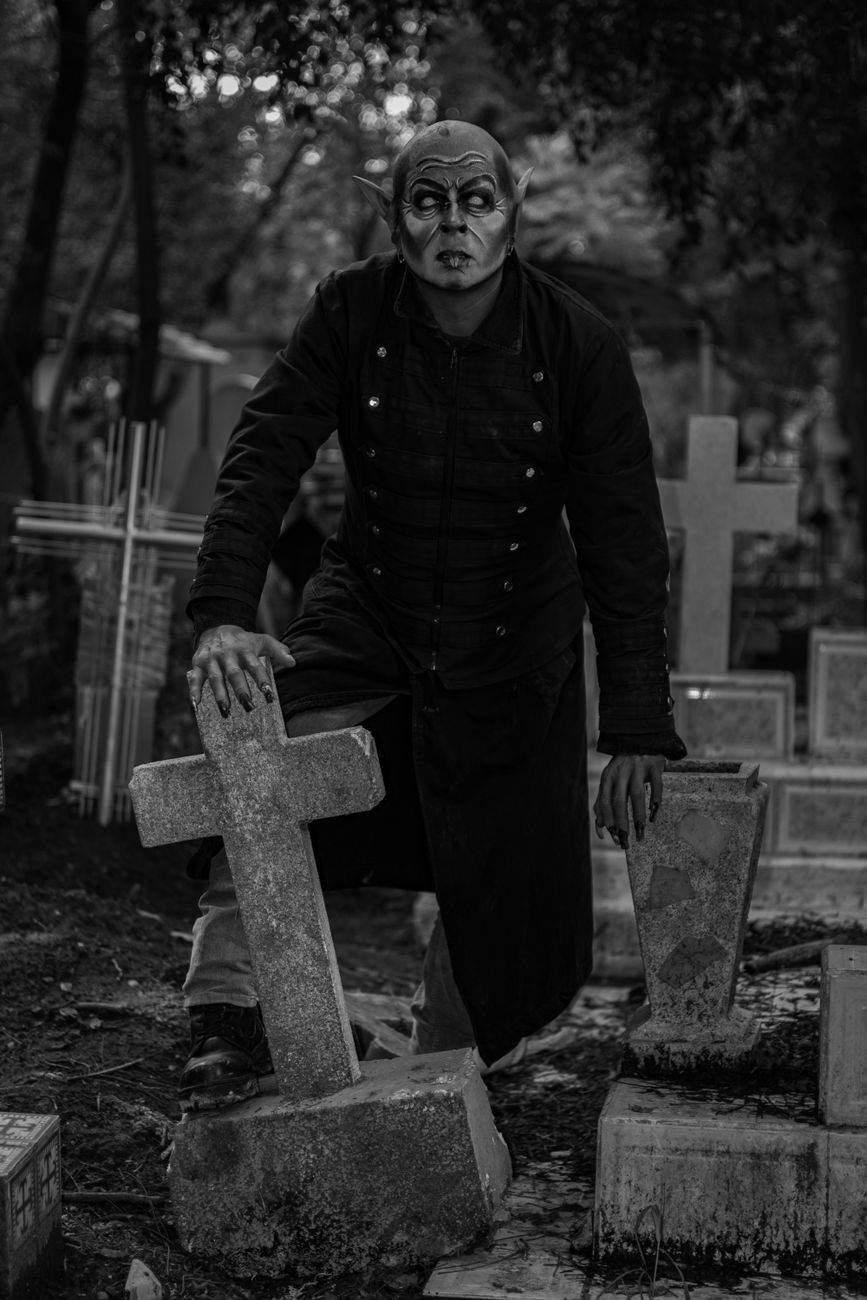
The Shoemaker of Breslau: Key Points
- In September 1591, a shoemaker named Weinrichius reportedly committed suicide in Breslau, now Wrocław, Poland. Soon afterward, residents claimed his ghost was wandering the city and attacking people.
- The shoemaker allegedly entered bedrooms at night, pressed against sleeping victims, and left bruises on their bodies. Unlike modern vampires, he appeared as an ordinary man without fangs or blood-drinking habits.
- Seven months after his death, authorities reportedly exhumed his body and discovered unusually preserved skin and a rose-shaped mark on his foot. These features strengthened suspicions that he was a vampire or connected to witchcraft.
- The corpse was reburied near the gallows, but the hauntings supposedly continued. Eventually, the body was dismembered, burned, and its ashes scattered into a river, after which the disturbances reportedly stopped.
- The story reflects European folklore about revenants, restless spirits, and suicides returning from the dead. It also shares characteristics with early vampire traditions involving preserved corpses, nighttime attacks, and unusual burial practices.
- Modern explanations include sleep paralysis, natural decomposition, collective fear, and exaggerated testimony. The account remains an important example of vampire beliefs before the literary vampires of the nineteenth century.

Introduction
The Shoemaker of Breslau is one of the most unsettling vampiric narratives of early modern Europe, blending worries of suicide, restless spirits, witchcraft, and the potential of the dead physically attacking the living. The narrative takes place in Breslau, Silesia, in 1591 and recounts the tale of a shoemaker who apparently committed suicide but later became the subject of stories of nite attacks, unexplained injuries, and a corpse that purportedly refused to rot. Unlike the aristocratic vampires popularized by Gothic literature of the nineteenth century, the Shoemaker of Breslau was a common craftsman whose death was said to have terrified a whole community. His story is a remarkably thorough account of how Europeans imagined the dangerous dead before the contemporary vampire became a prominent figure in literature. It also raises problems regarding the relationship between religious beliefs, human psychology, decomposition, and communal anxiety.
The sources agree on a single-narrative core: a man who died in 1591/in the vicinity of Breslau, Striegau, and Strzegom, who supposedly returned as a semi-corporeal revenant (often described as a ghost or “undead”) and inflicted pinches, blows, and suffocatory attempts on living relatives, leaving visible marks on victims. The case has played a prominent role in considerations of soul-munity, corporeal substance, and the threshold between life and death in early modern vampire and posthumous-magic literature and has been referenced in parish records, hagiographic and sensational accounts, and later scholarly syntheses (Vermeir, 2011; Wojtucki, 2020).
The Shoemaker’s Death and Reported Hauntings
It appears to have begun in September 1591, when a shoemaker, sometimes known as Weinrichius, slit his own throat and committed himself. Breslau (now Wrocław, Poland) was a prominent commercial city in Silesia, a province of the Bohemian Crown under the reign of the Habsburgs. The death of the shoemaker was a severe theological and societal problem. In early modern Christian Europe, suicide was often seen as a mortal sin and suicide victims might be refused burial in consecrated ground. His manner of death created anxieties even before the first accounts of otherworldly occurrences emerged. The family of the shoemaker, as Henry More records it in 1659, concealed the suicide so as to safeguard his name and pretended that he had died of an illness.
The ruse did not stop the rumors from flying. Soon after the shoemaker’s burial, people began to claim that his ghost had returned to the streets of Breslau. Witnesses claimed to have seen a figure resembling the murdered man walking through town, entering residences, and appearing next to sleeping individuals. Some said the phantom crept into their mattresses, pressed against their bodies and physically attacked them. Others found themselves with bruises on their arms and legs, which they blamed on the dead shoemaker. The attacks were particularly scary since they happened in the apparent safety of people’s bedrooms. The shoemaker had become a midnight visitor, one who could transcend the threshold of the living and the dead (More, 1659).
The apparition was not like the traditional vampire with pointed teeth and a black cape and aristocratic manners. They say the Shoemaker of Breslau looked much like he did in life, recognizable as an average guy. His nature as a supernatural being was defined by his impossible presence after death and his ability to harm the living. The early tale does not offer any compelling proof that he had enlarged fangs, turned into a bat or consumed blood. Instead, he behaved like a revenant, a dead person said to return bodily or spiritually to trouble the living. These creatures were known in European magical traditions long before the word vampire was used widely in Western European writing (Barber 1988).
According to reports, the shoemaker’s attacks became increasingly aggressive. His victims reported being pushed, shaken, or roughed up by an invisible or partially perceived presence. Some tales of the disruptions were widespread and implicated many families, indicating that the haunting had become a catastrophe for the whole community. Normal protective precautions seemed pointless. The dead man could enter locked homes and attack sleeping people. As Breslau citizens try to explain how somebody buried is still among them, the city is gripped by fear. The connection between his suicide and his purported return strengthened the suspicion that his death had broken the right relationship between body, soul, and community.
The recorded assaults share many similarities with the tradition of the European nightmare. In the mythology of the Middle Ages and early modern period, supernatural entities were often blamed for experiences of pressure on the chest, momentary paralysis, suffocation, and terrible encounters during sleep. The mare was a nocturnal ghost who was associated with nightmares and said to sit on sleepers or oppress them in some other way. Witches, devils, ghosts, or other otherworldly visits were sometimes credited with similar occurrences. Owen Davies (2003) observes that nightmare experiences have been understood in terms of the religious and supernatural beliefs of the cultures in which they happened. The Shoemaker of Breslau also conforms to this pattern, as the most distressing encounters are said to have taken place in bed, where victims felt bodily pressure and apparent physical attacks.

Exhumation, Corpse Preservation, and Revenant Traditions
Reports kept coming in, and more and more suspicion began to fall on the tomb of the shoe maker. Seven months after his death, the authorities allowed his body to be excavated. They found a body there that was reported to be remarkably well preserved. The skin seemed strong and the body was said to have no advanced deterioration expected after months beneath. Some tales additionally mention a mark on the foot in the shape of a rose, which is considered a probable sign of witchcraft or other spiritual taint. Such observations bolstered the assumption that the Shoemaker was active after death. The condition of his corpse, to horrified bystanders, seemed to validate what the witnesses had already described: the dead man had somehow kept the power to walk among the living (More, 1659).
The supposed freshness of the corpse was especially essential, for the remarkable preservation of the body was to become a repeating characteristic of European vampire tales. In numerous stories, suspected vampires were identified by their apparently undamaged bodies, flexible limbs, skin that seemed new, or blood around the mouth. The traits were taken by many as proof that the corpse had been feeding off the living. According to Paul Barber (1988), many of the historical descriptions of vampires can be explained by conventional processes of disintegration, which were not well understood by older observers. Burial conditions, temperature, moisture, and the makeup of the surrounding soil can all have a drastic effect on the rate and appearance of the body’s deterioration.
A body buried for a few months might still be recognized. Especially if the environmental conditions are right. Swollen tissue, changes in skin coloring, and the presence of blood or other fluids surrounding openings in the body can also be caused by postmortem alterations. These findings may be particularly disturbing to those who expected a body to have deteriorated more thoroughly. The shoemaker’s supposedly preserved body does not provide evidence that anything unusual occurred. But it does explain why the exhumation may have fanned public fears. The witnesses read the body through a cultural lens in which a wrongly dead person may be physically hazardous.
The shoemaker’s foot had a mark on it, and there was another layer of suspicion. Early modern Europeans sometimes linked strange skin scars to witchcraft, demonic influence, or secret supernatural associations. In witchcraft proceedings, alleged witches’ markings might be used as physical evidence that they were in league with the Devil. Brian P. Levack (2016) and other historians have looked at how such ideas informed accusations and judicial processes during the European witch hunts. A mole or birthmark that would have been of little consequence on any other body took on horrifying significance when found on the body of a corpse already suspected of supernatural activity. Thus, the rose-shaped mark in the Breslau story demonstrates the confluence between vampire beliefs and the wider culture of witchcraft mistrust.
The first effort to halt the haunting, it was said, was to remove the shoemaker’s remains to a place associated with execution and shame. His remains were re-buried, or at least under or near the gallows, removing him from the typical burial society. It was a gesture that said some deaths mattered enough to be treated differently. Criminals, suicides, and those accused of practicing harmful supernatural behavior might be buried in marginal regions because their remains were considered spiritually or socially troublesome. The gallows was a symbolically suitable place for one whose death was seen to have transgressed religious and social norms.
The move was not successful, at least in the surviving story. The shoemaker’s apparition was reported occasionally, and the horrified residents decided that the power of the corpse was not removed by transferring it. Later on more drastic means were used. The body was again removed, cut up, and burned. Then they threw its ashes into a river and it was impossible to restore the body to its original form. It is said the haunting stopped after this destruction. Thus the story ends with a common ingredient in revenant folklore: peace comes only after the corporeal remnants of the hazardous dead have been permanently rendered inert (More, 1659).
The treatment of the shoemaker’s body evokes the rituals seen across the European vampire cultures. Suspected revenants were sometimes unearthed and beheaded or staked or burned or buried under large stones. These procedures were designed to keep the dead from leaving their tombs, or to remove whatever supernatural energy was thought to animate them. Such practices persisted in regions of Eastern and Southeastern Europe into the seventeenth century, when accounts of purported vampires began to engage the attention of physicians, military officers, and government investigators. Barber (1988) talks about the ways these narratives contributed to influencing the emerging Western European conception of vampirism.
The Shoemaker of Breslau is also part of a greater German-language tradition of the restless dead. Some early modern writers employed terminology such as Nachzehrer to describe corpses believed to do damage to the living after burial. In some legends these entities stayed in their graves, gnashing at their burial shrouds or their own bodies while mysteriously drawing vitality from family and neighbors. Other revenants were spotted walking among the living and spreading sickness, terror, or actual physical hurt. The Breslau shoemaker falls best into the second group, because the essential action was his reported ability to get out of his grave and attack people directly. However, his account contributes to the wider belief that a dead body might be tied to the pain of the living (Barber, 1988).
Taylor’s wider treatment of Wrocław/Breslau history in late-20th/early-21st-century reception provides some context for modern memory of the Breslau vampire episodes within a broader cultural-historical narrative concerning changes in the place name, urban memory, and the transformation of historical cases into literary-symbolic matrices. This allusion, though not a direct assertion about the content of the Breslau case, helps to understand the scholarly interest in the positioning and interpretation of the Breslau/Silesia revenant narratives within the shifting geography and historiography of Silesia (Taylor, 2008).
A key relationship is also the common notion that some deaths created exceptionally harmful spirits. Traditions regarding restless ghosts sometimes involved suicide, murder, unexpected death, poor burial, or unsolved wrongdoing. These fatalities interrupted the usual journey from life to death, raising anxiety about the spiritual calm of the dead. The suicide of the shoemaker made him a very plausible suspect. His apparent return might be looked upon as a divine chastisement, as the work of the devil, or as the effect of an unquiet soul. These readings show how supernatural tales typically reinforced accepted religious and social norms.
The story also shows the effect of Protestant and Catholic religious strife in early modern Central Europe. Breslau was located amid a religious landscape that had been shaped by the Reformation, in which disputes over salvation, burial, spirits, and the fate of the dead shaped everyday life. Protestant theologians frequently rejected the old Catholic accounts of purgatory, yet reports of ghosts and supernatural visitations did not vanish. Instead, apparitions might be regarded as demonic deceptions, heavenly warnings, or evidence of exceptional spiritual events. The Shoemaker of Breslau entered into this theological discourse, as his supposed return questioned traditional notions of death and the afterlife.
Historical Accounts and Modern Explanations
One of the most influential surviving treatments of the narrative is in Henry More’s The Immortality of the Soul (1659). More was an English philosopher and a member of the Cambridge Platonists, a group of thinkers concerned with the relationship between Christianity, reason, and spiritual truth. He gathered stories of apparitions and other out-of-the-way occurrences because he felt they could be used to strengthen arguments for the existence of immaterial spirits. A particularly vivid illustration was furnished by the shoemaker of Breslau. The presence of several witnesses, physical injuries, exhumation, and eventual annihilation of the corpse made it seem more significant than a typical ghost sighting (More, 1659).
More’s use of the narrative is a case of a key issue in interpreting historical accounts of the supernatural. The events were said to have happened in 1591, decades before his publication, and his story was based on older tales, not his own experience. The existence of a printed report indicates that the myth was current among educated readers but does not in itself prove that the purported attacks or supernatural happenings took place. This distinction matters because early modern authors typically gathered marvelous anecdotes to bolster religious or philosophical positions. Their criteria for evidence were different from those of modern historical and scientific inquiries.
Modern theories of hauntings mainly center on psychological, social, and physical phenomena. Sleep paralysis provides a potential explanation for some of the midnight experiences. Sleep paralysis is when a person is momentarily unable to move, yet they are still somewhat cognizant. The experience can consist of pressing sensations, a feeling of an intruder and intense hallucinations. For example, David J. Hufford (1982) studied how such encounters had a role in traditions of supernatural assault, such as beliefs about the Old Hag and other similar nocturnal entities. A Breslauer who had experienced sleep paralysis would have recognized the attacker as the shoemaker, especially after hearing stories of his return.
Sleep paralysis can’t explain everything that happened in the story. Reports of bruising, visual apparitions, and disturbances around the city need to be considered separately. Some injuries may have been the consequence of regular accidents, of movement in the dark, or of other causes misunderstood by witnesses. Others may have been embellished through retelling. It’s also possible that the specifics were added or changed in the telling of the story. Since the surviving account lacks independently verifiable medical testing or credible testimony from all purported victims, no single natural explanation can be conclusively proved.
Another interpretation is collective terror. Now that the inhabitants had come to believe that the shoemaker was back, they might attribute any manner of strange happenings to him, even without any direct evidence. A mysterious bruise, unexplainable sound, or nightmare could become another apparent indication of the haunting. Repeated conversations could reinforce expectations of the community and increase the likelihood of further reports. This procedure does not involve intentional misrepresentation. People can genuinely make sense of ambiguous experiences through beliefs held by others around them. That potential is reflected in how the plot escalates from one death to a city-wide supernatural crisis.
The treatment of the dead also shows the social ramifications of these beliefs. The shoemaker’s remains were said to have been disturbed several times and the last annihilation of his body was an unusual intervention in the typical handling of the dead. The community’s terror had been so great as to justify amputation and cremation as preventative measures. Today we would regard such actions as severe. But in the worldview of the people engaged, they were a practical answer to a danger that traditional religious and civic organizations appeared unable to contain. The body became the physical focus of a dilemma that had begun with an unexplained and socially disturbing death.
The story’s ending may have further strengthened belief in the supernatural interpretation. The disruptions reportedly ceased when the remnants were destroyed. Modern witnesses saw this event as evidence that the corpse was to blame. But the lack of reports could have been because of a shift in public expectations, diminished fear, or the community’s sense that the threat was finally gone. The identical act that probably destroyed the vampire may also have eliminated the psychological circumstances that supported the haunting. It is unclear if the fire is related to the termination of the disturbances without independent evidence.
The Shoemaker’s Place in Vampire History and Literature
The Shoemaker of Breslau occupies an intriguing position in vampire lore, for it predates the eighteenth-century vampire conflicts that made the issue popular all over Europe. The name “vampire” was introduced to the knowledge of Western European readers in the 1700s, especially in accounts from lands ruled by the Habsburgs. But many of the ideas about vampires that would later emerge were already circulating, as we can see from earlier cases, such as the Breslau haunting. They covered the dangerous corpse, nocturnal assaults, preservation of the body, disinterment, and the destruction of remains. The shoemaker’s tale operated to sustain a version of the vampire that was intimately tied with spirits, devils, and improper death.
The account is also very different from the romantic vampire of modern entertainment. The sentence does not suggest that the shoemaker was supernaturally beautiful, alluring, or immortal, nor that he had a sad love story. He was dreaded because he had passed the bounds of common life. His purported assaults were invasive and humiliating, and his corpse was turned into an object of dread, not attraction. The ancient picture of the vampire as a frightening, rotting, or curiously preserved dead person is important to Barber’s (1988) historical interpretation of European vampirism.
Later literary vampires modified these traditions. John Polidori’s The Vampyre (1819) helped to develop the educated, socially powerful vampire, while Bram Stoker’s Dracula (1897) layered aristocratic horror with earlier beliefs about graves, blood, and the undead. The Shoemaker of Breslau is of the previous world from which some of these features came. There is no clear line of influence between the Breslau narrative and either piece of literature, but the contrast reveals how vampire legends evolved as they passed from local supernatural accounts to popular fiction.
The Shoemaker of Breslau also remains appealing because of its apparent historical singularity. The story names a city, a date, a profession, a death, and a series of activities performed on a suspected corpse. These facts make it sound like a medical or criminal case study. But historical specificity is not proof of supernatural occurrences. The best way to read the narrative is as an early modern account of supposed revenant activity, transmitted through writers who found remarkable happenings important to their knowledge of the spiritual realm.
Conclusion
The Shoemaker of Breslau is an intriguing illustration of the way vampire beliefs operated before the contemporary vampire took on its now-famous form and behavior. The suicide of a shoemaker allegedly led to horrific nighttime meetings, the discovery of an uncommonly well-preserved corpse, multiple exhumations, and the eventual burning of his remains. The story brings together earlier European traditions of restless spirits, hazardous deaths, witchcraft, and the power of the body. Natural explanations, including decomposition, sleep paralysis, and collective dread, provide reasonable alternatives to its supernatural claims; however, the surviving evidence cannot demonstrate precisely what happened. Its enduring significance is in representing a community’s effort to understand death, bodily deterioration, and terrible experiences through the ideas available at the time. Long before Dracula ever entered his castle, the vampire was conceived as the average dead neighbor who just refused to stay in his grave.
References
Barber, P. (1988). Vampires, burial, and death: Folklore and reality. Yale University Press.
Davies, O. (2003). The nightmare experience, sleep paralysis, and witchcraft accusations. Folklore, 114(2), 181–203. https://doi.org/10.1080/0015587032000104211
Hufford, D. J. (1982). The terror that comes in the night: An experience-centered study of supernatural assault traditions. University of Pennsylvania Press.
Levack, B. P. (2016). The witch-hunt in early modern Europe (4th ed.). Routledge.
More, H. (1659). The immortality of the soul, so farre forth as it is demonstrable from the knowledge of nature and the light of reason. J. Flesher.
Polidori, J. W. (1819). The vampyre: A tale. The New Monthly Magazine, 1, 195–206.
Stoker, B. (1897). Dracula. Archibald Constable and Company.
Taylor, J. (2008). A Rather Late Letter from Wrocław. The Iowa Review, 38(2), 27–41. https://doi.org/10.17077/0021-065x.6443
Vermeir, K. (2011). Vampires as Creatures of the Imagination: Theories of Body, Soul,and Imagination in Early Modern Vampire Tracts (1659–1755). 341–373. https://doi.org/10.1484/m.eer-eb.4.00014
Wojtucki, D. (2020). “The Living Dead” in Modern Era Parish Records in Silesia and Moravia. Krakowskie Studia Z Historii Państwa I Prawa, 13(3), 273–287. https://doi.org/10.4467/20844131ks.20.020.12516
Leave a Reply