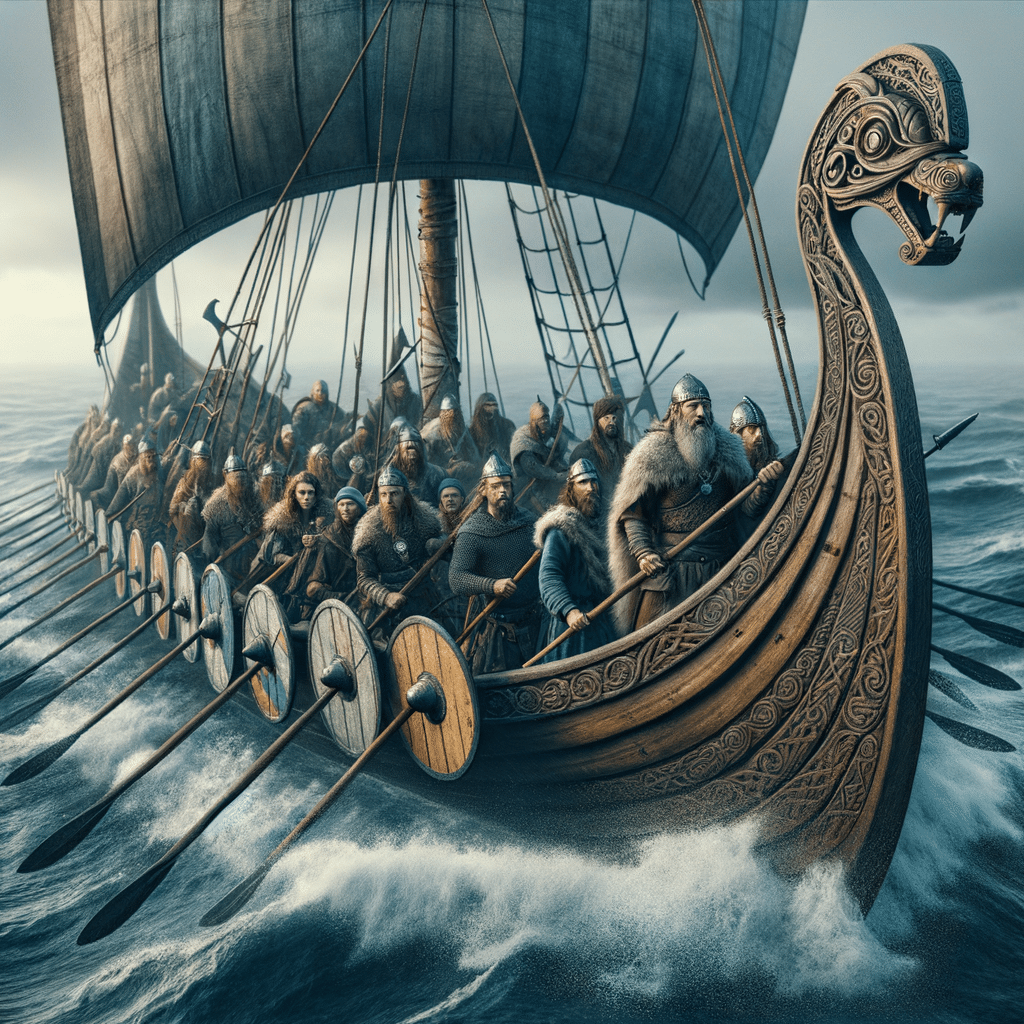
The seafaring Norse people from their homelands in Scandinavia engaged in vast exploration, raiding, and trading during the Viking Age, which lasted from the late 8th to the early 11th century. Beyond its commercial and social developments, a strong and intricate spiritual framework shaped the Vikings’ worldview during this period. This spiritual system was full of superstitious beliefs about the paranormal, which influenced their interactions with nature, shaped societal standards, and determined how they responded to different occurrences and phenomena.
Norse Mythology
The foundation of the Vikings’ belief system was the Norse pantheon, which included the gods Æsir and Vanir. They worshipped a wide range of strong gods, such as Thor, the god of thunder; Freyja, the goddess of beauty and love; and Odin, the primary god connected to war, wisdom, and poetry. The Vikings personified their paranormal beliefs by portraying these gods as superhuman beings with remarkable skills. The gods intervened in human affairs, provided guidance through omens, and received appeasement through sacrifices and rites.
The three Norns, Skuld (future), Verdandi (present), and Urd (past), represent the idea of fate, one of the most fascinating aspects of Viking paranormal beliefs. The concept that the Norns weaved the fates of men and gods showed how accepting the Vikings were of fate’s inevitable course. Their understanding of time as a cyclic phenomenon, rather than a linear one, further represented this perspective and contributed to the complex interweaving of life, death, and rebirth.
The Vikings’ belief in a multitude of otherworldly beings further enhanced the universe’s paranormal landscape. People regarded the dwarfs, known as dvergars, as expert artisans, and frequently associated the elves, known as álfar, with light and beauty. The draugar, undead monsters that tormented the living, and the jötnar, or giants, often depicted as the gods’ enemies, symbolized the darker side. Within the Vikings’ supernatural worldview, these entities—each with unique traits and purposes—coexisted and influenced rituals and everyday life.
Moreover, the Vikings’ spiritual culture deeply ingrained the belief in an afterlife. The Vikings imagined a number of places beyond this world, including Valhalla, where they thought warriors who died in combat would live, feast, and get ready for the last great catastrophe, Ragnarok. Similarly, they believed that the goddess Hel ruled a region named Hel, where those who died from illness or old age would rest. These ideas reflected the Vikings’ sophisticated conception of life and the paranormal, emphasizing their belief that death is not the end but rather a transfer to another existence.

Afterlife
Their paranormal beliefs also influenced the Vikings’ interpretation of natural events. They saw natural occurrences as the doings of gods or other supernatural entities because they were perceived through a supernatural prism. For instance, they believed that the writhing of the snake Jormungandr caused earthquakes, and the blows of Thor’s hammer caused lightning. This viewpoint gave them reasons for the erratic and frequently cruel natural environment they lived in, in addition to engulfing their world in magic and mystery.
The ingrained supernatural beliefs of the Vikings had a significant impact on how they perceived the world. They were able to navigate their existence and interact with their surroundings thanks to this complex web of gods, supernatural creatures, fate, and the afterlife. Although these ideas might appear fanciful to an outsider today, these beliefs were central to the Viking worldview and had useful functions, such as explaining natural events and directing social norms and conduct.
For instance, the Vikings’ belief in the supernatural influenced their combat strategy. Before going into battle, they frequently prayed to their gods for protection and victory. Their fearlessness and tenacity on the battlefield may have stemmed from their belief in the beautiful afterlife of Valhalla, reserved for fallen warriors. While not all Vikings were willing to die in combat, it is evident that their faith in the paranormal offered a kind of comforting spirituality.
Supernatural
The supernatural also influenced the Vikings’ everyday routines and social customs. They observed festivals connected to significant occurrences, such as the changing of the seasons, and carried out rituals to honor the gods and the spirits of the land. The Vikings’ art and craft also reflected these beliefs, often depicting gods and otherworldly creatures in their jewelry, sculptures, and manuscripts.
In addition, the Vikings employed a variety of magical and divinatory practices, frequently connected to the völva, a female shamanic seeress. These customs, believed to be a means of accessing supernatural powers, enabled the Vikings to influence fate, predict future events, or communicate with the divine. These customs highlight the active role that the paranormal played in Viking culture.

Conclusion
In order to understand the Vikings’ paranormal beliefs, it’s critical to consider them within their historical and cultural context. The natural world was unpredictable and dangerous during the Viking era, with severe winters and strong storms at sea. Their supernatural beliefs gave them a sense of control over their destiny and allowed them to make sense of these difficulties.
Ultimately, the Vikings’ views regarding the paranormal provide unique insights into their culture and worldview. They show people who live in close connection to their surroundings and who make sense of the world around them through a complex web of superstitions, rituals, and stories. These ideas embody the human need to comprehend and provide meaning to the universe we live in, even if they are very different from the state of modern science. Therefore, researching the paranormal beliefs of the Vikings reveals universal aspects of human nature, such as our capacity for wonder, our need for reassurance in the face of uncertainty, and our unwavering quest for understanding, in addition to revealing the spiritual practices of a bygone era.
References
Ceolin, M. (2020). Paranormal Tendencies in the Sagas: A Discussion about Genre. Paranormal Encounters in Iceland 1150, 1400, 347-65.
Jakobsson, Á. (2013). The Taxonomy of the Non-existent: Some Medieval Icelandic Concepts of the Paranormal. Fabula, 54.
Sävborg, D. (2016). Are the Trolls supernatural?: some Remarks on the Terminology for Strange Beings in Old Norse Literature. AION: annali: sezione germanica: nuova serie: XXVI 1/2, 2016, 119-129.
Schwebel, L. (2003). The Paranormal in the Bible and in Old Norse Literature–Superstition?. The Journal of Parapsychology, 67(2), 399-405.
Wilkins, K. (2016). “Ravished by Vikings”: The Pre-modern and the Paranormal in Viking Romance Fiction. Journal of Popular Romance Studies, 5(2), 1-13.

Leave a Reply