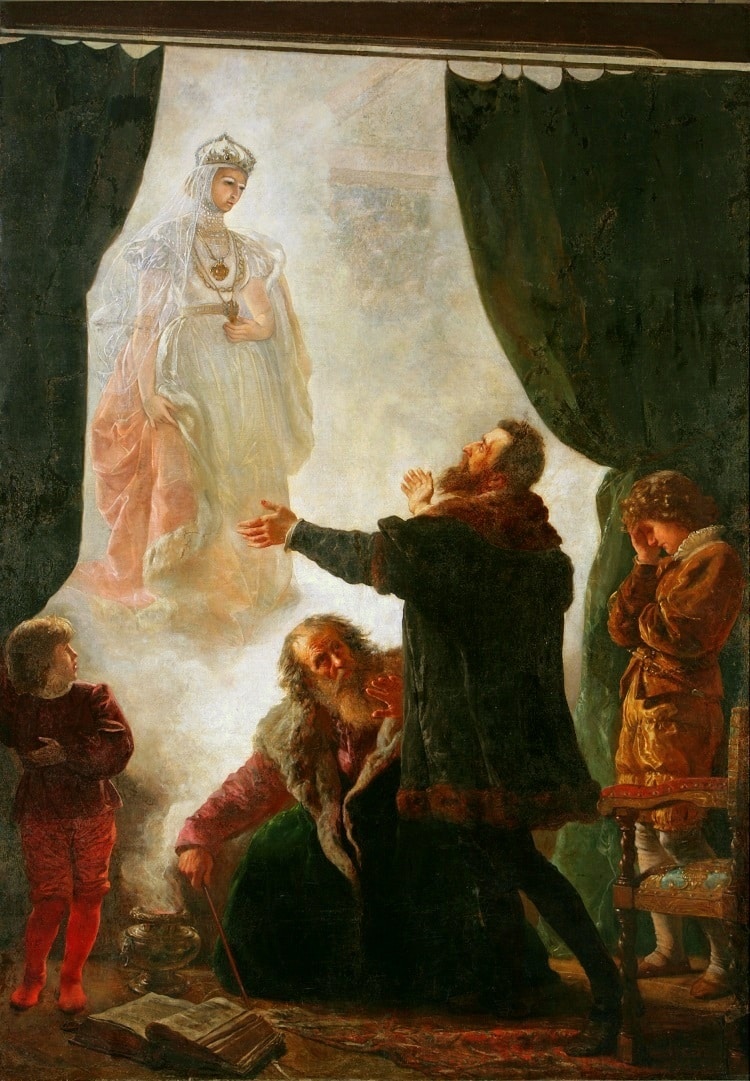
For a very long time, people have associated ghosts and spirits with the afterlife—spirits of the dead that continue to exist in this world. Even though they are frequently perceived as incorporeal apparitions, ghosts can take on a variety of shapes and levels of reality. Some even assume entire corporeal bodies while still having the capacity to interact with items. Understanding a ghost’s liminal existence between the worlds of the living and the dead is possible by understanding the nature of its shape.

Corporeal or Incorporeal?
Generally speaking, a ghost refers to a certain kind of incorporeal undead. It’s important to remember that ghosts are not always confined to their incorporeal appearance, even if that description is typically correct. Even though they are mostly incorporeal, some ghosts can nevertheless interact with objects and even reclaim some aspect of their physical shape. Rarely, one may also come across physical spirits in addition to these semi-corporeal ghosts. These ghosts are rare, but despite not being alive, they are just as substantial as anything.
When a ghost is not physically present on this plane of existence, it takes on an incorporeal form. Incorporeal ghosts have the ability to pass through both living things and tangible objects, such as walls. Even though these entirely incorporeal spirits are incapable of interacting with tangible objects, they still pose a threat to the living. The majority of the incorporeal undead’s dangers entail taking life force from living things, usually at a distance. Though it leaves a chilly, uneasy feeling, the experience of a ghost passing through a living creature is rarely damaging. This is particularly typical of non-corporeal, unseen ghosts.
Ghosts that are semi-corporeal are poised between incorporeal and corporeal forms. Poltergeists are a common term for these ghosts. They can move like incorporeals and are frequently undetectable, yet they have a form that enables them to communicate with material objects on the Earth. Be aware that a semi-corporeal ghost might not have a tangible body that can be handled or grasped.
Despite not having a complete physical form, semi-corporeal ghosts exhibit unnerving behaviors such as moving objects, opening doors, and making noises—interactions that are just substantial enough to frighten the living. These cunning spirits are nonetheless hard to physically touch or subdue, despite their trickery.
Very few ghosts have a physical form. Though most people consider ghosts to be incorporeal, strong undead are capable of taking on physical forms. Often, this appears exactly the same as it did while the spirit was alive. Many ghosts that have physical forms are able to switch between corporeal and incorporeal forms at will.
Though extremely rare, corporeal ghosts combine the otherworldly abilities of the undead with a completely genuine, physical body that is as substantial as any living thing. These ghosts have evil intentions, but they look just like their past lives. Despite their fragile physical shape, corporeal ghosts are very dangerous to approach because of their capacity to change between incorporeal and corporeal states.

Variety of Ghostly Shapes
A ghost’s shape explains their interactions with the mortal world. If you see anything at all when you come across the creature, the appearance of a ghost describes it. The appearance of a ghost might change. Some assume the form of their corpse, while others manifest as they were in life. Many ghosts bear no identifiable resemblance to their living forms.
Ghosts’ varied features are a reflection of the conditions surrounding their restless life as undead. Some assume creatures that are bestial, monstrous, or wholly unrecognizable, while others maintain their original humanoid appearance. Some appear to be more of a supernatural ectoplasm than any material found on Earth. It is impossible to fully capture the ghostly variety of ghosts in any attempt to categorize their many guises.
Conclusion
For a very long time, people have associated ghosts with the afterlife—spirits of the dead that continue to exist in this world. Even though they are frequently perceived as incorporeal apparitions, ghosts can take on a variety of shapes and levels of reality. Some even assume entire corporeal bodies while still having the capacity to interact with items. Understanding a ghost’s liminal existence between the worlds of the living and the dead is possible by understanding the nature of its shape. We can better understand the enigmatic space between this life on Earth and the vast beyond when we are aware of the variety of spectral shapes.
Further Reading
Castelow, E. (2014). Ghosts: A history of phantoms, poltergeists, and haunted houses. New York, NY: Fall River Press.
This book provides an overview of ghost lore throughout history across various cultures. It explores the origins of beliefs in ghosts and examines famous tales of hauntings. As ghosts are a cultural and historical phenomenon, this book offers useful background information.
Morton, L. (2015). The haunting of history: The ghosts of the past. Charleston, SC: CreateSpace Independent Publishing Platform.
Morton examines how ghosts and the supernatural have intersected with key historical events and figures. Combining paranormal accounts with historical research, this book suggests ghosts can provide insight into past eras. It’s relevant for showing how ghosts reveal cultural perspectives.
Spera, D. (2019). Spirit legacy: Ghostly tales from California. Charleston, SC: The History Press.
Focusing on ghosts in California, this book compiles famous stories of hauntings across the state. It provides a regional look at ghostly encounters, showing how local history shapes ghost narratives. The accounts are directly relevant to ghost beliefs.


Leave a Reply