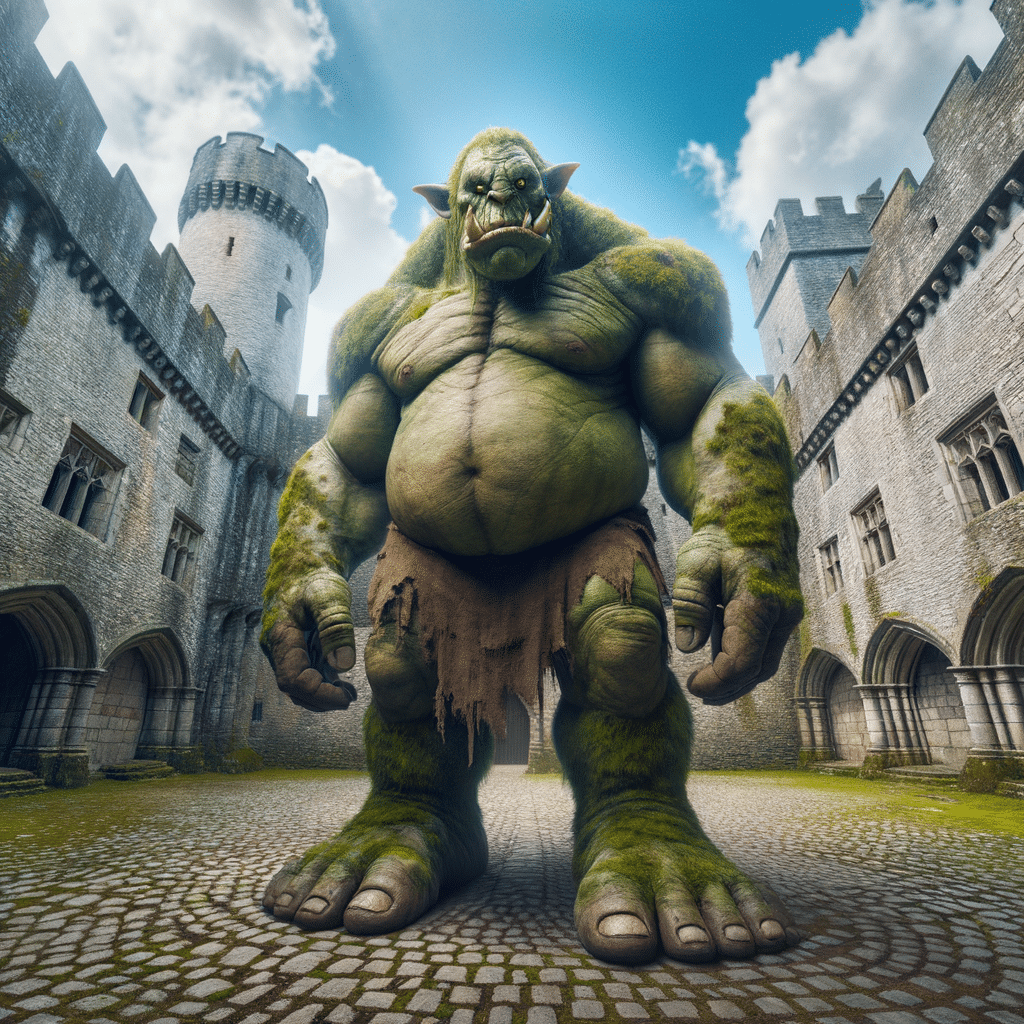
The towering, monstrous creatures known as ogres from legend and fantasy have enthralled societies all over the world for millennia. Many communities have interpreted and changed these legendary creatures, often depicted as hideous and terrible, to reflect the diverse viewpoints and worldviews of different peoples.

Ogre Description
Folklore typically describes ogres as gigantic, ferocious giants with protruding eyes, twisted features, and excessively big skulls. Their purposefully twisted and exaggerated appearance arouses disgust and terror. However, their incredible strength and insatiable appetite, which frequently drives them to engage in cannibalism or the consumption of human prey, equally highlight their physical prowess (Champion, 2021).
Ogre tendencies are usually defined by their inherent brutality, violent tendencies, and lack of intelligence. Characters usually portray them as simple protagonists, easily outwitted by lesser, sharper ones. Primal desires such as power, greed, and hunger motivate their activities. Sometimes, depictions of the monster depict them as lonesome beings lurking in isolated caverns or deep within perilous woodlands, constantly posing a threat to unwary travelers or neighboring communities.
Although ogres are similar in most cultures, folklore and mythology portray them in very different ways and assign them different responsibilities. European folklore frequently portrays ogres as evil adversaries, symbolizing the worries and concerns of rural areas (Fe & Fo, 2021). They might stand for the risks of venturing too far from the security of civilization or the hazards of the unknown. On the other hand, certain Asian traditions portray them as strong, albeit frequently mischievous, otherworldly creatures that occasionally act as guards or protectors of holy places.

Ogres Around the World
Ogres are common in mythology and folklore from many different civilizations, and each has its own stories and meanings (Bouloumié, 2015). Tales such as Jack and the Beanstalk from England are part of European mythology, and they tell of a fearsome monster that resides in a castle atop a magical beanstalk and utters the famous words, “Fee-fi-fo-fum, I smell the blood of an Englishman.” An ogre in Charles Perrault’s French literary fairy tale Peau d’Âne desires to marry a princess, forcing her to run away and assume the appearance of a servant with donkey skin.
In Asian mythology, the ancient Chinese epic The Monkey King portrays the Monkey King facing and defeating a variety of ogres and demons, including the terrifying Ogre King, who is guarding a valuable staff. India’s Hindu mythology presents Bakasura, a formidable ogre that terrorizes the universe until Lord Vishnu’s avatar vanquishes him. Native American folklore from several Algonquian tribes describes the Wendigo, a cannibalistic ogre-like creature, as possessing hungry individuals and turning them into hideous creatures with an unquenchable thirst for human flesh.
The story The Ogre’s Wife, found in West African folklore, tells the account of a young woman who is compelled to marry an ogre and must use cunning to get out of his grasp. The Norwegian folktale The Ogre’s Barn is part of Scandinavian folklore, and it tells the story of a farmer’s son who challenges a bunch of ogres who have kidnapped his father and taken their animals. These tales frequently function as cautionary tales, expressing cultural values and worries while simultaneously honoring human strength and ingenuity’s victory over the monsters’ ferocity and brutality.
Analysis
In many cultures, ogres have come to represent a variety of ideas, ideals, and anxieties that are inherent in those societies. Mythology frequently uses ogres as symbols of primordial forces or the darker sides of human nature that require subduing or overcoming. Their iconography frequently refers to themes of violence, gluttony, greed, and the perils of unbridled authority.
European mythology often depicts ogres as malevolent adversaries, symbolizing the worries and fears of rural populations. They may represent the dangers of leaving civilization or the wild and unknown. Grendel is an excellent Norse example of this. Their hideous look and ravenous hunger for human flesh are a reflection of the deeply rooted anxieties of being eaten or preyed upon by forces outside of one’s control (Jobling, 2001).
In Asian traditions, ogres have a more nuanced symbolic meaning. Frequently portrayed as strong, supernatural entities with their own hierarchies and spheres of influence, ogres can also symbolize destructive energies and the embodiment of evil. In certain circumstances, they may also act as protectors or guardians of holy places, which indicates a belief in the duality of nature and the necessity of honoring and pacifying these powerful beings.
Native American mythology uses ogres as warning symbols against greed, selfishness, and disrespect for the natural balance. One previously noted example of this is the Wendigo, a member of the Algonquian tribes. The Wendigo’s voracious appetite for human flesh is a metaphor for the results of unchecked desire and the possibility that people could stray from their morality and succumb to it.
In African mythology, ogres may symbolize the fight against injustice and the triumph of the human spirit over misfortune. Stories such as The Ogre’s Wife demonstrate the protagonist’s cleverness and tenacity in defeating the ogre’s dominance, illustrating the cultural ideals of tenacity and defiance against entities that aim to enslave or take advantage of (Gorfain & Glazier, 1978).
All cultures frequently use ogres as symbols for the darkest sides of human nature, such as cruelty, greed, and the willful quest for power. Their symbolic value comes from their capacity to humanize these primordial energies, acting as admonitions and reminders of the value of preserving equilibrium, restraint, and respect for the natural world.
Ogres have seen a rebirth in contemporary popular culture, moving away from their solely monstrous identities and toward more complex and nuanced characterizations. Movies, books, and video games have humanized ogres, portraying them as complex, confused beings with depth and feeling. The popularity of films like Shrek has helped to normalize the loving this monster stereotype, shattering preconceived notions and bringing warmth and humor to these hitherto terrifying creatures.
Conclusion
Society constantly changes its portrayal of ogres, reflecting the attitudes and ideals of the times. Even though these legendary monsters still have terrifying roots, they have evolved into complex symbols that address issues of acceptance, otherness, and the duality of human nature. They remain powerful symbols of folklore.
References
Bouloumié, A. (2015). The ogre in literature. In Companion to Literary Myths, Heroes and Archetypes (pp. 912-924). Routledge.
Champion, G. (2021). Introduction: The Anthropophagus Complex: Despotic and Overbearing Ogre Figures in Ancient and Medieval Texts and in Psychoanalysis. In Interdisciplinary Essays on Cannibalism (pp. 63-66). Routledge.
Fe, F., & Fo, F. (2021). Grendel and the Ogres. Eaters of the Dead: Myths and Realities of Cannibal Monsters, 55.
Gorfain, P., & Glazier, J. (1978). Sexual Symbolism, Origins, and the Ogre in Mbeere, Kenya. The Journal of American Folklore, 91(362), 925-946.
Jobling, I. (2001). The psychological foundations of the hero-ogre story: A cross-cultural study. Human Nature, 12, 247-272.

Leave a Reply