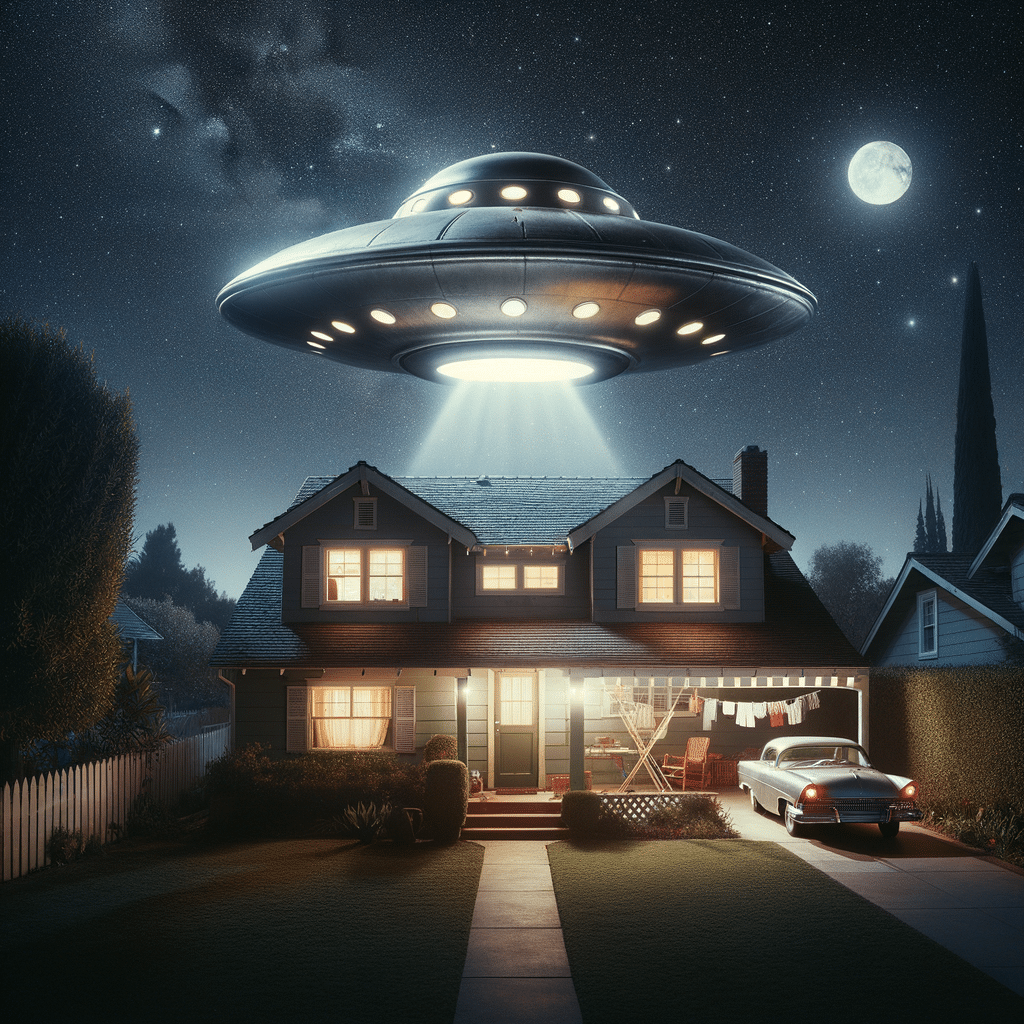
A podcast about the book The World of Flying Saucers: A Scientific Examination can be accessed above. This episode was part of several podcasts generated with Google NotebookLM and is the product of AI.
Menzel and Boyd’s The World of Flying Saucers: A Scientific Examination is a scientific examination of UFO reports from the 1940s and 50s. The authors systematically analyze numerous cases, offering alternative explanations based on natural phenomena like meteors, atmospheric effects, and misidentification of celestial bodies. They critique the methodologies of some UFO investigators and enthusiasts, highlighting inconsistencies and biases in their interpretations. The book argues against the extraterrestrial hypothesis, presenting evidence that many seemingly inexplicable sightings can be attributed to observable natural occurrences. Ultimately, the authors aim to separate fact from fiction within the context of the prevalent UFO craze.

[Joe]
Hey everybody and welcome to Connect Paranormal. We’re diving deep today into the world of UFOs.
[Tammy]
Oh yeah.
[Joe]
But with a bit of a scientific twist.
[Tammy]
Ooh, fun.
[Joe]
Yeah. So we’re cracking open a book from way back in 1963 called The World of Flying Saucers, a scientific examination of a major myth of the space age. Wow.
Now I know our listeners love a good mystery and a good, you know, paranormal explanation.
[Tammy]
For sure.
[Joe]
But sometimes it helps to bring in- A little skepticism. Yeah. A little bit of that healthy skepticism, right?
[Tammy]
Yeah.
[Joe]
So we’re going to use this book as our guide to navigate through some really intriguing UFO sightings and the explanations, both the wild and the scientifically sound.
[Tammy]
You know what I love about this book?
[Joe]
What’s that?
[Tammy]
Is that it really tackles the fact that there are so many different descriptions of UFOs. It’s not just the little green men and like the stereotypical- Right. You know, silver discs.
[Joe]
Like we always see.
[Tammy]
Exactly.
[Joe]
It’s crazy how many different shapes people report.
[Tammy]
Oh, tell me about it.
[Joe]
Cigars.
[Tammy]
Yeah.
[Joe]
Teardrops, even stacks of plates.
[Tammy]
Stacks of plates.
[Joe]
I know, right? It’s crazy. I’ve been wondering if there’s something about like the human brain that makes us want to see things.
[Tammy]
Familiar objects.
[Joe]
Yes. These like random lights in the sky.
[Tammy]
It’s true.
[Joe]
You know?
[Tammy]
Yeah.
[Joe]
It’s a good point. And the book actually does talk about that.
[Tammy]
Does it?
[Joe]
Yeah. It suggests that our expectations can really influence- What we perceive. But before we get too deep into the psychology of UFO sightings, I think we should talk about a case- Okay.
That really captured the imagination back in the day.
[Tammy]
Okay.
[Joe]
The Mantell tragedy.
[Tammy]
Oh, yeah.
[Joe]
You know about this one?
[Tammy]
Yeah. The Mantell tragedy is a classic UFO case.
[Joe]
Classic.
[Tammy]
It’s a real nail biter. Back in 1948, we have Captain Thomas Mantell- Yes. Decorated pilot, dies while chasing a UFO.
[Joe]
It’s crazy.
[Tammy]
Some people think it was a secret weapon.
[Joe]
Right.
[Tammy]
Others think alien craft.
[Joe]
It could.
[Tammy]
So what really happened?
[Joe]
Well, the book lays out all the facts.
[Tammy]
Very meticulously. You know, there were multiple witnesses who saw this thing moving in the sky.
[Joe]
Yeah.
[Tammy]
They described it in all kinds of different ways.
[Joe]
Oh, really?
[Tammy]
Yeah. Circular teardrop shaped. Wow.
Even like an ice cream cone.
[Joe]
An ice cream cone?
[Tammy]
An ice cream cone. Wow. But Captain Mantell wanted to see this thing- Yeah.
Up close and personal.
[Joe]
Of course.
[Tammy]
Took off in his P-51 Mustang- Oh, wow. And his plane crashed.
[Joe]
Tragically.
[Tammy]
Tragically, yeah.
[Joe]
So the book suggests that it was a weather balloon- Yes. Caught in the jet stream.
[Tammy]
That’s the most likely explanation.
[Joe]
I got to say I’m a little skeptical.
[Tammy]
Really?
[Joe]
I mean, you would think a seasoned pilot- Right. Like Captain Mantell would know the difference between a balloon- Right. And something more extraordinary.
[Tammy]
I know what you mean.
[Joe]
Yeah.
[Tammy]
And the book does say that there’s some controversy about this case.
[Joe]
Right.
[Tammy]
However- Okay. When you think about like the weather conditions and the altitude of the object- Uh-huh. And the fact that weather balloons can get swept up- Yeah.
In the jet stream- It’s true. At crazy high speeds.
[Joe]
Yeah.
[Tammy]
It does start to make sense.
[Joe]
Yeah. See what you mean?
[Tammy]
Yeah.
[Joe]
So even experienced observers can be fooled- Absolutely. When dealing with something unfamiliar in the sky.
[Tammy]
Especially when it’s unfamiliar.
[Joe]
Yeah.
[Tammy]
And this case kind of leads us into a theme we see- Okay. Throughout this book.
[Joe]
Oh yeah.
[Tammy]
Misidentifications.
[Joe]
Okay.
[Tammy]
You know how many UFO reports are actually Venus?
[Joe]
Venus.
[Tammy]
Really?
[Joe]
Venus.
[Tammy]
I mean, it’s just a bright planet.
[Joe]
I know, but you’d be surprised- Okay. How often it’s mistaken for something else.
[Tammy]
Okay.
[Joe]
Especially when the atmospheric conditions are just right.
[Tammy]
Okay.
[Joe]
Temperature inversions can make Venus appear to move erratically.
[Tammy]
Really?
[Joe]
Change colors.
[Tammy]
Wow.
[Joe]
Even seem closer than it actually is.
[Tammy]
I can see how that would be unsettling.
[Joe]
Definitely.
[Tammy]
If you don’t know what you’re looking at.
[Joe]
Yeah.
[Tammy]
Like seeing a face in the clouds. Totally.
[Joe]
Or like brains just want to- Find patterns.
[Tammy]
Chan patterns, even when they’re not there.
[Joe]
Exactly. And the book makes a really good point.
[Tammy]
Okay.
[Joe]
That a lot of these UFO sightings- Yeah. Especially the ones with bright lights in the evening or early morning- Okay. Can be our friend Venus.
[Tammy]
Just Venus.
[Joe]
Just Venus.
[Tammy]
So no alien visitors from Venus?
[Joe]
Probably not.
[Tammy]
Just a case of mistaken identity.
[Joe]
Exactly.
[Tammy]
Well, that’s one less thing to worry about. One less thing. What about those stories of UFOs causing electromagnetic interference?
[Joe]
Oh yeah.
[Tammy]
Like cars stalling, radios failing, that kind of thing.
[Joe]
I love those stories.
[Tammy]
Me too. They’re so intriguing.
[Joe]
I know. They’re spooky.
[Tammy]
Almost spooky. Like something out there is messing with our technology.
[Joe]
Right. It’s scary.
[Tammy]
It’s a little scary.
[Joe]
But as always- The book wants us to look at the evidence.
[Tammy]
Okay.
[Joe]
Okay. So there are definitely reports- Yeah. Of electromagnetic disturbances near UFO sightings.
[Tammy]
Okay.
[Joe]
The question is, are they actually related?
[Tammy]
So just because a car stalls- Right. Near a UFO sighting- Yeah. Doesn’t mean the UFO caused it.
[Joe]
Exactly. Correlation doesn’t equal causation.
[Tammy]
Right. Okay. I got it.
[Joe]
It could just be a coincidence- Yeah. Or a mechanical issue.
[Tammy]
That makes sense.
[Joe]
You know.
[Tammy]
It’s easy to jump to conclusions- Oh yeah. When it’s something as mysterious as UFOs.
[Joe]
Exactly.
[Tammy]
Okay. But what about the reports of UFOs being detected on radar?
[Joe]
Ooh. Good point. That seems more concrete.
Well, not necessarily.
[Tammy]
Okay.
[Joe]
Because radar is powerful.
[Tammy]
Right.
[Joe]
But it’s not foolproof.
[Tammy]
Right.
[Joe]
This book talks about something called radar angels.
[Tammy]
Radar angels. Radar angels.
[Joe]
That sounds kind of whimsical.
[Tammy]
I know, right?
[Joe]
For hard science.
[Tammy]
I know, but they’re actually just false signals- Oh. Caused by atmospheric conditions. Flocks of birds.
[Joe]
Really?
[Tammy]
Even insects.
[Joe]
Wow. So even our advanced technology can be tricked by nature.
[Tammy]
That’s right.
[Joe]
That’s humbling. Makes you wonder how many UFO sightings are actually- Yeah. Radar angels.
[Tammy]
Right. The famous invasion of Washington DC- Oh, yeah. Back in 1952 when radar stations were picking up all these blips- Yeah.
Moving all over the place. It was huge news.
[Joe]
Yeah.
[Tammy]
But looking back- Yeah. Probably just temperature inversions- Oh, wow. Creating false echoes.
[Joe]
So radar gone wild.
[Tammy]
Radar gone wild.
[Joe]
Wow, that’s fascinating.
[Tammy]
It is.
[Joe]
So we need to be cautious about interpreting any kind of evidence.
[Tammy]
Absolutely.
[Joe]
Even the seemingly scientific kind.
[Tammy]
Be cautious.
[Joe]
Speaking of evidence- Yes. I think we got to talk about one of the more outlandish theories.
[Tammy]
Okay.
[Joe]
This book debunks- Late on me. The G-field.
[Tammy]
The G-field.
[Joe]
The supposed anti-gravity force- Yeah. Used by UFOs to zip around the sky.
[Tammy]
I love that one.
[Joe]
Come on, this sounds a little too sci-fi for me.
[Tammy]
A little bit.
[Joe]
Even for me.
[Tammy]
Yeah, but the book does a good job of explaining why this doesn’t work scientifically. Okay, it all comes down to gravity. Gravity affects everything.
[Joe]
Yeah.
[Tammy]
Equally.
[Joe]
Makes sense.
[Tammy]
And there’s no way to manipulate it.
[Joe]
Right.
[Tammy]
The way people say UFOs do.
[Joe]
So no anti-gravity joyrides for us. Sure. Bummer.
[Tammy]
I know.
[Joe]
But at least the laws of physics still apply.
[Tammy]
That’s good.
[Joe]
Even when it comes to UFOs.
[Tammy]
It keeps us grounded, so to speak.
[Joe]
I like it.
[Tammy]
Speaking of mystery though- Yeah. Have you heard of contactees?
[Joe]
Oh, yeah. The people who claim to have met extraterrestrials?
[Tammy]
That’s right.
[Joe]
That’s where things get interesting.
[Tammy]
Tell me about it.
[Joe]
Yeah, so tell me more about this.
[Tammy]
Well, the book looks at this phenomenon with a lot of fascination, but also skepticism.
[Joe]
Right.
[Tammy]
And it shares some really interesting stories.
[Joe]
Like?
[Tammy]
Like the one about the lunar potatoes.
[Joe]
Lunar potatoes.
[Tammy]
Lunar potatoes.
[Joe]
Okay, now I’m really intrigued.
[Tammy]
Okay, so one of these contactees- Okay. Claimed they went to the moon.
[Joe]
Okay.
[Tammy]
And brought back a potato.
[Joe]
Okay.
[Tammy]
That had five times the protein.
[Joe]
Five times the protein.
[Tammy]
Five times. Wow. Of a regular earth potato.
That’s amazing. I know, right?
[Joe]
So what happened to the potato?
[Tammy]
Well, that’s where it gets a little weird.
[Joe]
Okay.
[Tammy]
The contactee said the government took it.
[Joe]
Of course they did.
[Tammy]
For national security reasons.
[Joe]
And naturally- Oh my gosh. Yeah, that’s the go-to explanation- Yes. For anything UFO related.
[Tammy]
That’s what I like.
[Joe]
It can’t be explained.
[Tammy]
Exactly. It makes you wonder- It does.
[Joe]
If some of these people really believe- Yeah. What they’re saying. Or if it’s misinterpretations or fantasies.
[Tammy]
It’s possible.
[Joe]
Yeah.
[Tammy]
The book talks about the psychological and cultural factors- True. That might contribute to these claims.
[Joe]
It’s like the line between belief and reality gets blurred.
[Tammy]
It does.
[Joe]
Yeah.
[Tammy]
Totally.
[Joe]
And the book encourages us to think about all the possibilities.
[Tammy]
Yeah.
[Joe]
Not just dismiss these stories out of hand.
[Tammy]
Right.
[Joe]
It’s about using critical thinking- Yes. But also acknowledging the power of belief.
[Tammy]
For sure.
[Joe]
Yeah.
[Tammy]
And the human need to find meaning- Right. In these crazy events.
[Joe]
Speaking of crazy events- Oh yeah. What about the moon bridge?
[Tammy]
The moon bridge.
[Joe]
A bridge on the moon.
[Tammy]
I know.
[Joe]
That sounds like a sci-fi movie.
[Tammy]
It does.
[Joe]
So back in 1954- Yeah. There are all these reports of an artificial structure- Yes. On the Mare Crisium.
[Tammy]
Wow.
[Joe]
A dark plane on the moon’s surface.
[Tammy]
Right.
[Joe]
And people were convinced- Oh yeah. It was evidence of an advanced civilization. Of course.
So what was it really? Was it just a trick of the light?
[Tammy]
It was just a plateau.
[Joe]
A plateau.
[Tammy]
A high plateau- Okay. On the surface of the moon. And the way the sun was setting- Okay.
It illuminated the plateau. But everything else around it was dark.
[Joe]
Oh wow.
[Tammy]
So it looked like a bridge.
[Joe]
Wow.
[Tammy]
That’s so cool. Yeah.
[Joe]
That’s amazing.
[Tammy]
It is.
[Joe]
It shows how our perceptions can be shaped- Yes. By what we expect to see.
[Tammy]
That’s right.
[Joe]
Especially when we’re looking for something extraordinary.
[Tammy]
Absolutely.
[Joe]
So this case really highlights- How important it is to understand how our minds work- Absolutely. And how that influences our interpretation of events.
[Tammy]
Especially mysterious ones.
[Joe]
Especially mysterious ones like UFO sightings.
[Tammy]
Right.
[Joe]
That’s a great point. And it’s something we should keep in mind. Not just when we’re talking about UFOs, but any time we’re evaluating information- Yes.
Or forming beliefs- Yeah.
[Tammy]
Got it.
[Joe]
It’s a reminder that critical thinking is essential. Essential. Especially in a world- Yeah.
Where information spreads so quickly.
[Tammy]
Like wildfire.
[Joe]
Yeah. It’s true. And not all of it is accurate.
[Tammy]
That’s right.
[Joe]
This deep dive is really making us think.
[Tammy]
It is.
[Joe]
Not just about the science behind UFOs- Yeah. But also the psychology of belief and perception.
[Tammy]
Totally.
[Joe]
It’s a reminder that the truth can be stranger than fiction.
[Tammy]
Can.
[Joe]
But often it’s simpler- Yeah. Than we might imagine.
[Tammy]
Absolutely.
[Joe]
And on that note- Okay. We’re going to take a quick break.
[Tammy]
Sounds good.
[Joe]
Together our thoughts- Yeah. Prepare for the next phase- All right. Of our deep dive- Okay.
Into the world of flying saucers.
[Tammy]
Looking forward to it.
[Joe]
Stay tuned. We’ve got more fascinating cases and insights to uncover.
[Tammy]
Can’t wait.
[Joe]
We’ll be right back.
[Tammy]
All right. Welcome back to our deep dive into the world of flying saucers.
[Joe]
So before the break- Yeah. We were talking about how our perceptions and expectations- Yes. Can really influence- Uh-huh.
What we see.
[Tammy]
It’s true.
[Joe]
Especially when it comes to UFO sightings.
[Tammy]
Right. Like our brains are always trying to make sense of things- Exactly. Even if they’re totally unfamiliar- Yeah.
[Joe]
And that can lead us- To see things that might not actually be there.
[Tammy]
Exactly. And this book is full of cases like that.
[Joe]
Oh, really?
[Tammy]
Yeah. Like what- Well, one that comes to mind is the story of the silver rain in Brazil.
[Joe]
Silver rain?
[Tammy]
Silver rain.
[Joe]
Okay. That sounds like something out of a sci-fi movie.
[Tammy]
I know. What happened?
[Joe]
Okay. So back in 1954- Mm-hmm.
[Tammy]
There were reports of this shiny- Uh-huh. Metallic material- Okay. Falling from the sky- Right.
Over Brazil. And people thought it was- Debris from a crashed flying saucer.
[Joe]
Oh, wow. Alien technology.
[Tammy]
That’s what they thought.
[Joe]
So did scientists analyze it?
[Tammy]
Well, that’s the thing. There wasn’t a lot of scientific investigation.
[Joe]
Really?
[Tammy]
And that’s what led to so much speculation.
[Joe]
Interesting.
[Tammy]
So there were a few chemists- Okay. Who looked at the material- Uh-huh. But they didn’t do a full analysis.
[Joe]
Oh, so we don’t know for sure what it was.
[Tammy]
Right. Some people said it was tin solder. Okay.
Others said it was a mix of elements- Uh-huh. Including tin. Okay.
But with a much higher density than normal.
[Joe]
So it’s still a mystery.
[Tammy]
It’s still a mystery.
[Joe]
Wow.
[Tammy]
And the book uses this case- Yeah. To show how jumping to conclusions- Uh-huh. Without real scientific evidence- Right.
Can lead to all sorts of crazy ideas.
[Joe]
So we gotta be critical thinkers. Even when we’re dealing with something as exciting as alien artifacts.
[Tammy]
It’s tempting, I know. It is. But we gotta use our brains.
[Joe]
Absolutely.
[Tammy]
And you know what? This book gives us some really good tips for evaluating UFO reports.
[Joe]
I’m perfect. I’m all ears.
[Tammy]
All right. So the first thing- Yeah. Is to separate fact from inference.
[Joe]
Okay.
[Tammy]
So ask yourself, what did the witnesses actually see?
[Joe]
Okay.
[Tammy]
And what are they assuming based on what they saw?
[Joe]
That’s a good point.
[Tammy]
Right. It’s easy to get caught up in the story- Yeah. And forget about the facts.
Absolutely. And then another tip is to think about the witnesses themselves. Are they reliable?
[Joe]
Okay.
[Tammy]
Do they usually tell the truth?
[Joe]
Uh-huh.
[Tammy]
Do their stories match up?
[Joe]
Yeah.
[Tammy]
Or are they all different?
[Joe]
Right. If you have multiple witnesses- Yes. That helps.
Yes. But only if their stories are consistent.
[Tammy]
Exactly.
[Joe]
And we gotta remember memory.
[Tammy]
Oh, yeah.
[Joe]
Can be tricky.
[Tammy]
It is.
[Joe]
Especially with events that are unusual.
[Tammy]
Right.
[Joe]
Or scary.
[Tammy]
Totally.
[Joe]
So even if someone’s telling the truth- Their memory might not be perfect. Right. And then another thing to think about is alternative explanations.
[Tammy]
Okay.
[Joe]
So could the UFO actually be a weather balloon?
[Tammy]
Okay.
[Joe]
Or an airplane?
[Tammy]
Uh-huh.
[Joe]
Or a meteor?
[Tammy]
Right.
[Joe]
Or even just lights from the ground?
[Tammy]
Yeah. Our atmosphere can play tricks on us. It can.
We’ve seen that.
[Joe]
Yeah. And sometimes the simplest explanation is the best one.
[Tammy]
Okay.
[Joe]
Even if it’s not as exciting.
[Tammy]
Speaking of explanations- Yeah. What about the government cover-up theory?
[Joe]
Oh, yeah. That’s a popular one.
[Tammy]
Right. Everyone loves a good conspiracy– I know. That the government’s hiding evidence- Right.
Or dismissing sightings.
[Joe]
Uh-huh.
[Tammy]
So what does the book say about that?
[Joe]
Well, the book acknowledges that a lot of people believe that.
[Tammy]
Right.
[Joe]
But it wants us to think about it from the Air Force’s perspective.
[Tammy]
Okay.
[Joe]
So the Air Force has to investigate things.
[Tammy]
Yeah.
[Joe]
That could be a threat to national security.
[Tammy]
Right.
[Joe]
They’ve looked into tons of UFO reports.
[Tammy]
Uh-huh.
[Joe]
And while some are unexplained.
[Tammy]
There’s no real proof of a big cover-up.
[Joe]
So maybe there’s just not enough evidence- Janky. To say for sure what’s going on.
[Tammy]
Right. It’s easy to jump to the conspiracy conclusion.
[Joe]
Yeah.
[Tammy]
But we gotta be careful.
[Joe]
We do.
[Tammy]
And this all goes back to the main point of the book.
[Joe]
Okay.
[Tammy]
Critical thinking is so important.
[Joe]
It is.
[Tammy]
Especially when we’re dealing with something like UFOs.
[Joe]
That challenges our understanding of the world.
[Tammy]
Exactly.
[Joe]
It’s about finding the truth.
[Tammy]
Yes.
[Joe]
But doing it carefully.
[Tammy]
Absolutely.
[Joe]
With evidence.
[Tammy]
Evidence is key.
[Joe]
So the book also talks about civilian UFO investigators.
[Tammy]
Oh yeah. Those are the people who are really passionate.
[Joe]
Yeah.
[Tammy]
About UFOs. They really want to know the truth.
[Joe]
Right. And they don’t always trust- No. The official explanation.
Not always. So what does the book say about them?
[Tammy]
Well it recognizes their enthusiasm and their dedication. Uh-huh. But it does raise some questions.
[Joe]
Like what?
[Tammy]
Like do they start with the assumption that UFOs are aliens? Right. And if that’s your starting point.
[Joe]
Yeah.
[Tammy]
You might only look for evidence.
[Joe]
Right.
[Tammy]
That supports that.
[Joe]
So they might dismiss anything.
[Tammy]
Exactly.
[Joe]
That doesn’t involve aliens.
[Tammy]
Even if it makes sense.
[Joe]
Even if it’s a good explanation.
[Tammy]
Right.
[Joe]
Okay.
[Tammy]
And the book also says that their investigations aren’t always very scientific.
[Joe]
Okay.
[Tammy]
Like they rely on anecdotes.
[Joe]
Yeah.
[Tammy]
And eyewitness accounts. Okay. And photos that might not be real.
[Joe]
Right.
[Tammy]
Without being very critical.
[Joe]
So it’s like the difference between a casual observer and a detective.
[Tammy]
Exactly.
[Joe]
One is going with their gut.
[Tammy]
Uh-huh.
[Joe]
The other is carefully gathering evidence.
[Tammy]
You got it.
[Joe]
So to illustrate this.
[Tammy]
Yes.
[Joe]
The book talks about a case in Sheffield Lake, Ohio. Oh yeah. Back in 1958.
[Tammy]
Uh-huh.
[Joe]
So tell me about that.
[Tammy]
Okay. So there was a woman named Mrs. Fitzgerald.
[Joe]
Okay.
[Tammy]
And she saw this bright light outside her window in the middle of the night.
[Joe]
Boogie.
[Tammy]
I know, right? And she said it was big and metallic with a dome on top.
[Joe]
Okay.
[Tammy]
And portholes with lights coming out.
[Joe]
Wow. That sounds pretty convincing.
[Tammy]
It does.
[Joe]
So what did the Air Force say?
[Tammy]
They sent investigators to talk to her and look around.
[Joe]
Uh-huh.
[Tammy]
And they said she probably saw a searchlight.
[Joe]
A searchlight.
[Tammy]
Yeah. From a Coast Guard cutter.
[Joe]
Oh, okay.
[Tammy]
That was patrolling the lake.
[Joe]
So it was just a light.
[Tammy]
Right. And the weather conditions were kind of foggy.
[Joe]
Uh-huh.
[Tammy]
So the light could have looked different.
[Joe]
Okay. So a simple explanation.
[Tammy]
Right.
[Joe]
Case closed.
[Tammy]
Well, not quite.
[Joe]
Okay.
[Tammy]
Because a civilian UFO group got involved, the UFO Research Committee of Akron.
[Joe]
Okay.
[Tammy]
And they said the Air Force was wrong.
[Joe]
Really?
[Tammy]
Yeah. They said they didn’t listen to Mrs. Fitzgerald and that they ignored important details and that they jumped to a conclusion too quickly.
[Joe]
So they thought it was more than just a searchlight.
[Tammy]
They did.
[Joe]
Wow.
[Tammy]
They even said the Air Force was part of a coverup.
[Joe]
Wow. So you have the official explanation and then you have this group- Yes. That believes something more extraordinary happened.
[Tammy]
Exactly. And the book looks at both sides.
[Joe]
Okay.
[Tammy]
And it says that objectivity is so important.
[Joe]
Objectivity.
[Tammy]
Yeah. And critical thinking.
[Joe]
Critical thinking.
[Tammy]
Whether it’s the Air Force or civilian investigators.
[Joe]
Because everyone has their own biases.
[Tammy]
That’s right.
[Joe]
And we have to be aware of that.
[Tammy]
Absolutely.
[Joe]
When we’re looking at evidence.
[Tammy]
And evidence is everything.
[Joe]
So this case shows us- Yeah. That we shouldn’t jump to conclusions or make accusations without proof.
[Tammy]
Proof is key.
[Joe]
This book is really ahead of its time.
[Tammy]
It is.
[Joe]
Promoting a skeptical and evidence-based approach to UFOs.
[Tammy]
It doesn’t say aliens don’t exist.
[Joe]
Okay.
[Tammy]
But it says that most UFO sightings probably have natural explanations. Misidentifications, hoaxes, or even psychological things.
[Joe]
So it’s a call for a more rational approach.
[Tammy]
Exactly.
[Joe]
To UFOs.
[Tammy]
Yeah. We don’t have to jump to the most exciting conclusion.
[Joe]
Right.
[Tammy]
We can be a little more level-headed.
[Joe]
And that’s so relevant today.
[Tammy]
Tell me about it.
[Joe]
With so much information out there.
[Tammy]
Oh yeah.
[Joe]
About UFOs.
[Tammy]
It’s everywhere.
[Joe]
And not all of it is true.
[Tammy]
Not even close.
[Joe]
So this deep dive has been fascinating.
[Tammy]
It has.
[Joe]
We’ve learned about UFO sightings.
[Tammy]
Yeah.
[Joe]
The science.
[Tammy]
Yeah.
[Joe]
And the psychology.
[Tammy]
The psychology is so interesting.
[Joe]
It is.
[Tammy]
Right? Like how our minds work.
[Joe]
Yeah. It’s crazy how easily we can be tricked.
[Tammy]
It is.
[Joe]
And how our expectations shape what we see.
[Tammy]
Absolutely.
[Joe]
So we’ve got to be critical.
[Tammy]
We do.
[Joe]
When we’re looking at these extraordinary claims.
[Tammy]
Always.
[Joe]
You know what’s amazing to think?
[Tammy]
Like that?
[Joe]
How much our understanding of the world has changed.
[Tammy]
Oh yeah.
[Joe]
Since this book was published back in 63.
[Tammy]
For sure.
[Joe]
I mean back then space travel was just getting started.
[Tammy]
It was.
[Joe]
And we knew so much less about our own planet.
[Tammy]
Right.
[Joe]
Let alone the universe.
[Tammy]
It’s crazy to think how much we’ve learned. I know. It’s mind-blowing.
Like we’ve sent probes to other planets. Yeah. Mapped the human genome.
[Joe]
Uh-huh.
[Tammy]
We’ve even detected gravitational waves.
[Joe]
It makes you wonder what the authors of this book.
[Tammy]
Yeah.
[Joe]
Menzel and Boyd would think of all this.
[Tammy]
Right. Would they be surprised?
[Joe]
I think they’d be thrilled.
[Tammy]
I think so too.
[Joe]
They were both scientists.
[Tammy]
Yeah.
[Joe]
Driven by curiosity.
[Tammy]
Absolutely.
[Joe]
And a desire to find the truth.
[Tammy]
That’s what science is all about.
[Joe]
Speaking of the truth.
[Tammy]
Yeah.
[Joe]
I’m curious about what this book says about the possibility of extraterrestrial life. Oh that’s a big one. Does it completely rule it out?
[Tammy]
Well it mostly focuses on debunking those myths.
[Joe]
Uh-huh.
[Tammy]
And giving natural explanations for UFO sightings.
[Joe]
Okay.
[Tammy]
But it doesn’t actually say aliens don’t exist.
[Joe]
So it leaves room for the unknown.
[Tammy]
It does.
[Joe]
I like that.
[Tammy]
It acknowledges that the universe is huge.
[Joe]
Yeah.
[Tammy]
And we’ve only explored a tiny part of it.
[Joe]
Right.
[Tammy]
So there could be other life out there.
[Joe]
Maybe even intelligent life.
[Tammy]
It’s possible.
[Joe]
That’s exciting to think about.
[Tammy]
It is.
[Joe]
But I guess the main takeaway is.
[Tammy]
What’s that?
[Joe]
We shouldn’t jump to conclusions.
[Tammy]
No.
[Joe]
Just because we see something strange doesn’t mean it’s aliens.
[Tammy]
Exactly. We gotta use our critical thinking skills.
[Joe]
Right.
[Tammy]
And look for evidence.
[Joe]
That’s where this book’s value really lies. I think so too. It encourages us to be skeptical.
[Tammy]
Yes.
[Joe]
And to rely on evidence.
[Tammy]
Evidence is key.
[Joe]
And those are important principles. They are. Not just for UFOs.
Right. But for life in general.
[Tammy]
Absolutely.
[Joe]
It’s about being curious. Yeah. But also being careful.
[Tammy]
Right.
[Joe]
Open to new ideas.
[Tammy]
Uh-huh.
[Joe]
But not believing everything we hear.
[Tammy]
Exactly.
[Joe]
Well said.
[Tammy]
Thank you.
[Joe]
So this deep dive into the world of flying saucers.
[Tammy]
Yes.
[Joe]
Has been a wild ride.
[Tammy]
It has.
[Joe]
We’ve explored so many cases.
[Tammy]
From tragic to bizarre.
[Joe]
I know, right.
[Tammy]
It’s been amazing.
[Joe]
We’ve encountered all these theories.
[Tammy]
Some compelling.
[Joe]
Yeah.
[Tammy]
Some a little out there.
[Joe]
A little out there.
[Tammy]
But that’s what makes it fun.
[Joe]
It does. Right. And we’ve learned a lot.
[Tammy]
We have.
[Joe]
About critical thinking.
[Tammy]
Absolutely. And healthy skepticism.
[Joe]
Those are important tools.
[Tammy]
They are.
[Joe]
For navigating the world.
[Tammy]
And maybe the mystery of UFOs.
[Joe]
Yeah.
[Tammy]
Will never be fully solved. Maybe not. But the search for knowledge.
[Joe]
Yeah.
[Tammy]
The quest to understand the universe. That’s what matters.
[Joe]
That’s the journey.
[Tammy]
It is.
[Joe]
And it’s a fascinating one.
[Tammy]
It is. Thanks for joining us on this deep dive.
[Joe]
Of course.
[Tammy]
Into the world of flying saucers.
[Joe]
It’s been a pleasure.
[Tammy]
Until next time.
[Joe]
Yeah. Keep exploring.
[Tammy]
Keep exploring. Keep questioning. Yeah.
Keep those minds open.
[Joe]
We’ll see you next time on Connect Paranormal.
[Tammy]
Bye everyone.



Leave a Reply