
A notion that spans several civilizations and has changed significantly over ages, the duende resides at the junction of magic, fear, and creative inspiration. Originally seen in Spanish and Latin American mythology as a mischievous home spirit or faerie, the duende has become a metaphysical force embodying the enigmatic nature of creative expression. This development shows people’s constant need to explain the unexplainable events of daily life as well as the deep, almost supernatural ones of artistic transcendence that appear to come from outside human knowledge.

Overview
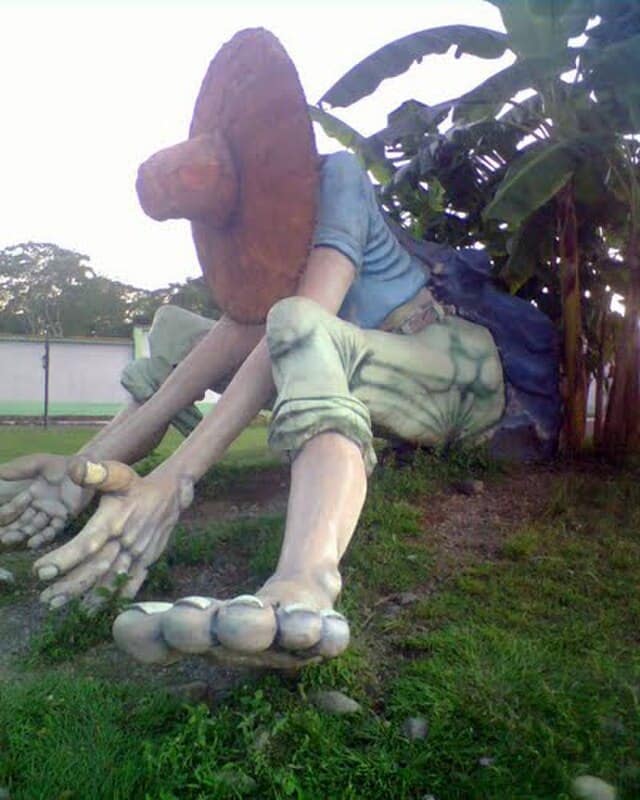
Traditionally, mythology describes the duende as a little, wizened creature barely taller than a kid with profoundly wrinkled skin resembling aged leather that reflects his ancient character. Most stories describe the being as having disproportionately big characteristics—especially the head, hands, and feet—that add to its disturbing look despite its small size. Unlike the ethereal beauty usually ascribed to Celtic fairies or the delicate, winged look of Victorian-era pixies, duendes have a more earthy, occasionally hideous body that links them more directly to the soil and human homes they occupy. Though many geographical variations of the duende are clearly not human, their shape is recognizably humanoid with pointed ears, scanty hair, and sometimes disturbing traits (Lorca, 1998).
Traditionally, the duende tale focuses on its function as a house spirit that clings to certain families or homes, where it might stay for decades. Usually entering dwellings through neglected areas—cracks in foundations, loose floors, or thin wall gaps—these ghosts set themselves as invisible residents next to the human population. Unlike many other fairy kinds like the Nordic tomte or nisse, which are mostly linked with farms and agriculture, or the more wild and unpredictable nature spirits like English pucks or Greek dryads that seldom set permanent residence among people, duendes are defined by this domestic attachment. Legends say duendes show their presence by means of unexplainable overnight, or tools and household goods vanishing only to return days later in strange places (Lorca, 1934).
The duende in folklore exhibits a complicated nature with both good and bad inclinations; its activities are mostly determined by how the household’s human inhabitants handle it. A respected duende could warn of approaching danger by means of calculated noises, guard the family from misfortune, or perhaps accomplish household work beneath the cover of night. This moral ambiguity sets duendes in sharp contrast to the more strictly classified fairy types found in other cultures, such as the uniformly malevolent redcaps of Scottish folklore or the consistently benevolent brownies of English tradition, who would never intentionally harm their human hosts. The ethical fluidity of the duende more closely resembles the temperamental character of Irish leprechauns or Slavic domovoi, whose interactions with people rely largely on mutual respect and defined limits.
Duende’s etymology points to links to the Latin domitus (tamed) and domus (home), suggesting its original idea as a domesticated spirit akin to the Roman household deities. Maintaining its essential identity as a liminal figure straddling the boundary between human and supernatural spheres, the duende myth evolved to fit various regional settings across the Iberian Peninsula and eventually all over Latin America. While northern European fairy traditions tend to stress the separation between the fairy and human worlds—with Celtic folklore especially emphasizing fairy mounds, rings, and other portals between realms—duende mythology places these beings directly inside human spaces, implying a more intimate coexistence between the visible and invisible worlds (Webster, 2004).

Duende Folklore
Medieval Spanish culture changed the idea even more by including Moorish folklore and indigenous traditions from conquered lands. During this time, the duende came to be linked with music and dance, especially flamenco, where dancers were said to be possessed by the duende’s spirit during times of extraordinary creative inspiration. This artistic link is a major departure from other fairy customs; no other fairy type has been so completely incorporated into theories of artistic expression and creative authenticity, even as Irish sidhe or Norse huldra may sometimes grant artistic gifts or motivate human creativity. The Church’s power during this time also shaped the duende’s portrayal, occasionally transforming these conventional spirits into fallen angels or little demons, a destiny shared with many European fairy kinds under Christianity’s spread (Leon, 1975).
Spanish poet Federico García Lorca’s powerful poems in the 20th century profoundly changed the duende idea. Particularly in music, poetry, and dance, his 1933 lecture Play and Theory of the Duende reframed the duende as a supernatural force propelling genuine artistic expression. This philosophical interpretation linked Spanish folk customs to more general ideas of creative authenticity and emotional depth, therefore raising the duende from humble family spirit to a worldwide artistic concept. While other fairy have been updated by fantasy literature or popular culture, none have seen such a total metaphysical change or reached such importance in artistic thought and creative debate (Robb & Miller, 2017).
Modern knowledge of the duende now includes both its traditional beginnings and its artistic metaphorical significance, enabling the idea to cross cultural borders. Particularly in magical realism, duendes in current Latin American literary traditions are often representations of cultural memory and the ongoing impact of the supernatural on apparently logical contemporary life. Unlike the commercialized reimagining of fairy types like pixies in children’s literature or elves in fantasy games, the duende has kept both its traditional folklore presence and evolved a complex philosophical aspect that distinguishes it among fairy kinds. Even as conventional folk beliefs have diminished, this dual life has guaranteed the duende’s cultural importance.
The duende’s transformation from domestic spirit to creative idea mirrors people’s continual need to clarify both daily enigmas and deep emotional experiences. Where earlier families blamed missing keys or odd sounds on a naughty home spirit, today’s artists could call an extraordinary performance as possessed by duende—the enigmatic energy that transforms technical mastery to soul-stirring art. While other fairy types like the little English flower fairies or the hazardous Nordic trolls stay firmly anchored in their mythological settings, the duende has crossed its beginnings to be both a legendary being and a metaphysical idea relevant beyond cultural borders. Whether expressed in the unexplainable creaks of an old house or the unexplainable force of a performance that takes us to tears, the duende’s continuance in modern culture speaks to our ongoing curiosity with the unexplainable elements of human experience.
Conclusion
The duende’s transition from folkloric figure to metaphysical idea shows how mythology changes to meet evolving human needs across centuries. What began as a rationale for home enigmas has evolved into a deep artistic philosophy that remains relevant for creative individuals seeking to understand the magical aspects of their work. Unlike other fairy kinds that have been either relegated to children’s entertainment or maintained as historical curiosities, the duende has developed into a sophisticated metaphor that refers to universal human experiences of creativity, emotion, and spiritual depth. The duende reminds us that, despite our technical progress and rational awareness of the universe, we still yearn for ideas that recognize the enigmatic, the ineffable, and the profoundly emotional elements of human experience existing outside the grasp of unadulterated reason.
References
Leon, C. A. (1975). El Duende and Other Incubi: Suggestive Interactions Between Culture, the Devil, and the Brain. Archives of general psychiatry, 32(2), 155-162.
Lorca, F. G. (1934). The Duende: theory and divertissement. Composed and delivered in a lecture in Buenos Aires for the Sociedad Amigos del Arte. Accessed May 18, 2025.
Lorca, F. G. (1998). In search of duende. New Directions Publishing.
Robb, M., & Miller, A. (2017). Supervisee art-based disclosure in El Duende process painting. Art Therapy, 34(4), 192-200.
Webster, J. (2004). Duende: a journey in search of flamenco. Random House.



Leave a Reply