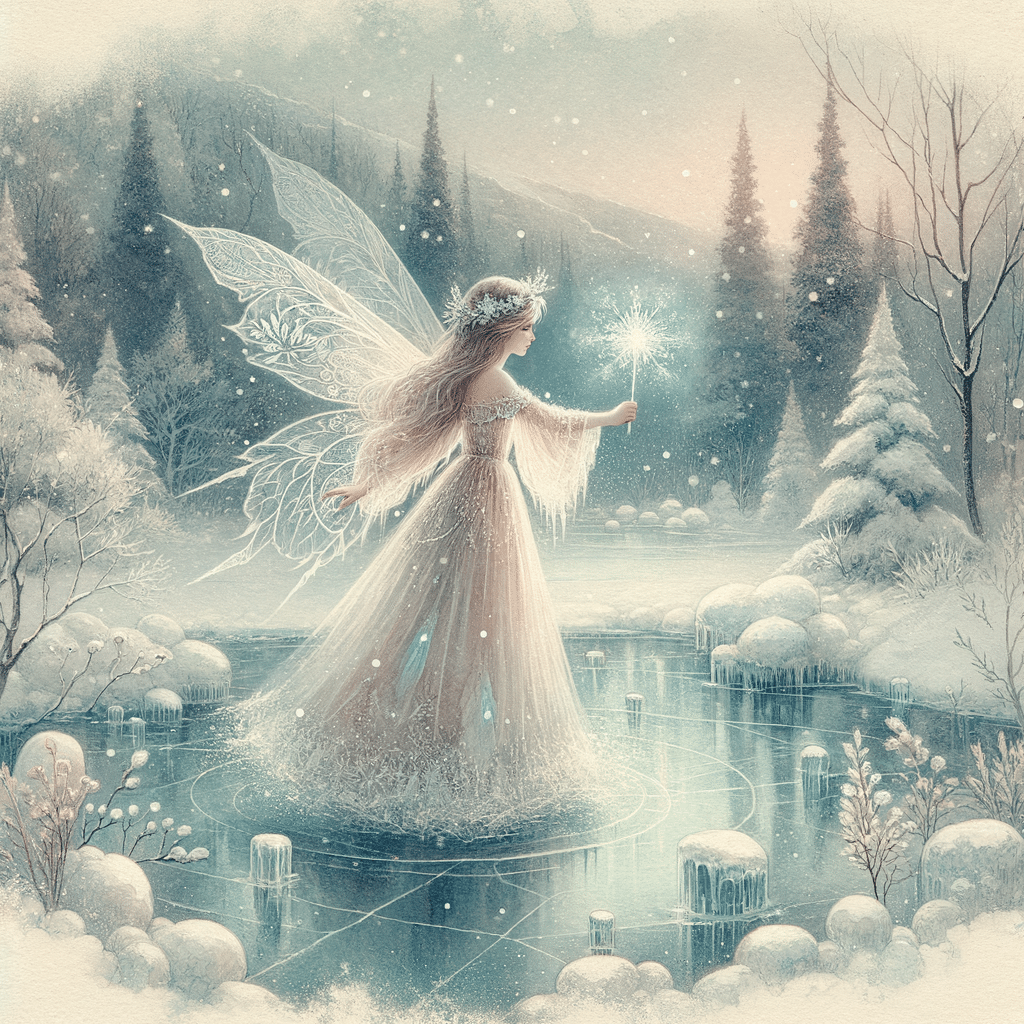
Key Points About Ice Faeries
-
Ice fairies are otherworldly, glowing creatures with see-through skin, wings that seem like frost patterns, and features that look like crystals. They represent the beauty and peril of winter.
-
People think they can dance on snowflakes, make frost patterns on windows, and become stronger when the weather is severe in the winter.
-
Folklore from around the world is very different. For example, there are Nordic “rimfrost alfar,” Russian “Snegurochka,” Japanese “Yuki-onna,” and Celtic winter court faeries.
-
The Winter Court is a complicated, hierarchical society ruled by powerful kings and queens. Ice fairies play different functions inside rigorous, secret rules that are deadly for anybody who doesn’t know them.
-
Even though scientists know how winter works, ice fairies are nevertheless popular in fantasy books, kids’ shows, and digital media.
-
In talks about climate change, ice fairy symbolism has taken on new meaning. It stands for delicate winter ecosystems and the complicated way people deal with catastrophic weather.

Introduction
In the frigid realms where frost glitters like diamonds and breath hangs suspended in crystalline clouds, there exists a mystical class of beings known as ice faeries. These ethereal creatures, dwelling between the tangible world and the realm of magic, have captivated human imagination for centuries across numerous cultures. Unlike their woodland or flower counterparts, ice faeries embody the stark beauty and dangerous allure of winter itself, serving as both explanation for natural phenomena and cautionary figures in traditional storytelling. This exploration delves into their physical characteristics, behaviors, cultural significance across global folklore, and their surprising persistence in modern consciousness despite our technological age.
Description
Ice faeries are typically described as luminescent beings with translucent skin that captures and refracts light like perfectly formed icicles. Standing rarely taller than a human hand, they possess delicate wings resembling intricate frost patterns that might form on windowpanes during the deepest winter nights. Their hair often appears as fine strands of silver or white crystal, while their eyes contain the deep blue of glacial ice or sometimes the pale green of frozen lakes viewed from above. Their attire, when depicted in art or described in tales, consists of garments seemingly crafted from snowflakes, frozen dewdrops, and the silvery light of winter moons, creating an impression of beings literally formed from winter’s essence.
The behavior of ice faeries aligns closely with winter’s dual nature – both beautifully serene and potentially treacherous. During snowfalls, folklore suggests they dance upon snowflakes as they descend, guiding each one to its perfect resting place in an elaborate choreography visible only as swirling snow patterns. They are said to paint frost patterns on windows during the night, creating elaborate artworks that dissolve with morning’s first light. These faeries allegedly draw energy from the cold itself, becoming more vibrant and powerful during blizzards or particularly harsh winter conditions, when humans retreat indoors and leave the frozen landscape to these supernatural inhabitants.
Nordic folklore presents some of the most detailed accounts of ice faeries, where they appear as “rimfrost alfar” or frost elves. In these traditions, ice faeries were believed to be the souls of those who perished in snowstorms, transformed into guardians of winter’s domain who occasionally guided lost travelers to safety but more often led them deeper into disorientation (Brown, 2022). Russian tales speak of the “Snegurochka” or Snow Maiden, a being born of snow who embodies ice faerie qualities, beautiful but ultimately unable to exist in warmth without dissolving back into the elements. The Japanese “Yuki-onna” represents a more menacing interpretation – a ghostly woman of the snow who freezes unwary travelers, though occasionally showing mercy to those who demonstrate kindness or respect (Reider, 2023).

Ice Faerie Traditions
Inuit folklore, deeply connected to Arctic living, portrays ice spirits not necessarily as faeries but as conscious entities dwelling within ice formations. These spirits are seen as guardians of the frozen realm, intricately woven into the fabric of daily life and survival in one of Earth’s harshest environments. To the Inuit, respecting these entities is paramount; they believe that failing to honor them could provoke their wrath, resulting in dangerous conditions for hunters and travelers who navigate the treacherous frozen landscapes (Laugrand & Oosten, 2010).
Celtic traditions characterize ice faeries as members of the winter court of the fae realm, engaged in eternal seasonal conflict with their summer counterparts. These winter fae were thought to be responsible for the biting winds that swept across Scottish highlands and Irish moors, sometimes stealing human children who were left inadequately protected against the cold. This Winter Court has become associated with faeries from different traditions, not just Celtic ones.
The Winter Court of faerie lore exists as a complex hierarchical society ruled by figures often known as the Winter Queen or the Frost King, monarchs possessed of terrible beauty and merciless power. Within this court, ice faeries occupy various stations from courtiers and knights to messengers and artisans, each with duties related to winter’s manifestation in the mortal realm. Their revels are said to occur during the longest nights of winter, particularly during solstice, when celebrations of crystalline splendor unfold in forgotten forest glades and atop frozen lakes, with music that sounds like ice chimes and glass bells carried on frigid winds. The winter courtiers are bound by elaborate codes of etiquette and obligation that mortals can never fully comprehend, making interaction with them particularly dangerous, as an unwitting human might commit grievous offense through ignorance of the court’s ancient protocols and find themselves transformed into ice sculptures as punishment for their transgressions (Daimler, 2017).
Modern Impact
The persistence of ice faerie imagery in contemporary culture demonstrates their enduring appeal despite scientific explanations for winter phenomena. Modern fantasy literature frequently incorporates ice faeries as complex characters rather than simple elemental spirits, exploring themes of environmental preservation through these ancient symbols of winter’s fragility and power. Children’s entertainment continues to feature sanitized versions of these beings, from Disney’s Elsa with her ice powers to countless Christmas animations featuring frost sprites and snow faeries helping Santa Claus. Video games and digital art have embraced ice faeries as visual shorthand for winter magic, allowing new generations to connect with this ancient folklore in technologically mediated ways.
Climate change discussions have given ice faerie symbolism renewed significance, with environmental activists sometimes invoking these beings as representatives of fragile winter ecosystems under threat. Artists creating climate-focused work occasionally depict dying or retreating ice faeries as metaphors for melting glaciers and changing winter patterns across the globe. Some modern pagan and earth-centered spiritual practices have incorporated ice faerie veneration into winter solstice rituals, seeking to honor the harshest season’s beauty while acknowledging its necessary role in natural cycles, showing how ancient folklore adapts to address contemporary concerns (Frattalone, 1993).
Conclusion
The appeal of ice faeries transcends mere supernatural fascination, touching on humanity’s complex relationship with winter itself – a season that has always represented both death and dormancy alongside purification and preservation. Their continued presence in our cultural imagination speaks to our need to humanize and make meaningful the natural forces that shape our world. As we face increasingly uncertain winter patterns due to environmental changes, perhaps these ancient winter spirits serve as reminders of what we stand to lose when seasonal magic diminishes. In the crystalline beauty and dangerous power of ice faeries, we find reflections of our own complicated dance with nature’s extremes – attracted to winter’s stark beauty while respecting its potential for both harm and necessary renewal.
References
Brown, N. M. (2022). Looking for the Hidden Folk: How Iceland’s Elves Can Save the Earth. Simon and Schuster.
Daimler, M. (2017). Fairies:: A Guide to the Celtic Fair Folk. John Hunt Publishing.
Frattalone, S. M. (1993). Winter Frolics: Fairies Dance inside the Castle of Ice. Lighting Design+ Application, 23(7), 36-42.
Laugrand, F., & Oosten, J. (2010). Qupirruit: insects and worms in Inuit traditions. Arctic Anthropology, 47(1), 1-21.
Reider, N. T. (2023). Snow Woman Yukionna: From Spirit of Snow to Icy Hot Female. Journal of American Folklore, 136(541), 298-321.
Leave a Reply