Key Points about Dunvegan Castle’s Paranormal Connections
-
Dunvegan Castle has been Clan MacLeod’s home for 800+ years and is a paranormal hotspot.
-
A ghost guards the Fairy Flag, an ancient banner with magical properties.
-
Paranormal reports include cold spots, footsteps, moving doors, and a ghostly piper’s music.
-
Local folklore features fairy gifts, selkies, and magical protection stories.
-
Explanations range from psychology to geological factors like infrasound.
-
The castle’s supernatural reputation continues to draw those fascinated by history and the unexplained.

Introduction
Dunvegan Castle has been a lookout over the rough shore of the Isle of Skye for more than 800 years. Its aged stone walls have seen many clan chiefs, conflicts, and strange events. This majestic fortification is the ancient home of Clan MacLeod. It is famous for both its historical importance and the ghosts that live within. Highland legend has made the castle’s link to the supernatural a part of its history. Stories of phantom pipers, fairy flags, and strange events have drawn in both tourists and residents. We need to consider not only the reported events but also how these stories show the cultural heritage of the Scottish Highlands and our lasting interest in the unexplained as we look into Dunvegan’s paranormal history.
Castle Overview
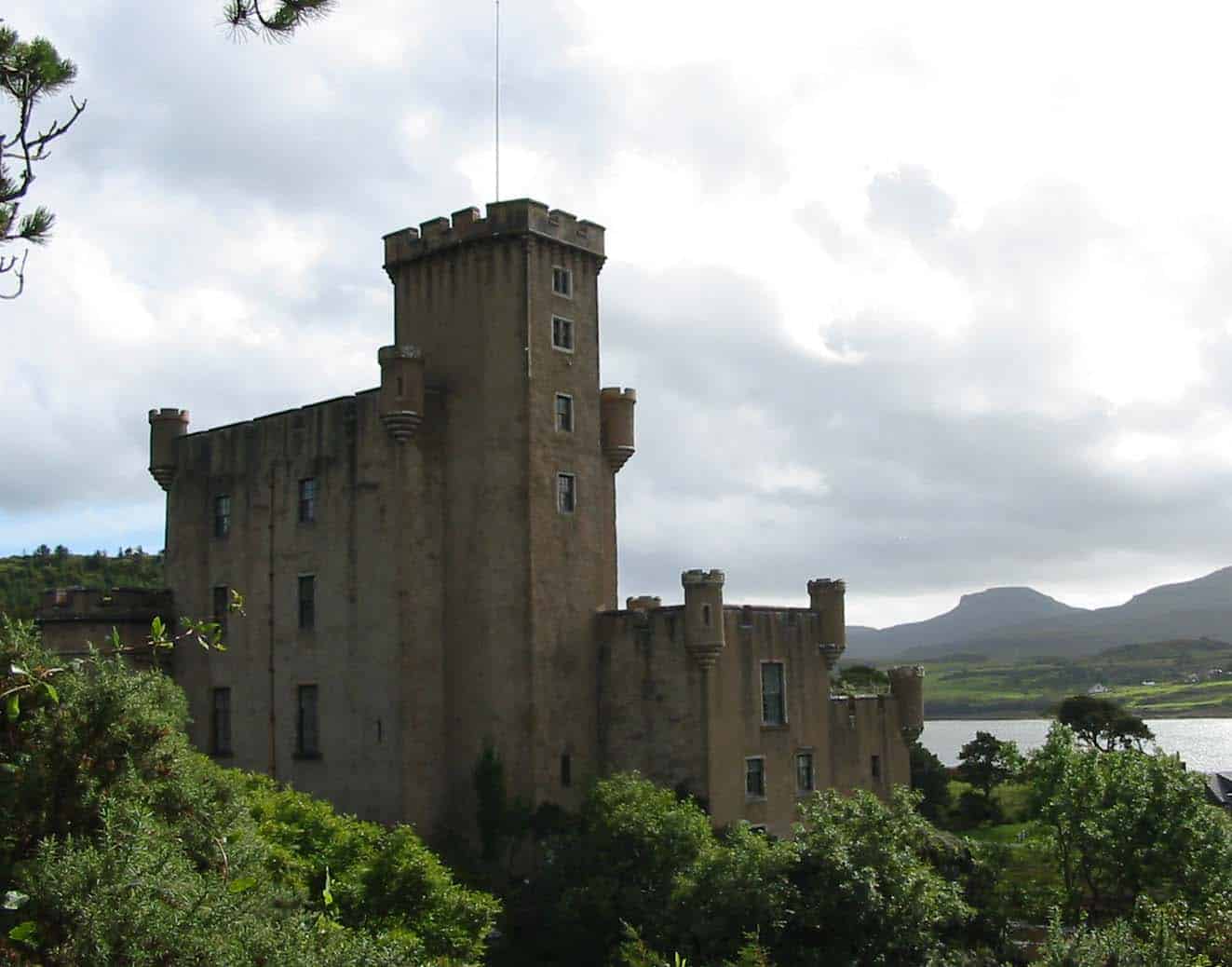
The castle sits impressively on a rocky outcrop that looks out over Loch Dunvegan. It casts a shadow against the sometimes-stormy Scottish skies. The keep, which is the oldest part, was built in the 14th century. Since then, other parts have been added, making a patchwork of architectural styles that spans six centuries. Originally built to withstand sieges, the thick stone walls now hold beautiful drawing rooms, libraries, and bedrooms decorated with family pictures and clan artifacts. The castle’s most unique feature is perhaps its location, which is surrounded on three sides by the waters of the sea loch and has formal gardens that lead down to the shoreline. Narrow windows, which were previously useful for defense, now frame beautiful views of the Hebridean scenery. The great hall, with its enormous fireplace and vaulted ceiling, still makes people think of the castle’s medieval past (Bogle, 1895).
Dunvegan Castle, the oldest castle in Scotland still inhabited, has been under the Clan MacLeod’s control since the 13th century. Legend has it that a Norse chieftain built the first stronghold, demonstrating the Vikings’ significant influence on the Hebrides. Dunvegan stood strong through generations of clan wars, Jacobite uprisings, and the harsh Highland Clearances. It changed with the times but always stayed the clan’s spiritual heart. Dame Flora MacLeod, the 27th Chief, opened the castle to the public in the middle of the 20th century. Her efforts helped protect both the building and the clan’s history. Inside its walls are valuable items, including the Fairy Flag, a silk banner that is claimed to have mystical powers, and Sir Rory Mor’s Horn, a ceremonial drinking cup that was used at the chief’s initiation (MacLeod, 1913).

Haunted Castle
Many people have said they have had strange experiences in Dunvegan, which has given it a reputation for being paranormal. The castle’s resident ghost, the Fairy Flag’s guardian, is probably the most famous. People say that he or she emerges when the old treasure is in danger. Staff and guests have said that there are cold places, footfall that can’t be explained, and doors that open and close on their own, especially in the North Wing. People report hearing the echo of bagpipes throughout the castle grounds on certain evenings. This phenomenon is because a piper was sent to look for a secret tunnel under the castle and never came back. His sad melody can still be heard. People have said that they have seen a “Gray Lady” in the castle’s gardens. She is thought to be a former Lady MacLeod and disappears when you become close (Underwood, 1973).
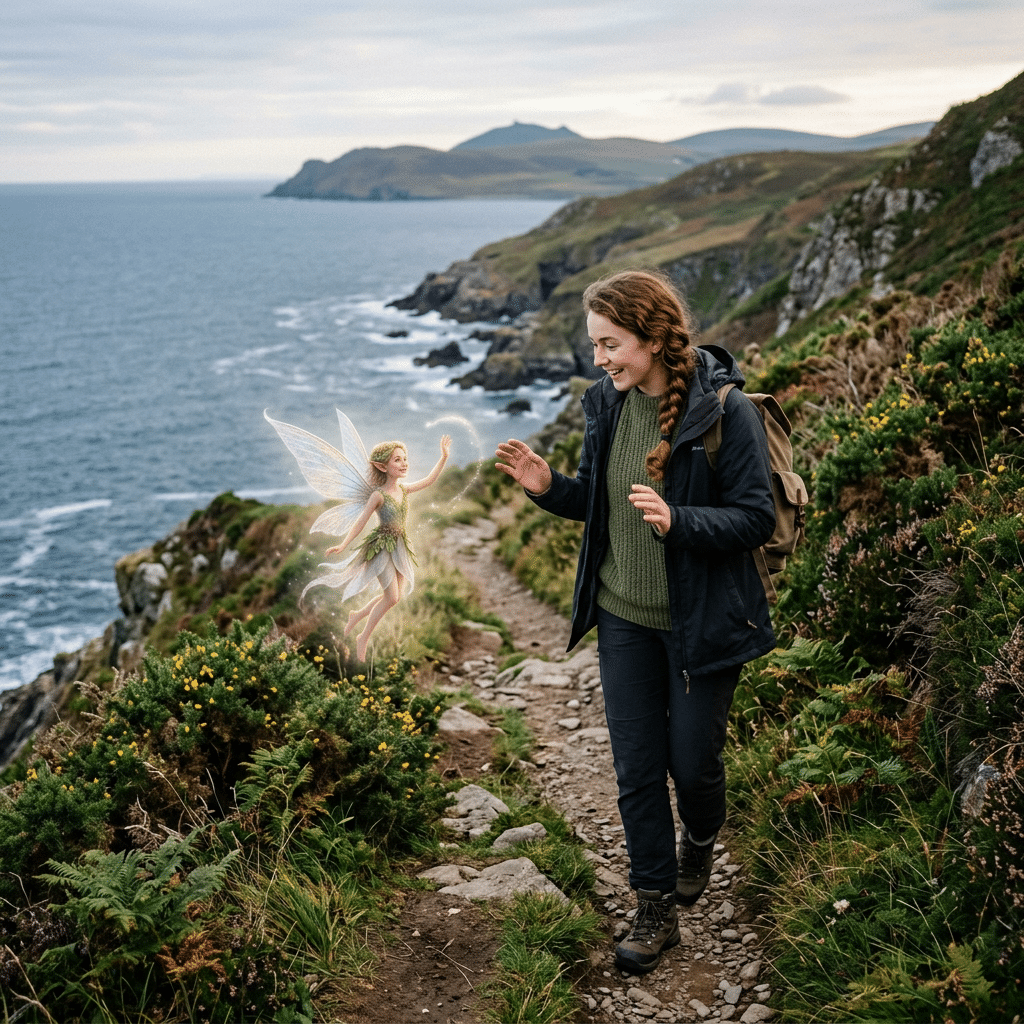
Highland mythology has added a lot of detail to Dunvegan’s supernatural ties. Stories were passed down orally for generations before they were ever written down. There are many stories about the Fairy Flag. Some say it was a gift from fairies to a chief’s baby son, others say it was a present from a chief’s fairy lover, and still others say it was a banner carried by Harold Hardrada at the Battle of Stamford Bridge. Tradition says that the flag has been flown in combat three times, and each time it brought victory to the MacLeods when all hope seemed lost. There is said to be one last usage for it. There is also the story of a MacLeod who married a seal woman, or selkie, who later went back to the sea. Her tears made the “Fairy Pools” near the castle. These stories are based on Celtic and Norse myths that are common in Highland culture, where the line between the mortal world and the other realm is seen as thin (MacGregor, 1881).
Analysis
Diverse perspectives, ranging from the skeptical to the spiritual, explain Dunvegan’s reputation for paranormal activity. Psychological theories propose that the castle’s ambient ambiance, along with visitors’ preexisting awareness of its spectral renown, engenders an expectation that affects the perception and interpretation of commonplace occurrences. Some individuals say that ghost stories had practical uses in the past, such as keeping people away from dangerous parts of the castle or stopping people from stealing clan goods. Geophysical theories suggest that the castle’s position atop geological fault lines could generate infrasound, perhaps inducing confusion and discomfort commonly linked to hauntings. Cultural researchers say that the supernatural stories show how the MacLeods needed to prove their validity and mystical connection to their lands during times of trouble, especially when outside powers were threatening Highland ways of life.
Today, Dunvegan Castle still draws people who are interested in both history and the paranormal. Guided tours generally focus on its ghostly residents as well as its historical importance. Paranormal investigative teams have held several nocturnal vigils, using everything from simple voice recorders to advanced electromagnetic field detectors to try to record the unexplainable. Unusual sounds, unexplainable temperature changes, and hazy pictures often emerge from these investigations, leaving us with more questions than answers. The MacLeod family, who still live in parts of the castle, have accepted these paranormal connections as part of their heritage. They are not totally welcomed or rejected, but they are recognized as part of what makes Dunvegan special (Butler, 2019).
Conclusion
Dunvegan’s paranormal heritage continues to be popular because it appeals to something deep in the human experience: our yearning to connect with the past and think about what might be beyond our grasp. The ghost stories about the castle lend an intangible but valuable depth to this ancient monument, whether people believe them to be true, allegorical, or just fun stories. Dunvegan Castle’s stone walls protect centuries of history, and the castle itself is a part of the clan that calls it home. The castle also keeps these supernatural stories alive, which have become as much a part of its identity as the clan that calls it home. The mists of the Isle of Skye swirl about the aged battlements of this ancient fortress, making the line between history and mystery, the real and the otherworldly, always fuzzy. The atmosphere makes each visitor think about what might be beyond the veil of ordinary vision.
References
Bogle, L. (1895, November). Archaeological Notes on Dunvegan Castle. In Proceedings of the Society of Antiquaries of Scotland (Vol. 29, pp. 255-271).
Butler, R. W. (2019). 14. Overtourism in rural settings: the Scottish highlands and islands. 14. Overtourism in rural settings: the Scottish highlands and islands, 199-214.
MacGregor, A. (1881). The Isle of Skye in the olden times. The Celtic Magazine, 7(73), 19-23.
MacLeod, F. T. (1913, November). Notes on the Relics preserved in Dunvegan Castle, Skye, and the Heraldry of the Family of MacLeod of MacLeod. In Proceedings of the Society of Antiquaries of Scotland (Vol. 47, pp. 99-129).
Underwood, P. (1973). Gazetteer of Scottish and Irish Ghosts. Peter Underwood.
Leave a Reply