Six Key Points About Arctic Ghosts
-
Indigenous communities like the Inuit use ghost stories to interpret environmental changes and preserve cultural identity amid climate threats.
-
Literary works such as Doyle’s The Captain of the ‘Pole-Star’ use Arctic ghosts as metaphors for colonialism and environmental exploitation.
-
Arctic sea ice loss is projected to strengthen El Niño events and disrupt global climate patterns.
-
Greenlandic cultural landscapes have evolved through complex interactions between traditional beliefs and modern environmental challenges.
-
Methodological advances in sea ice modeling help scientists better understand and predict ghost-like patterns in Arctic ice formation and retreat.
-
Animal habitat selection in Arctic regions demonstrates “ghostly coexistence” where species appear to avoid each other despite sharing environments.

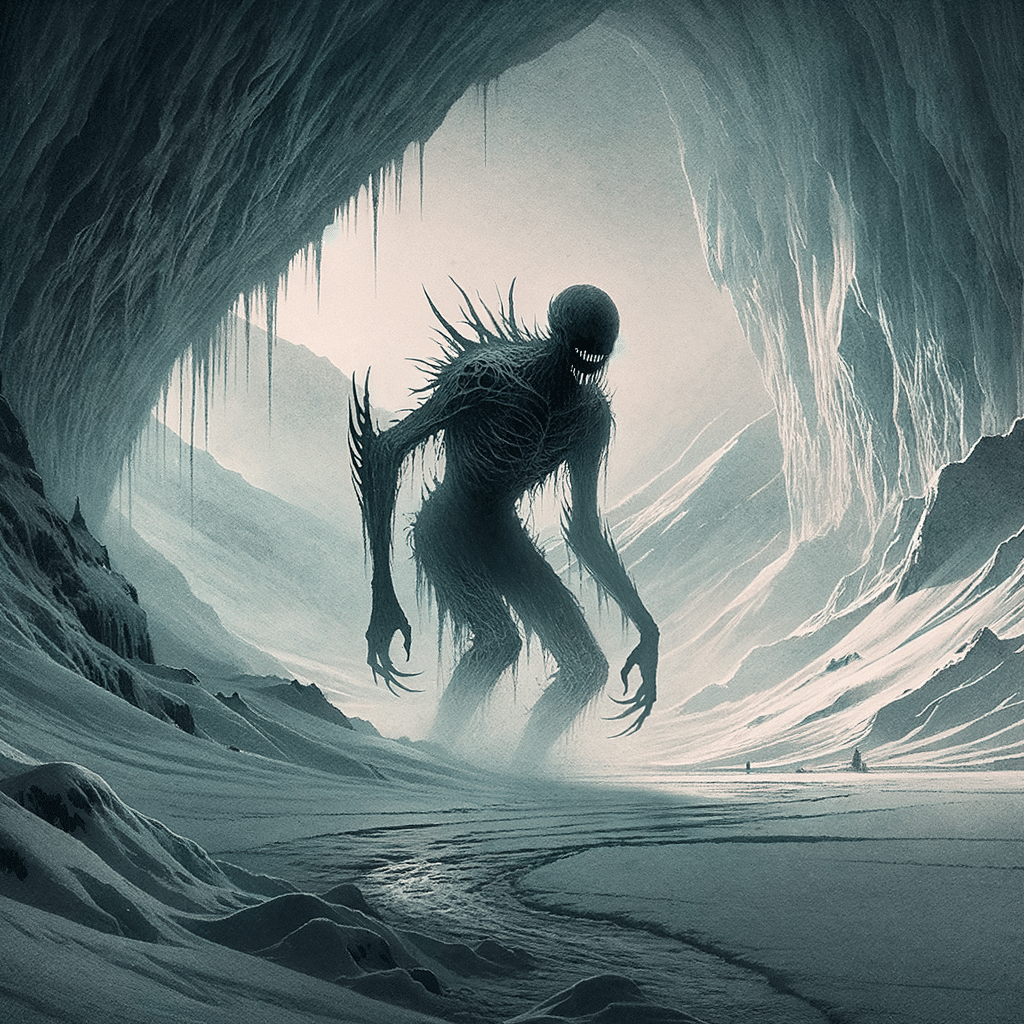
Stories of ghosts have fascinated people for thousands of years in the vast, frozen Arctic, where the sun doesn’t rise for months at a time and the aurora borealis paints the sky with strange colors. Arctic ghosts, as they are known in many northern cultures, are more than just strange otherworldly beings. They are a symbol of the complicated interaction between people and the harsh, unforgiving nature that surrounds them. These northern ghosts have been woven into cultural stories that help people understand natural events, remember the past, and deal with the mental obstacles of living in one of the most severe places on Earth.
Overview
People often say that Arctic ghosts look like clear figures that glow with a faint blue or white light, like the way moonlight looks on fresh snow. People from Inuit, Sámi, and other northern indigenous groups commonly say they see these ghosts during blizzards or in the deep polar nights, when the lines between realms seem to dissolve along with the horizon. Many stories say that these spirits walk softly across ice fields, sometimes hovering just above the surface and leaving no tracks even in fresh powder. In folklore, these ghosts are often said to represent the souls of those who died in the harsh landscape, such as hunters who got lost in sudden storms, travelers who died from the cold, or whole villages that died from famine or disease during very severe winters.
The folklore about Arctic ghosts is different in different circumpolar tribes, yet some themes stay the same. In Inuit stories, there are “shadow people” called Tarriaksuit who live lives that are similar to humans but can only be seen at dusk or in the corner of one’s eye. The Sámi people tell stories about Stállu, a spirit who can change shape and wanders the tundra looking for travelers to seduce away from safety. Russian immigrants in Siberia were afraid of the Yuki-onna, which are spirits of women who froze to death and now haunt snowstorms, breathing freezing breath on people who are sleeping. These stories often have practical purposes beyond entertainment. They warn people about environmental dangers, stress the importance of community survival, and explain the strange optical phenomena that happen in polar regions, where light refraction and snow blindness can create startling visual illusions.
For example, Inuit storytelling is deeply rooted in the connection to place and acknowledges the profound influence of environmental shifts on their lives. Sakakibara’s research illustrates how Iñupiat narratives incorporate supernatural elements to cope with climate-related challenges, reflecting their deep-seated respect for their homeland and cultural identity (Sakakibara, 2008). Such stories are not just folklore; they represent a coping mechanism for the unpredictable nature brought about by climate change, where spirits and ghosts symbolize both loss and resilience.
Arthur Conan Doyle’s short story, The Captain of the ‘Pole-Star’, presents an interesting narrative tied to Arctic ghost themes. The captain’s haunting experiences are delicately connected to his longing for lost wildlife and address the environmental responsibilities prominent in late-Victorian culture. The narrative intertwines personal grief with broader cultural awareness, highlighting how Arctic ghosts symbolize collective anxieties regarding environmental degradation and conservation values (Alder, 2022). Thus, the spectral elements of the story embody not only personal but also communal responses to existential threats posed by nature.
The physical realities of the Arctic environment also frame the beliefs surrounding ghosts and spirits. On one hand, indigenous peoples imbue the land with meaning, populating it with spiritual figures that reflect their ecological concerns. On the other hand, environmental changes have begun to alter these narratives drastically. The concept of “ghost flux” emerges in climate research, referring to artificial models that account for energy imbalances due to changing Arctic ice conditions (Sun et al., 2020). These models echo the spiritual “ghosts” as they represent the haunting specter of ecological consequences not seen directly but fundamentally altering the natural world. Furthermore, the historical avoidance of certain areas, such as the feared inland ice described by Dzik, suggests that cultural narratives about ghosts serve as a framework for understanding danger in the landscape (Dzik, 2014). The qivittut, or human outcasts, embody the peril of these spaces, reinforcing culturally specific understandings that caution against certain environmental interactions.

Analysis
The tensions between traditional beliefs and contemporary realities highlight an ongoing evolution within Arctic ghost narratives. Research indicates that as climate conditions shift, so too do the stories told by indigenous peoples. The loss of traditional lifestyles spurs a resurgence in folklore that actively adapts to address new fears, particularly those linked to climate change. Audette and Kushner’s exploration of sea ice management highlights this contemporary adaptation, where ghostly references in environmental modeling serve as a metaphor for a deeper, multifaceted relationship between communities and their natural surroundings (Audette & Kushner, 2022). The underlying issues of competition referenced in ecological studies may parallel the spiritual narratives surrounding coexistence within these delicate ecosystems, suggesting that ancient wisdom still resonates amidst modern challenges (Ale et al., 2011).
Researchers of the paranormal have looked into arctic ghost phenomena with ideas that try to connect old beliefs with new ones. Some people think that the intense electromagnetic conditions near the poles, especially during auroral activity, could make it easier for paranormal events or perceptions to happen. Some people think that the psychological stress of being in the dark for a long time, being alone, and having to survive may make people more sensitive to energies or beings that they ordinarily can’t see. Expedition journals from the 19th and early 20th centuries have many stories of “third man syndrome,” which is when polar explorers felt like someone was with them when they were at their most desperate. Sometimes this person would soothe or guide them, and survivors said that this person was responsible for their rescue.
Skeptics present alternate hypotheses grounded in scientific comprehension of Arctic circumstances. They talk about natural things like light pillars, ice fog, and temperature inversions that can make very real spectral illusions. Psychologists say that being in the Arctic for a long time, where it’s really cold and dark and you can’t see or hear anything, can cause hallucinations and changes in how you see things. Historical narratives of ghost sightings frequently align with manifestations of hypothermia, vitamin D insufficiency, or carbon monoxide poisoning due to insufficient ventilation in winter shelters. These theories do not inherently discredit the experiences of witnesses; rather, they propose that phenomena perceived as supernatural may stem from physiological or psychological roots specific to human adaptation in severe situations.
People who visit the Arctic today, whether they are scientists or tourists, are often affected by these stories. They see the area through a lens that has been shaped by hundreds of years of spectral tales. Artists, writers, and filmmakers still get ideas from Arctic ghost stories. They develop works that look at issues like being alone, staying alive, and how people relate to the Arctic. The enduring nature of these narratives reflects a fundamental human inclination—to ascribe meaning to profound events and to inhabit even the most hostile terrains with stories that facilitate navigation of both physical and psychological landscapes.
Conclusion
In the end, whether you look at them from a cultural anthropology, psychology, or paranormal research point of view, Arctic ghosts tell us more about people than they do about the otherworldly. These ghostly beings from the far north are a sign of our efforts to understand and live with one of the most difficult places on Earth. They represent our anxieties of being alone and dying, our admiration for the power of nature, and our hope that some part of our awareness will live on when we die. These ghost stories become more important as climate change quickly changes the landscapes of the Arctic, linking them to ways of life and places that are disappearing. The real power of Arctic ghosts may be that they may haunt not only the icy landscapes of the north but also the landscapes of our minds, reminding us of how strong and weak we are when faced with nature’s worst difficulties.
References
Alder, E. (2022). Arctic ghosts: Whale hunting and haunting in Arthur Conan Doyle’s “The Captain of the ‘Pole-Star’”. Victorian Studies. https://doi.org/10.2979/vic.2022.a901285
Ale, S. B., Morris, D. W., Dupuch, A., & Moore, D. E. (2011). Habitat selection and the scale of ghostly coexistence among Arctic rodents. Oikos, 120(8), 1302-1312. https://doi.org/10.1111/j.1600-0706.2010.18933.x
Audette, M., & Kushner, P. J. (2022). Simple hybrid sea ice nudging method for improving control over partitioning of sea ice concentration and thickness. Journal of Advances in Modeling Earth Systems, 14(10), e2022MS003180. https://doi.org/10.1029/2022MS003180
Dzik, A. J. (2014). Kangerlussuaq: Evolution and maturation of a cultural landscape in Greenland. Bulletin of Geography: Socio-Economic Series, 24(24), 57-69. https://doi.org/10.2478/bog-2014-0014
Liu, Y., Cai, W., Wang, G., Santoso, A., & Collins, M. (2022). Arctic sea-ice loss is projected to lead to more frequent strong El Niño events. Nature Communications, 13(1), 4952. https://doi.org/10.1038/s41467-022-32705-2
Sakakibara, C. (2008). Our home is drowning: IÑupiat storytelling and climate change in Point Hope, Alaska. Geographical Review, 98(4), 456-475. https://doi.org/10.1111/j.1931-0846.2008.tb00312.x
Sun, L., Alexander, M., & Deser, C. (2020). Global coupled climate response to polar sea ice loss: Evaluating the effectiveness of different ice‐constraining approaches. Geophysical Research Letters, 47(3), e2019GL085788. https://doi.org/10.1029/2019GL085788

Leave a Reply