Haunted Conwy Castle: Key Points
-
Conwy Castle, built by Edward I between 1283 and 1289, is a UNESCO World Heritage Site in North Wales with a history of conflict and tragedy that contributes to its haunted reputation.
-
Paranormal reports include sightings of medieval soldiers, mysterious figures in photographs, unexplained sounds, and intense feelings of despair, with accounts persisting from Victorian times to the present day.
-
Skeptics attribute phenomena to psychological factors like suggestion and pareidolia, plus environmental causes such as wind-generated acoustic effects, temperature variations, and infrasound that can trigger anxiety and hallucinations.
-
The haunted reputation attracts ghost hunters alongside history enthusiasts, with popular ghost tours and Halloween events contributing to the local economy and conservation funding.
-
The paranormal dimension creates tension between supernatural tourism and historical preservation, with concerns that ghost stories might overshadow the castle’s genuine medieval significance.
-
Conwy Castle exemplifies how locations exist at the intersection of documented history and unexplained phenomena, continuing to inspire contemplation about our relationship with the past and enduring mysteries.

Introduction
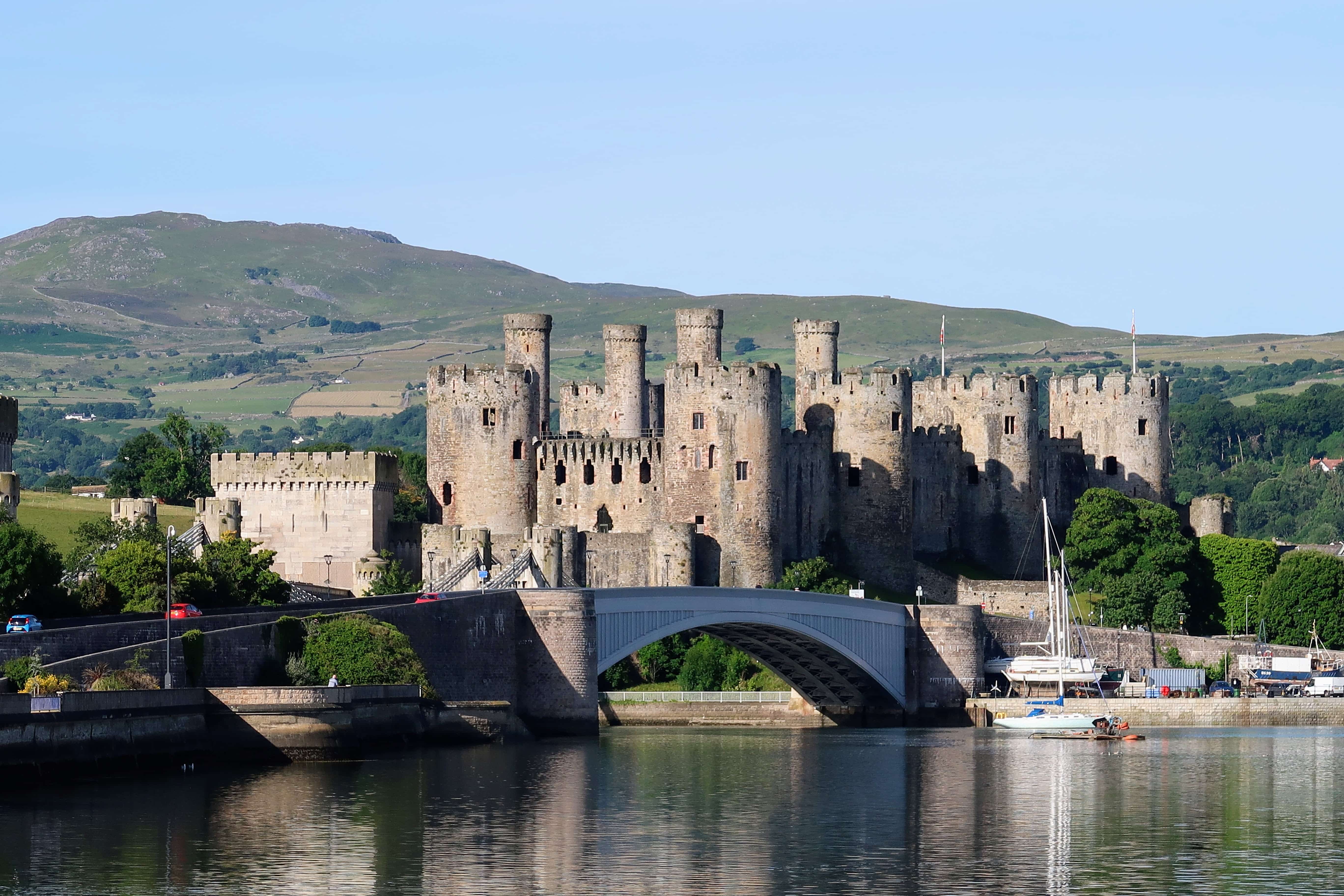
Conwy Castle is one of the most impressive medieval castles in Wales. Its eight enormous towers rise above the town of Conwy in North Wales like silent guards watching over the centuries. Edward I built this UNESCO World Heritage Site between 1283 and 1289 as part of his iron ring of castles to put down Welsh resistance. Over the years, it has seen many battles, sieges, and human dramas. Conwy Castle is renowned for its beautiful architecture and historical importance. It is one of Wales’ most haunted places, with visitors and staff reporting odd occurrences for generations. The wind-blown battlements and dark stone hallways of the castle seem to hold more than just memories of the past. The atmosphere they create blends history and the supernatural.
Overview
Master James of St. George, the best military engineer of his time, built the castle. It is a work of art in medieval military architecture. It has twenty-one towers and three gatehouses, and its curtain walls stretch for more than 1,400 meters. Its location makes it almost impossible to break into. It is on a rocky outcrop that looks down on the River Conwy. The inner ward has the remains of the massive hall and the king’s apartments, where Edward I lived while he was fighting in Wales. The outer ward used to have kitchens, stables, and places for the garrison to stay. The castle was an important stronghold for the English in North Wales because it was in a suitable place to defend both the walled town below and the important river crossing. The castle’s walls and towers are still in excellent shape, even though they were damaged during the English Civil War and were left to rot for hundreds of years. Visitors can walk the same stone paths that medieval soldiers used to patrol (Davies, 2014).
There were many wars, secrets, and deaths at Conwy Castle, which made it a wonderful place for ghost stories to grow. During the revolt of Madog ap Llywelyn in 1294, the castle was able to withstand a Welsh siege, but the garrison almost starved before being rescued. Henry Bolingbroke betrayed and captured Richard II, who sought refuge within these walls in 1399. This event led to Richard’s deposition and eventual mysterious death. During the English Civil War, the castle changed hands many times. First, Royalists held it, and then in 1646, Parliamentary forces took it and damaged it so that it couldn’t be used for military purposes again (Taylor, 1985). During these turbulent centuries, many soldiers, prisoners, and civilians died inside or near the castle walls. Violence, disease, or the harsh conditions of medieval warfare ended their lives too soon.
There have been reports of paranormal activity at Conwy Castle for hundreds of years. However, documentation became more organized during the Victorian era, when interest in spiritualism and ghost stories grew (Rees, 2020). A medieval soldier is one of the most common ghosts that people see. They are often described as wearing chain mail or armor from that time period and have been seen patrolling the battlements, especially at twilight or in the early morning mist. Visitors to the chapel tower report experiencing a constant sense of surveillance. Some even said they heard prayers or chanting in an old form of Welsh or Latin. There have been many reports of footsteps echoing through empty rooms and the feeling of passing through cold spots that don’t seem to make sense in the King’s Tower, where Edward I’s private chambers were. Many tourists have said that they saw strange shapes in photos that weren’t there when they took them.
Visitors to the prison tower have reported some of the most disturbing paranormal activity, including feelings of extreme hopelessness, claustrophobia, and even physical sensations of being restrained or choked. Staff members who work at the castle have sometimes said they won’t go into certain areas alone, especially the darker hallways and dungeons where prisoners were kept in terrible conditions. Several paranormal investigation groups spent the night at the castle in the 1980s and 1990s. They reported strange changes in the electromagnetic field, temperature drops of up to fifteen degrees Celsius in small spaces, and audio recordings that supposedly captured voices that weren’t there. One very detailed story from the early 2000s was about a tourist who said they saw a woman in medieval clothes standing in the Queen’s Tower. Her face showed deep sadness, and then she just disappeared. These stories have kept coming in through the twenty-first century. Social media and online forums constantly host new reports of strange happenings at Conwy Castle (Davies, 2017).

Conwy Castle
Theories
Skeptics and historians have put forth several logical explanations for the strange things that have happened at Conwy Castle. They say that psychological and environmental factors, not supernatural ones, are to blame. The power of suggestion is crucial. For example, people who come to the castle expecting to see ghosts may see shadows as spirits and drafts as ghosts. The castle’s architecture makes natural sounds happen. For example, the wind whistling through arrow slits and gaps in the stonework can sound like whispers or moans. The thick medieval walls also make areas of sharp temperature change, which is why people have reported cold spots. Pareidolia, the human inclination to perceive significant patterns in seemingly random stimuli, likely accounts for many of the shapes people perceive in photographs or in their peripheral vision. This is because the way light and shadow play on old stone can make very convincing illusions. Contemporary electrical systems produce high electromagnetic fields that, along with the geological characteristics of the rock beneath the castle, may influence certain visitors’ neurological functions, leading to feelings of discomfort or the perception of a presence.
Other researchers have investigated psychological explanations based on the notion of place memory and the emotional significance of historically important sites. Knowing that you are in a place where a lot of suffering, death, and dramatic historical events happened can make you feel forcefully, which can lead to strange experiences. Wind moving through the castle’s structures can make infrasound, which are sound waves below the frequency of human hearing. Infrasound can cause anxiety, fear, and hallucinations, scientists say. The medieval architecture’s confusing layout and dim lighting in many parts of the castle serve as a deterrent to intruders. These factors can turn on the brain’s threat detection systems and make you more aware of things that might be dangerous. Some psychologists think that the things that people say they see may also be a kind of collective cultural memory, where stories passed down from generation to generation shape what people expect and what they experience, creating a cycle of ghost sightings and supernatural beliefs that keeps going.
Impact
The belief that Conwy Castle is haunted has become a key part of its identity as a tourist attraction. The castle draws in not only history buffs who are interested in Welsh heritage and medieval architecture but also ghost hunters and people who are interested in the supernatural. Such popularity makes the castle more appealing and helps the local economy a lot. Ghost tours and other Halloween events at the castle are getting more and more popular. Some of them sell out months in advance because people want to experience the thrill of exploring the castle after dark. This supernatural aspect has helped the castle stay popular in pop culture, making sure that each new generation sees Conwy as more than just a historical site but also as a place full of mystery and wonder. The stories have been on many TV shows, in books, and in documentaries about haunted Britain. This feature has made the castle more famous and attracted visitors from all over the world who might not have known about this Welsh fortress (Taylor, 1995).
The relationship between preserving history and paranormal tourism has made things easier and harder for the people who are responsible for the site. On the one hand, the ghost stories bring in money and interest that help pay for conservation work, making sure that this beautiful medieval building can be kept up for future generations to enjoy and learn from. On the other hand, some historians and archaeologists are worried that the emphasis on supernatural events might make people forget about the castle’s real historical importance and the important role it played in Welsh and English history during the Middle Ages. The challenge is to attain a balance between recognizing the castle’s haunted reputation as a cultural phenomenon and making sure that visitors also understand and appreciate the real stories of daily life, war, politics, and life in the Middle Ages that happened inside these walls. This conflict between historical accuracy and popular myth reflects larger issues about how we interact with the past and what parts of our heritage we choose to highlight today (Liddiard, 2016).
Conclusion
Conwy Castle remains a location where the distinction between history and legend, between the documented past and the unexplained, is often blurred. Reports of paranormal events at the castle now play a significant role in its story and its appeal to modern audiences. They could be real supernatural events, misunderstandings of natural events, or the strong psychological effects of place and expectation. The fortress is a testament to medieval military engineering and the rocky history of Welsh-English relations. It also shows how people are still interested in the idea that the past might not be as dead as we think. As long as these old stones stay up and cast their long shadows over the town of Conwy, they will probably keep making people wonder, fear, and guess about what might be hiding between what we know and what we imagine. The real strength of Conwy Castle may not be in proving or disproving its ghosts, but in making us contemplate our connections to history, death, and the things that are difficult to explain.
References
Davies, J. B. (2014). Conwy Through Time. Amberley Publishing Limited.
Davies, J. B. (2017). AZ of Conwy: Places-People-History. Amberley Publishing Limited.
Liddiard, R. (Ed.). (2016). Late medieval castles. Boydell & Brewer.
Rees, M. (2020). Paranormal Wales. Amberley Publishing Limited.
Taylor, A. (1985). The dismantling of Conwy castle. Ancient Monuments Society.
Taylor, A. J. (1995). The town and castle of Conwy: preservation and interpretation. The Antiquaries Journal, 75, 339-363.
Leave a Reply