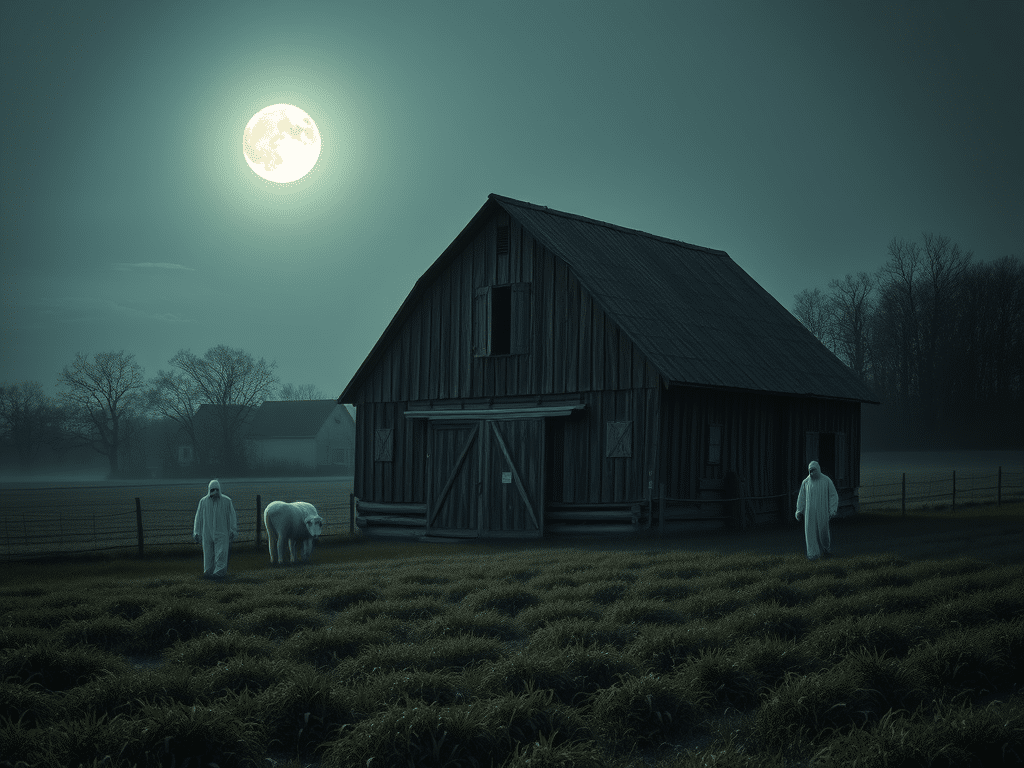
Haunted Farms: Key Points
-
Farms have earned strong paranormal reputations due to their isolation, age, and history of both human and animal deaths over generations.
-
Commonly reported phenomena include apparitions of former farmers continuing their work, phantom sounds of agricultural activities, and animals behaving strangely in certain locations.
-
Notable examples include the Tallman Farm in Wisconsin, Borley Rectory farmlands in England, and the Myrtles Plantation in Louisiana, all with documented reports of supernatural activity.
-
Theories explaining farm hauntings range from the stone tape hypothesis and psychological effects of isolation to environmental factors like electromagnetic fields and infrasound.
-
These hauntings impact families psychologically and can affect local economies through paranormal tourism, though some owners find the reputations burdensome.
-
Farm ghost stories serve important cultural functions by preserving memories of past generations and maintaining connections to agricultural history even as farming practices modernize.

Introduction
People who are interested in the paranormal have always been drawn to the countryside, with its broad fields and old barns. Many cultures and continents have given farms a bad name as locations where weird things happen, especially old ones. These farms, which are often distant from cities and have been in families for hundreds of years, are great sites to tell ghost stories and other unusual things that have happened over the years.
Paranormal stories often include farms because they are tied to both life and death in the cycle of farming. This makes them different from other areas that are said to be haunted. Over the years, farms have seen many people and animals die and be born. In cities, like in hotels or theaters, there are just a few deaths and births; therefore, the situation is different. People who believe claim that this generates a concentrated residue of spiritual force. A lot of farms are recognized for having a thin border between the living and the dead. This is because they are often ancient, alone, and have been worked on and cared for by many generations. Many paranormal investigators think that farms were often places where horrible things happened. For example, there were accidents with heavy machinery, painful childbirths in the past, and the hard life of a farmer that might lead to despair and early deaths.
People in the country often talk of haunting as a way to describe farm buildings, barns, and fields as locations where ghosts, memories, and unusual feelings might be felt. Different sources describe “haunting” as a feature of rural areas, such as folklore, ethnographic studies of farming communities, or literary-scientific analyses of ghosts in farming contexts. For example, studies on haunted landscapes look at how homes, farming buildings, and rural areas can be places of strange repetition and memory, linking hauntings to moving after the war, crossing borders, and the memory practices of farming life (Ćwiek-Rogalska, 2020; Cox, n.d.; McGill, 2022). This literature portrays farms not solely as economic enterprises but as culturally significant sites where histories of migration, conflict, and ecological transformation are reflected in spectral relics (Cox, n.d.; McGill, 2022; Pearson, 2024).
Common Characteristics of Farm Hauntings
There are a few common features in stories of ghostly activity on farms that make agricultural hauntings different from other types of unexplained encounters. People who saw ghosts of old farmers going about their daily lives, walking along fence lines at night, or taking care of animals that no longer exist often reported they saw them. People often believe they hear the sounds of ghost farm activity. These include the sound of horses driving plows over fields where there are no animals, the creaking of barn doors opening and closing on nights when there is no wind, and the peculiar noises of milk pails slamming together in empty dairy barns. Many families who live on farms swear they can feel things that aren’t there in their homes and outbuildings, especially in older buildings like root cellars, attics, and barns that are over a hundred years old. Some individuals believe that animals on farms act strangely in certain places. For example, they might not go inside certain buildings or exhibit signs of uneasiness in situations where people later say they had paranormal encounters.
The Tallman Farm in Horicon, Wisconsin, gained fame in the 1980s for being one of the most well-documented haunted farms in the United States. The people who lived there stated they witnessed a lot of terrible things, such as fires that weren’t there, things that moved on their own, and spirits of people from different times popping up all over the house. A lot of paranormal experts looked into the subject because it gained a lot of media attention. They noticed unusual variations in temperature and electronic voices in the location. The Tallman family finally left the farm because the activity had become too dangerous and intense for them to bear. People who have owned the house since then haven’t had any scary experiences, and it’s thought that the hauntings were caused by a delayed gas leak repair (Facts-Chology, n.d.).
The former Borley Rectory farmlands in Essex were once considered the most haunted spot in Britain. This was before the main house burned down in 1939. People said that the soul of a nun who was slain on the site hundreds of years ago still dwelt in the fields and houses on the surrounding farm. Witnesses reported they saw her spectral figure walking down what is now called the Nun’s Walk. People who worked on the farm stated that tools would go missing and then show up in different places, that lights would appear in the fields at night for no reason, and that they could hear phantom horses and carriages traveling down paths that had long since disappeared. Harry Price, a famous psychical researcher from the early 1900s, looked into the case in great detail and wrote about numerous unusual incidents that happened while he was studying the property (Price, 2011).
The Myrtles Plantation in Louisiana is generally known as a historic site, but it also features a number of fields where slaves used to work and where many people perished in awful ways. Persons who work and visit the site have stated that they have seen ghosts of persons in old-fashioned garments walking around the old sugar cane fields and near the slave quarters. People say that odd occurrences happen at the plantation, not just in the main house but also in the nearby farming buildings and land. People have stated they heard voices that weren’t there, saw shadowy figures, and felt like someone was watching them when they were alone in the fields. Paranormal investigators who have looked into the property think that the plantation’s history of pain and suffering may have left a trace on the land itself (Vaughn, 2012).
In the American South and settler colonies, eerie agricultural landscapes are employed to investigate the history of dispossession, land claims, and the ramifications of colonial administration. In settler literature, works that talk about how the Gothic interacts with agricultural space show how farm settings bring out the contrasts between progress, exploitation, and haunting memory. They usually go against the Arcadian idea that farming is calm and serene (Weidmann et al., 2022). Ultimately, these narratives illustrate how haunting can reveal the structural violence inherent in rural development and land-use practices.

Theories of Farm Hauntings
There are a lot of ideas on why so many individuals think they’ve encountered ghosts on farms and other agricultural estates. The stone tape theory, which is popular among paranormal researchers, holds that traumatic or emotionally charged events can be recorded in the environment, especially in materials like stone and wood that are ubiquitous in old farm buildings. This idea states that certain things can make these recorded occurrences happen again. That’s why witnesses often say they see the same ghosts or have the same experiences over and over. This perspective is corroborated by individuals who note that farm hauntings often display residual traits rather than intelligent manifestations, suggesting that these occurrences resemble recordings rather than sentient entities attempting to interact with the living.
People often think of haunted space when they think of how landscapes might look like ghosts and how memories stay alive in rural locations. Hauntology posits hauntings as recursive reverberations of historical events that resurface in contemporary rural life, shaping modern perceptions of place and identity within agricultural communities (Barrenha, 2022; Ćwiek-Rogalska, 2020; McGill, 2022; Wills, n.d.). In certain cases, hauntings are linked to colonial and settler histories that are deeply rooted in agricultural landscapes, where homes, land ownership, and farming infrastructure carry the burden of past pain and memory (Barrenha, 2022; Borzaga, 2020; Cooper, 2022).
Psychological ideas on farm hauntings underscore the effects of isolation, sleep deprivation, and the suggestibility linked to living in old buildings with creaking floorboards and mysterious noises. Skeptics remark that farmers work long hours and may see or hear things that aren’t there because they are sleepy or the lighting is bad. The way farming families tell ghost stories may also get the next generation ready to see weird phenomena as paranormal, which keeps the cycle of belief going. Infrasound can also be made by wind blowing through ancient barns and other buildings. This can make people feel uneasy and even see things that aren’t there. This might help explain some of the odd occurrences that have been seen.
Ethnographic and literary analyses perceive farms as sites where haunting narratives intersect with nationalism, identity, and modernization. For instance, agrarian tourism and haunted farm spectacles illustrate the conflicts between nostalgia, nationalism, and the commercialization of rural life, portraying farms as locations of the uncanny to inspire national identity and “traditional” rural culture (agri-tourism in Canada) (Poetker, 2021). People also talk about farm spaces as locations where national identity is made ghostly. Haunted farm experiences are part of a larger cultural economy that uses farming settings to share memories.
Environmental and geological theories suggest that some agricultural locations may be vulnerable to unusual electromagnetic fields or other natural events that could clarify certain observed behaviors. Some experts have observed connections between geological fault lines and reports of strange events. They believe that tectonic stress could produce electromagnetic waves that influence how humans see things. Some people might think that localized magnetic anomalies are created by supernatural beings; however, they could be generated by old farm wells, underground streams, or certain minerals in the soil. These concepts strive to find a middle ground between not believing in the supernatural and believing in it by offering natural methods that true experiences could happen without having to believe in ghosts or spirits.
Cultural and Economic Implications of Haunted Farms
Farm hauntings don’t simply affect the families that live there; they also affect the communities and even benefit the economy by bringing in tourists who are interested in the paranormal. People that pursue ghosts, look into the paranormal, or are just interested often visit farms where weird occurrences happen. They want to have true experiences with things that can’t be explained. Some farm owners are okay with the idea that their farms are considered to be haunted. They give tours and let paranormal research organizations use their farms, which brings in extra money that can help keep the farms up. But some farming families don’t appreciate that people know their farms are haunted. This could diminish property values and make it hard to find workers who are willing to work in barns or fields that are said to be haunted.
People who live and work on farms that are claimed to be haunted can have a substantial and long-lasting effect on their mental health. People who say they’ve had paranormal experiences on their property often say they feel like they’re being watched all the time, can’t sleep, and have a general sense of dread that makes their life less fun and less productive. Kids who grow up on farms that are known for having haunted things happen may have fears that continue into adulthood. Some families report that the burden of living with things that don’t make sense has hurt their relationships and made them decide to stop farming altogether. Some farm families, on the other hand, feel comfortable or even like they have friends in the ghosts that live there. They think of them as guardian spirits or just part of the property’s character and history.
Haunted farms are culturally important because they reveal that people are afraid of death, memory, and the link between the living and the dead. These stories help keep the memory of earlier generations alive. They make sure that the challenges and accomplishments of those who worked the land are not lost when farming practices change and become more advanced. Farm ghost stories often teach morals or warn people about the dangers of working on a farm, the importance of honoring the land and its history, or the bad things that happen when you are rude to people or animals. Farm hauntings are a way to pass along stories and keep cultural traditions alive. They help people stay connected to the past even as rural communities change and grow.
Farm hauntings and contemporary farming methods don’t always go along, which makes life in the country even more interesting. As farms grow more industrialized and corporate farming takes over family farms, the strong connection to the soil that is thought to produce supernatural happenings may be eroding. Even on farms that have been updated, stories of hauntings still happen. This could mean that the incidents are real and not influenced by belief systems, or that people’s desire for supernatural stories changes with the times. Farmers today who think they have had paranormal experiences sometimes have trouble reconciling their practical, science-based approach to farming with the things that seem to be unexplained. This can cause cognitive dissonance, which is hard to get over.
Conclusion
Farm hauntings are still a prominent aspect of rural mythology around the world and still interest people. These phenomena may indicate genuine supernatural occurrences, psychological experiences arising from the unique pressures and isolation inherent in rural life, or natural events that remain insufficiently explained by science. Still, they play important cultural and personal roles for the people who report them. Stories of haunted farms remind us that farmland is important for more than just its economic value. It is a location where everyone who has lived, worked, and died has left their mark. As long as there are farms and people have deep relationships with the land they work, stories of ghostly farmers, phantom animals, and weird incidents will definitely continue to be a part of rural culture and the greater realm of supernaturalism.
References
Albin-Clark, J. (2023). Documenting data-ghosts: Visualising non-human life and death through what is undocumented in early childhood education. Journal of Posthumanism, 3(1), 59–71. https://doi.org/10.33182/joph.v3i1.2851
Barrenha, N. C. (2022). They live: Violence, horror and spectres in four contemporary Argentine films. Acta Universitatis Sapientiae Film and Media Studies, 22(1), 77–96. https://doi.org/10.2478/ausfm-2022-0013
Borzaga, M. (2020). Psychic unhomings, amnesia, and the risk of decosmopolitanization in Damon Galgut’s The impostor (2008). Humanities, (3), Article 105. https://doi.org/10.3390/h9030105
Cooper, J. (2022). Re-membering publicness. Journal of Public Pedagogies, (6), 57–76. https://doi.org/10.15209/jpp.1245
Cox, T. G. (n.d.). Exploring rural rhetoric beyond the landscape, farm, or site of tragedy: Space and place in rural bridge folklore [Doctoral dissertation, Iowa State University]. Iowa State University Digital Repository. https://doi.org/10.31274/td-20240329-330
Ćwiek-Rogalska, K. (2020). “It’s scary here.” Haunted landscape as a research tool to look into post-expulsion landscapes. Polish Journal of Landscape Studies, 3(6), 27–47. https://doi.org/10.14746/pls.2020.6.2
Facts-Chology. (n.d.). The haunted Tallman house of Horicon, Wisconsin. https://factschology.com/mmm-podcast-articles/haunted-tallman-house-horicon-wisconsin
Hickey, I. (2018). Virgilian hauntings in the later poetry of Seamus Heaney. Estudios Irlandeses, (13), 27–40. https://doi.org/10.24162/ei2018-8066
Leep, M. (2022). Specters of minks: Postcapitalist elegies and multispecies solidarities. Millennium: Journal of International Studies, 51(1), 237–260. https://doi.org/10.1177/03058298221131360
McGill, M. L. (2022). The evolution of haunted space in Scotland. Gothic Studies, 24(1), 18–30. https://doi.org/10.3366/gothic.2022.0118
Pearson, M. (2024). Furry, feral, foe: Temporalizing heath and invasion on an English chalk stream. Journal of the History of Medicine and Allied Sciences, 80(4), 347–362. https://doi.org/10.1093/jhmas/jrae043
Poetker, K. (2021). Imagining the farm: Spectacle, nationalism, and agri-tourism in Canada [Doctoral dissertation, Ryerson University]. Ryerson University Digital Repository. https://doi.org/10.32920/ryerson.14661483
Price, H. (2011). The end of Borley Rectory. Read Books Ltd.
Vaughn, H. A. (2012). A critical ethnography of The Myrtles Plantation in St. Francisville, Louisiana with ruminations on hauntology [Master’s thesis, Louisiana State University and Agricultural & Mechanical College]. LSU Digital Commons.
Weidmann, S., Filep, S., & Lovelock, B. (2022). How are tourism businesses adapting to COVID-19? Perspectives from the fright tourism industry. Tourism and Hospitality Research, 23(1), 121–126. https://doi.org/10.1177/14673584221085217
Wills, J. (n.d.). Gothic negotiations of the boundaries of the New Zealand farm in settler literature [Master’s thesis, Victoria University of Wellington]. Victoria University of Wellington Research Archive. https://doi.org/10.26686/wgtn.21424821




Leave a Reply