Sekhmet: Key Points
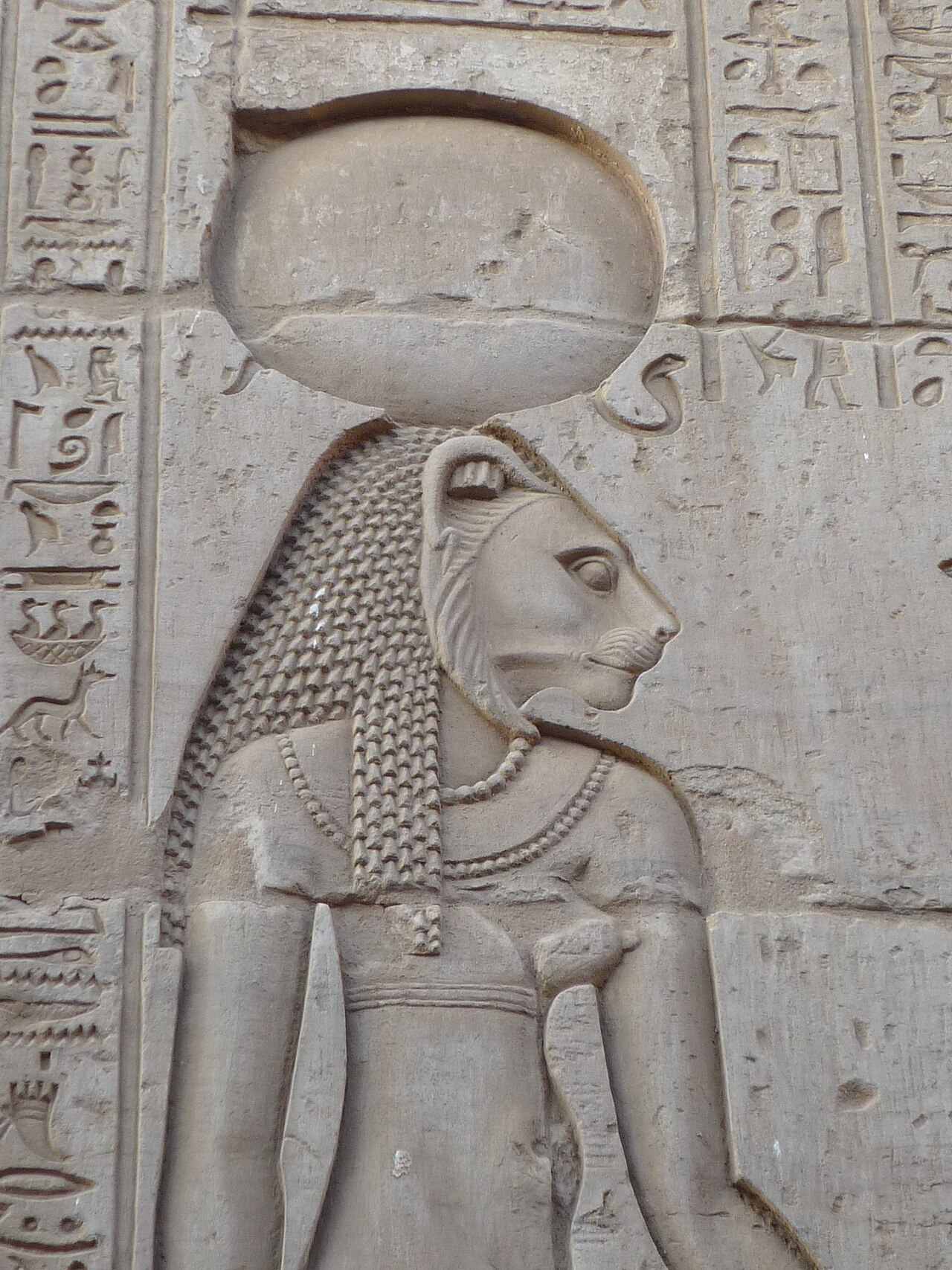
- Sekhmet was a lioness-headed Egyptian goddess associated with warfare, destruction, plague, and the scorching sun, yet she was also a powerful protector and healer.
- In The Destruction of Mankind, Sekhmet nearly destroys humanity after Ra sends her to punish rebellion, showing how divine violence could restore order but become dangerous when uncontrolled.
- Ancient Egyptians experienced epidemics and many infectious diseases, and without knowledge of germs, they often understood illness through both physical and supernatural explanations.
- Sekhmet could send pestilence but could also prevent or cure disease, making her priests important figures in healing practices that combined medicine, ritual, prayer, and magic.
- Her destructive and healing roles reflected Ma’at, the Egyptian principle of cosmic order, because dangerous forces could help correct disorder but had to be controlled before they created greater chaos.
- Sekhmet’s paradox shows that destruction and healing were sometimes understood as parts of the same cycle, with punishment confronting disorder and healing restoring the proper balance between humans, the gods, and the cosmos.

Introduction
Sekhmet occupies one of the more disturbing places in ancient Egyptian religion. She was a lion-headed goddess tied to the scorching strength of the sun, warfare, violent destruction, epidemic sickness, and divine punishment but also invoked as a defender against illness and closely connected with physicians and healing. Her name is commonly translated to mean “the Powerful One,” which is an appropriate term for a goddess who could destroy human life or protect it (The Metropolitan Museum of Art, n.d.). This seeming paradox is explained when Sekhmet is understood in relation to the Egyptian concept of Ma’at, the divinely constituted order that regulated nature, society, justice, and human-god relations. The Egyptians didn’t just split supernatural forces into benevolent gods who healed and malevolent gods who harmed. Dangerous forces, if held in due control, may serve legitimate ends. Sekhmet was then the embodiment of a fearsome theological idea; ruin, disease, and death could be a sign of disorder, punishment for transgressing divine authority, and a way of restoring balance.
Sekhmet and The Destruction of Mankind
She was normally represented as a woman with the head of a lioness, frequently wearing the solar disk and uraeus as a crown. From the very beginning, her lioness appearance indicated that she was dangerous. The lion lived on the edges of the desert, which flanked the cultivated land of the Nile Valley. It represented a power that was close to the divide between the ordered world of man and the dangerous wilderness beyond. Sekhmet was also intimately linked to Ra and may have been the destructive Eye of Ra. She delivered war, disease, and abrupt tragedy, but Egyptian images also pointed to the other side of her might. She is sometimes depicted clutching the ankh, the symbol of life. Hence, the same goddess who could visibly take life also had the power to provide or save it (The Metropolitan Museum of Art, n.d.). The horrifying scope of Sekhmet’s devastating power is most graphically shown in the narrative generally dubbed The Destruction of Mankind, recorded as part of the Book of the Heavenly Cow. In the narrative, the aged sun god, Ra, realizes that mankind is plotting against him. He consults the other gods and sends his Eye against the rebels, in the form of a furious goddess linked in the myth with Hathor and Sekhmet. The punishment turns into a slaughter. The goddess becomes so consumed by her desire to kill that the destruction exceeds Ra’s original intentions. Ra finally makes the decision to save the remaining humanity. Thousands of jugs of beer are dyed red and spilled all over the land. The goddess consumes the liquid, thinking it is blood, becomes inebriated, and stops the massacre (McCoy, 2012).
First, the plot makes destruction feel legitimate but devastating when it crosses its proper boundary. Humanity has rejected divine authority. Ra’s answer is to reestablish power through punishment. However, the devastation poses a risk of creating a new disorder. So they must hold back Sekhmet. This difference is key to understanding her relationship with Ma’at. Ma’at represented truth, justice, right relationships, and cosmic order, while Isfet, its antithesis, signified disorder, injustice, and disturbance. Ma’at was to be acted upon continuously, for chaos was a constant threat to creation (Allen, 2004; Kwiecinski, 2016). Destructive force could therefore offer a defense of order, but unrestrained destruction could pose a threat to order itself.
The Destruction of Mankind is more complex than a tale of a wrathful goddess. Sekhmet is the cure for disorder and the potential cause of far worse disorder. Ra cannot allow the revolt of mankind to continue, but neither can he allow Sekhmet to wipe out humanity. Somewhere between these extremes is cosmic equilibrium. Her violence has a use, a limit, and finally an end. Thus, the tale represents a common Egyptian religious notion that hazardous forces do not necessarily need to be eradicated. Instead, they can be contained, diverted, appeased, and made helpful.

Plague, Disease, and Healing
Disease was a particularly dramatic illustration of this notion in the actual world. Ancient cultures faced epidemics again and over again with little knowledge of germs, viruses, or contemporary epidemiology. Egypt had its share of endemic diseases too. Archaeological and linguistic evidence points to parasitic diseases such as schistosomiasis, intestinal worms, guinea worm, TB, and others. Pinpointing individual epidemics from ancient times is challenging since many infectious diseases do not leave obvious clues in human remains. Egyptian literature does, however, speak to pestilence, and Sekhmet was especially identified with a “year of pestilence” (University College London, n.d.-a).
Epidemics were not peculiar to Egypt. Outbreaks periodically struck ancient Mediterranean and Near Eastern societies. These outbreaks could kill quickly and seemed to spread erratically between groups. Plague, before the advent of germ biology, was often interpreted as an invisible attack on society. Occasionally, the cause eluded detection, yet entire families or villages suffered the consequences. Religious interpretations provided such calamities with a comprehensible position in the wider framework of the universe. Disease can be perceived as an act of a deity, unfriendly supernatural forces, divine fury, or a disruption of proper interactions between the human and the divine.
Sekhmet was particularly suited to embody this menace because her destructive power resembled that of an epidemic. She could attack swiftly, stealthily, and on a massive scale. Egyptians connected her with the ability to spread pestilence, often through deadly agents. Later evidence also ties Sekhmet with protection from contagious sickness and with ritual measures to avert epidemics (University College London, n.d.-a). The deity that caused the threat was thus also the deity that people turned to for protection from it.
This association helps explain the seemingly paradoxical identity of Sekhmet as a healer. If she could control disease, she could also refuse to transmit disease, stop disease, or stop disease from harming someone. The Metropolitan Museum of Art states this duality directly: “Sekhmet brought illness and destruction, but when appeased she offered health and restoration” (The Metropolitan Museum of Art, n.d.). Nor did healing require Egyptians to imagine Sekhmet’s defeat by a distinct supernatural power. Alternatively, Sekhmet herself could switch roles from attacker to protector.
Her priests therefore developed major connections with medicine. Several different groups of practitioners, including physicians and the wab-priests of Sekhmet, practiced ancient Egyptian healing. The former were notably associated with diseases that had unclear causes, such as the plague (University College London, n.d.-b). Religion and medicine were not clear categories in Egyptian philosophy. Treatments may include practical observation, medicines, ritual purity, spells, prayers, and appeals to divine forces. According to Zucconi (2007), Egyptian medical ideas included religious themes, such as Ma’at and heka, or magical power. Thus, healing could cure physical symptoms and also reestablish a disordered link between the patient, supernatural powers, and the ordered cosmos.
Sekhmet’s association with epidemic sickness may perhaps have affected royal religious policy. In the Eighteenth Dynasty, Amenhotep III had hundreds of statues of the goddess made. More than 600 similar statues were uncovered in the precinct of Mut at Karnak and enormous numbers of Sekhmet statues are associated with his rule (The Metropolitan Museum of Art, n.d.). Some scholars suggest this initiative may relate to diseases in Egypt or the Near East, but the evidence does not show an epidemic caused the sculptures. There is some evidence for disease over the wider Amarna period from historical allusions, although the pathogen responsible is obscure (Panagiotakopulu et al., 2022). But the very scale of Amenhotep III’s devotion to Sekhmet suggests the seriousness with which royal religion perceived her destructive and protecting abilities.
Ma’at, Restoration, and Cosmic Balance
Viewing disease through the lens of Ma’at makes the paradox even more intriguing. It would be incorrect to say that the Egyptians just embraced epidemics because they thought that disease inherently promoted cosmic harmony. They were scared of disease and actively tried to prevent and treat it. Egyptian religion could better situate tragedy within a framework where destructive divine power could be enlisted to restore or defend order. It was only because the divine power had become antagonistic to men that Sekhmet’s plague was so terrible. To appease her was to restore that power to its proper connection with man.
To heal, from this perspective, was to do much more than get rid of the symptoms. It was symbolic of restoration. A sick body had strayed from its proper state, as a rebellious society had strayed from Ma’at. The healer aimed to restore bodily order; ritual specialists aimed to restore bodily order; ritual specialists aimed at restoring the correct link between humans and divine energies. Sekhmet could fill both roles, as the same heavenly authority caused and ended the disruption. In her mythology, disease transformed into a problem of power, of borders, and of balance.
One idea about Sekhmet’s dual nature is that it represents an Egyptian predisposition to see opposing characteristics as related. Life depended on forces that were potentially hazardous. The Nile River could ruin property but without inundation, Egyptian agriculture could collapse. The heat of the sun sustained the natural cycle, yet that same heat might kill. The king’s violence was damaging to the adversaries but protective to Egypt. Even the daily solar cycle included disappearance into darkness, regeneration, and morning. Egyptian concepts of time were highly cyclical, where renewal followed decline and darkness again and again (Kamrin, 2017). Sekhmet fits perfectly into such a worldview. Her identity as a destroyer and healer did not negate each other. They made each other conceivable.
Another interpretation concerns control. Sekhmet is a raw heavenly force before and after it has been appropriately funneled. Ra releases her in The Destruction of Mankind because of the threat human rebellion poses to divine order. The dilemma arises when appropriate retribution escalates into unchecked carnage. The resolution does not kill Sekhmet. Rather, her behavior is manipulated by a ritualistic activity with beer, color, intoxication, and pacification. The dangerous goddess is still powerful but her power is being channeled. Egyptian rites dedicated to lioness deities constantly focused on themes of pacification, drinking, and avoiding destructive divine energies from turning against Egypt (Bryan, 2020). Ritual thus became a means for human societies to symbolically participate in the containment of cosmic threats.
Political, Religious, and Cultural Impact
Sekhmet had a political face as well. Pharaohs had to sustain Ma’at, safeguard Egypt from internal and external threats, maintain the temples, and combat foes who represented disorder (Allen, 2004). Incorporation into the royal philosophy of a deity capable of destroying adversaries and safeguarding those under her care seemed inevitable. Her violence could turn into protective violence. Her plague might be her shield against the plague. Peace doesn’t have to be the end of her awful power. It has to be aimed at the defense of the ordered world.
The concept exercised a lasting influence on Egyptian religion and medicine. The cult of Sekhmet brought together ideas that modern observers tend to divide among religion, medicine, public health, magic, governmental authority, and explanations of natural disaster. Priests might try to placate a goddess while engaged in therapeutic techniques. Rituals may confront an epidemic both as a physical hazard and as a disorder that needed heavenly assistance. Statues could glorify the same deity dreaded as a bringer of disease. These rituals made sense in a worldview where visible and invisible forces were always at play.
Sekhmet’s dilemma, therefore, shows something more profound about the ancient Egyptian attitudes to destruction. For the Egyptians, damage was not always good in nature and pestilence was not a blessing since it could be explained religiously. There may be a proper role for destructive power in the protection and restoration of Ma’at. Sometimes chaos had to be forced into containment. But unbridled force can become another kind of disorder, just as Sekhmet’s punishment of rebellious humanity becomes a threat to mankind’s own survival. The objective was limited violence and controlled power. It represented power that was controlled and remained within its intended limits.
Conclusion
Thus Sekhmet was the greatest destroyer and healer, and both functions were derived from the same conception of divine strength. She could bring forth plague because she controlled the powers that brought sickness. She could keep sickness away or heal since those powers were still in her domain. This tension is embodied graphically in The Destruction of Mankind. Sekhmet is unleashed to punish rebellion, goes dangerously far beyond her limits, and must then be pacified so life can go on. Her mythology implies the Egyptians believed in a cosmic balance that had to be protected and restored again and again. Destruction may sometimes clear away revolt or disorder, but destruction itself must be kept within bounds. Healing closed the loop by bringing the body, society, and cosmos back to their proper state. So Sekhmet’s lioness look meant more than fear. The terrible thought was that the very forces capable of destroying an orderly world were often the same forces required to maintain it.
References
Allen, S. (2004, October). Kings and queens of Egypt. The Metropolitan Museum of Art.
Bryan, B. M. (2020, September 30). The altered state of religion: Sekhmet and ritual revelries in the reign of Amenhotep III. American Research Center in Egypt.
Kamrin, J. (2017, February). Telling time in ancient Egypt. The Metropolitan Museum of Art.
Kwiecinski, J. (2016). The ancient Egyptian concept of Maat: Reflections on social justice and natural order. The International Journal of Social Quality, 6(1), 26–44.
McCoy, P. A. (2012, October 21). Myths and legends of ancient Egypt: The destruction of mankind. Ta’wy.
Panagiotakopulu, E., Buckland, P. C., Day, P. M., & Sarpaki, A. (2022). A critical assessment of proposed outbreaks of plague and other epidemic diseases in ancient Egypt. International Journal of Paleopathology, 39, 1–12.
The Metropolitan Museum of Art. (n.d.). Statue of the goddess Sakhmet. The Metropolitan Museum of Art.
University College London. (n.d.-a). Disease in ancient Egypt. Digital Egypt for Universities.
University College London. (n.d.-b). Healing titles. Digital Egypt for Universities.
Zucconi, L. M. (2007). Medicine and religion in ancient Egypt. Religion Compass, 1(1), 26–37. https://doi.org/10.1111/j.1749-8171.2006.00004.x

Leave a Reply