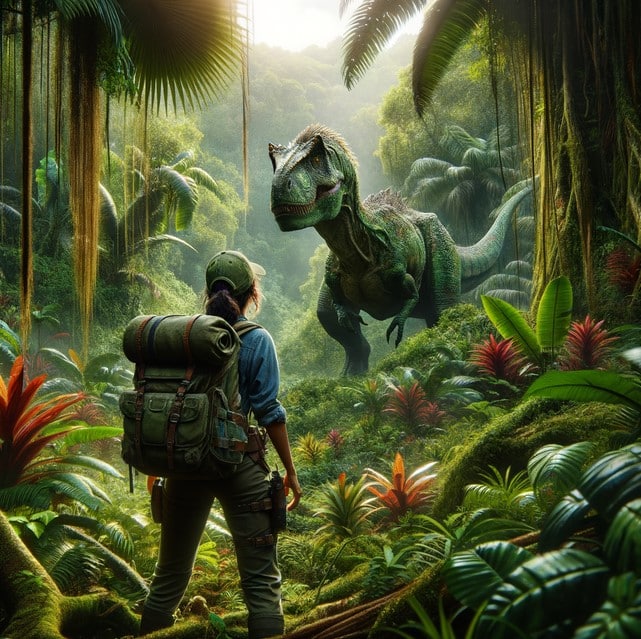
According to many scientists, not all non-avian dinosaurs went extinct. Some people think that cryptids, like Mokele-mbembe and the Loch Ness Monster, are descendants of dinosaurs that still roam the planet.
Dinosaurs
More than any other prehistoric species, dinosaurs captivate the imagination. They are legendary due to their immense size, fearsome look, and unexplained extinction. This has prompted some people to theorize that dinosaurs might still exist in some far-off parts of the globe today. Even though the majority of scientists believe that dinosaurs went extinct 66 million years ago, there is a slim chance that some extinct animals could still exist due to reports of sightings and tales of dinosaur-like creatures.
From the end of the Cretaceous period (approximately 65 million years ago) to the late Triassic period (about 230 million years ago), dinosaurs dominated the land animal kingdom for almost 160 million years. The long-necked sauropods Brachiosaurus and Tyrannosaurus rex, the plated stegosaurs, the horned ceratopsians Triceratops and Tyrannosaurus rex, and the armored ankylosaurs were among the major groups. Dinosaurs ranged in size from chicken-sized to over 120 feet long, exhibiting immense diversity in size, anatomy, and food. Their ability to occupy multiple ecological niches, coupled with their diversified feeds and often gigantic size, can contribute to their success. About 66 million years ago, they went extinct, leaving only birds as members of the dinosaur clade.
The extinction of the dinosaurs, also referred to as the Cretaceous-Paleogene (K-Pg) extinction event, occurred at the end of the Cretaceous epoch. A huge asteroid impact and volcanic activity, according to the most popular explanation, brought about significant alterations in the temperature and ecosystem. Due to the worldwide firestorm, nuclear winter brought on by debris obstructing the sun, and ecosystem collapse brought about by this impact, 76% of species—including all non-avian dinosaurs—were wiped off. Conventional scientists conclude that all dinosaurs, except for birds, went extinct millions of years ago, based on the discovery of dinosaur fossils only in specific Mesozoic era sedimentary strata.
Although the general consensus is that all non-avian dinosaurs became extinct a long time ago, some people theorize that small groups might have managed to survive in remote locations. Advocates cite reports of encounters with enigmatic creatures that bear resemblance to dinosaurs in isolated jungle areas. Critics counter that hiding a huge, air-breathing terrestrial species like a dinosaur for 66 million years is impossible. Most enigmatic organisms have more common-place explanations. The preservation of living dinosaurs in a remote location is highly unlikely. However, the romantic notion of dinosaurs living into the present day still piques people’s curiosity.
With the vast fossil record, it seems unlikely that any dinosaurs survived the K-Pg event and made it to contemporary times. It is important to remember, though, that scientists believe birds to be modern dinosaurs because they descended from theropod forebears. In this sense, dinosaurs still exist today. However, the idea that dinosaurs, other than birds, have survived is a lot more controversial.

Cryptid Dinosaurs
A few reported cryptids from around the world appear to be dinosaurs or other extinct reptiles.
There’s a mythical animal called Mokele-mbembe that lives in the enormous Congo River Basin, a location full of mystery and wildness. According to regional legend, this mysterious creature bears a resemblance to the magnificent sauropods that once roamed our earth millions of years ago.
Even with passionate legends passed down through the ages and compelling firsthand recollections, doubts persist about Mokele-Mbembe’s reality. Despite searching this thick area nonstop, scientists and specialists dedicated to discovering its truth have yet to find any concrete proof of its existence.
Many creators are actively working on the search for Mokele-mbembe. They believe that the discovery of a live dinosaur would refute the concept of evolution. It’s not apparent, though, how the discovery of a dinosaur that lived in solitude for millions of years would advance our knowledge of Earthly life.
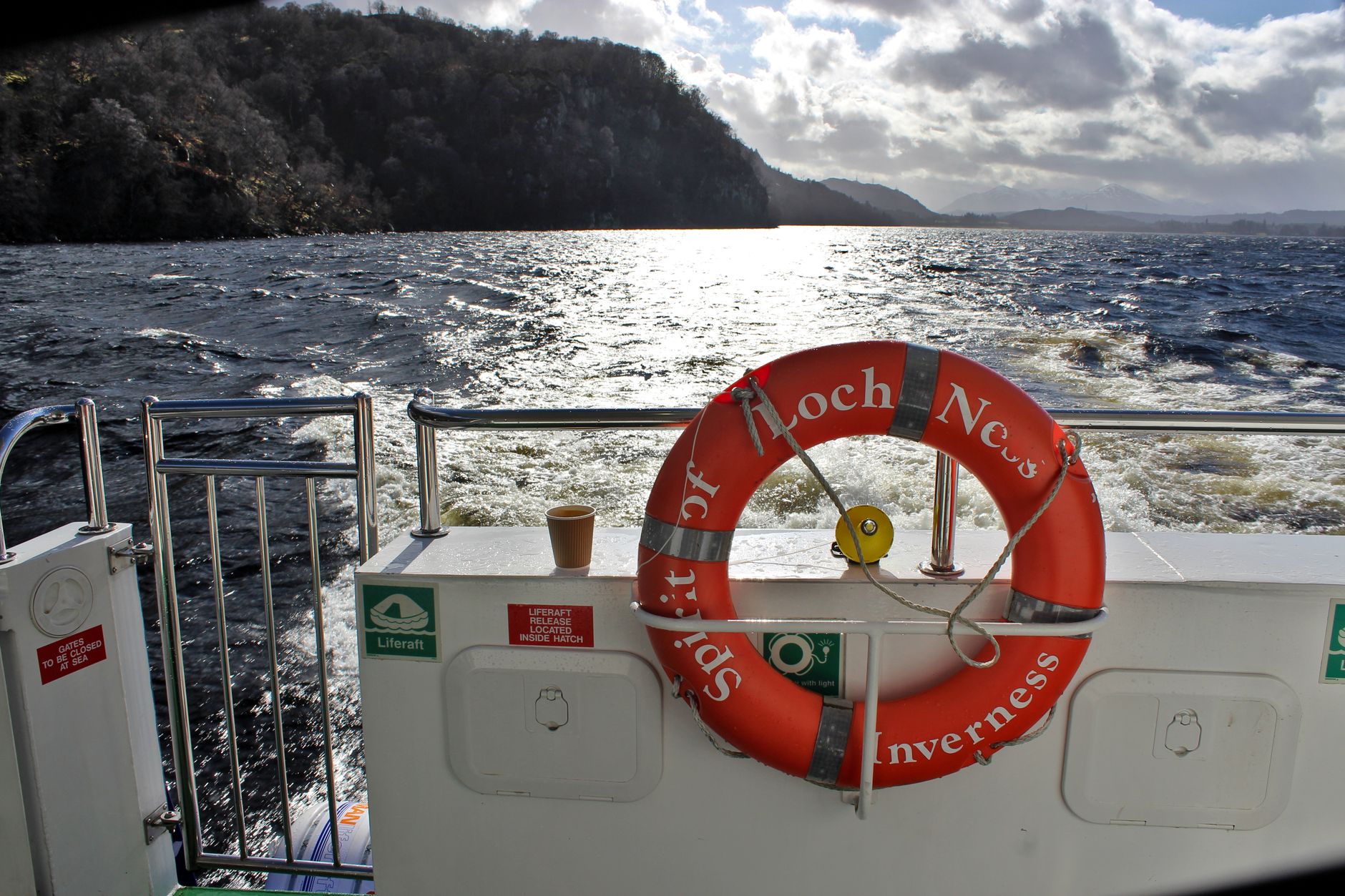
For a considerable amount of time, people all over the world, including locals, have been fascinated by the enigmatic being often known as the Loch Ness Monster, or Nessie. Among the many conjectures and theories concerning its genesis, one particularly fascinating theory contends that Nessie might be a living example of a plesiosaur, an amazing aquatic reptile that formerly coexisted with humans on Earth during the dinosaur era.
Despite numerous eyewitness reports and purported images fueling the public’s fascination with this elusive creature, scientific proof of Nessie’s existence is noticeably lacking. No solid evidence has surfaced to back rumors of a living dinosaur in the depths of Scotland’s famous Loch Ness, despite decades of intensive research by committed researchers.
A hypothesis suggests a relationship between Nessie and prehistoric animals such as plesiosaurs due to their morphological similarities. Plesiosaurs were powerful aquatic predators distinguished by their small heads, long necks, robust bodies, and specially designed flippers for swimming. Because of these similarities, some cryptozoologists have hypothesized that these extinct reptiles may have survived extinction events millions of years ago by hiding in Loch Ness’s secret depths.
People have long believed that pterosaurs, those amazing flying animals that dominated the skies during the time of the dinosaurs, are extinct. On the other hand, there have been ongoing tales and accounts of pterosaurs living in Papua New Guinea’s isolated rainforests.
Numerous indigenous communities in Papua New Guinea have long exchanged tales and traditions about their experiences with pterosaurs, despite the lack of hard evidence to back these claims. These tales frequently describe large, winged animals with long tails and pointed teeth as either perched in trees or soaring overhead. Some accounts even describe pterosaurs dragging children or small animals away.
A few daring individuals have recently descended into the heart of the Papua New Guinea bush to gather proof for these assertions. They returned with stories of strange, indiscernible sounds and unsettling sensations of being watched from above, but they did not return with concrete evidence.
Even though it may seem unlikely that pterosaurs might still exist today, it’s crucial to keep in mind that Papua New Guinea’s rainforests are full of secrets and unexplained occurrences. Given the amazing biodiversity of the area, it is quite plausible that a species of flying creature managed to stay undetected for such a long time.
Sea monster legends have captured people’s attention and instilled fear in the minds of those who dare to sail on open waters throughout history. These stories frequently feature creatures that bear a startling resemblance to extinct marine reptiles or even dinosaurs, which raises the potential that these species may still live in the ocean’s depths.

The Kraken is a legendary sea monster that has gained widespread attention. It is a large octopus that is rumored to inhabit the waves off the coast of Scandinavia. The Kraken was a terrifying sea monster that could pull sailors and ships to their watery demise, according to Norse mythology. Some have compared it to a giant squid or even an octopus, both of which are enormous, intelligent sea animals, due to its massive size and tentacles. The Kraken is a fearsome character in sea monster mythology, despite the fact that there have been no confirmed sightings of it. People have passed down tales of its legend over the years.
Beyond the legends of the Loch Ness Monster and the Kraken, there are a plethora of other sea monsters from all over the world that speak of animals that resemble marine reptiles or dinosaurs from prehistory. For instance, the Ogopogo, a marine reptile that is believed to reside in Canada’s Lake Okanagan, is sometimes characterized as a serpentine being with a small head and a long, skinny body that resembles a mosasaur. Mosasaurs are extinct. People describe the Cadborosaurus as a long, serpentine monster, similar to a plesiosaur, with a small head and a huge body. People claim it inhabits the waters off the coast of British Columbia.
Although there is no scientific proof that these sea monsters exist, their legends continue to pique people’s curiosity and ignite discussions about the potential that they may still be hiding in the ocean’s depths. Many scientists speculate that these stories could be exaggerated representations of real-life aquatic animals, such as enormous squid, whales, or even large sharks, twisted over time by oral tradition and folklore. However, the mystery surrounding these marine monsters will continue to captivate and stimulate us, stoking our curiosity about the unknown.
Analysis
The question of whether non-avian dinosaurs survived the K–Pg extinction is debatable due to a lack of conclusive evidence. The fossil record contains a significant void where these animals would have appeared if they had survived, and there is no concrete evidence to support the cryptids, often mentioned as potential dinosaurs. It is also exceedingly doubtful that these species would continue to exist because the environments in which they would need to survive have undergone significant changes.
Since an air-breathing creature as huge and specialized as a dinosaur could not possibly evade observation for 66 million years, most mainstream scientists consider this scenario exceedingly implausible. However, the possibility of finding massive species in remote regions like the Congo or the oceans remains slim. Claims about dinosaur cryptids will remain contentious and untested as long as scientists cannot examine a living or dead specimen.
Conclusion
It is nevertheless romantic and imaginative to consider the possibility that some dinosaurs may still survive. Both adults and children imagine discovering a real dinosaur-filled Jurassic Park. Science, however, firmly believes that no non-avian dinosaur could have survived to the present day. Although reports of cryptid sightings around the world allude to residual remnants, they are unverified. Aside from birds, it appears that dinosaurs vanished 66 million years ago. However, science never stops surprising us. Therefore, the remote chance of finding living dinosaurs on some extinct planet maintains our sense of amazement. Even though the study of these cryptids is an intriguing aspect of popular culture, it does not offer reliable proof that prehistoric dinosaurs ever existed. The extensive fossil record and the offspring of these dinosaurs in birds carry on the dinosaurs’ heritage, not any secret survival.
References
Loxton, D., & Prothero, D. R. (2013). Abominable science: origins of the yeti, Nessie, and other famous cryptids. Columbia University Press.
Naish, D. (2001). Sea serpents, seals and coelacanths: an attempt at a holistic approach to the identity of large aquatic cryptids. Fortean studies, 7, 75-94.
Naish, D. (2016). Hunting monsters: Cryptozoology and the reality behind the myths. Arcturus Publishing.
Newton, M. (2016). Encyclopedia of Cryptozoology: A Global Guide to Hidden Animals and Their Pursuers. McFarland.
Woetzel, D. (2015). » Cryptozoology & Creation Apologetics.«. Creation Matters, 20(4).


Leave a Reply