
Greek mythology is an intricate network of interwoven stories featuring gods, heroes, and monsters. It is a captivating narrative environment that has had a significant and long-lasting influence on Western civilization. The monsters are unique among these mythological beings because of their hideous appearance and frequently terrifying abilities. These animals represented the fears and concerns of society in a tangible way, in addition to feeding the nightmares of the ancient Greeks. This film explores the mythology surrounding Greek monsters, revealing their tales and examining their symbolic meaning.
Medusa
Of the three hideous sisters known as the Gorgons, Medusa is arguably the most well-known. Most frequently, depictions of Medusa feature snakes writhing in place of her hair, further emphasizing her terrifying appearance. The most powerful tool at Medusa’s disposal was her sight, which could transform any person who looked directly into her eyes into stone. Remarkably, Medusa wasn’t always a monster—rather, Athena transformed her into one in retaliation for her mistreatment at the hands of the deity Poseidon. This story element gives her character more complexity by implying themes of change, rage, and the perils of unbridled pride.
Hydra
The multi-headed serpent known as the Hydra poses an almost unbeatable task because of its extraordinary capacity for regeneration. Any severed head would regenerate into two. This hideous beast haunted Lernae’s marshes and tormented the local populace. The Hydra’s tenacity represents the enduring nature of issues or evils that, if left unchecked, could grow more numerous and terrifying. As one of his Twelve Labors, Heracles defeated the Hydra, symbolizing the victory of strategy and perseverance over seemingly insurmountable obstacles.
Chimera
The Chimera is a terrifying hybrid of several animals, with the head of a goat sticking out of its back, a lion’s torso, and a fire-breathing serpent for a tail. The Chimera was born from the mating of two horrific beings, Typhon and Echidna, and tore across the regions of Lycia until the hero Bellerophon killed it. The Chimera is a composite creature that represents chaos and disorder—a terrible representation of nature’s laws broken. Its imagery has persisted over the years, symbolizing the ideas of the impossible and the hideous.
The Minotaur
The Minotaur, a tragic figure locked inside the labyrinth of Crete, is a creature with a bull’s head and a human body. The Minotaur, a symbol of shame, was born from the coupling of Queen Pasiphaë of Crete and a beautiful bull. The renowned architect Daedalus locked it away in a complicated labyrinth. The Minotaur stands for the inner beast—the instinctive, primitive drives that exist in opposition to society’s established order. The final killing of Theseus represents the triumph of reason over force.
Sirens
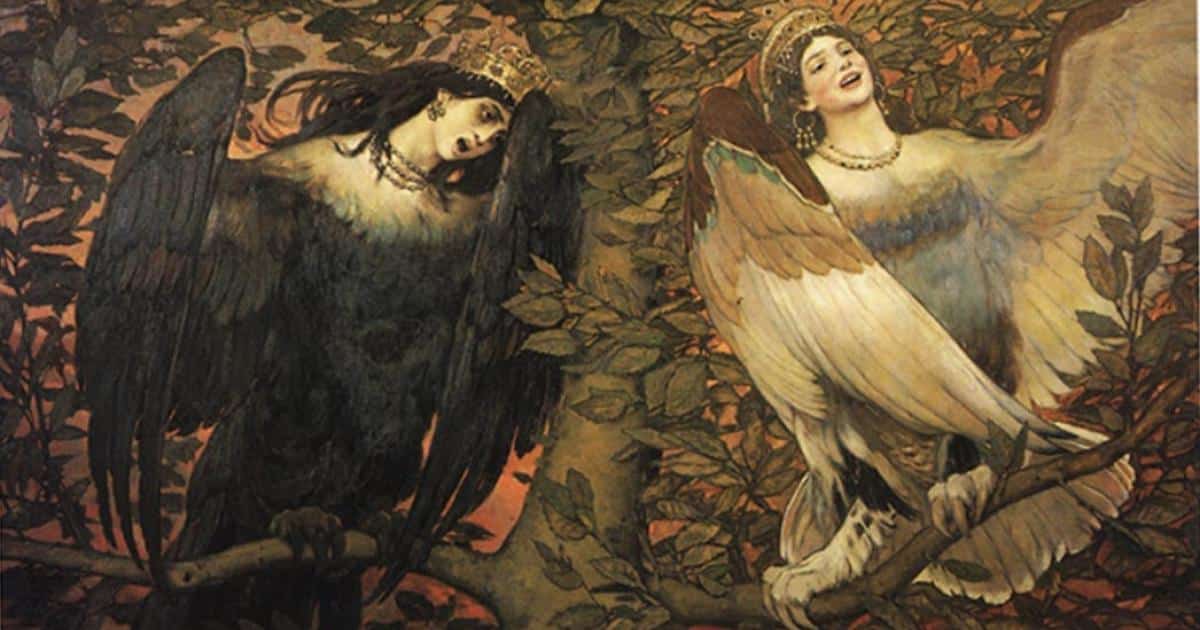
Often depicted as stunning women with birdlike characteristics, the Sirens are notorious for their mesmerizing singing that lures sailors to their deaths. With their seductive melody acting as a metaphor for irresistible yet harmful impulses, the Sirens represent the dangerous allure of temptation. Their story serves as a warning about the perils of giving in to alluring delusions.
It’s interesting to note that Greek mythology regarded sirens as mermaid-like creatures. Greek mythology sometimes depicts them as cunning mermaids, posing a similar risk to males.
Harpies
According to Greek mythology, the Harpies were fearsome animals that instilled fear in humans’ hearts. These mythical creatures had a body like a bird and a face like a woman, giving them a distinctive and hideous look. Still, there was more to their scary nature than just their appearance.
Known for their unmatched ferocity and extraordinary speed, the Harpies served as constant harpies in classical Greece. With unparalleled agility, they would swiftly descend onto gullible targets and take away both people and stuff. But what remained when they left was not just the eerie sense of loss but also an overpowering odor—a persistent reminder of their evil intentions.

Cerberus
Cerberus, with his three terrifying heads and fierce personality, was the imposing gatekeeper of the Underworld’s entry. Its main responsibility was to prevent any soul from leaving the world of death and to warn off any living thing that dared to enter its gloomy depths.
Cerberus represents death’s ultimate finality and inevitable aspect. With each head representing a distinct facet or stage of life (past, present, and future), this hideous creature appears to have the remarkable ability to understand a person’s entire life at once. Its very existence serves as a melancholic reminder that some boundaries should remain unbroken.

Nemean Lion
This terrifying monster from Greek mythology was well-known for its unbreakable strength and impenetrable skin. This powerful beast was one of the most well-known obstacles that Heracles encountered during his Twelve Labors. The heroic figure faced an unbeatable obstacle that would put his resolve to the test when he set out on his torturous quest to attain immortality and redemption—this formidable lion.
The Nemean Lion terrified everyone who dared to get near it, since its hide was unaffected by armor or weapons. Legends whispered of warriors who valiantly attempted to breach its unbreakable barriers, only to ultimately succumb to its relentless assault. Villages in its path shook with fear at the sight of its savage roar and razor-sharp claws reverberating through the dark woodlands.
The lion represents the seemingly insurmountable obstacles that heroes must get past in order to establish their value.
Sphinx
The Sphinx was a mysterious being that had a seductive human head, a strong lion’s body, and majestic bird wings. She used her riddles to ensnare travelers. This enigmatic creature served as a strong guardian at the nexus of destiny and knowledge across the ancient world. Wanderers came across the seductive and scary Sphinx as they neared her kingdom, and their fate was in jeopardy.
The Sphinx would test the bravery and intelligence of anybody who ventured to pass her piercing eyes, which appeared to reach right into one’s innermost soul. Her crafty mind created complex riddles that required a person seeking passage to possess both insight and unyielding determination. Only those who could decipher her mysterious riddles had any chance of escaping her clutches and making it through their perilous travels unharmed.
The sphinx represents the complex and cryptic nature of wisdom and understanding.
Echidna
Greek mythology’s Echidna was a fascinating creature that combined the menacing attraction of a serpent with the elegant grace of a woman. Echidna’s remarkable demeanor as a hybrid of a serpent and a woman captivated the ancient Greeks because of her perceived mystique.
Beyond her fascinating physical appearance, however, Echidna was an even more important figure in Greek mythology because she was known for being the mother of many infamous monsters. Her progeny would go on to terrify gods and mortals alike, with their powerful abilities and evil spirits.
Echidna was the ancestor of many grotesque monsters, including some of the most feared beasts in Greek mythology. Her notorious offspring included vicious creatures like Orthrus, an intimidating two-headed hound known for its ferocity; Chimera, whose hideous shape incorporated features from several animals; and Cerberus, Hades’ three-headed guard dog.
The echidna represents the scary unknown that exists outside the boundaries of the known world, along with the source of chaos and fear.
Analysis
Greek mythology uses monsters for a variety of reasons, such as giving heroes fearsome foes or representing society’s anxieties or intangible ideas. Their tales are emblematic of humanity’s battle against erratic and powerful forces, and they symbolize the chaos and unpredictability that exist beyond the bounds of the known world.
Once a gorgeous woman, Medusa now represents the effects of conceit and heavenly wrath. Her hideous shape and stony eyes perfectly capture the idea of crippling terror. The Hydra, with its endless proliferating heads, symbolizes issues that escalate if not fully resolved at their source, serving as a metaphor for enduring challenges encountered in daily life. The Minotaur, imprisoned in a labyrinth, symbolizes the beast within us and our primitive and chaotic inclinations, while the Chimera, a hybrid creature, depicts chaos and the breakdown of natural order.
The harpies and sirens, respectively, are symbols of impending punishment for transgressions and cautions against seduction. Cerberus is a somber reminder of death’s finality, standing as a sentinel on the brink of life and death. The unbeatable Nemean Lion symbolizes seemingly insurmountable obstacles that bravery and skill can overcome. The enigmatic Sphinx represents the difficulties encountered in the quest for knowledge, as well as the riddle of wisdom. Lastly, Echidna, the mother of monsters, symbolizes the endless source of chaos and terror, reflecting the fear of the unknown in humans.
Conclusion
Greek mythology’s monsters, in all their hideous splendor, are more than merely legendary creatures created to arouse dread. They are symbolic beings that represent distinct cultural anxieties, moral teachings, or impersonal ideas. These animals, from Medusa’s terrifying stare to the Sphinx’s difficult riddles, act as mirrors reflecting human nature and our struggles with obstacles and phobias. They are an essential component of Greek mythology, adding richness and fascination to the stories with their presence and nuanced metaphorical meanings. Through their tales, we delve into the realm of Greek imagination while simultaneously delving into the ageless and universal themes of temptation, fear, wisdom, and the human struggle against insurmountable obstacles.
References
-
Hamilton, E. (1942). Mythology. Little, Brown and Company.
-
Graves, R. (1955). The Greek myths. Cassell.
-
Evslin, B. (1966). Heroes, gods and monsters of the Greek myths. Thomas Y. Crowell.
-
d’Aulaire, I., & d’Aulaire, E. P. (1962). D’Aulaire’s book of Greek myths. Doubleday.
-
Rose, H. J. (1958). A handbook of Greek mythology (6th ed.). Methuen.
-
Guirand, F. (Ed.). (1959). Larousse encyclopedia of mythology. Prometheus Press.

Leave a Reply