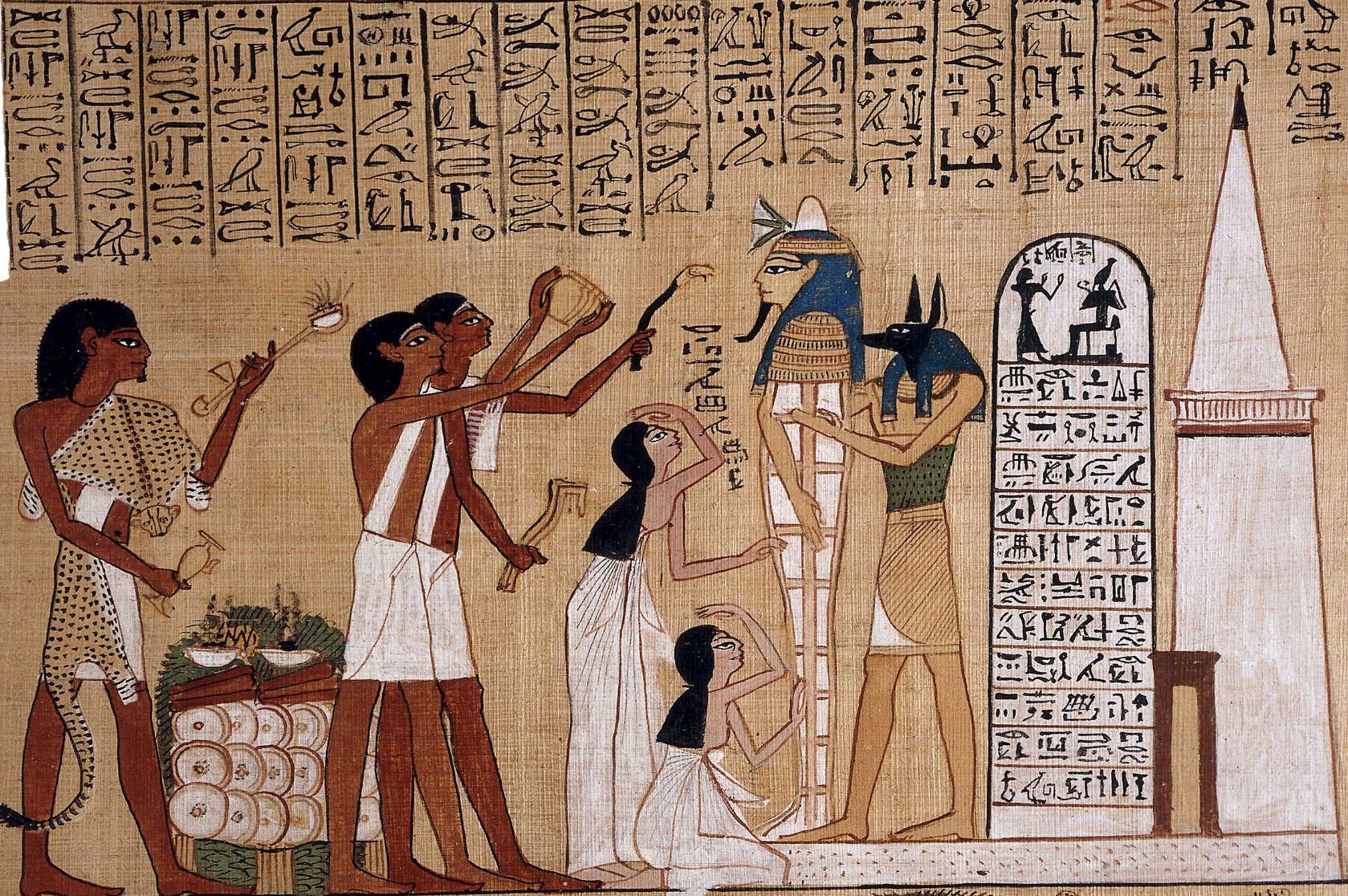
Just as modern society employs a wide range of medical modalities (e.g., conventional Western medicine, homoeopathy, TCM, and alternative therapies), so did the Ancient Egyptians.
Sources
Some methods of illness treatment were quite precise and clinical. With its inclusion of forty-eight case studies, the Edwin Smith Surgical Papyrus exemplifies a logical and scientific method. Through each case study, readers can delve into the Ancient Egyptian perspective on the injury, examination, diagnostic criteria, prognosis, and therapeutic route.
The London-Leiden Papyrus is typical of other papyri in that it places a far greater emphasis on the mystical.
As a result, Ancient Egyptians made use of both methods. One possible criterion is the kind of disease being treated. It would be possible to treat illnesses using non-magical methods if their causes were recognized. Things like crocodile bites and fractured bones would be considered part of this. But if the origin of a disease remained a mystery, its treatment might be based on mystical concoctions concocted by evildoers.
It is also possible that the doctors relied on their personal tastes, with some favoring a more clinical approach and others more of a magical one. “Magic is effective together with medicine,” the Ebers Papyrus states. When combined with magic, medicine works wonders.

Ancient Medicine
In Ancient Egypt, priests held the position of highest-ranking physician. Wabu was the name given to these priest-physicians. These were your typical priests, each one bound to their own shrine and god. Sunu, who were lay physicians, were also present. These stood on their own, unrelated to any one temple or god. There were also magicians who doubled as doctors, known as sesh-per-ankh. The magicians from the House of Life were identical to these. This indicates that three distinct medical specialties existed in Ancient Egypt.
There were strict rules around the practice of medicine, and those who broke these rules faced harsh punishments. It was acceptable to use both magical and medical methods. Aside from magical techniques, the wabu and sunu also made use of clinical methods, whereas the sesh-per-ankh relied only on magical techniques. Except for the Edwin Smith Surgical Papyrus, which adheres strictly to clinical practice, most of the surviving medical papyri are believed to have been composed by the sesh-per-ankh.

Medicine-Related Deities
Sekhmet: One of the most significant deities in Ancient Egyptian medicine and healing was Sekhmet, a terrifying goddess with a lion’s head. It was common practice to bestow high medical titles on Sekhmet priests in recognition of their legendary healing abilities. As an example, Nedjemou held the titles of “Chief of the Physicians” and “Chief of the Priests of Sekhmet.”
Serving as both “High-Priest of Sekhmet” and “Chief of Magicians,” Heryshefnakht was a physician to the pharaoh. But it was also thought that Sekhmet could bring illness and cure it. One interpretation of the task of curing illness is to appease Sekhmet so that she does not bring out further epidemics.
Others who were associated with health and healing were:
Isis: After Seth severed her husband Osiris’s limbs, she mended them and gave him new life. Healers would pray to her, goddess of magic, for help in curing patients.
The Egyptian god Thoth, who had an ibis head, was often shown writing. His six volumes on anatomy, surgery, remedies, eye diseases, women’s ailments, and general diseases were attributed to him by the Greeks.
In Ancient Egypt, the eye of Horus served as a protective emblem and a means of warding off illness.The ancient Egyptians often sought medical treatment at these temples.
Temples of Dendera and Queen Hatshepsut’s mortuary temple were particularly revered for their curative properties.
Priests and physicians at the Temple of Dendera administered healing baths made of enchanted water. Pouring the water over monuments that had been inscribed with incantations gave them a magical quality. People who were ill may take a dip in the water and feel better thereafter.
Inside the temple, there were additional crypts where patients would go to sleep, lit only by special lamps meant to induce therapeutic dreams. The dreamer sought a remedy for their sickness by consulting the gods.
Long after her death, Queen Hatshepsut’s temple continued to be renowned throughout the Ptolemaic Dynasty for its curative powers.
Imhotep and Amenhotep, who were both priests of her temple, were doctors. Greeks associated Imhotep with their god of healing Asclepius, and he was the architect of the first pyramid—the Step Pyramid—commissioned by King Djoser. Graffiti art from pilgrims who sought solace at this temple attests to its prominent role in the healing community.
Germs and bacteria were apparently considered “disease demons” by the Ancient Egyptians. The germ hypothesis that we use today is very close to their ideas on how diseases propagate. Additionally, they stated that diseases might spread from one location to another and from person to person through the following means: “the wicked spirits,” “the emissaries of Sekhmet.”
References
Breasted, J. H. (Ed. & Trans.). (1930). The Edwin Smith surgical papyrus (Vols. 1–2). University of Chicago Press.
Bryan, C. P. (Trans.). (1930). The Papyrus Ebers: The greatest Egyptian medical document. Levin & Munksgaard.
Griffith, F. Ll., & Thompson, H. (Eds. & Trans.). (1904). The demotic magical papyrus of London and Leiden (Vols. 1–3). Grevel.


Leave a Reply