Egyptian mythology is a huge collection of stories and beliefs. It has a lot of different gods and stories, but they all have some common themes and traits. These themes give us a lot of information about how the Ancient Egyptians thought about the spiritual and material worlds. They show how deeply they thought about the universe and life itself. A closer look at these themes, backed up by more general information, expert opinions, and specific examples, shows how important Egyptian mythology was in shaping the culture and religion of society.

Themes
The idea of order versus chaos is one of the main ideas in Egyptian folklore. The principle of Ma’at, which stands for truth, balance, order, and justice, is a good example of this. When you put Ma’at next to Isfet, they stand for chaos, lies, and disorder. Wilkinson says that the Egyptians thought the world went from being chaotic to having a set order, which the gods, pharaohs, and people were in charge of keeping up. This balance in the universe was important for the state’s health and for the continuation of the universe itself. The fight between the gods Seth and Horus illustrates this theme. In Egyptian mythology, Seth, who stands for chaos and disorder, and Horus, who stands for order and security, fight for the throne. Hart asserted that despite Seth’s negative reputation, his significance stemmed from his role in protecting the sun god Ra during his nightly battles with the snake Apophis in the underworld.
The cycle of life and the afterlife, akin to the sun’s path across the sky and the Nile’s flooding, is another significant aspect of Egyptian folklore. The story of Osiris, the god of the afterlife, farming, and rebirth. Seth betrayed and killed Osiris, but his wife, Isis, brought him back to life. People saw his death and rising not as two separate events but as an eternal process that goes around and around. The Egyptians believed in the future and the possibility of being born again after death. This narrative reinforced their religious convictions in these domains. Egyptologist Pinch asserted a connection between Osiris and crop growth. He said that Osiris’s resurrection represented the annual growth of the first crops, which is why his story is so important to farming practices.
The blend of the natural and the divine in Egyptian folklore is another distinctive feature. Many Egyptian gods had a connection to natural events. Ra, for example, sailed across the sky every day in his divine boat. The sky goddess Nut ate him at dusk and rebirthed him at dawn. These myths helped explain and alert people to natural events, making them more well-known and less scary. In Egyptian folklore, the worship of animals as gods aligns with this theme, as depictions of gods often feature humans with animal heads. In his writings, Lesko said that Anubis‘ jackal head represents his job as an afterlife guardian, while Hathor’s cow horns stand for mothers and fertility.
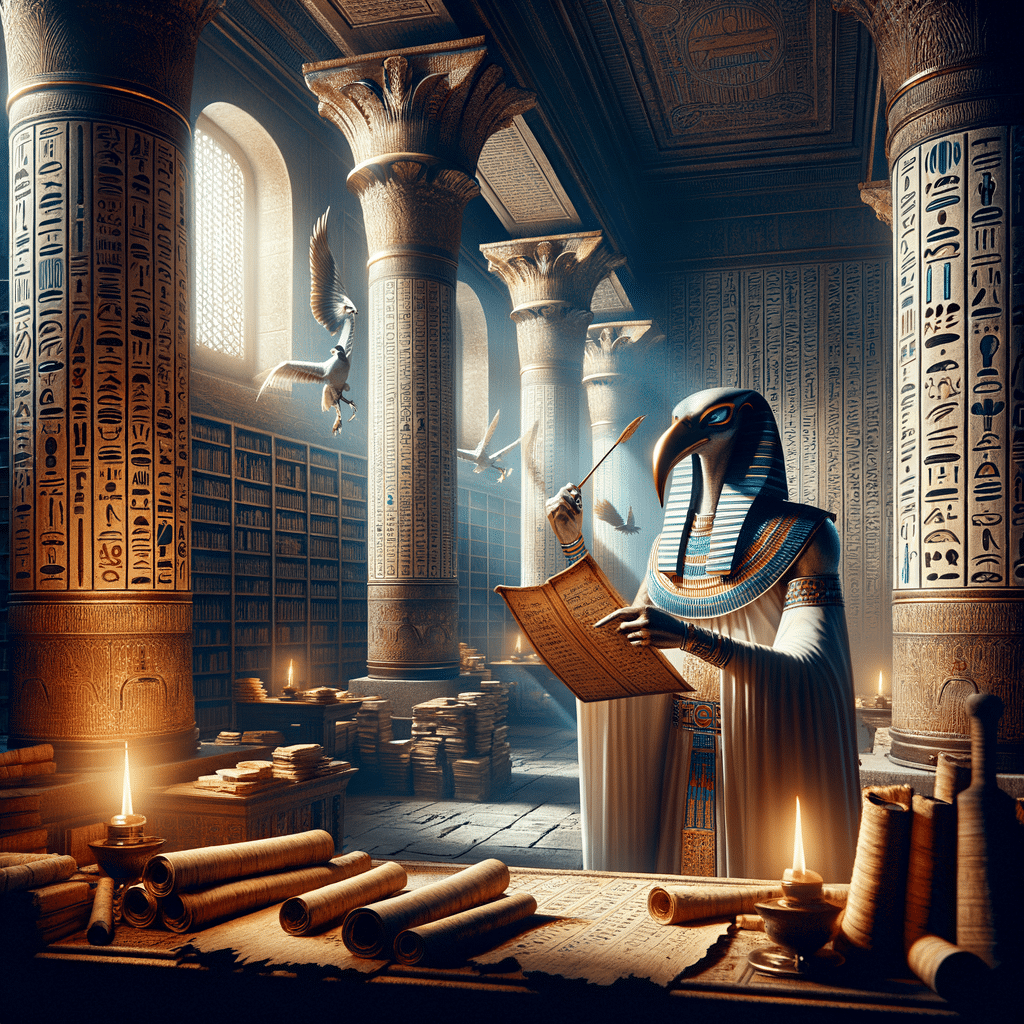
The concepts of life and death, as well as chaos and order, play a significant role in Egyptian folklore. Hornung says this idea goes all the way to showing gods with complicated personalities and many sides. One example is Thoth, who is the god of wisdom, as well as the one who settles disputes between gods, writes, stores information, and is the master of both spoken and written language. All of these different jobs show that the Egyptians understood how complicated the gods and their forms were, just like life itself has many sides.
Additionally, the protective nature of many Egyptian stories demonstrates the Egyptians’ concern for safety and security in both life and death. People believed that amulets, magic, and the complicated ceremonies written in the Book of the Dead would help the dead find their way through the underworld and keep them safe. This not only illustrates the incorporation of mythology into daily Egyptian life but also demonstrates its role in easing people’s anxieties about the future and the supernatural. Taylor asserts that the Book of the Dead is not a singular text but rather a compilation of spells tailored to each individual’s future needs.

Conclusion
Scientific research, especially in the fields of archaeology and Egyptology, has helped us figure out how these myths affected Egyptian culture. Excavated tombs and temples have revealed pictures and writings that align with popular myths. This demonstrates how important they were to religious activities and everyday life. For example, according to Sauneron, the Temple of Edfu has many writings that explain the story of the battle between Horus and Seth, demonstrating how important this story was in Egyptian society.
Egyptian mythology is primarily about the struggle between order and chaos, the concept of dualism, the cycle of life, the idea that the natural world is part of the divine, and the protective power of myths. These themes and traits show how the Ancient Egyptians saw the world. These ideas shaped their religious and philosophical views and helped them make sense of things that happened in nature as well as in their own lives. Egyptian mythology’s timeless stories continue to fascinate both scholars and fans, giving us deep insights into one of the most interesting societies in history.
References
Hart, G. (2005). The Routledge Dictionary of Egyptian Gods and Goddesses. Routledge.
Hornung, E. (1999). The Ancient Egyptian Books of the Afterlife. Cornell University Press.
Lesko, B. S. (1999). The Great Goddesses of Egypt. University of Oklahoma Press.
Pinch, G. (2004). Egyptian Mythology: A Guide to the Gods, Goddesses, and Traditions of Ancient Egypt. Oxford University Press.
Sauneron, S. (1957). The Priests of Ancient Egypt. Cornell University Press.
Taylor, J. H. (2013). Journey through the Afterlife: Ancient Egyptian Book of the Dead. Harvard University Press.
Wilkinson, R. H. (2003). The Complete Gods and Goddesses of Ancient Egypt. Thames & Hudson.

Leave a Reply