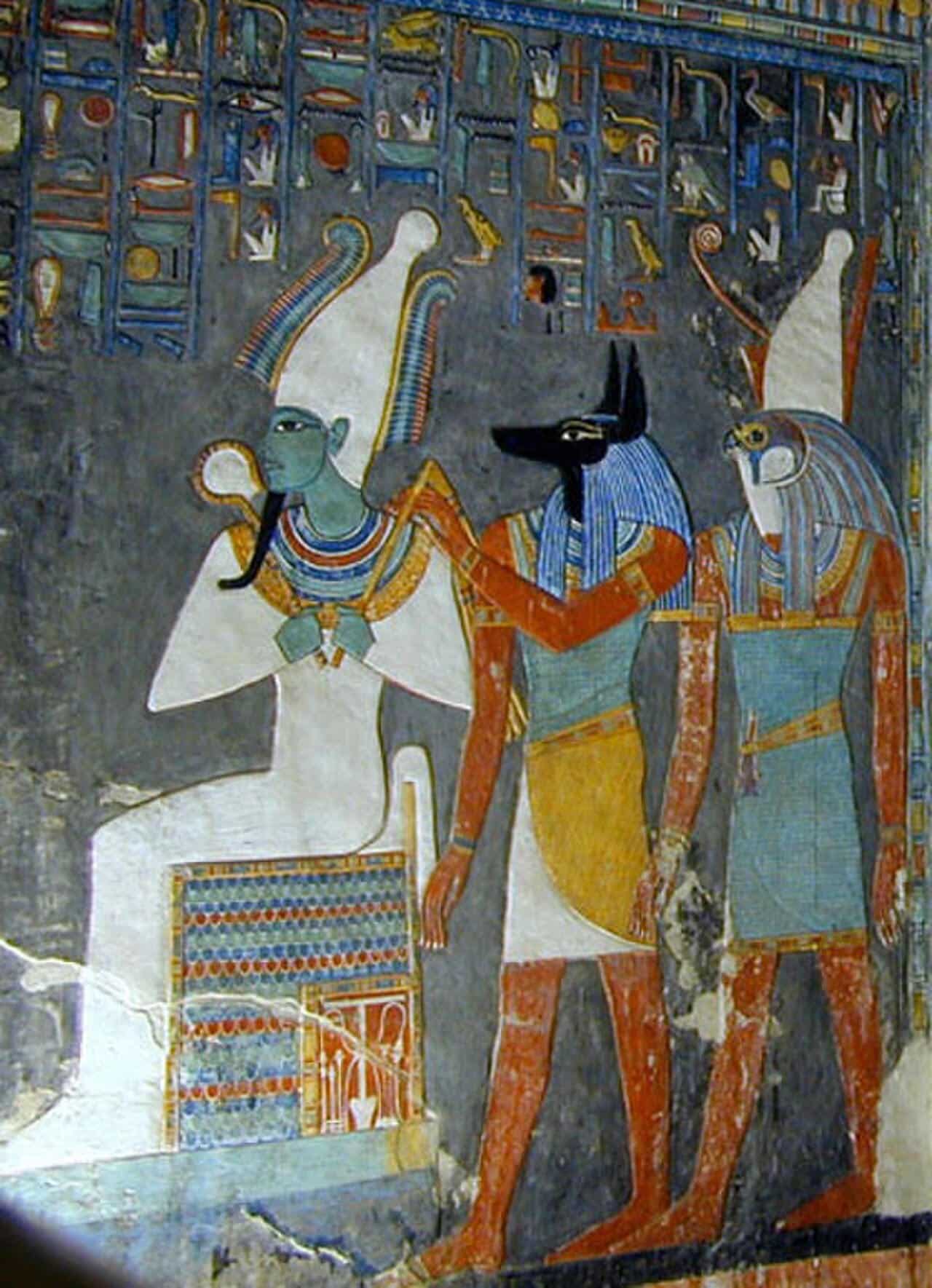
Over the course of history, the ancient Egyptians worshipped an estimated 2,000 deities. In addition to being essential to Egyptian spirituality, these gods and goddesses served as a reflection of the intricate social and political systems of the day. Many of these gods were intensely adored in particular places, frequently in the context of powerful religious cults that influenced politics. We will examine the lives and legacies of the Ennead of Heliopolis’ nine main deities in this essay, which will focus on one of these cults’ most powerful examples. We will also look at how some of these deities are still held in high regard by contemporary eclectic pagans.
The Ennead of Heliopolis: A Pantheon of Creation and Cosmic Order
One of the most powerful religious cults in ancient Egypt, the Ennead of Heliopolis offers a complex tapestry of mythology, symbolism, and cultural significance. Every god in this pantheon has special qualities and legends that have shaped ancient Egyptian culture and are still relevant in contemporary religious activities. Here’s a closer look at each of these influential people:
1. The Atum-Ra
The main deity in the Heliopolitan cosmology is Atum, who eventually united with the sun god Ra to become Atum-Ra. He is portrayed as the creator god, emerging via self-begotten ways from the primordial waters of Nu. Atum-Ra is a representation of the sun, the ultimate source of all life, strength and creativity. He is frequently portrayed in human form wearing the dual crowns of Upper and Lower Egypt, which stand for his omnipotence.
2. Shu
Atum’s first creation, the deity of light and air, Shu, was said to have been created from his breath or from a sneeze. A classic image that portrays Shu’s position as the deity of space and light is him holding Nut (the sky) and Geb (the earth) apart with his arms. Shu represents the air between the sky and the earth. Shu is also linked to calmness and coolness, which are essential for preserving harmony and order in the universe because she is an incarnation of the atmosphere.
3. Tefnut
Tefnut represents water, fertility, and dampness. She is Shu’s twin sister and consort. She is frequently shown as a lioness or as a lady with a lioness head, signifying her fierceness. Because of her connection to rain and moisture, Tefnut was directly linked to the fertility of the Nile and the general well-being of the land, which was essential for the Egyptian people’s survival.
4. Geb
The earthly god Geb is seen sleeping beneath the arch of Nut, the goddess of the sky. He is frequently depicted as having green skin, which stands for fertility and vegetation. Geb’s significance extends beyond the ground itself; he is connected to ideas of mortality and the afterlife since he is revered as the father of snakes and is connected to funeral customs.

5. Nut
The sky goddess Nut, whose body is portrayed as a starry sky, arches protectively over her consort Geb. Nuts are essential to the cycles of day and night, life and death. They are not only the mother of the sun but also the moon’s nightly regenerator. Her representation within sarcophagi shows her function as a guardian goddess, encircling the deceased in her celestial arms.
6. Osiris
The deity of fertility, resurrection, and the underworld is Osiris, possibly the most well-known of the Ennead’s characters. Originating as a fertility deity, Osiris became a symbol of endless life and moral integrity as his legend revolved around his death and resurrection. His green skin represents a fresh start. The story of Osiris’s death by his brother Seth and subsequent resurrection by Isis is among the most well-known in Egyptian mythology.
7. Isis
Isis is a goddess of protection, magic, and healing. She is the mother of Horus and the spouse of Osiris. She is shown as a strong mother figure by her commitment to protecting their son Horus and bringing Osiris back to life. Because of her significance in the mythological, ceremonial, and regal domains, Isis is frequently portrayed wearing a crown fashioned like a throne or clutching an ankh, the emblem of life.
8. Seth
The deity of chaos, storms, and warfare, Seth, is frequently shown as an animal with an enigmatic and unidentified head, signifying his association with the unknown and the alien. Seth plays a multifaceted function that includes killing Osiris and opposing Horus in battles, but he is also essential to the universe’s equilibrium.
9. Nephthys
The sister of Isis and consort of Seth, Nephthys is a guardian goddess connected to servitude, the dark, and sadness. Nephthys, who is frequently seen next to Isis in funeral rites, plays a supportive and consoling function. She is a marginalized figure who personifies the liminal spaces between life and death.

Contemporary Rituals and Worship
The enduring attractiveness of these ancient deities’ tales and abilities is evidenced by the incorporation of their worship into a variety of pagan rituals in modern times. Nut, for example, is a holiday in contemporary magic circles, especially in Thelemic groups. Invoking her protection and wisdom through symbols and elements that connect to her ancient traits, adherents might perform rituals beneath the stars.
In a similar vein, Isis is highly revered in contemporary paganism, particularly in practices like Dianic Wicca that highlight the power of women and magic. Modern devotees frequently seek out her healing and protective abilities through dreamwork and other ritualistic activities, such as keeping dream journals and using rose petals to invoke her presence and guidance.
Osiris’s Legacy and Its Continuations in Contemporary Practice
In addition to illustrating the themes of death and rebirth, the myth of Osiris highlights the beliefs of the ancient Egyptians on justice and the afterlife. It tells the story of Osiris’s death at the hands of Seth and his resurrection through the magic of Isis. This myth is still relevant today, giving current religious activities their structure and rituals related to justice, rebirth, and moral integrity.
Conclusion
Ancient Egyptian gods and goddesses, especially those mentioned in the Ennead of Heliopolis, provide an intriguing window into the daily and spiritual lives of the Egyptian people. Their tales, replete with themes of creation, defense, rebirth, and fairness, have persisted for millennia, molding themselves to fit contemporary spiritual requirements and customs. Many people still revere these gods as real, animate beings who can still influence, inspire, and direct them. The fact that Egypt’s gods are still revered today, whether via academic research or spiritual practice, is evidence of their lasting influence on spirituality and human society.
Further Reading
1. “The Complete Gods and Goddesses of Ancient Egypt” by Richard H. Wilkinson (2003)
Wilkinson’s book is an essential resource for anyone interested in Egyptian mythology. It provides detailed descriptions and extensive analysis of each deity, including their roles, relationships, and iconography. The book also explores the integration of gods into Egyptian society and their influence over the millennia. It’s particularly valuable due to its comprehensive nature, making it a great starting point for both students and enthusiasts of ancient Egyptian culture.
2. “Conceptions of God in Ancient Egypt: The One and the Many” by Erik Hornung (1982)
This classic work by Erik Hornung is renowned for its in-depth examination of the theological and philosophical dimensions of ancient Egyptian religion. Hornung challenges the traditional views and provides a nuanced perspective on the complex nature of Egyptian gods. He discusses how the Egyptians reconciled the seemingly contradictory notions of polytheism and monotheism. This book is recommended for its thought-provoking analysis and its influence on later studies of ancient Egyptian theology.
3. “Egyptian Mythology: A Guide to the Gods, Goddesses, and Traditions of Ancient Egypt” by Geraldine Pinch (2002)
Geraldine Pinch’s work is an accessible and engaging guide to the rich tapestry of myths that form the backbone of Egyptian religious practices. This book not only catalogs various gods and goddesses but also gives insight into how mythology influenced daily life in ancient Egypt. Pinch provides clear explanations and context, making this book ideal for those who are beginning their exploration into Egyptian mythology or seeking a reliable reference guide.


Leave a Reply