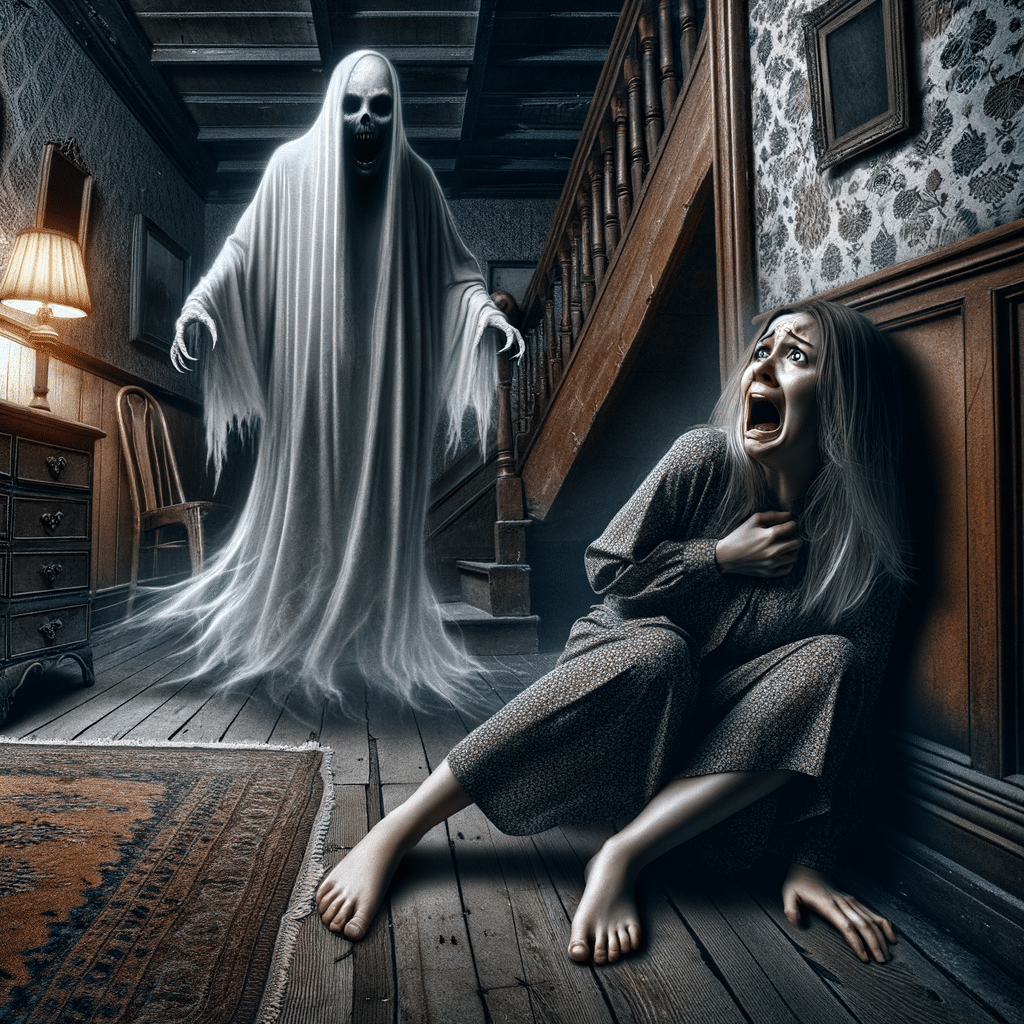
There are many things in the supernatural world that are both fascinating and terrifying, and undead ghostly beings are at the core of this duality. These ethereal entities are frequently bestowed with an array of abilities that not only subvert the laws of nature but also arouse a pervasive sense of discomfort regarding the transience of existence and the inevitable nature of death. By analyzing these abilities, we can classify them according to their characteristics and the significant impacts they have on the living world.
Environmental and Physical Manipulation
The capacity of ghosts to affect the material world is among their most prevalent characteristics. Especially frightening is their eerie ability to age their victims quickly. This ability can quickly turn a young person into an elderly one, emphasizing the destructive effects of aging. On the other hand, the capacity to control elemental forces like lightning indicates a mastery over nature that is beyond human comprehension.
Ghosts have greater direct control over their environment as well. This includes destabilizing the real world with poltergeist activity and fabricating illusions that warp reality and make people doubt their own sense of reality. These beings radiate light, which gives their surroundings an ethereal sheen and emphasizes their extraterrestrial nature.

Emotional and Psychological Impact
The power of the incorporeal undead to induce strong emotional emotions in people is well-known. They have the ability to immobilize and weaken even the strongest people with their array of tactics, which includes inspiring terror and inciting despair. With their hideous looks and the sound of keening that can portend death, they provoke revulsion and play on deep-rooted fears in the human psyche.
Direct Harm and Control
Direct physical harm is caused by some of the most feared phantom powers. Using spectral attacks to inflict wounds can result in injuries that are significantly more severe than those caused by normal means, and their capacity to corrupt and induce necrosis affects life itself. Aging more quickly might hasten a person’s deterioration and death, acting as a harsh reminder of one’s own mortality.
In addition, ghosts have dominion and control abilities. The enchantment of beasts demonstrates their influence even reaches into the animal kingdom, and control over the undead builds a hierarchy inside the spectral realm. The development of the undead demonstrates their capacity to carry on their spectral heritage and connect the souls of the recently deceased to their world.

Transcendent Powers and Resistance
Ghosts challenge our concepts of physical space with their ethereal qualities, such as intangibility and invisibility. Their ability to travel between worlds demonstrates how they exist in a state of liminality, where they are neither entirely present nor absent. They have specific resistances and immunities granted by this dualism, which makes them immune to many types of harm that impact living things.
Identification and Interaction
Ghosts can pinpoint the living with astonishing precision when they detect life, as it gives them a way to look for the energy that they themselves lack. This, together with their capacity to let forth melancholic wails or keening moans, enables them to engage in intense and frequently horrifying interactions and communication with the living.
Examination of Ghostly Talents
The variety of spectral abilities relates to ingrained human fears of loss of control, the unknown, and the hereafter. The capacity to influence the physical environment and elicit strong emotional responses highlights our anxieties regarding invisible entities that may interfere with and disturb our lives. Ghosts can cause physical harm and have power over both the living and the dead, which serves as a powerful reminder of how hazy the line is between life and death.
Because of all their powers, ghosts are nonetheless a source of fascination and fear. Their abilities, which range from subdued to blatantly horrifying, perfectly capture the spirit of the paranormal. These spectral beings and their many abilities, whether they are real afterlife manifestations or metaphors for unsolved issues, will live on in the collective consciousness as a reminder of humanity’s enduring fascination with the mysteries that exist beyond the veil.
Further Reading
Davies, O. (2007). The Haunted: A Social History of Ghosts. Palgrave Macmillan.
Owen Davies provides a meticulous social history of ghosts, tracing public perceptions and beliefs about the supernatural over centuries. This work was selected for its comprehensive examination of the cultural context in which ghost stories and beliefs have evolved, offering readers insight into how societal changes have shaped the notion of the paranormal.
Finucane, R. C. (1984). Appearances of the Dead: A Cultural History of Ghosts. Prometheus Books.
Ronald C. Finucane’s exploration delves into encounters with the spirits of the dead from antiquity to the modern era, across various cultures. This book is chosen for its broad historical scope and for providing an analytical approach to understanding the role of ghost sightings in shaping cultural and religious narratives.
Bann, S. (1995). Under the Shadow: The Supernatural and the Nineteenth-Century Domestic. Routledge.
Stephen Bann examines the intersection of the supernatural with the domestic sphere in the nineteenth century, focusing on how the home became a site for ghostly manifestations in literature and popular culture. This title was selected for its in-depth look at the psychological and sociological implications of hauntings in relation to family dynamics, gender roles, and the anxieties of the era.


Leave a Reply