
Podcast about the Origin of the Werewolf Superstition can be accessed above. This episode was part of several podcasts generated with Google NotebookLM and is the product of AI.
The podcast is about The Origin of the Werewolf Superstition by Caroline Taylor Stewart. It explores the origins and development of the werewolf belief around the world. The author argues that the werewolf superstition arose from primitive practices of disguising oneself in animal skins for various purposes, such as hunting, warfare, or sorcery. The belief in werewolves, she suggests, evolved from these practical uses and was shaped by cultural factors, including the prominence of specific animals in different regions, the development of supernaturalism, and the prevalence of mental illnesses like lycanthropy. The text provides a detailed historical and anthropological analysis of the werewolf belief, drawing on evidence from diverse cultures and historical periods to support its argument.

[Joe]
All right, ready to dig in. We’re howling at the moon today, folks, diving deep into werewolves. You wanted to know where this whole werewolf thing started, and trust me, it’s way more than just Hollywood monsters.
[Tammy]
It really is more than that. It’s not just silver screen stuff. This belief, this fear, it’s ancient, you know.
Echoes through time, pops up all over the world, across cultures. It’s amazing.
[Joe]
Yeah, it’s kind of mind-blowing when you think about it. A global phenomenon, right? Werewolf-like creatures, ancient Greece, the Americas, everywhere.
Makes you wonder, what were people seeing back then, out there in the dark?
[Tammy]
Right. It’s the question that always brings us back to those early encounters, you know. And the interesting thing is, the animal changes depending on where you are.
Europe, lots of wolves, so werewolves. But elsewhere, it could be big cats, bears, hyenas, whatever scared people the most.
[Joe]
So the animal might be different, but it’s always that human-to-beast thing that’s the core of it, yeah.
[Tammy]
Exactly. And when you put it in context, it makes sense. Think about those early humans.
Surviving meant understanding animals, outsmarting them, right? Food, clothing, but a huge danger too.
[Joe]
Oh yeah, I’m trying to imagine taking down like a woolly mammoth with a sharp stick. Not exactly a fair fight.
[Tammy]
No kidding. So they wore animal skins, not just camouflage, but to get close enough to use those primitive weapons. Imagine being the bait in a Stone Age wolf hunt.
Intense.
[Joe]
Whoa, next level hunting for sure.
[Tammy]
Yeah.
[Joe]
So they’re like becoming the wolf to hunt the wolf. That’s got to do something to how you see human versus animal, don’t you think?
[Tammy]
For sure. And that’s where things get interesting. That’s where it goes from practical stuff to ritual superstition, mimicking movements, sounds, trying to get that animal power.
That’s like early shamanism right there, trying to control nature.
[Joe]
From hunting strategy to, whoa, this guy’s got a wolf connection. I can see how that happens, especially back then.
[Tammy]
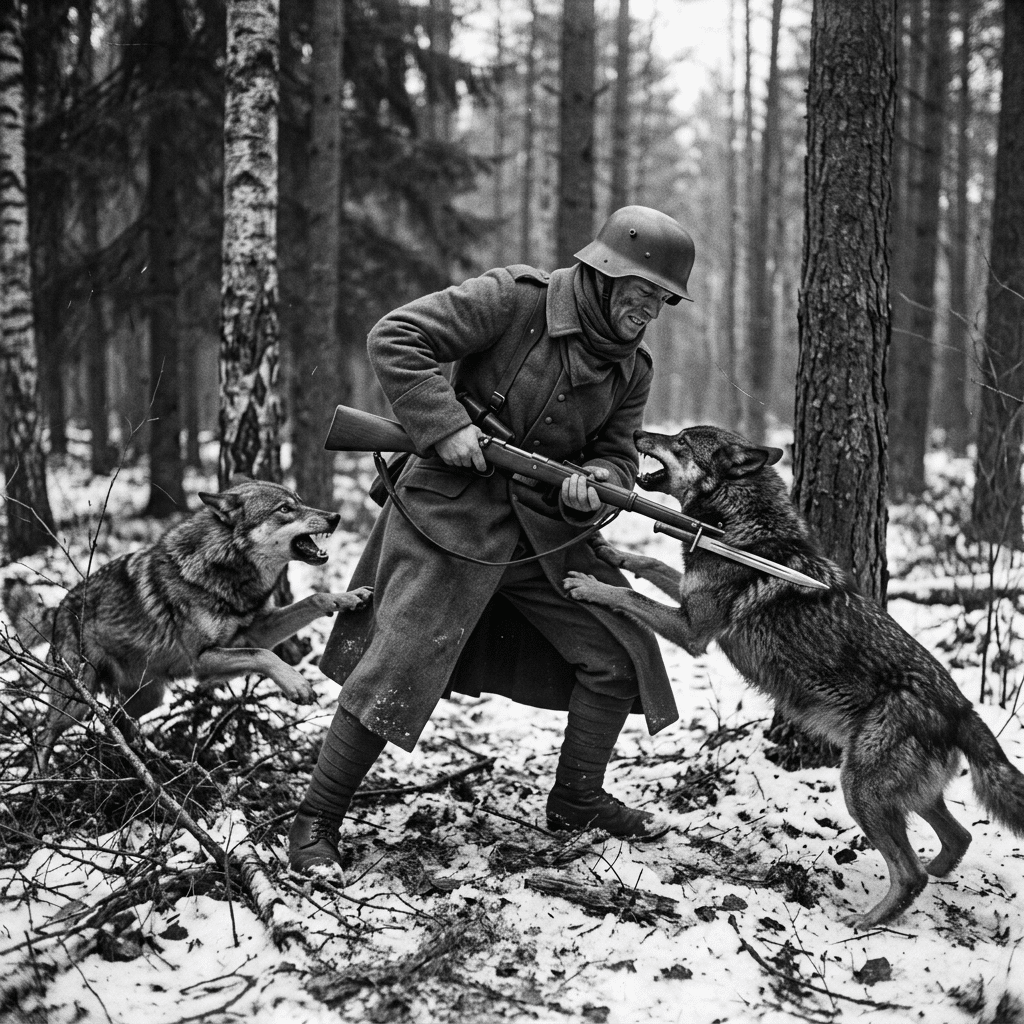
Exactly. And that’s where fear comes in. See, as humans got more organized, raiding parties, scouts, spies, suddenly someone lurking in the shadows, looking like a wolf?
Not coming for dinner. That’s danger.
[Joe]
Oh yeah, chills, right. Pitch black, you hear something moving, sounds like a wolf.
[Tammy]
Recipe for fear and for good reason. But it wasn’t just imagination. Real dangers fueled it too.
Rabies, for example. Bitten by a rabid animal, a wolf especially. Terrifying, contagious.
You can see the connection to the werewolf myth, right?
[Joe]
Totally. So you’ve got real danger, real fear, and then the stories we tell to explain it. It’s like the fear itself became contagious, spreading through stories, whispers, right?
[Tammy]
Exactly. And that’s when things change for the werewolf, because once that image, that fear is stuck in everyone’s mind, that opens the door for people to use it.
[Joe]
You know, it’s creepy thought, that fear becoming contagious like that. But you’re right, once that werewolf image was out there, people could really use it.
[Tammy]
Oh, absolutely. This is a time when myths weren’t just stories, right? They explained things people couldn’t explain, made sense of a scary world.
And the werewolf, it was like the perfect scapegoat, you know? A way to explain the darkness, literally and figuratively.
[Joe]
So, if you could control that fear, use it. You’d have a lot of power. The whole power dynamic thing gets really interesting there, don’t you think?
[Tammy]
Totally. And that’s what we see the werewolf used for everything. Social control, personal gain, you name it.
Think about it. You’re a shaman, a healer, claiming power over spirits. What better way to prove it than to say, hey, I control the werewolves, or even I can become one.
[Joe]
It’s like an ancient protection racket. I’ll protect you from the thing I might be making happen.
[Tammy]
Wow.
[Joe]
Talk about an origin story. Those villagers must have been terrified.
[Tammy]
It’s a fascinating parallel, isn’t it? And it keeps happening. Through history, you see the same patterns, secret societies, cults, even politics, using fear and superstition, you know, for their own purposes.
[Joe]
Nice to think how many myths started like that, right? Someone figuring out how to benefit from a good, scary story. Believe manipulation, it all gets mixed up.
[Tammy]
For sure. But let’s get back to the werewolf itself. We talked about why that human-animal thing was so powerful, but why a wolf, not a bear, a tiger, or something?
[Joe]
That’s a good point. Wolves weren’t the only scary predators out there. So why did the wolf become the poster child for this fear?
[Tammy]
Geography, mostly. Remember, we were talking about how the animal depends on the place. Well, Europe, wolves everywhere, threat to livestock, sometimes people too.
So the wolfman, that was the scariest thing they knew.
[Joe]
It’s almost like survival of the fittest, but for myths. Scariest, most common predator, that’s the one that ends up in the nightmares.
[Tammy]
Exactly. And as things changed, civilization spreading, bigger animals got pushed out, right? Bears, big cats, but wolves, they hung around.
Those stories, those feels, they stuck around too.
[Joe]
So those campfire stories, the whispers about shadowy figures, glowing eyes, it just got more and more real in people’s minds. A self-fulfilling process, kind of.
[Tammy]
And you know, it’s like that today, isn’t it? Look at urban legends, they’re always about things that creep us out, even now in the modern world. The things we fear, how we deal with nature, it all becomes part of our story.
[Joe]
That’s like our anxieties come to life, change with the times. Yeah.
[Tammy]
Exactly. And that brings us to a big question. If the werewolf is all about those primal fears that line between us and nature, what does that say about us?
And what about today? What monsters are we making right now? What will people say about our stories years from now?
[Joe]
Wow. Makes you think, doesn’t it? What scares us now?
How are those fears changing the stories we tell about the world? Makes you want to look over your shoulder, even in broad daylight, huh? It’s wild, right?
Like a scary story can tell us so much about ourselves, the things that freak us out, the things we worry about. It’s like a, I don’t know, like a psychological x-ray or something.
[Tammy]
That’s what makes these myths stick around, you know, hundreds of years and they still get to us because they’re about something real, something human, I think.
[Joe]
So even if we get it intellectually, like we know where the werewolf thing came from, how it changed over time, there’s still that part of us that’s like, ooh, spooky. You know what I mean?
[Tammy]
Definitely. It’s the power of stories. They remind us of a time when things weren’t so clear-cut human and wild, you know, that mix of wonder and terror.
[Joe]
It’s powerful. I get that. It’s like, even though we’re surrounded by technology, cities, there’s still that little bit of us that wants that connection to, I don’t know, the primal.
[Tammy]
And you see that in weird ways, honestly. Dystopian fiction, right? Post-apocalyptic stuff, nature taking over.
It’s that fear of losing control, humanity, nature, the lines blurring.
[Joe]
Whoa. So what will our myths be, you think? The stories we tell, that’ll still be around in a few hundred years.
What will they say about us?
[Tammy]
Right. That’s the question. And I don’t think there’s one answer.
Just like the werewolf changed, our fears changed too, right? They adapt.
[Joe]
So as we wrap up this werewolf deep dive, here’s the thing to remember. Next time you hear a scary story, doesn’t matter if it’s ancient or something you heard online, don’t just brush it off. Think about it.
What’s it saying about the people who tell it? What’s it saying about us?
[Tammy]
Because those monsters we create, those stories, they show us something real, the good and the bad. It’s all part of being human.
[Joe]
Well said. Something to think about. We’ll leave you with that, the monsters among us and all that.
Thanks for joining us on the deep dive. We’ll catch you next time.

Leave a Reply