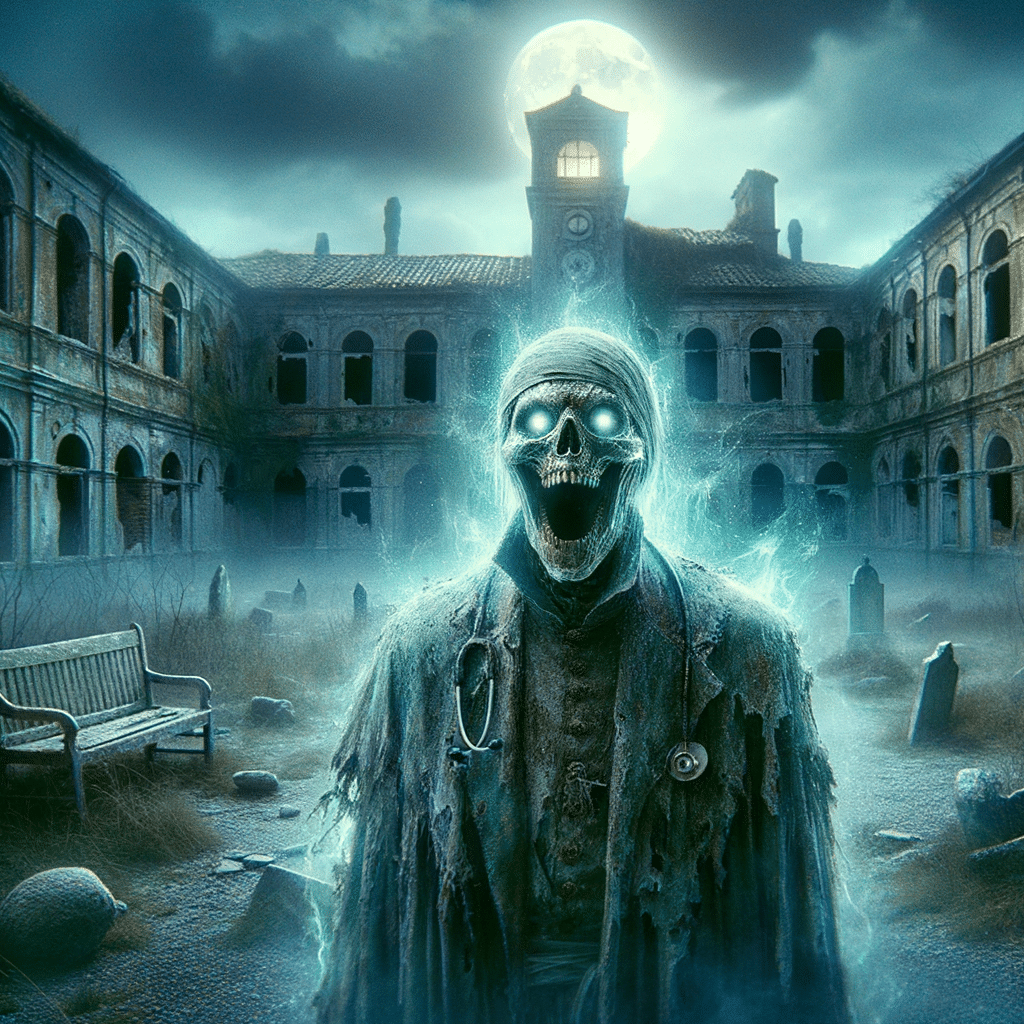
Located in the Venetian Lagoon, the little Italian island of Poveglia is one of the most well-known sites in the world for purported paranormal activity. This tiny island, which is less than half a mile long, has a reputation as one of the most haunted locations on Earth because of its gloomy past and the innumerable reports of paranormal activity.

Description
Poveglia, which lies between Lido and Venice, was a prosperous Roman settlement. During the collapse of the Roman Empire, the island provided sanctuary to those escaping barbarian assaults. But during the 14th-century Black Death, when Venice employed the island as a quarantine facility for plague patients, its idyllic past took a sinister turn. Some reports claim that they occasionally burned diseased people alive to prevent the disease from spreading and separated the dead and dying from the healthy populace. Estimates suggest that various plague outbreaks on the island claimed the lives of over 160,000 individuals, leaving mass graves and plague pits scattered across the island (Haag, 2021).
When Poveglia became a psychiatric hospital in 1922, its sinister history continued into the 20th century. According to local mythology, a doctor subjected patients to torturous experimental operations before supposedly going insane. According to these stories, the doctor climbed the hospital’s bell tower and jumped to his death, though some versions claim he survived the fall only to be strangled by a mysterious mist that rose from the ground (Flavel, 2023).
There have been many reports of paranormal activity on Poveglia, including spectral appearances from past mental patients and plague victims. Visitors have described screams, shadow figures, and strange physical sensations like pushing or scratching. While exploring the grounds, some tourists report feeling possessed or overcome by unpleasant feelings, and they report regular malfunctions of electronic equipment on the island. People claim that the bell tower continues to ring across the lagoon, despite the removal of its bell years ago (Cavallo & Visentin, 2020).
Visitors have spotted shadowy figures dressed in period attire strolling the grounds, especially in the vicinity of mass graves. Some report a spectral procession of plague victims, replete with the characteristic masks of birds that plague physicians wear. The most commonly reported noises were crying, groaning, and sporadic screaming, which appeared to come from beneath the plague pits.
The spirit of a mental hospital doctor who purportedly committed suicide by jumping from the bell tower is the most notorious of Poveglia’s purported ghostly residents. Throughout the facility, witnesses regularly describe coming into contact with what they perceive to be his restless spirit. These sightings usually describe a dark, ominous figure lurking in the bell tower, creating an intimidating silhouette against the Venice cityscape. Some visitors feel a suffocating presence following them through the hospital’s decaying halls, while others describe an invisible force physically pushing them as they ascend the tower’s stairs. The stories of people who say they saw an apparition in period medical garb performing surgery in the deserted operating rooms are possibly the most unsettling. People claim that the sounds of medical equipment and muffled screams accompany these phantom procedures, creating an especially eerie aura in the former operating locations. According to legend, the doctor’s spirit is particularly active at night and on cloudy days, when the island’s already ominous aura is at its height.

Paranormal Theories
Many theories explain the supernatural events of Poveglia. According to some paranormal researchers, the island’s enormous death toll and the anguish endured there have left a lasting impression, resulting in lingering hauntings. Others propose that the island’s limestone composition and proximity to water foster an environment conducive to energy storage and release, leading to the manifestation of paranormal activity. The hypothesis of limestone’s connection to hauntings has also extended to other purportedly haunted sites throughout the world (Goodwyn, 2011).
According to the disputed Dark Portal Theory in paranormal research, some places, especially those that are home to evil spirits or negative energies, can act as gates between our world and other realms. This hypothesis frequently comes up when talking about areas where there have been numerous reports of severe paranormal activity and troubling historical occurrences. Poveglia meets the requirements for being considered a dark portal (Pugliese, 2024).
Proponents of the Dark Portal Theory assert that Poveglia Island, with its numerous supernatural gates, not only serves as a haunted site but also serves as a true nexus between our world and deeper dimensions. Theorists assert that the concentrated misery of plague victims, the deaths of mental patients, and the documented medical experimentation create a “perfect storm” of circumstances for portal development.
Dark portal theorists identify a number of specific spots on Poveglia as possible gateway sites. The spiral staircase and suicide history of the bell tower make it a key portal point. People claim that the tower’s spiral structure, in particular, creates a vortex effect that amplifies supernatural energy. Scholars point to the strange bell noises and the mysterious mist, believed to have killed the insane doctor, as evidence of portal activity.
Researchers have also identified the island’s mass graves and disease pits as potential portal locations. These areas, marked by mass death and severe misery, are believed to have loosened the dimensional boundaries. According to portal theorists, compared to other sections of the island, these regions show more frequent equipment failures and higher electromagnetic disturbances.
In applications of portal theory, the basement of the former mental institution is especially significant. Researchers claim that the subterranean setting, patient suffering, and purported experimental practices produce a “layered effect” of negative energy. Visitors to this location report experiencing more extreme paranormal encounters, such as time distortion and disorientation.
Portal theorists speculate that the island’s location within the Venetian Lagoon may also be significant. It is believed that the nearby water serves as a conduit for supernatural energy, generating a system of natural amplification for portal activity. The limestone makeup of the island, which some scientists contend can store and release energy, might amplify these impacts.
According to some experts, Poveglia’s several possible portal locations produce a network effect, whereby the different gateways reinforce one another and sustain an ongoing cycle of paranormal activity. This could potentially elucidate the high number of reported paranormal events on the island and its perceived danger to tourists.
Nonetheless, there is still much debate and speculation surrounding the application of Dark Portal Theory to Poveglia. Detractors argue that the portal explanation overcomplicates what social, psychological, and environmental aspects could more easily explain, despite the theory’s established history and countless paranormal sightings making the island an intriguing case study.
However, skeptics offer more conventional explanations for the documented phenomena. They highlight the potential for inflated or entirely fabricated historical narratives about the island’s troubled past, aimed solely at attracting tourists. The island’s eerie environment and the power of persuasion may have triggered visitors reported bodily experiences. The island’s decaying buildings, shaky grounds, and the presence of poisonous materials from its medical past may explain feelings of unease and sickness. Furthermore, people are more likely to encounter paranormal phenomena on the island due to its remote location and infamous reputation, which could cause them to misinterpret natural events.
Conclusion
Despite the illegal entry of some tourists, Poveglia remains mostly deserted and closed to the public today. The island’s recorded history of human misery and death makes it an unquestionably creepy place, regardless of one’s belief in the paranormal. Its eerie history, remote setting, and dilapidated buildings all contribute to its standing as one of the most haunted sites in the world, which is evidence of people’s obsession with the macabre and the unknown.
References
Cavallo, F. L., & Visentin, F. (2020). THE ‘WORLD’S MOST HAUNTED ISLAND’. Ghost narratives and practices around Poveglia, an abandoned island in the Venetian Lagoon. Shima, 14(1), 194-211.
Flavel, A. (2023). Camposanto: Plague in the Venetian Republic (Doctoral thesis, The University of Western Australia).
Goodwyn, M. (2011). Ghost Worlds: A Guide to Poltergeists, Portals, Ecto-Mist, & Spirit Behavior. Llewellyn Worldwide.
Haag, A. (2021). Safeguarding the serene republic: Plague mitigation and the magistrato alla sanita in early modern Venice, c. 1347-1598 (Master’s thesis, Southeastern Louisiana University).
Pugliese, C. (2024). An Exploration of Ghost Doors and Ghost Spaces in Haunted-House Literature. The Cultural Construction of Hidden Spaces: Essays on Pockets, Pouches and Secret Drawers, 40, 155.


Leave a Reply