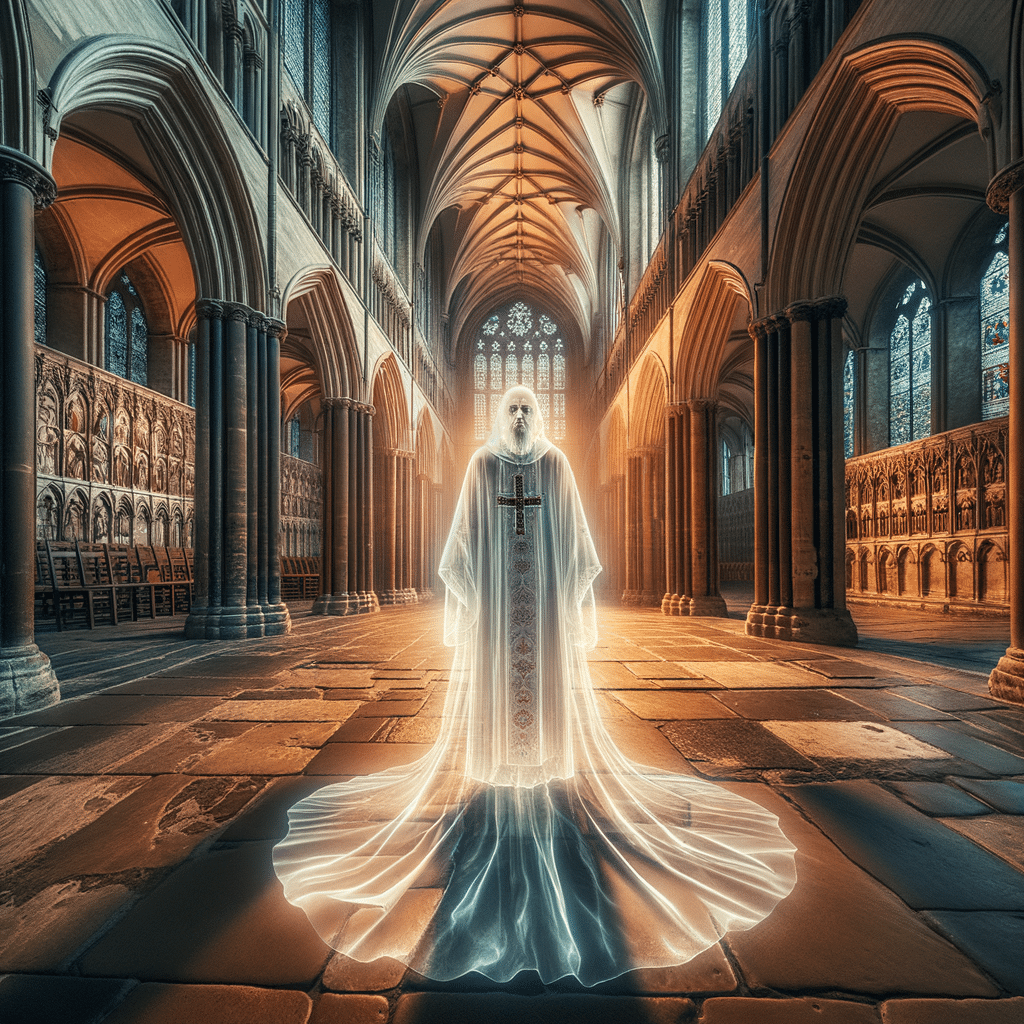
For centuries, not only with its architectural beauty but also with its supernatural legends, the beautiful Canterbury Cathedral, a UNESCO World Heritage site and the mother church of the Anglican Communion, has enthralled guests. From enigmatic monks to the notorious Thomas Becket, the stone walls of the cathedral seem to be full of ghost stories. Deeply entwined with the rich historical fabric of the cathedral, these paranormal stories have captivated believers as well as critics in a continuous conversation about the essence of haunted sites.

Overview of Paranormal Activity
Rising magnificently above Canterbury’s medieval alleyways, the cathedral offers a remarkable mix of Romanesque and Gothic architecture with its unique bell tower pointing skyward. The complex stonework of the edifice, large stained-glass windows, and ornate vaulted ceilings produce a sense of immense spirituality and historical weight. Many supernatural encounters center on the Trinity Chapel, the site of Becket’s shrine, and the gloomy, atmospheric crypt under the cathedral main.
Beginning with its creation by St. Augustine in 597 CE, the history of the cathedral runs about 1,500 years. The most crucial event occurred in 1170 when King Henry II’s knights killed Archbishop Thomas Becket, turning the cathedral into a popular pilgrimage site. Having seen many restorations and expansions over its life, the structure has survived fires, reformations, and the English Civil War. Its reputation as a haunted site has been shaped in part by this convoluted history of bloodshed, dedication, and change (Willis, 1845).
Certainly Thomas Becket is the most well-known spectral inhabitant of Canterbury Cathedral; his brutal murder in 1170 seems to have left a lasting supernatural imprint. Often showing on December 29, the anniversary of his death, witnesses claim to have seen his ghost in full archbishop’s regalia. While some stories say he walked the cloisters with a procession of ghost monks or knelt in prayer, others say he traveled from the martyrdom site to the Trinity Chapel (Froude, 1877).
The monastic energies of the cathedral show up all across the complex in several forms. Particularly in early dawn or twilight, witnesses said they saw black Benedictine robes gliding softly around the cloisters. These figures apparently disappear when one approaches or walks past solid walls where medieval doors formerly stood. Often accompanying these sightings are the sounds of Gregorian chanting, echoing through vacant hallways and rooms during non-services.
The cathedral houses the grave of Edward the Black Prince, who is believed to appear as a fully armored figure. Visitors have claimed to have seen him at the Trinity Chapel close to his ornate tomb, occasionally accompanied by metallic footsteps. While some stories say he shows up during times of national importance, others say he keeps a watch over his site of final resting.
The crypt of the cathedral houses multiple different supernatural beings. Often seen is the White Lady, who wears medieval or Tudor-era attire. She apparently glides across the crypt’s pillars and then vanishes behind walls. Many times, witnesses note abrupt temperature dips and a profound sense of depression in her company. Some researchers link her to the destruction of sacred relics during the Reformation (Clarke, 2012).
There are presently several known paranormal hotspots throughout the cathedral. The spirit of Nell Cook, a murdered servant girl who supposedly shows up during foggy evenings, haunts the tunnel leading to the Green Court. Many accounts of phantom beings sitting on the stone benches have originated from the Chapter House, possibly reflecting the echoes of centuries of ecclesiastical meetings.
More recent ghostly visits include modern-era priests and cathedral staff workers who have died yet seem to be continuing their work. Visitors have reported receiving tours from pleasant guides who do not appear to exist among the living workforce. Sometimes late at night, the organ is heard playing when the cathedral is locked and empty; some people attribute these phantom concerts to a dead organist.
Over the whole cathedral complex, several witnesses have recorded poltergeist-like phenomena. Witnesses have observed library books flying off shelves, doors opening and closing without human intervention, and even goods in the cathedral shop moving independently. Around the anniversaries of important historical events in the cathedral’s past, these phenomena are especially active (Montgomery, 2018).
The Bell Harry Tower, named for the bell it houses, has been associated with several paranormal events. While some visitors say they hear phantom bell-ringing while the bells are silent, others climbing the tower steps report feeling invisible hands pushing or dragging them. Some witnesses assert to have seen individuals in medieval clothing come and vanish around the top of the tower.

Theories and Skepticism
Paranormal investigators put out several hypotheses to explain these occurrences. Some say that horrific occurrences, like Becket’s murder, have produced what they refer to as residual hauntings, records of past events buried in the stone of the building. Others support the stone tape theory, which holds that some materials may absorb and reinterpret emotional or traumatic events. Investigators also cite infrasound and electromagnetic field disturbances as possible causes of paranormal experiences inside the old cathedral walls. (Dudley, 2010)
Skeptical scientists provide other theories for the claimed events. They contend that the sophisticated acoustics and play of light through stained glass in the cathedral’s construction can produce false sensory sensations. Visitors’ impressions might be shaped by psychological elements including suggestibility, expectancy, and the impact of historical context. Scientific research has shown how low-frequency sound waves, air pressure changes, and temperature differences can generate experiences sometimes connected with ghostly contacts.
Canterbury Cathedral’s haunted reputation has had a big impact on popular culture; it shows up in lots of ghost-hunting TV shows, paranormal documentaries, and spooky books. These legends have added to the attraction of the cathedral by drawing people eager in both its historical value and its paranormal features. The unique cultural narrative that combines spiritual legacy and eerie tales captivates modern viewers.
Conclusion
Canterbury Cathedral offers a fascinating case study in how architectural grandeur, historical events, and supernatural legends could combine to produce a complex tapestry of cultural value. The ghost stories connected with the cathedral help to increase the mystique and historical relevance of the cathedral even while the argument between believers in ghosts and skeptics keeps on. These stories are an important part of the cathedral’s history and make sure that it has a place in both religious history and paranormal lore, whether they are seen as real supernatural events or as the result of people’s minds and the environment.
References
Clarke, R. (2012). A Natural History of Ghosts: 500 Years of Hunting for Proof. Penguin UK.
Dudley, C. J. (2010). Canterbury Cathedral: Aspects of its sacramental geometry. Xlibris Corporation.
Froude, J. A. (1877). THE MURDER OF THOMAS BECKET. The Nineteenth century and after: a monthly review, 2(8), 389-410.
Montgomery, J. G. (2018). Haunted Castles of England. Llewellyn Worldwide.
Willis, R. (1845). The architectural history of Canterbury Cathedral.


Leave a Reply