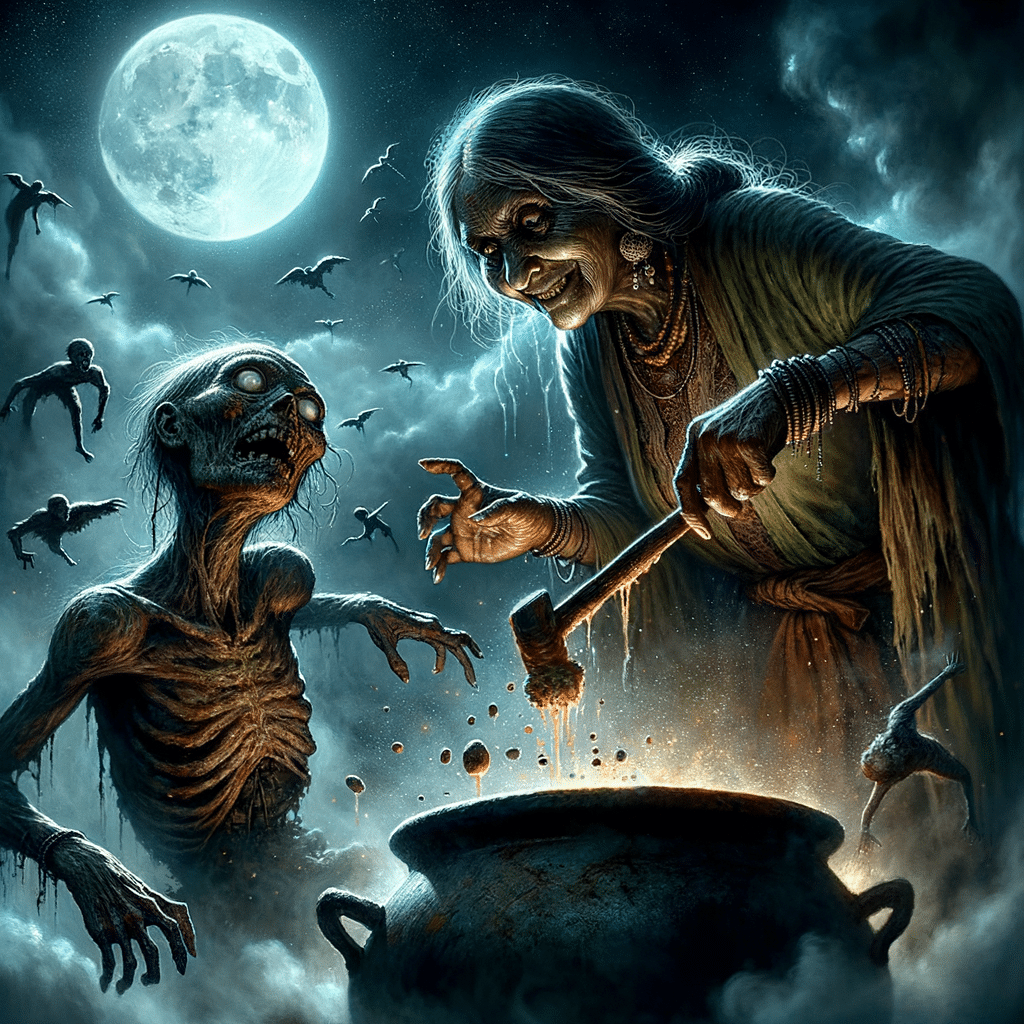
The horrifying picture of the dead rising from their graves has tormented the public mind all across Western history. Although modern public culture mostly links zombies with Haitian Vodou and modern horror movies, European folklore has long had its customs connecting witchcraft to the resurrection of dead bodies. These links expose ingrained anxieties about mortality, women’s power, and the violation of natural limits. Examining how accusations of necromancy got connected with witchcraft persecutions and how the power to control the dead became a feared component of the witch’s alleged talents, this essay investigates the historical relationship between witches and zombies in Western cultures.

Overview
Western heritage zombies are quite different from their contemporary film equivalents. Reanimated corpses in old European mythology were not always the mindless, flesh-eating hordes shown in modern media. Rather, they were usually considered dead bodies returned to a semblance of life by magical or demonic powers, usually preserving certain qualities of their previous personalities but under the control of their maker. These revenants could be revived to cause fear among the living, seek retribution, or work. Deeply ingrained in European society, the fear of the dead returning was reflected in many different customs, such as putting coins on the eyes of the dead, stone burial, and other funerary procedures meant to stop such an event (Caciola, 1996).
In Western customs, the link between witches and zombies reflects the view of witches as boundary-crossers with the power to flip natural sequences. Witches were more and more depicted during late medieval and early modern times as practitioners of maleficium (harmful magic) who could use demonic abilities to reach unnatural goals. One of the most grave charges directed against alleged witches was necromancy, which was maybe the ultimate violation of divine order, as it allowed one to influence the dead. This link created a gendered aspect to concerns about supernatural influence over the dead by drawing on previous customs of female mourners and death workers who readied corpses for burial. As a female character with concealed knowledge and abilities, the witch became the ideal vehicle for society’s concerns about death and its possible reversibility (Barrowclough, 2015).
Court records during European witch trials sometimes included allegations of necromancy and corpse desecration. Particularly those of unbaptized children whose liminal position rendered them potent magical components, witches were charged with exhuming corpses from graveyards for use in their magical mixtures. Records from the infamous Bamberg witch trials (1626-1631) include claims of witches dancing with reanimated corpses at their sabbats. During the Würzburg trials of the same time, those under torture admitted to utilizing corpse parts in ceremonies and ordering the dead to rise. These charges imply that witches could taint even this divine promise since they not only reflect fear of witchcraft but also great concern about the holiness of burial sites and the Christian belief in physical resurrection (Walinski-Kiehl, 1988).
Rituals for controlling or connecting with the dead are mentioned often in the grimoires and spell books connected to European witchcraft and ceremonial magic. Though mostly focused on demon summoning, the Grimorium Verum and the Key of Solomon have rites for resurrecting deceased spirits to acquire knowledge or service. Usually, these ceremonies called for chanting invocations during certain astrological alignments, burning certain herbs and resins, and drawing magic circles with particular symbols. Folk customs all around Europe included more casual techniques like employing graveyard dirt in medicines, making poppets from burial shrouds, or reciting incantations over fresh graves at midnight. Although these writings were more strongly linked to educated male magicians than rural witches, the difference sometimes fell during witch trials as women were charged with practicing kinds of high necromancy historically ascribed to male practitioners.

Analysis
Witch fears of raising zombies reflect more general cultural concerns about power and control. In European culture, where social hierarchies were strictly upheld, the notion that marginalized people (especially women) could command the dead signified a severe reversal of appropriate order. A witch manipulating zombies could accumulate supernatural labor, collect information invisibly, or seek revenge without physical confrontation. The tale echoed worries about women’s latent power and the possibility of social disturbance. Appearing in many folktales, the theme of the witch commanding an army of the dead reflects concerns about insurrection from below, with the witch figure channeling both gendered and class-based anxieties about the disturbance of established hierarchies.
Significant regional differences in European customs of witch-created zombies expose various cultural obsessions. Though witches were usually accused of enabling their formation via curses or faulty burial practices, in Germanic mythology, the nachzehrer was a self-created zombie able to govern other corpses. Scandinavian customs included the draugr, deceased people with superhuman power usually linked with witchcraft and seiðr magic. In Slavic areas, tales of witches controlling upir, revenants mixed with vampire legends, combined with those of witches. These regional differences show how the witch-zombie link developed to fit local cultural contexts even as it preserved the fundamental link between female magical practitioners and the unnatural animation of the dead (Cammarota, 2023).
With Gothic literature particularly probing the line between life and death and those who could control it, the literary legacy evolved these links even more. Though not directly about witchcraft, Mary Shelley’s Frankenstein plays on comparable ideas of unnatural reanimation and its repercussions. Later Gothic works more directly linked witchcraft with reanimation, as in J. Sheridan Le Fanu’s Carmilla and Bram Stoker’s Dracula, where female vampiric figures mix elements of witchcraft and undeath. These literary investigations shaped the cultural link between women with occult knowledge and the ability to cross the line separating life from death, therefore affecting how witches would be shown in relation to the undead in subsequent media.
The psychological aspects of this link expose ingrained cultural fears. The witch-zombie link reflects worries about female power, death’s finality, and the upheaval of the natural order. While the zombie reflects worries of loss of selfhood and autonomy, Carl Jung could see the witch as a shadow archetype symbolizing suppressed societal elements. The specific dread of the witch-zombie relationship comes from its reversal of the nurturing female role: the witch distorts the natural order by providing a parody of life to the dead rather than creating life. Though belief in real witchcraft declined throughout the Enlightenment, this psychological conflict contributed to guaranteeing the ongoing presence of these motifs in folklore.
These customs have been greatly changed by modern readings. Focusing on honoring life and natural cycles, modern Wicca and neo-paganism clearly reject the historical link between witchcraft and destructive necromancy. Academic folklorists have looked again at witch trial records of corpse reanimation as results of torture-induced confessions rather than actual folk practices. Popular media still links culture, however, with characters like the Witch-King in The Lord of the Rings leading armies of the dead or contemporary horror movies with witches generating zombies (Torre, 2002). These modern depictions use the historical link to fit it to current concerns about technology, bodily autonomy, and moral limits.
Conclusion
The lasting link between witches and zombies in Western traditions exposes ongoing cultural concerns about death, power, and transgression. From medieval witch trials to contemporary horror movies, the picture of the witch commanding the dead has reflected anxieties about the reversal of natural order and assaults on established authority. While preserving the fundamental interest in individuals who may govern the border between life and death, the changing character of these depictions reflected shifting social concerns. Processed via cultural stories, our relationship with death shapes the witch-zombie link, which is a strong emblem of our ambivalence towards people who assert knowledge beyond traditional limits and control over the greatest mystery of life.
References
Barrowclough, D. (2015). The wonderful discovery of witches’: Unearthing the occult, necromancy and magic in seventeenth-century England. Academia.edu/7973344.
Caciola, N. (1996). Wraiths, revenants and ritual in medieval culture. Past & Present, (152), 3-45.
Cammarota, M. G. (2023). Interactions between the Living and the Dead in. Der Vampir: Ein europäischer Mythos des kulturellen Transfers, 75.
Torre, M. D. (2002). The Portrait of Evil in The Lord of the Rings: Reflections Personal, Literary, and Theological. Logos: A Journal of Catholic Thought and Culture, 5(4), 65-74.
Walinski-Kiehl, R. (1988). ‘Godly States’, Confessional Conflict and Witch-Hunting in Early Modern Germany. Mentalities, 5(2), 13.
Leave a Reply