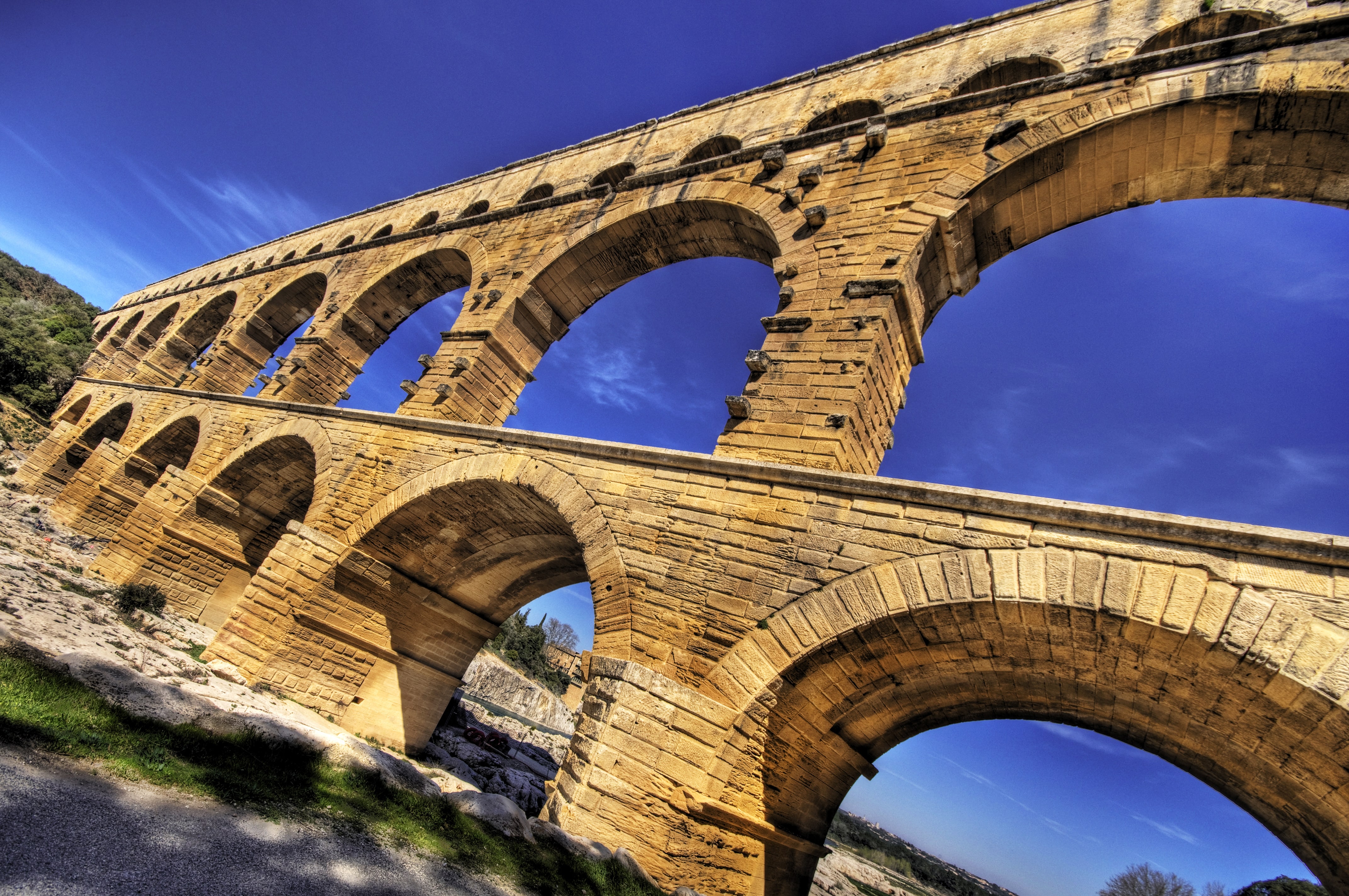
Though under its limestone arches lay a more mysterious legacy, the ancient Roman aqueduct of Pont du Gard testifies to human engineering genius. Visitors and locals have been witnessing bizarre events at this UNESCO World Heritage site for generations, which defy expectations. Ranging from ghostly sightings to unexplainable noises, these stories have woven themselves into the rich fabric of the past of the monument. The longevity of these accounts across centuries begs more investigation of what could really be happening at this extraordinary building, even as critics dismiss these assertions as simple folklore or psychological problems. While some think the intersection of ancient history, great engineering, and the inherent power of the environment makes an ideal backdrop for real paranormal events, others see it as the result of human imagination interacting with a compelling environment.

Description
The Pont du Gard, an exceptional work of Roman architecture, spans the Gardon River in southern France, about 25 kilometers from the city of Nîmes. Rising almost 50 meters above the river, this three-tiered stone aqueduct is made up of 52 exactly built arches that have survived the test of time for almost two millennia. Quarried locally, its huge limestone blocks—some weighing up to six tons—were put together without mortar using iron clamps and extreme cutting accuracy. Delivering an estimated 44 million gallons daily via its modest slope of 1 in 3,000, the aqueduct was a vital part of a 50-kilometer system meant to carry water from springs near Uzès to the baths and fountains of Roman Nîmes. The amazing accuracy of this slope—falling only one vertical centimeter for every 30 horizontal meters—shows the Romans’ exceptional mastery of surveying and engineering concepts, hence producing a building that combines utility with breathtaking aesthetic harmony (Fonder & Xanthoulis, 2007).
Under the probable patronage of Marcus Vipsanius Agrippa, son-in-law of Emperor Augustus, construction of this wonder started about 40 to 60 AD. The aqueduct served its purpose for almost five hundred years until slow neglect and calcium deposits reduced its efficacy. With medieval changes including the broadening of its lower tier to fit carriages, the Pont du Gard discovered new purpose as a toll bridge following the collapse of the Roman Empire. Over its history, the building withstood many dangers, including a major flood in 1958 that almost toppled it. This extraordinary endurance against time and nature has caused some to propose that more than just engineering brilliance could be at work in saving the old structure. Local folklore tells of protecting spirits—maybe the ghosts of original architects or laborers—who still monitor their creation and intervene during times of utmost danger to save what they devoted their lives to constructing (Ortloff, 2020).
With the aqueduct ascending steeply from a limestone valley created by the meandering Gardon River, the surrounding scenery of the Pont du Gard greatly enhances its magical quality. Clinging to the rocky ground, thick Mediterranean flora creates hidden grottos and dark caverns where noises reverberate and warp in erratic fashion. From the sweltering heat of Provençal summers to the mistral winds howling over the valley in winter, the region undergoes dramatic seasonal variations that create atmospheric conditions enhancing sensory perceptions and occasionally generate natural optical and audio effects. Archaeological evidence points to the site’s sacred importance for indigenous Celtic tribes long before Roman control; several found items point to ritual activity in the area around where the bridge now stands, implying the Romans may have purposefully selected a site already charged with spiritual importance.

Paranormal Activity
Even in drought times when the contemporary river is low, paranormal stories at Pont du Gard often describe the sounds of running water reverberating through the building. As though the aqueduct still operates in some spectral realm, visitors have reported hearing the phantom splash of water running through the now-dry channel atop the topmost tier of arches. Unexpected temperature declines sometimes follow these auditory events, particularly in the thin corridor along the top tier where the water originally flowed. Visitors have said they felt an unexplainable attraction to particular areas of the bridge, with dizziness or confusion not caused just by the physical height or view. Local tour guides verify that certain parts of the building regularly produce more claims of strange encounters than others, hence producing what paranormal experts call hot spots of activity that remain constant despite the daily cycle of various visitors around the site (Allen & Bryan, 2020).
More dramatic stories feature ghosts seen at dawn or dusk when the changing light creates intricate shadows across the worn stone. Several independent observers have reported seeing people dressed in Roman attire, either maintaining the upper canal or standing sentinel at the ends of the bridge. A particularly recurrent story is about a Roman engineer who purportedly shows up on the anniversary of the aqueduct’s completion, measuring and inspecting the structure with translucent instruments. Local guides mention a spectral procession they say crosses the bridge during the winter solstice, believed to signify the first ceremony when water first flowed through the finished aqueduct to Nîmes. Usually, these sightings depict people who seem solid at first but disappear when approached or photographed. Historical studies have uncovered numerous recorded fatalities during the aqueduct’s building, including one master architect who allegedly fell from the top level and whose ghost is claimed to be among those most often seen examining his life’s work.
The surrounding region has its own spooky reputation, with the wooded areas near the aqueduct appearing in local stories of strange lights and disembodied voices speaking in ancient languages. While swimmers in the Gardon River sometimes claim invisible hands are apparently pulling at them from under the surface, hikers have said they feel watched when walking the trails under the monument. Archaeological studies in the vicinity have shown signs of pre-Roman Celtic rites at the site, implying the place had spiritual importance long before the aqueduct’s building. Such evidence has fueled theories that the Pont du Gard might have been purposefully placed to use or cross with what ancient people thought of as sacred energies or ley lines. The finding of multiple pre-Roman burial sites within a kilometer of the aqueduct has sparked speculation that the bridge accidentally upset ancient resting grounds, therefore accounting for some paranormal events indicating beings predating the Roman control of the area.
Reported incidents’ time dimension offers yet another fascinating trend: paranormal events group around notable astronomical events. Solstices and equinoxes tend to coincide with higher reports, particularly the summer solstice, when the setting sun aligns precisely with the central arch of the middle tier, giving a dramatic illumination effect. Witnesses during this yearly occasion have reported witnessing shadow figures seemingly performing rituals at several locations along the bridge, moving against the flow of real tourists. Historical records show that Roman engineering often included astronomical alignments into public structures, implying the possibility that such alignments were intentionally included in the design of the Pont du Gard for ceremonial or religious reasons. Several archaeoastronomers have recorded how some important areas of the building frame particular celestial phenomena when seen from selected observation sites, implying an extra layer of purpose beyond the utilitarian function of the aqueduct.
Analysis
Often, scientific explanations for these events highlight the particular acoustic qualities of the building and its components. Dense limestone absorbs and reflects sound in unique ways, possibly creating aural illusions resembling flowing water or distant sounds. Rapid temperature fluctuations typical of the area, especially in the day-to-night transition, can cause thermal expansion and contraction inside the stone, producing faint sounds. Geologists have pointed out that the riverbed under the bridge has notable quartz deposits, which certain parapsychologists believe could act as a natural recording medium, storing and sometimes replaying past sounds—a contentious idea known as “stone tape theory.” Modern acoustic research of the site has uncovered several oddities, including areas where whispers can be heard clearly from dozens of meters away owing to the curved surfaces of the arches generating natural amplification corridors, perhaps clarifying some claims of disembodied voices.
Some reported events have further natural justifications provided by meteorological conditions particular to the river valley. Often, the interaction of the river’s moisture and temperature gradients produces localized fog banks that form and disappear quickly, sometimes seeming to acquire columnar formations that, in low light, may mimic human figures. The limestone in the area includes significant levels of phosphorescent minerals that absorb sunlight during the day and generate a mild glow after dark, occasionally generating what appear to be floating lights among the plants. Funneling through the river gorge, the mistral winds create unique wailing noises by interacting with the aqueduct arches, generating tones that some observers interpret as sad voices or distant melodies. Against the backdrop of such an imposing historical edifice, these natural events happening in conjunction create situations where normal environmental impacts could easily be misread as supernatural.
Undoubtedly, psychological elements help shape paranormal events at the site. The building’s excellent size and knowledge of its historic beginnings combine to produce a strong, evocative environment that prepares guests for exceptional experiences. The human predisposition to see patterns and meaning—pareidolia—easily turns changing shadows and natural noises into imagined human figures or voices. Particularly for those already familiar with stories of hauntings, the tourist anticipation of experiencing something meaningful at such a historically important location may unknowingly affect perception. But these justifications overlook regular witness testimonies who were not previously aware of the site’s reputation for being haunted. Cognitive psychologists highlight the “thinning of psychological boundaries” phenomenon, in which particular environments—especially those with historical significance and aesthetic power—may momentarily change consciousness in ways that increase suggestibility and perception of subtle stimuli usually filtered out by daily awareness.
Alternative ideas claim that the sheer concentration of human effort, intention, and experience concentrated in the construction and use of the aqueduct may have imprinted itself on the location in ways science cannot yet measure. Some studies on awareness claim that sensitive people may see places of significant historical importance as having a kind of “place memory.” Water’s constant flow along the same route for ages could have created an energetic pattern still resonating in some unseen area. Some believe that during certain times of the year, the way the structure lines up with specific stars and planets might boost natural earth energies, creating moments when different timelines can briefly overlap. Particularly the sightings of people involved in construction or maintenance activities, the idea of “residual hauntings”—where traumatic or emotionally charged events leave an energetic imprint that periodically replays—has been proposed to account for the repetitive character of many of the reported events.
Another intriguing line of research is the link between water and claimed paranormal activity. Often considered a conduit between worlds or levels of existence, water has been important in spiritual practices across civilizations. The Pont du Gard’s basic purpose of channeling water, paired with the river running beneath it, generates a unique confluence of water forces that some parapsychologists say can magnify psychic sensations. Studies on the molecular structure of water have shown its extraordinary ability to create intricate patterns in reaction to different stimuli, which has led some theorists to suggest that water could somehow “remember” or record data from its environment—though such ideas are very speculative and outside conventional scientific acceptance. The aqueduct’s limestone is very porous and has absorbed millennia of water, so maybe it is storing and slowly releasing trace minerals and chemicals that might theoretically influence human neurochemistry in subtle ways, temporarily changing perception or consciousness in visitors who spend extended time near the structure.
Using tools from electromagnetic field detectors to infrared cameras and audio recorders, modern paranormal investigators have done much research at the location. Some teams have noted strange data patterns, while others have found nothing unexpected. Particularly along the water channel of the uppermost tier, several controlled experiments have recorded temperature anomalies that do not match natural airflow or solar heating patterns. When no other visitors were in various areas of the building, audio recordings have sometimes caught inexplicable sounds resembling footprints and mumbling voices. Skeptical academics, on the other hand, highlight the many chances for contamination and misinterpretation in such studies, especially in a setting with complicated acoustics and regular tourist activity. The absence of regularly repeatable data keeps the gap between those who perceive real paranormal activity at the Pont du Gard and those who ascribe all such stories to natural events coupled with psychological elements.
These paranormal connections’ cultural influence has interacted with the historical importance of the site, thereby shaping modern tourists’ perceptions and experiences of the Pont du Gard. Local tourism has embraced the mysterious aspects by offering haunted history trips in the evenings, after traditional tours have concluded. In Romantic-era literature, when Gothic sensibilities drove authors to include the old structure in stories of spirit encounters and timeslips, literary allusions to the aqueduct’s spooky reputation surfaced. Some modern books set in Provence use the Pont du Gard as a gateway between past and present, drawing on the ongoing traditions of temporal anomalies recorded at the site. This cultural framework probably affects how first-time tourists understand their experiences, so producing a self-perpetuating cycle whereby folklore affects perception, which then produces fresh stories supporting the current folklore.
Though the concentration and consistency of reports appear especially evident at this site, comparative research with other historic Roman aqueducts shows that the Pont du Gard is not exceptional in drawing paranormal claims. Roman water engineering sites around Europe have documented similar phenomena, suggesting possible links between certain architectural characteristics and claimed supernatural activity. Some have speculated that the utilization of particular geometrical ratios typical in Roman engineering—especially the golden ratio present in many aspects of the design of the Pont du Gard—would produce buildings that naturally enhance or channel subtle energies in ways that could support paranormal events. Among the unique characteristics of the Pont du Gard not present in other surviving aqueducts, archaeologists have found strange symbol engravings by the original masons that some believe are protective sigils or spiritual markers, maybe suggesting the builders themselves saw something strange about the site (Gerrard, 2022).
The conflict between scientific skepticism and experiential reporting generates a continuous conversation concerning the essence of reality itself and our interpretation of events outside traditional explanation. Although conventional archaeology and history emphasize the concrete accomplishments of Roman engineering represented in the Pont du Gard, the ongoing stories of paranormal events provide a counterpoint that recognizes the personal aspect of how people engage with important locations. Though visitor experiences keep piling up in an unofficial parallel history of the site, professional historians and archaeologists usually shun discussing these elements in formal research. This split highlights the larger cultural gap between empirical science and phenomenological experience and challenges concerning what qualifies as proof and how group human experiences ought to be included in our knowledge of historically important sites.
Conclusion
The Pont du Gard still spans the philosophical divide between our knowledge of history and the enigmatic experiences recorded at the site, as well as the physical one across the Gardon River. Whether the paranormal events connected to this old monument arise from natural causes, psychological suggestion, or something really beyond our present knowledge remains an unanswered topic that fascinates both tourists and academics. The longevity of these stories across centuries implies that, whatever their actual character, the stones of Pont du Gard carry secrets that go beyond their remarkable workmanship. Perhaps the whispers of the past that appear to resonate through this extraordinary structure will one day be understood not as paranormal but as natural events we have just lacked the framework to explain as we keep creating more complex tools for probing consciousness and perception. The aqueduct is a strong symbol of how ancient buildings can act as conduits not just for water or transportation but also for the human imagination itself, linking us to the past in both physically and mysteriously intangible ways and reminding us that, despite our technological progress, there are still experiences that escape our complete understanding and continue to inspire awe at the limits between the known and unknown.
References
Allen, D., & Bryan, M. (2020). Roman Britain and Where to Find It. Amberley Publishing Limited.
Fonder, N., & Xanthoulis, S. (2007). Roman aqueduct and hydraulic engineering: case of Nîmes aqueduct and its Pont du Gard bridge. Water Science and Technology: Water Supply, 7(1), 121-129.
Gerrard, J. (2022). The Social Lives of Wells in Roman Britain and Beyond. Water in the Roman World: Engineering, Trade, Religion and Daily Life, 77.
Hampe, A. C. (2022). The Pont du Gard: A Marvel of Roman Technology.
Ortloff, C. R. (2020). Roman Hydraulic Engineering: The Pont du Gard Aqueduct and Nemausus (Nîmes) Castellum. Water, 13(1), 54.

Leave a Reply