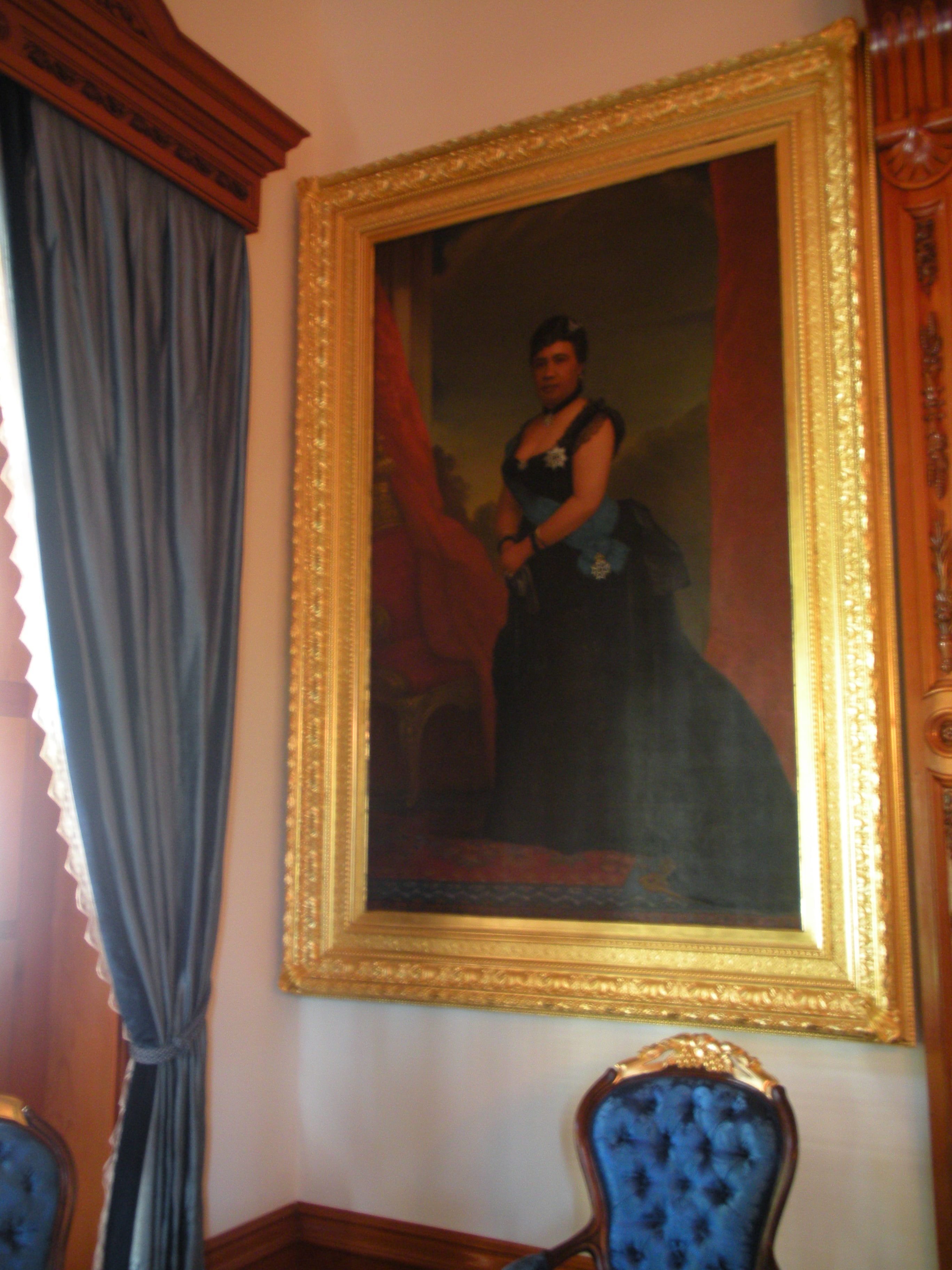
The majestic ʻIolani Palace stands as a proud monument to Hawaii’s royal history, yet beneath its stately exterior lies a world of unexplained phenomena that has captivated visitors and staff for generations. Built in 1882 by King Kalākaua, this opulent palace served as the official residence for Hawaii’s monarchy until the overthrow of the kingdom in 1893. While the palace now functions primarily as a museum showcasing Hawaii’s royal heritage, numerous accounts of paranormal activity have transformed it into something far more mysterious—a nexus where the past refuses to remain silent and where the veil between worlds appears remarkably thin.

History
The palace itself is an architectural marvel, blending Western and Hawaiian design elements in what was known as the American Florentine style. Four stories tall with corner towers and expansive verandas, ʻIolani Palace was remarkably advanced for its time, boasting electricity before even the White House and featuring indoor plumbing, telephones, and other modern conveniences. Ornate koa wood staircases wind through the interior, leading to rooms furnished with European décor, crystal chandeliers, and ceremonial regalia. The meticulously maintained palace grounds, with their ancient banyan trees and royal palm-lined walkways, create a perimeter of tranquility around this historic landmark in downtown Honolulu, making the reported supernatural occurrences all the more striking against such a refined backdrop (Kamehiro, 2006).
The painful transition of Hawaii from a sovereign kingdom to American territory is deeply intertwined with the history of Iolani Palace. Following the overthrow of the monarchy during the Hawaiian Revolution of 1893, Queen Liliʻuokalani, Hawaii’s last reigning monarch, was imprisoned within the palace for eight months, confined to a single bedroom where she composed music and quilted to pass the time. This period of imprisonment, marked by heartbreak and injustice, has left an emotional imprint that many believe contributes to the paranormal activity. The palace later served as the capitol building for the Republic of Hawaii, the Territory of Hawaii, and briefly for the State of Hawaii before extensive restoration efforts in the 1970s returned it to its original splendor, preserving both its physical structure and, some would argue, the spiritual remnants of its turbulent past (Moses, 2023).

Haunted Palace
Reports of paranormal phenomena at ʻIolani Palace are both numerous and consistent, with Queen Liliʻuokalani’s ghost featuring prominently in many accounts. Staff members and visitors alike have reported hearing the Queen’s music box spontaneously playing her composition Aloha Oe when no one is near it, particularly on significant dates related to the monarchy. The Queen’s presence is often detected in her former imprisonment room, where the scent of her favorite cigars and perfume occasionally wafts through the air despite no obvious source. Night guards have reported seeing a regal woman in Victorian dress walking the corridors before vanishing, while others describe hearing the rustling of fabric and soft footsteps when the palace is empty of visitors (Coulombe, 2004).
King Kalākaua’s ghost allegedly maintains a presence in the palace as well, with numerous accounts of his apparition appearing in the king’s library and bedroom. Security personnel have documented inexplicable cold spots throughout the building, defying explanation even when they examine the climate control systems. Electronic equipment frequently malfunctions in certain areas of the palace, particularly near the throne room, with batteries draining without explanation and recording devices capturing unusual electronic voice phenomena (EVPs) that sound remarkably like whispered Hawaiian phrases or fragments of chants from royal ceremonies long past.
The palace’s grand staircase serves as another hotspot for paranormal activity, with visitors occasionally reporting the sensation of being gently pushed or guided by unseen hands. Museum staff have documented numerous occasions where objects move overnight despite the sophisticated security system detecting no intruders. Display items associated with the royal family, particularly personal possessions of Queen Liliʻuokalani, have been found rearranged in the morning, sometimes returned to positions that would have been typical during the monarchy period rather than their curated museum placements. Tourists occasionally capture unexplained orbs of light or shadowy figures in their photographs, contributing to the palace’s reputation as one of Hawaii’s most haunted locations (Hendricks, 2020).
Analysis
Skeptics offer numerous explanations for these phenomena, pointing to the palace’s age and construction as primary culprits. The building’s unique architectural features, including hidden passages and unusual acoustics, could explain many of the sounds mistaken for spectral activity. The wooden structure naturally expands and contracts with Hawaii’s temperature and humidity fluctuations, creating creaks and groans easily misinterpreted as footsteps or voices. Modern HVAC systems interacting with the palace’s original design might account for sudden cold spots, while electromagnetic fields from outdated wiring could potentially affect both electronic equipment and even visitors’ perceptual experiences, creating sensations misattributed to paranormal causes.
Psychological factors also feature prominently in skeptical explanations, with the power of suggestion playing a significant role. Visitors arriving with preconceptions about the palace’s haunted reputation may unconsciously interpret ordinary stimuli through a supernatural lens. The emotional weight of the palace’s history, particularly the tragic story of Queen Liliʻuokalani’s imprisonment, creates a psychological priming effect that makes people more likely to perceive ambiguous sensory information as evidence of spirits. Additionally, the phenomenon of pareidolia—the tendency for the human brain to find familiar patterns in random stimuli—might explain why some visitors see faces or figures in the play of shadows or hear voices in the ambient sounds of the building.
Cultural perspectives offer another layer of interpretation that transcends the binary debate between supernatural belief and skepticism. In traditional Hawaiian spirituality, the concept of mana (spiritual energy) and the continued presence of ancestors remain central. Many Native Hawaiians view the reported phenomena not as ghosts in the Western sense but as manifestations of the continued spiritual presence of aliʻi (royalty) who remain connected to important places. This cultural perspective helps explain the experiences at ʻIolani Palace by respecting both the personal nature of these encounters and their importance in Hawaiian traditions, where the lines between the past and present, and between the living and ancestors, are considered less strict than in Western beliefs (Bingham & Riccio, 1991).
Scientific investigation of the palace’s phenomena has yielded mixed results, with paranormal research teams documenting unusual electromagnetic fluctuations and unexplained audio recordings. However, these investigations themselves face methodological challenges, including the difficulty of controlling for environmental variables in a historic building and the inherent confirmation bias that can affect even well-designed studies. The palace administration maintains a respectful stance toward both scientific inquiry and cultural beliefs, allowing limited overnight investigations while ensuring that the dignity of the site and its royal history remain paramount. This balanced approach acknowledges both the genuine experiences reported by staff and visitors and the importance of critical inquiry, creating space for multiple interpretations of the palace’s mysteries.
Whether one interprets the unexplained occurrences at ʻIolani Palace as genuine paranormal phenomena, natural phenomena misunderstood, or the cultural expression of a people’s connection to their royal past, the reports themselves have become an undeniable part of the palace’s modern identity. The persistent accounts spanning generations speak to something profound about our relationship with history—how traumatic events and powerful emotions can seemingly echo through time, manifesting in ways that defy simple explanation. Perhaps the true significance of ʻIolani Palace’s paranormal reputation lies not in definitively proving or disproving the existence of ghosts, but in how these stories preserve another dimension of Hawaiian history, keeping alive the memory of the monarchy and the profound sense of loss that accompanied its fall.
Conclusion
In the shadow of Honolulu’s modern skyline, ʻIolani Palace stands as a bridge between worlds—between Hawaii’s independent past and its American present, between historical fact and supernatural mystery, and between Western skepticism and indigenous spirituality. The reports of paranormal phenomena, regardless of their ultimate explanation, remind us that history is never simply confined to the past but continues to manifest in the present in ways both tangible and ethereal. As visitors walk through the palace’s hallways, they are not merely observing artifacts of a bygone era but participating in the ongoing negotiation between memory and mystery, between what can be documented in historical records and what can only be experienced in the quieter moments when the boundaries between past and present seem to momentarily dissolve. In this sense, the spirits of ʻIolani Palace—whether literal or metaphorical—continue to fulfill their most important role: ensuring that the story of Hawaii’s royal legacy remains vibrantly alive in the consciousness of each new generation.
References
Bingham, J., & Riccio, D. (1991). More haunted houses. Simon and Schuster.
Coulombe, C. A. (2004). Haunted Places in America: A Guide to Spooked and Spooky Public Places in the United States. Rowman & Littlefield.
Hendricks, N. (2020). Haunted Histories in America: True Stories Behind the Nation’s Most Feared Places. Bloomsbury Publishing USA.
Kamehiro, S. L. (2006). Iolani Palace: Spaces of Kingship in Late Nineteenth-Century Hawaii. Pacific Studies, 29, 32-32.
Moses, K. L. (2023). Hawai ‘i Land Struggles and a Pacific Statehouse. Journal of the Association of Historians of American Art, 9(1).
Leave a Reply