
Owlman of Cornwall: Key Points
-
The Owlman of Cornwall is a modern cryptid legend that began in 1976 with sightings of a mysterious winged creature near Mawnan Church, with reports continuing sporadically in the same localized area over the decades.
-
Witnesses describe a four- to five-foot-tall creature with an owl-like head, glowing red eyes, a humanoid feathered body, and massive wings spanning ten to fifteen feet.
-
The nocturnal creature exhibits territorial but non-aggressive behavior, typically hissing and fleeing from humans rather than attacking anyone.
-
Though the legend lacks ancient folklore roots, some have attempted to connect it to Celtic traditions associated with Mawnan Church’s historically mystical location.
-
Theories explaining the sightings range from misidentification of large birds and elaborate hoaxes to unknown species and supernatural entities, none supported by physical evidence.
-
The Owlman has become one of Britain’s most famous cryptids, impacting local culture and serving as both a tantalizing mystery for believers and a lesson in critical thinking for skeptics.

Introduction
The Owlman of Cornwall is one of Britain’s most intriguing modern cryptid legends. This mysterious winged creature has scared people in the beautiful county of Cornwall since the late 1970s. Compared to other legends passed down through generations, this one is relatively new. However, it has caught the attention of cryptozoologists, paranormal fans, and skeptics alike. People have been seeing the creature mostly in the village of Mawnan Smith and the woods around Falmouth. This event has created a mystery that has lasted for almost fifty years. The Owlman is especially intriguing because it is different from other cryptids. It has a unique mix of bird and human traits that makes it stand out from other mysterious creatures that people talk about more often.
Overview of the Owlman of Cornwall
In April 1976, two young sisters on vacation with their family had a scary experience near Mawnan Church. This is where the story of the Owlman begins. The girls, June and Vicky Melling, said they saw a big winged creature hovering over the church tower. It scared them so much that their father cut short their vacation and left Cornwall right away. Two months later, in July of the same year, two other young girls, Sally Chapman, 14, and her friend Barbara Perry, said they saw a similar creature in the woods near the church. They said they hid behind trees while the thing hissed at them, which scared them and made them run away (Grego, 2013).
More sightings from the Mawnan area kept coming in over the years, but not as often as they did in 1976. A sixteen-year-old girl saw the creature again while camping near the church in 1978. She said it had glowing red eyes that seemed to cut through the dark. In the 1980s and 1990s, several people came forward to tell their stories about this mysterious being, adding to the legend. In 1995, an American tourist and his girlfriend saw a man-sized owl flying right over their car as they drove past the church. This instance is one of the most believable later sightings. Many believe that if the creature exists, it lives in the same area, with Mawnan Old Church and the surrounding woods at its center (McCue, 2019).
Witnesses who say they saw the Owlman describe a creature that is difficult to put into a box because it offers features that seem to be impossible to combine. People say that the thing is between four and five feet tall, but some say it looks even bigger when its wings are spread out. Most descriptions focus on its owl-like head, which has big, glowing eyes that turn red or orange in the dark. Its appearance makes people who see it feel uneasy and hypnotized. People say that the creature’s face looks like a barn owl’s, with a triangular or heart-shaped shape and a hooked beak or pointed mouth that makes it look even more scary (Lake, 2007).
People say that the Owlman’s body looks like a person, with a torso, arms, and legs that make it seem like it is more than just an animal. Witnesses always say that the creature is covered in grayish or brownish feathers, which give it a texture that looks both soft and scary at the same time. The wings are probably the most impressive part. They are enormous and can reach ten to fifteen feet across when fully extended. They look like the wings of a giant owl, but they are attached to a body that is more human-like. People often say that the feet or talons are big and claw-like and that they can grip branches or other surfaces with apparent strength. This strange mix of traits makes it look like something that shouldn’t exist based on what we know about biology.
The Owlman’s behavior in reported encounters suggests that it is territorial and wary of people, but not necessarily aggressive in the usual way. Witnesses say that it is mostly active at night, with most sightings happening in the evening or in the dim light of dawn and dusk. People have seen the creature hovering or sitting in trees near Mawnan Church, which makes it seem like it might own this area. When people get close to the Owlman or find it, it usually makes hissing sounds, which is a defensive noise that scares individuals away instead of inviting them to fight.
Despite scaring people, no one claims the Owlman has attacked anyone. Its behavior pattern shows it prefers avoiding people to seeking them out. It only shows up when it is accidentally discovered or when people get too close to its preferred habitat. Some witnesses have said that they felt a strong sense of dread or fear when they saw the creature. These symptoms may be due to its frightening appearance or some unknown quality. The creature’s ability to stay hidden for long periods of time and only come out every few decades suggests either excellent stealth or a minimal population that rarely goes where people can see it.

Analysis
There isn’t much folklore about the Owlman compared to older cryptids. This is mainly because the story is only about fifty years old and hasn’t had time to build up layers of myth and cultural significance. But the place where the sightings happened has its own deep historical and mystical connections that some people think might be connected to the creature’s presence. The Mawnan Church itself is from the Norman period and is in an area that had long been linked to Celtic traditions and spiritual practices before Christianity. Some folklorists think that the church may have been built on or near an ancient sacred site. The construction of churches was a common way to Christianize pagan places in medieval times (Gerhard, 2013).
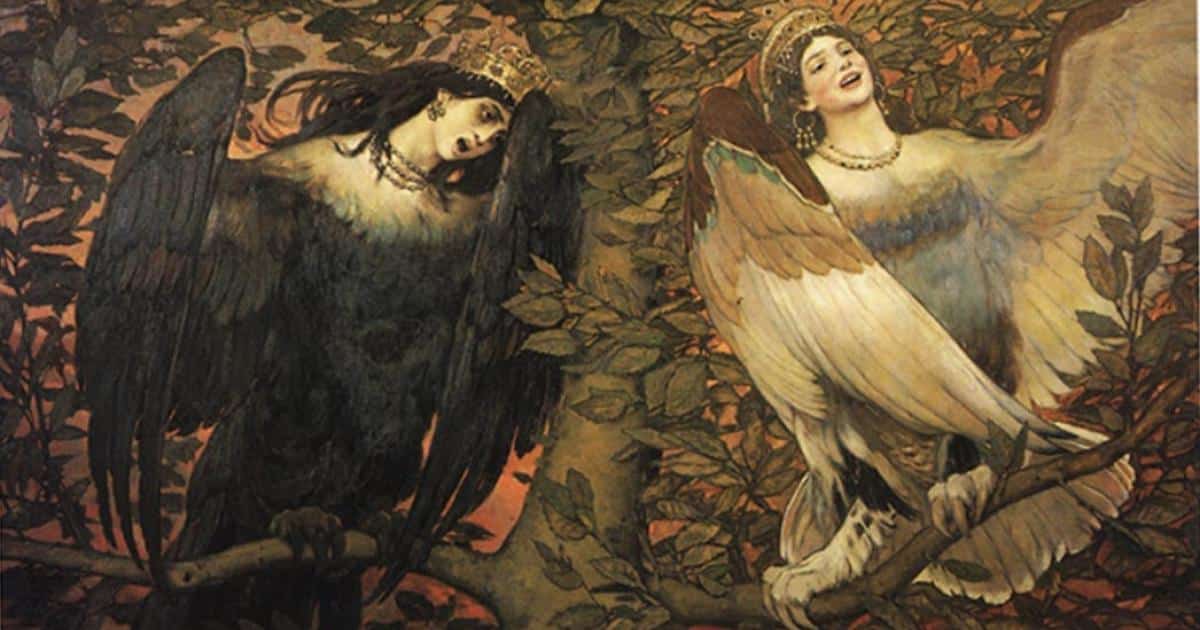
People have tried to connect the Owlman to other supernatural traditions through local stories and speculation, but these links are weak and mostly based on modern interpretations rather than real historical folklore. Some fans have tried to connect the creature to old Celtic ideas about shapeshifters or guardian spirits that kept sacred groves and holy places safe. Some people have compared the Owl Man to stories from around the world about bird-human hybrids, like the harpies in Greek mythology and owl spirits or owl people in different indigenous cultures. Owls have long been linked to wisdom, death, and the supernatural in British folklore, which adds to the creature’s mystery. It’s important to remember, though, that there was no real historical folklore about the Owlman before 1976. This makes it a modern phenomenon rather than an ancient legend that was rediscovered.
The Owlman has been seen in many ways, from the ordinary to the strange. Each one presents a different view of what people might have seen. The most skeptical explanation says that all of the sightings could be because people mistook known animals for something else, like barn owls, eagle owls, or exotic birds that escaped from private collections. People who believe in this theory say that inadequate lighting, fear, and the power of suggestion could easily turn a large owl seen in a scary situation into something much scarier in the minds of scared witnesses. The European eagle owl, which can have a wingspan of more than six feet and a height of about two feet, could look much bigger and scarier when you see it by surprise, especially to young children.
Another idea is that the Owlman sightings are elaborate hoaxes made by people who want attention or as a way to make a local legend attract tourists. Skeptics point to Tony “Doc” Shiels, a magician and psychic investigator who wrote down many of the first sightings and has been accused of faking paranormal events in the past. Shiels took pictures of what he said were Owlman tracks and became closely associated with spreading the legend. Some people think he may have made up or exaggerated encounters to get others interested. Many people have doubts about the sightings because they happened during holidays when many kids were around.
Some theories say the Owlman is an unclassified species or a supernatural being. Some cryptozoologists think it might be a living member of a large owl species that hasn’t been found yet or a genetic mutation that gave it strange traits. Some people have suggested more outlandish ideas, like the creature being an interdimensional being that only shows up in our world for a short time or an alien being that is watching how people act. These more speculative theories are fun to think about, but they don’t have any real proof and are based on ideas that aren’t widely accepted in science, so they can’t be tested or proven wrong using normal methods of investigation.
The Owlman has greatly impacted Cornwall and cryptozoology, despite few sightings. People discuss the creature a lot, along with Nessie and other strange beings that are said to live in the British Isles (Coleman, 2001). It has become one of Britain’s most famous cryptids. Mawnan Smith and the surrounding area have experienced both positive and negative effects from this fame. While some local businesses leverage the legend to draw in curious tourists, others perceive the association with a “monster” as detrimental to the area’s reputation. There are many books, TV shows, and podcasts about cryptozoology and paranormal mysteries that talk about the Owlman.
The Owlman is an intriguing cryptid in the cryptozoological community because it is a relatively new cryptid with a well-known origin. The Owlman is different from creatures like Bigfoot or the Loch Ness Monster, which have been seen over a long period of time and in many different places. Only a few places and times have recorded sightings of the Owlman. Depending on how you look at it, this concentration has made it easier to study and easier to ignore. Serious cryptozoologists like having clear limits to work within, which lets them focus on a specific area instead of chasing reports all over the world.
Beyond cryptozoology, the cultural impact extends to broader discussions about belief, folklore, and the creation and dissemination of stories in contemporary societies. The Owlman is an intriguing example of how people have always filled the unknown with strange creatures. This process still happens today, but technology and media have taken the place of oral tradition as the main way to tell these stories. The legend has inspired writers of fiction, artists, and filmmakers, who have used the creature in different works that mix horror, mystery, and the Cornish atmosphere. Scholars focused on folklore and belief systems have analyzed the Owlman phenomenon as a case of modern legend creation, investigating the interplay of eyewitness accounts, media representation, and cultural context in the establishment of persistent enigmas.
Conclusion
The Owlman of Cornwall is proof that people are still fascinated by the unknown and want to fill the mysterious parts of our world with creatures that make us question what we know about reality. People who have seen the Owlman and the culture around Mawnan Smith can’t deny that it has had an effect on them, whether it’s a real biological creature, a case of mistaken identity, an elaborate hoax, or something else entirely. The creature has gone from being scary in the 1970s to being a real modern legend that still fascinates and disturbs people who hear its story. For those who believe, the Owlman represents the exciting idea that there are still unknown creatures in our world that are hiding in plain sight and only come out now and then to remind us that nature still has secrets we haven’t found yet. For skeptics, it is a useful lesson in critical thinking because it shows how normal things can become extraordinary claims when perception, emotion, and expectation work together in complicated ways. No matter what you believe about it, the Owlman is now one of the most famous British cryptids. It is a winged shadow that still haunts people’s minds and the woods of Cornwall.
References
Coleman, L. (2001). Mothman and other curious encounters. Cosimo, Inc..
Gerhard, K. (2013). Encounters with Flying Humanoids: Mothman, Manbirds, Gargoyles & Other Winged Beasts. Llewellyn Worldwide.
Grego, P. (2013). Cornwall’s Strangest Tales: Extraordinary but true stories. Portico.
Lake, M. (2007). Weird England: Your Travel Guide to England’s Local Legends and Best Kept Secrets. Sterling Publishing Company.
McCue, P. A. (2019). Britain’s Paranormal Forests: Encounters in the Woods. The History Press.

Leave a Reply