UFOs and Fairy Circles: Key Points
-
UFOs represent unexplained aerial phenomena in paranormal research, displaying impossible physics and appearing across cultures for centuries.
-
Fairy circles are mysterious bare-earth rings surrounded by vegetation, attributed to fairies in folklore but explained by scientists through natural soil and plant processes.
-
Some researchers theorize UFOs and fairy circles are connected, noting circles appearing after UFO sightings in the same areas.
-
Theories range from UFO energy emissions affecting soil to metaphysical dimensional intersections and reinterpreted ancient folklore.
-
Skeptics argue most sightings have conventional explanations and warn against seeing patterns in coincidence without extraordinary evidence.
-
These mysteries significantly impact culture and science, with the believer-skeptic debate balancing curiosity with rigorous reasoning.

Introduction
The enigmatic occurrence of unidentified flying objects has enthralled humanity for generations, inciting numerous discussions regarding the potential existence of entities beyond our conventional comprehension of reality. In the larger field of paranormal research, UFOs are in a unique place where technology and the unknown meet. This phenomenon makes us question our ideas about both alien life and the nature of consciousness itself. It is even more intriguing when scientists link strange things that happen in the air to strange things that happen on the ground, like fairy circles. The evidence suggests that some strange things might be more connected than we thought. This investigation into the potential connection between UFOs and fairy circles leads us through folklore, contemporary observations, and the perpetual human endeavor to comprehend what exists beyond the ordinary.
Overview
In the realm of paranormal studies, UFOs signify considerably more than mere misidentifications of aircraft or meteorological balloons. Researchers examining these phenomena frequently recount experiences that contravene established physical laws, involving objects that execute improbable right-angle turns at extraordinary velocities, emit anomalous luminescence, or appear to exhibit intelligent responses to human presence. Many paranormal investigators have noticed that UFO sightings often happen in places where other strange things happen, like ghostly apparitions or electromagnetic anomalies. This suggests that these events may have similar causes. The modern UFO phenomenon didn’t receive much attention until the late 1940s, but stories of strange lights and objects in the sky go back hundreds of years and can be found in ancient texts and art from all over the world. What makes UFOs different from other paranormal phenomena is that they are physical. Witnesses have reported seeing things and objects that sometimes leave behind physical evidence, such as scorched earth, radiation traces, or even injuries to the people who saw them.
UFO sightings frequently exhibit comparable characteristics of ambiguous origins and an absence of empirical evidence that meets scientific standards (Treonis et al., 2024). UFO reports often come from people misunderstanding natural events or strange things happening in the atmosphere, which leads to stories that aren’t backed up by facts (Ravi et al., 2017; Sahagian, 2017). This phenomenon is similar to the different ideas that have been put forward to explain how fairy circles form, which include ecological interactions and abiotic factors. In both cases, these events are interesting and lead to many different explanations, many of which are based on folklore and personal stories rather than hard scientific evidence.
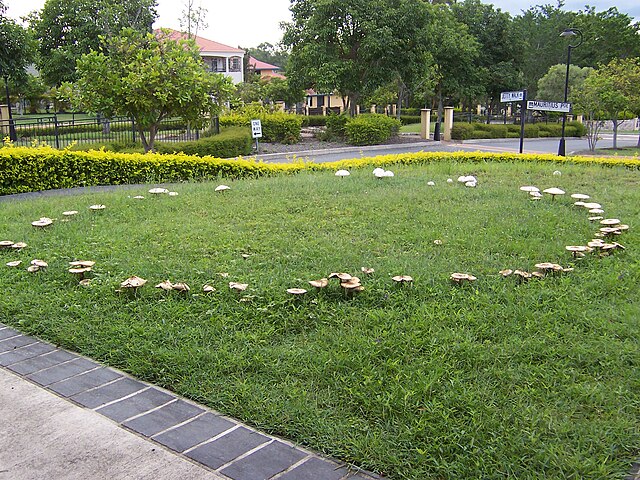
Fairy circles, on the other hand, are a strange puzzle that has intrigued both scientists and folklorists for hundreds of years. You can find these strange circular shapes in grasslands and forests. The most famous places to see them are in Namibia and Australia, where bare patches of earth form almost perfect circles surrounded by healthy plants. Some circles last for decades, while others only last a few years. The circles can be as small as a few feet or as large as a hundred feet. Folklore in Europe said that fairies danced in circles at night and that people who stepped into the rings might be taken to the fairy realm or cursed with bad luck. Modern scientific explanations have included theories about competing plant species, underground termite colonies, unique soil chemistry, and water distribution patterns. However, none of these theories can explain all of the fairy circles that have been seen around the world. The enduring enigma of these formations continues to provoke scientific inquiry and more arcane conjecture regarding their origins.
There are some intriguing similarities between UFOs and fairy circles, especially when it comes to their controversial origins and the strange ecological effects they have. Fairy circles, which are mostly circular patches of plants surrounded by bare soil, are most common in dry areas like the Namib Desert. A substantial corpus of scientific literature has concentrated on their formation mechanisms, encompassing biological interactions involving termites (Juergens, 2013) and hydrological factors influencing soil moisture retention (Yizhaq et al., 2024; Ravi et al., 2017). This body of research demonstrates that fairy circles possess intricate ecological dynamics that evoke a sense of wonder, akin to UFOs—both phenomena captivate the intellect with their enigmatic nature.
Researchers who saw intriguing patterns in both UFOs and fairy circles started to wonder if they might have a common source. Some researchers have found cases where fairy circles appeared in the same area as UFO sightings, with witnesses saying they saw strange lights hovering over fields before bare patches of vegetation appeared in the shape of circles. Some theorists believe that the strong energy or radiation from UFO landings or low-altitude hovering might create conditions conducive to the formation of fairy circles, which would explain both their circular shape and the unusual phenomenon of plants not growing in these areas. Some individuals have proposed deeper metaphysical connections, positing that these occurrences could serve as indicators of the intersection of our world and other dimensions or realities, with fairy circles serving as enduring symbols of the thin boundary between worlds. In this light, the stories about fairy circles take on new meaning. The old stories about fairy rings taking people to other worlds could be early attempts by humans to explain encounters with technology or beings from outside of Earth. People may consider these connections interesting or far-fetched, but they are an intriguing attempt to put together different mysteries into one theory of the unexplained.

Theories
There are a lot of different paranormal theories about the link between UFOs and fairy circles, ranging from the scientific to the mystical. Some researchers examine the issue solely from a physical perspective, exploring whether electromagnetic fields, radiation, or other energy emissions from UFOs could modify soil composition or plant growth in ways that result in enduring circular patterns. Some people, on the other hand, take a more consciousness-based approach and say that UFOs and fairy circles might be examples of a collective unconscious or psychic energy that takes on physical form in certain situations. Some people think that both events are real contacts with non-human intelligence, either extraterrestrial beings using advanced technology or interdimensional beings that our ancestors saw through the lens of fairy tales. Some theorists suggest that ancient humans observed UFO phenomena but lacked the conceptual framework to articulate it in technological terms, subsequently integrating these experiences into their mythology as encounters with fairies, angels, or other supernatural entities. The different explanations show how difficult it is to study things that don’t fit into traditional categories and seem to connect the physical and the metaphysical.
Skepticism is an important and necessary part of judging claims about UFOs, fairy circles, and the supposed link between them. Scientists who have studied fairy circles a lot say that perfectly natural things like soil chemistry, water dynamics, and plant competition can explain them. They also say that once we understand the environmental factors, we don’t need supernatural explanations. Skeptics of UFOs remind us that misidentified planes, satellites, weather events, or optical illusions can explain most sightings. They also remind us that eyewitness accounts are often unreliable, even when conditions are perfect. They say that our natural tendency to search for patterns makes us see connections where there are none, which is why the apparent link between UFO sightings and fairy circle formations is just confirmation bias at work. Critical thinkers assert that extraordinary claims necessitate extraordinary evidence. While anecdotal accounts of UFOs near fairy circles may be intriguing narratives, they lack the stringent documentation required to substantiate a genuine causal relationship. This skeptical viewpoint is a crucial counterbalance, compelling researchers to obtain more robust evidence and contemplate ordinary explanations prior to arriving at paranormal conclusions.
Fairy circles have led to studies of ecological processes that show how plants, animals, and environmental conditions interact in complex ways (Ravi et al., 2017; Békési et al., 2025). This demonstrates a general human inclination to associate unexplained anomalies with a search for significance, highlighting how cultural narratives can influence perceptions of ecological formations and UFOs. The notion of fairy circles possessing mystical origins parallels certain descriptions of UFOs as extraterrestrial phenomena, with both functioning as cultural artifacts that embody humanity’s quest to comprehend the environment through mythological perspectives (Kataoka et al., 2012; Tschinkel, 2012).
The investigation of these phenomena also encompasses methodological analyses. Utilizing advanced technologies such as synthetic aperture radar to examine fairy circles parallels the application of technology by scientists to document and investigate anomalous UFO sightings (Békési et al., 2025). Both disciplines depend on cultural narratives and technological progress to unravel their fundamental enigmas.
Skeptics raise valid concerns about the evidence and methods used, but the cultural and psychological effects of these mysteries are real, regardless of how they are explained. The persistent fascination with UFOs has influenced a wide range of areas, including government policy and pop culture. Now, big countries are openly looking into aerial phenomena that don’t fit with what we know. Fairy circles still attract tourists and researchers to remote areas, which helps the economy of the local communities and inspires new generations of scientists to study ecological mysteries. The convergence of these two phenomena in paranormal research signifies a profound human desire to seek meaning and connection within the universe, to hold the belief that we are not isolated, and that reality encompasses more marvel than our quotidian experiences may imply. Whether UFOs and fairy circles are linked by undiscovered physics, interdimensional portals, or merely our collective imagination, their influence on human culture illustrates our species’ extraordinary propensity for curiosity and our unwillingness to concede that all enigmas have been elucidated. The conversation itself tests the limits of what is acceptable in scientific research, forcing researchers to keep an open mind while still following strict rules about evidence.
Conclusion
The search for possible links between UFOs and fairy circles reveals as much about our nature as it does about any outside events. Our willingness to entertain unconventional ideas, despite skepticism, exemplifies the innovative thinking that has driven human progress throughout history, while our simultaneous demand for evidence and proof protects us from falling prey to superstition and pseudoscience. Whether subsequent research elucidates these enigmas as interconnected through unconventional physics, identifies them as entirely independent coincidences, or validates traditional explanations, the investigative process enhances our comprehension of the world and our role within it. The disagreement between those who believe and those who don’t, as well as between those who see connections and those who see only chance, creates a dynamic tension that ultimately serves the cause of truth better than either position alone could achieve. Ultimately, both UFOs and fairy circles serve as reminders that our world harbors secrets to uncover, inquiries to pursue, and enigmas that challenge even our most sophisticated scientific comprehension.
References
Békési, E., Szárnya, C., Prinzhofer, A., Twaróg, A., Porkoláb, K., & Tari, G. (2025). Exploration of fairy circles associated with natural hydrogen seepages with synthetic aperture radar interferometry and backscatter analysis.. https://doi.org/10.5194/egusphere-egu25-8374
Juergens, N. (2013). The biological underpinnings of namib desert fairy circles. Science, 339(6127), 1618-1621. https://doi.org/10.1126/science.1222999
Kataoka, R., Siddiqui, Z. A., Kikuchi, J., Ando, M., Sriwati, R., Nozaki, A., … & Futai, K. (2012). Detecting nonculturable bacteria in the active mycorrhizal zone of the pine mushroom tricholoma matsutake. The Journal of Microbiology, 50(2), 199-206. https://doi.org/10.1007/s12275-012-1371-7
Ravi, S., Wang, L., Kaseke, K. F., Buynevich, I. V., & Marais, E. (2017). Ecohydrological interactions within “fairy circles” in the namib desert: revisiting the self‐organization hypothesis. Journal of Geophysical Research: Biogeosciences, 122(2), 405-414. https://doi.org/10.1002/2016jg003604
Sahagian, D. (2017). The magic of fairy circles: built or created?. Journal of Geophysical Research: Biogeosciences, 122(5), 1294-1295. https://doi.org/10.1002/2017jg003855
Treonis, A. M., Bell, L. W., Marais, E., & Maggs‐Kölling, G. (2024). Namibian fairy circles: hostile territory for soil nematodes.. https://doi.org/10.1101/2024.12.04.626864
Tschinkel, W. R. (2012). The life cycle and life span of namibian fairy circles. PLoS ONE, 7(6), e38056. https://doi.org/10.1371/journal.pone.0038056
Yizhaq, H., Rein, C., Saban, L., Cohen, N., Kroy, K., & Katra, I. (2024). Aeolian sand sorting and soil moisture in arid namibian fairy circles. Land, 13(2), 197. https://doi.org/10.3390/land13020197
Leave a Reply