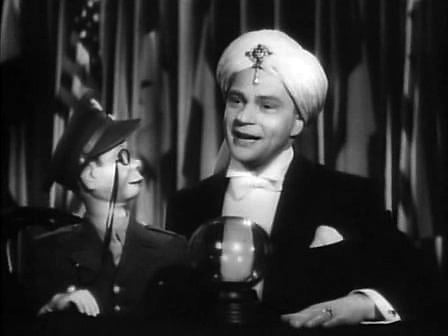
Haunted Ventriloquist Dummies: Key Points
- Haunted dummies are child-sized wooden or composite figures with hinged clacking jaws, glass or painted eyes that seem to follow people, and a fixed, toothy grin that begins to feel threatening rather than cheerful.
- They are found in positions where they were not left, turn their heads on their own, and emit laughter or speech from empty rooms, often growing possessive of their owner while patiently watching rather than attacking.
- A dummy becomes haunted through the lingering spirit of its original ventriloquist, a malevolent spirit seizing a convenient vessel, or the slow accumulation of identity from years of being named and spoken through.
- Their strength lies in intimate manipulation, movement, disembodied speech, and psychological control, while their weaknesses are the traditional remedies of burning, breaking, or removing them, none of which are guaranteed to work.
- Notable versions include Hugo in Dead of Night, Slappy from the Goosebumps series, Fats in the film Magic, and various Twilight Zone episodes, alongside quieter folklore about dummies stored in attics and museums.
- Their power to frighten is linked to the uncanny valley, the unsettling act of projecting a voice into a lifeless thing, and deeper anxieties about control and who is really doing the speaking.

Introduction
In the catalog of frightening things, few objects upset people as much as the ventriloquist dummy. It is a representation of life that is devoid of vitality, a small wooden figure that gazes and grins while remaining motionless. And when folklore pictures such a thing coming truly alive, the effect is one of the most lasting images in the horror genre. The ghost ventriloquist dummy occupies a peculiar corner of superstition, part cursed object and part unwilling puppet and part something that was never a puppet to begin with. To understand why these entities are so powerful in haunting our imaginations, it helps to look at what they are, what they reportedly do, and why so many storytellers keep returning to them.
Physical Appearance and Uncanny Behavior
The haunting dummy is also physically characterized by its uncanny resemblance to a human that is not entirely credible. Most are made of wood and molded composite material, around the size of a little child, with hinged jaws that click as they talk. People stare at the eyes because they seem to follow you across a room, yet the eyes are often painted or glass. The ordinary dummy wears a tidy little suit, a bow tie, and maybe polished shoes that hang while the figure is sitting on a knee. It has pink cheeks, and its mouth is frozen in a broad, toothy grin. That eternal smile is part of the horror. A human face changes, but the dummy’s expression never softens, and the smile starts to feel less like cheer and more like a menace locked in place.
What separates a haunting prop from just a spooky prop is the conduct of these figures. Folklore witnesses say the dummy was in a different spot from where they had put it. It moves its head when untouched. Some tell of empty rooms giving off weak laughter or a voice speaking when there is no ventriloquist. In the more vicious legends, the doll becomes protective of its owner and aggressive to anybody who threatens their attachment. It might ruin relationships, speak directly, or roam the house at night. In these stories the fear grows slowly, for the dummy rarely lunges. It waits, and it watches, and it is constantly seated just where it should not be.

The Displaced Voice and Ventriloquial Logic
The central phenomenon is the appearance of speech arising from a source apart from that of the speaker, a displacement that produces epistemic and affective doubt. This phenomenon is reflected in the philosophical and media-analytic literature on ventriloquism and voice mediation. Cooren captures ventriloquism as a generic relation in which speaking agents create effects through others (including non-human agents) and therefore the constitution of reality (Cooren, 2012). In organizational and media studies, this concept has been extended to examine how figures (puppets and dummies) “speak for” or via entities in social systems, showing the persistence of ventriloquial causation across domains (Cooren, 2012; Christensen & Christensen, 2022; Treadwell, 2005).
Origins and Powers of the Haunted Dummy
The reasons for a dummy’s haunting generally follow a few recognizable patterns. Sometimes the ghost is that of the original ventriloquist, so identified with the figure in life that death cannot sever the relationship. Other stories have a restless or malicious spirit finding the dummy a handy vessel, attracted to an object already formed like a human and half animated by decades of make-believe talking. There’s also the common idea that the haunting is generated by repetition itself. The wood slowly assumes a borrowed identity from the performer who speaks through the dummy every night for years, giving it a name, a personality, and a voice. But in this case, the dummy is not possessed; it is animated little by little by the force of habit and attention.
The purported powers of a haunted dummy are usually intimate, not great. It commands no troops. It levels no buildings. Strength is proximity and mastery. It can walk around on its own, it can speak with a voice that seems to come from nowhere, and it can exercise a psychological influence over the living, often convincing an owner that the two are inseparable. Some myths bestow it the power to affect dreams or to gradually drive those around it insane. Its weaknesses are typical of cursed objects. Frequently the only solution is to burn the dummy, rip it apart, or banish it from home, but horror tradition likes to remind us that fire doesn’t always work and that the ashes have a tendency to reassemble themselves. Cutting the emotional tie, refusing to speak for or through it, is sometimes presented as the subtler defense.
Cultural Legacy and Explanatory Frameworks
There is a rich gallery of such figures in literature and popular culture. One of the first and most significant is the one involving the dummy Hugo in the 1945 anthology film Dead of Night, when the boundary between ventriloquist and puppet blurs into a narrative of jealousy and ownership. The most famous modern version of the cliché was created by horror writer R. L. Stine, with Slappy, the wisecracking villain of the Goosebumps series, a dummy brought to life by ancient words read aloud from a slip of paper. Anthony Hopkins played a performer obsessed with his dummy, Fats, in the film Magic. The concept was revisited in more than one episode of The Twilight Zone, and the “Living Doll” and other episodes helped cement the picture in the public imagination. Folklore makes the quieter stories, local traditions about retired dummies stored in attics and museums that tourists claim have changed overnight.
Theories about why these things scare us so much often return to the idea of the uncanny valley, the uneasiness we experience from creatures that look human enough but not quite. The uneasiness is persistent with a dummy trigger because our minds cannot decide whether to read it as a person or an item. And then there is the psychology of the voice. It’s like a ventriloquist purposefully putting speech into an inanimate object. The seed of the dread that something is alive comes from the act of pretending it is alive. Some folklorists have suggested that the dummy represents fears of control, of who is actually speaking and who is being talked through, a concern that becomes frightening when the puppet appears to answer for itself.
Ventriloquial logic is used in ghost hunting and paranormal storytelling to frame experiences. Voices, presences, and hauntings are produced through co-constructed narratives in which stories, sites, and mediated voices support systems of belief. Ghosted and haunted spaces gain agency through collective storytelling and the apparatus of narrative construction (events, media coverage, and site lore) (Ironside, 2024; Sinoimeri, 2011). Investigations of paranormal TV programs (Most Haunted, Ghostwatch-influenced formats) reveal how media talk, live framing, and audience participation shape perceptions of presence, liveness, and authenticity—demonstrating ventriloquial dynamics where the “voice” of paranormal phenomena is mediated by broadcasters, scripts, and audience interpretation (Steward & Zborowski, 2014; Smith & Ironside, 2022). Environmental and perceptual factors tied to anomalous sensations (infrasound and electromagnetic fields) are discussed as factors that could induce subjective experiences of hauntings, illustrating how external stimuli can function as triggers for ventriloquial-like experiences of presence, while the interpretation depends on narrative framing and belief systems (French et al., 2009).
Conclusion
The ventriloquist dummy is an enduring spook because it dramatizes a simple human fear: that the things we animate for our own enjoyment can escape our control. It is a figure poised between categories, never quite alive, never safely dead, and its smile never fails. Whether one believes the stories or just likes the shudder they inspire, the little wooden performer with the moving jaw has made a place for himself in the ghost legends of the world. It lies quietly in attics and on stages and in the corners of our imaginations, waiting, as it always seems to be, for someone to look away.
References
Attenborough, R. (Director). (1978). Magic [Film]. Joseph E. Levine Productions.
Cavalcanti, A., Crichton, C., Dearden, B., & Hamer, R. (Directors). (1945). Dead of night [Film]. Ealing Studios.
Christensen, L. T., & Christensen, E. (2022). Preparing the show: Organizational ventriloquism as autocommunication. Organization Theory, 3(2). https://doi.org/10.1177/26317877221098767
Cooren, F. (2012). Communication theory at the center: Ventriloquism and the communicative constitution of reality. Journal of Communication, 62(1), 1–20. https://doi.org/10.1111/j.1460-2466.2011.01622.x
French, C. C., Haque, U., Bunton-Stasyshyn, R., & Davis, R. W. (2009). The “Haunt” project: An attempt to build a “haunted” room by manipulating complex electromagnetic fields and infrasound. Cortex, 45(5), 619–629. https://doi.org/10.1016/j.cortex.2007.10.011
Ironside, R. (2024). Ghost hunting events and storytelling. Event Management, 28(4), 649–654. https://doi.org/10.3727/152599524×17077053867629
Manning, L. (Director), & Volk, S. (Writer). (1992). Ghostwatch [TV film]. BBC.
Most haunted [TV series]. (2002–2019). Antix Productions.
Sinoimeri, L. (2011). “Close your eyes and listen to it”: Schizophonia and ventriloquism in Beckett’s plays. Miranda, 4. https://doi.org/10.4000/miranda.1924
Smith, F. V., & Ironside, R. (2022). The uncanny place: A critical appraisal of popular paranormal TV shows. The Journal of Popular Television, 10(1), 95–108. https://doi.org/10.1386/jptv_00072_1
Steward, T., & Zborowski, J. (2014). (G)hosting television: Ghostwatch and its medium. Journal of British Cinema and Television, 11(2–3), 189–212. https://doi.org/10.3366/jbctv.2014.0203
Stine, R. L. (1992–1997). Goosebumps [Book series]. Scholastic.
Treadwell, S. (2005). The motel. Space and Culture, 8(2), 214–224. https://doi.org/10.1177/1206331205275006




Leave a Reply