
Vila Fairies: Key Points
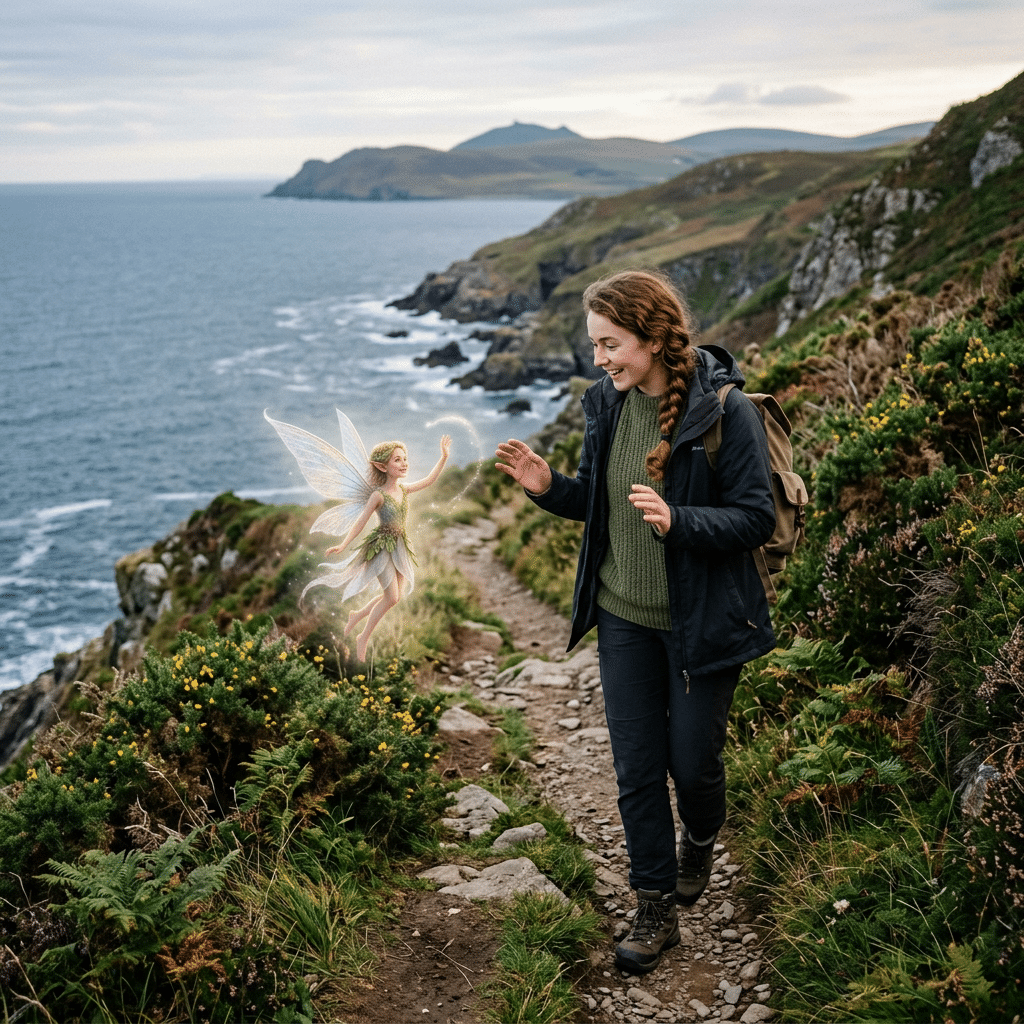
- Vilas appear as beautiful winged women in flowing white gowns, and in adulthood they can shape-shift into swans, horses, snakes, or falcons (Rosen, 2009).
- They live deep in the forest, fly through the treetops protecting the plants, and are revered for their knowledge of herbs and healing (Rosen, 2009).
- They are also dangerous, luring humans into a dance that leaves them exhausted in a landslide or drowned in a river (Rosen, 2009).
- Very old and rooted in Slavic tradition, these fairies survived Christianization as spirits rather than deities and lived on in oral epics, ballads, and charms.
- Their origins are disputed: some say they are the spirits of women who died before their wedding day (Rosen, 2009), while others call them nature spirits or demoted pagan goddesses.
- They command flight, healing, and enchantment, but a Vila can be bound by the theft of her wings, gown, or hair, and warded off by iron and garlic.

Introduction
In the mountains and forests of the Balkans and the larger Slavic realm, few beings are as vividly imagined as the Vila. the larger Slavic realm, few beings The Vila stands out as one of the most vividly imagined beings in the mountains and forests of the Balkans and the broader Slavic realm. as the Vila. These figures, seen all over Serbia, Croatia, Bosnia, Bulgaria, Slovenia, and beyond, are known by versions of the same name and straddle a peculiar middle ground between goddess, ghost, and fairy. They heal and protect the wild, but they harm men who enter their circles. To study the Vila is to study a whole set of cultural fears and hopes: the terror of the wild terrain, the veneration of herbal medicine, the mourning connected to women who died young, the ancient feeling that nature is populated by vigilant, easily offended energies. The object of this essay is to study the Vila as she appears in folklore: her physical shape, her conduct, her historical growth, her strengths and weaknesses, and the explanations that scholars and storytellers have provided to account for her.
Classification and Physical Form
Vilas are portrayed in all Slavic cultures as female supernatural beings associated with nature, beauty, and the spirit world. They are generally shown as stunningly beautiful and associated with natural environments like forests, rivers, and mountains. In cross-cultural talks, the vila is considered together with other Slavic female supernatural beings (e.g., in discussions of vilas, Mokosh, and other deities/spirits) and their function in folklore as part of a larger sacral and mythic environment (Пeнчев, 2011). They are heavenly or liminal beings with a non-human homeworld (typically the “upper” or cloud realm) that they can access the human world from through song, dancing, or other ritualized contact. This classification matches the discussion on Eastern and Southern Slavic vilas and their cloud/mountain habitats in cross-cultural studies (Miller, 2012; Telban, 2016; Gheltofan, 2023; Blažek, 2006).
In physical terms, the Vila is regarded as an image of idealized beauty. In the regions of Eastern Europe, she is “often portrayed as beautiful winged women, often clothed in flowing white gowns” (Rosen, 2009). The gown’s white color holds significant importance. In Slavic tradition, white represents both sadness and purity, and a pale figure glimpsed at the edge of a clearing embodies these dual associations. Her hair is usually described as long and flowing, either golden or light, flowing behind her as she walks. Tall, light, and strangely elegant. Her wings let her fly above the canopy, not through it, so she is heard before she is seen, a rustle in the leaves with no wind to accompany it.
But the winged maiden is merely one of her forms. As an adult, the Vila is a shape-shifter, able to appear “as swans, horses, snakes, or falcons” (Rosen, 2009). These are not forms at random. The swan connects her with water and with the many Eurasian tales of bird maidens whose feathered robes can be taken away. The horse symbolizes speed, the epic hero’s steed, and the untamed herds of the uplands. The snake connects her to the soil, to healing, and to the chthonic world below the roots of trees. The falcon offers her the vision of the hunter, the liberty of the open air. One Vila, in other words, can live in the sky, water, and earth, a creature that is not just a denizen of the natural world but a form of it.

Powers and Channels of Contact with Humans
The Vilas are said to have supernatural powers, to be able to influence the natural world or human affairs in ways beyond the power of normal humans. In some accounts, their powers are associated with fabled figures who can influence weather, fertility, or fate. They are generally characterized as powerful and sometimes dangerous or awe-inspiring figures in narratives (Oschepkova & Solovyeva, 2021). According to legends and folktales, the vilas are often described as having a strong physical presence and a magical aura, sometimes associated with magical or transformational powers characteristic of fairy beings in folklore traditions (Пенчев, 2011). In legends, gods are in contact with humans; they may help or bless them or test or punish them. They are said to be entities that function outside of the standard human moral economies, and tales about them tend to embody social rules or warnings in a mythic frame (Пенчев, 2011).
Song, music, and dance often become portals for vila-human engagements. Singing or listening to songs can transport a person to the world of the vila or to a ritual space where time and space are transformed (e.g., “fairy time” and the notions of age conversion). This motif emerges in comparative assessments of Slavic and Celtic exemplars and serves to show how song/dance mediates the boundary between the human and otherworlds (Miller, 2012). The motif of “the dancing fairy” who invites or tempts human suitors is a frequent one in ballads and fairy tales in all Slavic traditions. The ballad studies portray vilas as seductresses or wives in some variations, but in other variants the vilas are concerned with harm, danger, or obligation (e.g., forced marriage or escape) (Ajdačić, 2015). Spinning, thread, and other weaving symbols are sometimes described in Vila legend as a bridge between worlds and as marks of blessing or fate. The never-ending thread pattern, bestowed by fairies or fairy women, is a bridge between living and dead realms and a guarantee of aid or immortality under forbidden conditions. This theme of thread is testified to in Slovenian, Croatian, and Russian texts and is associated with bridging barriers between realms (Mencej, 2011).
Guardian and Predator: The Vila’s Dual Behavior
Her behavior is a function of that identity. The Vila lives deep in the forest, where they “fly beauty” and trespass the spirit world. tect the plants and are revered for their deep knowledge of herbs and healing” (Rosen, 2009). That is the tired face of the villa and why she was revered, not feared. She is the protector of growth and keeper of secrets of medicine (e.g., the kind of person a local hermit might say they learned from). There are stories of wounded warriors cured by a vila’s touch, of blood stopped and bones mended, of the right leaf on a wound at the right time. She can also be a foster mother and a teacher who raises a hero, who gives him strength, or who names herself Dancing Sister.
The opposite side is a lot less tender. Humans may be “lured into a dance with these creatures and be left exhausted in a landslide or drowned in a river” (Rosen, 2009). The dance is a dominant theme of Vila folklore. A traveler hears music, sees a ring of pale women turning in a meadow, and joins them. Time is condensed. He dances till the strength is out of him and the environment itself completes what the dance began: the slope gives way, the water closes over him, the route home is gone. The moral is a practical one also. Mountains do cause landslides, rivers do drown the irresponsible, and the villa lends a face and a motivation to those tragedies. She sets boundaries too. Anyone who trespassed on her spring, cut down her tree, spied upon her bathing, or interrupted her dance invited punishment, which could be blindness, muteness, madness, or a wasting illness.
Historical Development, Origins, and Scholarly Debate
The villa appears very old historically, and her documented biography goes through the oral epic tradition rather than through the written religion. Christianity reinterpreted her as a ghost or demon, not a god, yet she was not killed off and lived on in ballads, wedding chants, place names, and healing charms. She is well known for her function as the supernatural patron of a mortal champion, a role preserved in the heroic poetry of the South Slavs, which singers continued to recite into the modern period. The villa lived because she was useful. Belief in her dictated certain actions and proscribed others, explained misfortune, and delegated authority to those who performed folk medicine.
Her very beginnings are challenged within the tradition. “Many stories exist about the Vila’s origin, and some say they are the spirits of women who died before marriage; they are the spirits of women who died before they were married and cannot rest peacefully in their graves” (Rosen, 2009). This version puts her among the restless dead, the unquiet spirits that arise from an interrupted life. That would explain a lot: her whiteness, her antagonism to males, her preoccupation with dancing and music, the sounds of the wedding feast she never had, her habit of drawing young men away. Other versions have the Vila as a basic nature spirit, arising from the woodland or the cloud or the spring, rather than the result of any human death. Comparative theories see the Vila as a survivor of pre-Christian goddesses of fate and fertility, as she has features with the Greek nymph, the Roman fate, the Germanic swan maiden, and the Slavic rusalka. On this reading a demoted deity becomes a fairy. Another, more anthropological line of thought sees her as a projection of social pressures onto the terrain, conveying the hazards of the mountains, the significance of the community’s medical knowledge and the unresolved grief around unmarried women who died young.
For all her power, the Vila is not invulnerable, and this is what keeps her in the world of tales rather than religion. They say she is bindable in the old tales. A mortal who steals her wings, her gown, or a lock of her hair has power over her and may compel her to marry him, although such marriages never last when she gets back what was stolen and returns to the forest. She can be sworn to, appeased with offerings of flowers, cakes, or ribbons left by her spring, and kept at bay by iron, garlic, and religious precautions. Her weakness is her nature: bound by the laws of hospitality and reciprocity and of named agreement, a human who knows the norms can survive an encounter and even profit from it.
There is some disagreement as to the exact ontological status of vilas (celestial divinities vs. nature spirits), their relationship to Perun or other gods, and whether vilas are “goddesses” in a formal sense or more loosely defined spirits. Some authors believe that vilas are intermediates between worlds with meteorological links, while others consider vilas to be one of many nature spirits with varying societal purposes within a folklore framework (Miller, 2012; Marjanić, 2015; Marjanić, 2018; Blažek, 2006). Others focus more on the ethical and gendered aspects of vila interactions with humans (e.g., seduction vs. teaching or empowerment vs. oppression) (Mencej, 2011; Telban, 2016). Some scholars stress the transnational motif of “the thread” as a crucial linking mechanism. The equivalence of Vila with similar Indo-European prototypes (e.g., Greek nymphs, Irish sídhe) is debated, with some texts explicitly comparing across cultures to highlight common motifs, while others caution against overgeneralizing pan-European patterns (Miller, 2012; Marjanić, 2018; Blažek, 2006).
Conclusion
The Vila survives because she keeps contradictions in suspension.” She is a gorgeous winged woman in a white dress. She is also a snake, a swan, a horse, and a falcon. She watches the plants and tells of the secrets of healing and drowns males who dance with her. She might be a spirit of primeval nature, as old as the mountains, or the ghost of a bride who had never reached her wedding. All of these descriptions are fully proven and the point is their cohabitation, not a mistake in the record. The forest heals, the forest kills, and the villa is the one that does both. That doubleness is what has enabled her to survive the conversion of the region; what has kept her alive in poetry and painting and popular culture; what has kept her feeling less like a decorative fairy and more like a warning left in the treetops.
References
Ajdačić, D. (2015). O vilama u narodnim baladama [On the fairies in folk ballads]. Studia Mythologica Slavica, 4, 207–224. https://doi.org/10.3986/sms.v4i0.1818
Blažek, V. (2006). Celto-Slavic parallels in mythology and sacral lexicon. Studia Celto-Slavica, 1, 75–85. https://doi.org/10.54586/tvgf2195
Gheltofan, D. (2023). Fantastic realia: Some lexical correspondences (Russian-Romanian). Scientific Bulletin of the Politehnica University of Timişoara: Transactions on Modern Languages, 20, 16–28. https://doi.org/10.59168/mhan6499
Marjanić, S. (2015). The dyadic goddess and duotheism in Nodilo’s The ancient faith of the Serbs and the Croats [Dijadna boginja i duoteizam u Nodilovoj Staroj vjeri Srba i Hrvata]. Studia Mythologica Slavica, 6, 181–203. https://doi.org/10.3986/sms.v6i0.1783
Marjanić, S. (2018). A review of contemporary research on Croatian mythology in relation to Natko Nodilo. Traditiones, 47(2), 15–31. https://doi.org/10.3986/traditio2018470202
Mencej, M. (2011). Connecting threads. Folklore: Electronic Journal of Folklore, 48, 55–84. https://doi.org/10.7592/fejf2011.48.mencej
Miller, D. A. (2012). Supernatural beings and “song and dance”: Celtic and Slavic exemplars. Studia Celto-Slavica, 6, 101–112. https://doi.org/10.54586/vojo4470
Oschepkova, V. V., & Solovyeva, N. (2021). Spellonyms as linguo-cultural onomastic units in indigenous folklore. E3S Web of Conferences, 284, 08013. https://doi.org/10.1051/e3sconf/202128408013
Rosen, B. (2009). The mythical creatures bible: The definitive guide to legendary beings. Union Square & Co.
Telban, M. K. (2016). Symbolic equivalences in belief tales about female nature spirits. Traditiones, 44(3). https://doi.org/10.3986/traditio2014440304
Пенчев, В. (2011). The Slavic idea and the origin of Bulgarian folklore studies. Traditiones, 40(2). https://doi.org/10.3986/traditio2011400206
Leave a Reply