Matagot Black Cat: Key Points
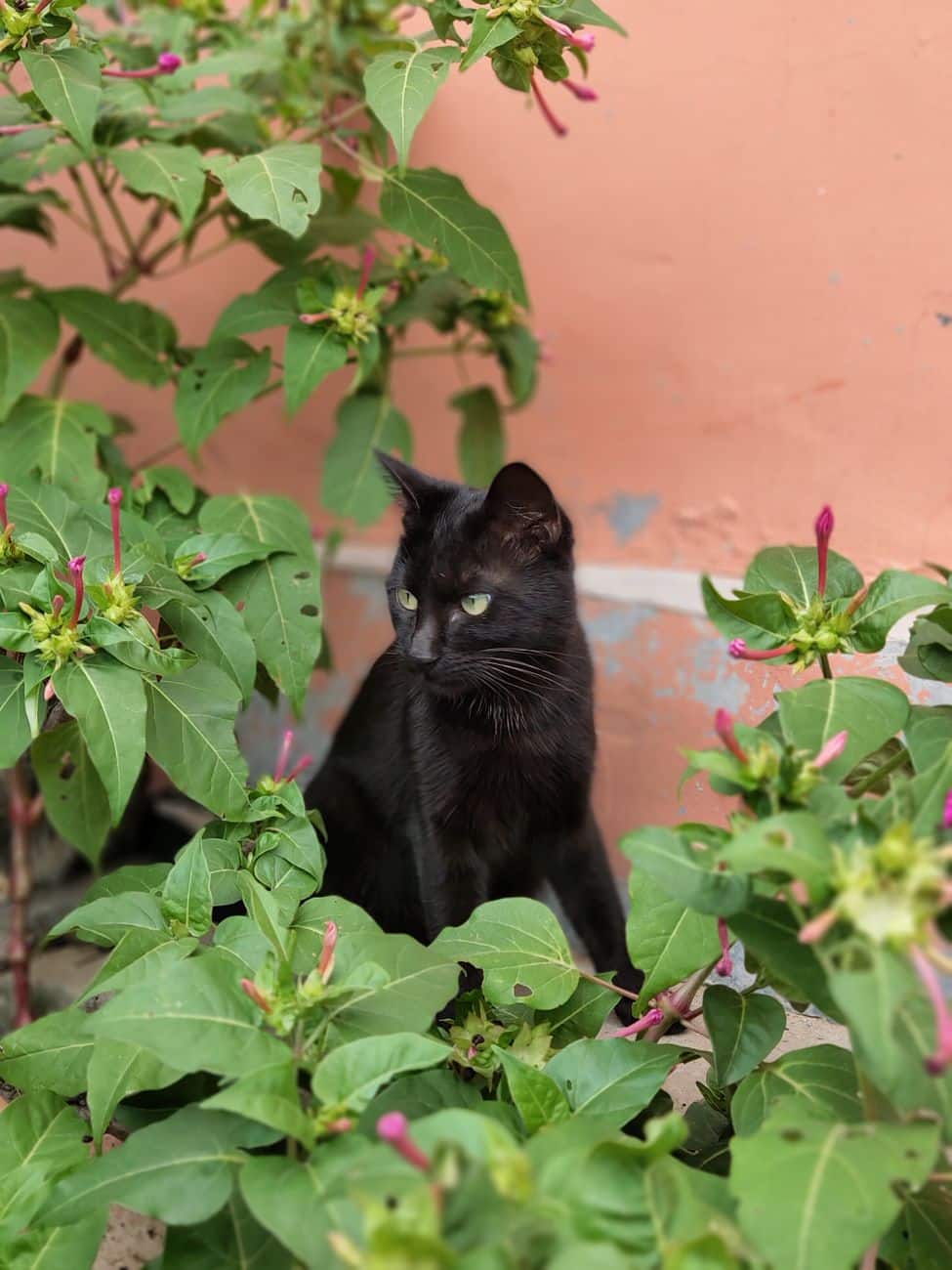
- The matagot, also called mandagot, mandragot or chat d’argent, is a spirit from southern French folklore. It usually takes the form of an ordinary black cat, though some tales say it can also become a rat, dog, fox or cow.
- Nothing sets it apart from a normal black cat. Because any black cat might secretly be a matagot, it made sense to treat all of them kindly.
- To catch one, you lured it with a hen at a crossroads, put it in a sack and carried it home without speaking or looking back. If you gave it the first bite of every meal, it might bring you a gold coin each morning.
- A neglected matagot would take revenge by causing chaos around the house and farm. An owner who died without passing it on faced a long, terrible death and possibly damnation.
- The belief was strong enough to create a market for the cats and even a 19th-century lawsuit over one. The matagot later influenced tales like Dick Whittington and His Cat and appeared in the film Fantastic Beasts: The Crimes of Grindelwald.
- The most likely origin is the mandrake root, which people also hid, fed and kept for wealth. The matagot may also come from household guardian spirits, Christian ideas about witches’ familiars or village suspicion of neighbors who got rich without explanation.

Introduction
In Europe the black cat has for ages been a symbol of distrust. It is associated with witches, night, and misfortune. But in the southern French countryside, one type of black cat was something more distinct. They named it the matagot. In some regions it was also called “mandagot,” “mandragot,” or the “silver cat” (Encyclopédie du paranormal, 2016). It seemed like a normal cat, but legend said it was a ghost that could bring wealth or destruction to a household and could even decide the fate of a man’s soul. The matagot is a fascinating insight into how rural communities regarded luck, money, obligation, and the supernatural. This essay examines the monster and its actions, tells the folklore about it, discusses its cultural effect and looks at numerous possibilities about where the belief comes from.
What Is a Matagot?
“Matagot” is a phrase used in French folklore and more generally in European folklore to describe a character in folklore, usually in relation to magical or supernatural creatures, and often in relation to cats as symbolic protectors or omens. Cats, notably black cats, have long been powerful symbols in superstitions, folk beliefs, and ceremonial narratives in many civilizations. The sources offered reflect themes of superstition, cats, and their cultural meanings in European and French contexts, providing points of synthesis on the topic of how a “Matagot,” or black cat figure, can be framed within historical and cultural discourses (Boehrer, 2009; Gliozzo, 1971; Arbach, 2016; Segalen, 1994; Boyko, 2020).
So what’s a matagot? Best characterized as a spirit in animal form. It is generally considered a black cat, although some versions state it can also turn into a rat, dog, fox, or cow (Matagot, 2026). Most accounts portray the matagots as wicked, although others are supposed to help humans who treat them kindly (Matagot, 2026). In Brittany, Gascony, Provence, and Languedoc, the silver cat was frequently reported as a devilish black cat that a sorcerer had obtained in exchange for his soul (Refuge animalier de Brax, 2015). It is neither entirely a demon, nor entirely a fairy, nor entirely a pet. Somewhere it’s a mix of all three.
Looks purposely plain. Matagots appear as typical black cats. For this reason, people believed it was wise to treat all black cats kindly, as any one of them could be a Matagot (Matagot, 2026). That’s the terrifying thing. The animal does not exhibit any characteristics that reveal its true nature. Sometimes writers go into more detail, suggesting the matagot was part of a bigger, more aggressive race of “Cat-Matagots” that magicians used to force to dig gems and minerals out of the dirt. In this version, the survivors became black cats, which looked innocuous and spread throughout the Dauphiné, Berry, Sologne, Touraine, Gascony, and Poitou (Jesterbear, 2016). Modern popular sources frequently describe the matagot as hairless, resembling a Sphynx cat (silverfox57, 2024). That picture owes more to current fiction than to the belief of ancient villages.
Capturing and Keeping a Matagot
The nature of the matagot is characterized by a strict quid pro quo. The most famous folklore tells how to catch one. It was reported to traverse the countryside in Gascony on one night of the year at an unknown hour between sunset and sunrise; thus, anyone who wanted to catch it had to stay awake every night (Encyclopédie du paranormal, 2016). The typical way was to tie a hen at a crossroads where four paths came together, for the greedy matagot would come rushing toward it. Then the hunter took the cat by the tail, put it in a sack and went home without looking back or talking, whatever occurred on the way (Gerakis-Escallier, s.d.). Some versions warn of odd sounds and visions on the ride home (Narrer, n.d.). The ban not to look back echoes numerous folk stories in which the rewards of the otherworld are contingent upon compliance with one particular taboo.
Once in the house, the matagot had to be looked after and treated with exceptional care. Tradition held that the owner should offer it the first taste of every meal. If so, the owner was fortune-proof (Gerakis-Escallier, n.d.). In some tales, the cat repaid this charity with a gold coin every morning (Matagot, 2026). Other legends claim that it went out at night to mysterious regions and came back at dawn with gold louis for its master (Refuge animalier de Brax, 2015). Others still believe that the owner left a single gold coin overnight and came back the next day to discover others (Le Guide du Chat, 2023). But the cat was not a free source of wealth. It was more like a hard-driving business associate.
If the owner was negligent, the matagot would take its revenge. A popular tale from the Hautes-Alpes tells of a cat that, angered and upset, hid the household tools and shattered them, braided the tails of the horses, milked the cows, and startled the neighbors (Gerakis-Escallier, n.d.). In a myth from the Basque country, a magician became rich and sent his matagots far away from home, only to be strangled by them (silverfox57, 2024). It stayed with its owner until death. Owners could not keep the cat throughout their life. A dying master who had not given the matagot to someone else would die a long and dreadful death (Gerakis-Escallier, n.d.; Matagot, 2026). Some tales add that a matagot might serve 9 masters in succession and only the final one would be cursed and transported to hell (Encyclopédie du paranormal, 2016).

Cultural Significance and Influence
The folklore was also used to instruct. The belief in the matagot seems to have been strongest in the south, in Occitan-speaking regions, where it was part of a greater legacy of sorcery and witchcraft. In 1922 a priest in the canton of La Bâtie-Neuve said that matagots were well known in the Champsaur, in Gap, and in his parish (Gerakis-Escallier, n.d.). One woman recalls being nicknamed a “petit matagot” as a child in the late nineteenth century when she threw a tantrum. Adults also urged her to stay near home because “there are matagots over there” (Gerakis-Escallier, n.d.). The monster was a ghost people believed in but it was also a word employed by parents to control their children. Often folklore does both duties at once.
In European tradition, cats have long been associated with supernatural power, witchcraft, and superstitions. The English and Continental traditions often associate cats with tales of witchcraft, protective or malevolent spirits, and omens. Cats feature in polemical or satirical writing as personifications of superstition or religious fears during and after the medieval/early modern periods. A broader context, therefore, casts a Matagot black cat as a figure imbued with magical or sinister connotations in European folklore (Boehrer, 2009). Other cross-cultural analogies indicate the vast distribution of cat-related superstitions across Europe and their historical intersections with religion, ritual practice, and popular culture. A comparative study of superstition across languages and traditions reveals the extent to which the magpie, as a related avian symbol, is implicated in the consideration of superstition in European folklore, making clear that animal figures often serve as portable signs across cultural contexts, including black cats as prominent figures in superstition discourse (Boyko, 2020).
The matagot was more than just a tale. The belief in the silver cat sometimes has genuine legal and financial ramifications. In the 19th century a man from Belle-Isle-en-Terre is said to have paid 300 francs to an elderly woman claiming to be a witch for a mandragot. After eight nights where the cat gave him nothing, he complained, and the justice of the peace condemned her to repay the money (Le Guide du Chat, 2023). The case suggests that the belief in witchcraft was strong enough to support both a market for it and instances of fraud. Such beliefs were also part of the general European distrust of cats. Historian Robert Darnton (1984) has suggested that cats in early modern France were associated with occult power, witchcraft, and the family, and the symbolism explains the reverence and harshness they experienced. The matagot has the same paradox. It brings wealth, but it may be the devil’s servant.
The beast lives on in modern culture. Commentators have likened it to familiar lucky cat stories. The cat in Dick Whittington and His Cat has been termed a matagot because it bestows tremendous prosperity on its master (Matagot, 2026). Others, like silverfox57, 2024, see Puss in Boots, the smart cat who makes his destitute master rich, as another version of this kind. More recently, in the film Fantastic Beasts: The Crimes of Grindelwald (Yates, 2018), matagots are sleek black cats that defend the French Ministry of Magic. In the film they become vicious when provoked and multiply when hit by spells (Harry Potter Lexicon, n.d.). This version retains the cat as guardian and servant but dispenses with the association with money and damnation.
Theories of Origin
There are many ideas as to the origin of the matagot. Most convincing is linguistic. The Gascon name mandragot could be a corruption of mandragore, which is the French name for the mandrake plant, and south of the Loire the mandrake was often called l’herbe du matagot, the matagot’s herb (Encyclopédie du paranormal, 2016). It was a folk belief that whoever kept a mandrake root at home, wrapped it in beautiful cloth and nourished it on milk or on his own blood would become rich and get every wish. The folklorist Antonin Perbosc proposed that the root was altered by popular belief into a cat (Encyclopédie du paranormal, 2016). The analogies are tight. They are both hidden, both need to be fed, both bring wealth, and both entail spiritual harm.
Another notion is that the matagot is a household guardian ghost. It has been compared to the Roman lares and the multitude of French home spirits who bestow happiness and wealth in return for tiny daily sacrifices (Encyclopédie du paranormal, 2016). It is quite similar to the initial taste of each meal that is provided to the cat. A third argument, largely my interpretation, is that the mythology was a mechanism for rural people to account for sudden or inexplicable wealth. You might accuse a neighbor who did well without any apparent cause of harboring a matagot. A story like that would credit his success to a secret bargain, not ability or luck, and would discreetly accuse him of sorcery. A fourth explanation links to Christian conceptions about witches’ familiars, which would explain why the cat is so often related to the devil, to sold souls, and to a final damnation (Darnton, 1984; Refuge animalier de Brax, 2015). These theories are not rivals. All of these elements combined probably gave rise to the matagot.
In French folklore and literary settings, the popular notion of superstitions and the supernatural is often associated with animal figures, including the Matagot or other magical or shapeshifting creatures. The distinction between superstition and religion has been a major theme in studies of attitudes toward belief systems in the Enlightenment and the way in which popular beliefs were represented vis-à-vis theological rationalism. The specific contemporary articles on Matagot are not included in the references listed here, but the French tradition of superstition and the politicized framing of superstition (rather than organized religion) provide an interpretive lens through which Matagot can be read as a culturally meaningful sign in the French-speaking folkloric and literary milieu (Boehrer, 2009; Segalen, 1994).
Conclusion
The matagot is a very normal-looking black cat, but it contains some of the deepest themes in French rural tradition. It can bring gold, but only to the owners who feed it consistently, capture it right, and give it away before dying. Its wrath on irresponsible rulers, its bond to the mandrake and its links to sorcery show a civilization that craved affluence but was afraid of what prosperity would entail. From parental warnings to a lawsuit before a justice of the peace, and extending to fairy tales and Hollywood pictures, its influence was pervasive. Whether it started out as a mandrake root, a household spirit, or a witch’s familiar, the matagot is rooted in a long-standing human anxiety that luck is something you have to earn and pay for.
References
Arbach, M. (2016). Marcel Monnier’s Portrayal of Hawaiians in Un printemps sur le Pacifique. Hawaiian Journal of History, 50(50), 75–89. https://doi.org/10.1353/hjh.2016.0003
Boehrer, B. (2009). Gammer Gurton’s Cat of Sorrows. English Literary Renaissance, 39(2), 267–289. https://doi.org/10.1111/j.1475-6757.2009.01047.x
Boyko, L. B. (2020). Signs And Superstitions Across Cultures: Russian, English, And French Linguocultural Traditions. 435–442. https://doi.org/10.15405/epsbs.2020.12.02.59
Brown, M. (1950). Dick Whittington and his cat. Charles Scribner’s Sons.
Darnton, R. (1984). The great cat massacre and other episodes in French cultural history. Basic Books.
Encyclopédie du paranormal. (2016, May 8). Matagot. http://www.paranormal-encyclopedie.com/wiki/Articles/Matagot
Gerakis-Escallier, N. (n.d.). Les matagots aux Aubins. La Bâtie-Neuve. http://www.labatieneuve.com/notice-historique/ses-hameaux-et-leurs-curiosites/les-matagots-aux-aubins/
Gliozzo, C. A. (1971). The Philosophes and Religion: Intellectual Origins of the Dechristianization Movement in the French Revolution. Church History, 40(3), 273–283. https://doi.org/10.2307/3163003
Harry Potter Lexicon. (n.d.). Matagots. https://potterlex.com/matagots
Jesterbear. (2016, August 3). Matagots. https://www.jesterbear.com/Hoodoo/Matagots.html
Le Guide du Chat. (2023, August 10). La légende du chat d’argent, le chat qui double ton salaire. https://leguideduchat.fr/chat-au-quotidien/chat-argent-double-ton-salaire/
Matagot. (2026, October 6). In Wikipedia. https://en.wikipedia.org/wiki/Matagot
Narrer. (n.d.). Les créatures de légende: Les chats noirs. https://narrer.fr/news/158/les-creatures-de-legende-les-chats-noirs
Perrault, C. (1990). Puss in boots (M. Arthur, Trans.; F. Marcellino, Illus.). Farrar, Straus and Giroux. (Original work published 1697)
Refuge animalier de Brax. (2015, October 23). Nos chats noirs. https://www.refugeanimalierdebrax47.com/2015/09/11/nos-chats-noirs/
Segalen, M. (1994). Here but Invisible: The Presentation of Women in French Ethnography Museums. Gender & History, 6(3), 334–344. https://doi.org/10.1111/j.1468-0424.1994.tb00204.x
silverfox57. (2024, October 31). Matagots. Brickthology. https://brickthology.com/2024/10/31/matagots/
Yates, D. (Director). (2018). Fantastic beasts: The crimes of Grindelwald [Film]. Warner Bros. Pictures.

Leave a Reply