Bell Witch as a Demon: Key Points
- Between 1817 and 1821, the Bell family of Robertson County, Tennessee reported escalating supernatural torment that began with strange animal sightings and knocking, then progressed to an intelligent speaking voice heard by dozens of witnesses.
- The entity repeatedly lied about its identity, claiming to be a disturbed spirit, a treasure guardian, a soul from a burial mound, and finally the witch of neighbor Kate Batts, which matches the classic demonic pattern of deception about origin.
- It combined uncanny scriptural mastery, such as repeating two sermons delivered thirteen miles apart, with obscenity and blasphemy, a mixture long recognized in Christian tradition as a marker of demonic rather than ghostly presence.
- Traditional demonology describes activity that escalates deliberately toward degradation and ruin, targeting children and adolescents, isolating households, mocking faith, and driving toward despair or death.
- The Bell Witch followed exactly that trajectory, beating Betsy Bell until she fainted and bled, destroying her engagement to Joshua Gardner, throwing a visitor from the house, and allegedly poisoning John Bell before singing drinking songs at his grave.
- Skeptical theories point to Betsy as hoaxer or unconscious poltergeist agent, to suitor Richard Powell, to arsenic poisoning, or to Ingram’s late 1894 account as fiction, but none explains the whole record as coherently as the demonic reading does.

Introduction
Few American ghost stories match the heft of the Bell Witch. In Robertson County, Tennessee, between 1817 and 1821, a farming family claimed to be tormented by an invisible apparition that hammered on their walls, spoke in a human voice, read scripture, and thrashed their children until they bled. It has been described as a ghost, a poltergeist, a curse, or a hoax. However, a closer examination of the facts preserved in the tradition reveals a situation that increasingly resembles something older and darker than a restless ghost. However, a closer examination of the facts preserved in the tradition reveals a situation that resembles something older and darker than a restless ghost. The Bell Witch lied about its identity, insulted prayer while demonstrating an astounding understanding of the Bible, tortured a kid, and reputedly killed a man. Those are not the habits of a confused soul hovering near its grave. They were the classic devil marks.
Origins of the Haunting on the Bell Farm
The Bell Witch is often described in folklore and ghost lore as a major Tennessee haunting of a female spirit associated with a witch character. This positioning is seen in American haunt legends and regional ghost stories that place Tennessee as a significant site (Bird, 2018; Waters, 2015; “Monsters, Murders and Vampires,” 2012; Ramírez, 2023). The story begins in a cornfield. The Bell Witch is a case study in catalogs of American ghost legends, offering a point of comparison for the local histories and tourism contexts that embed hauntings (Bird, 2018; Ramírez, 2023).
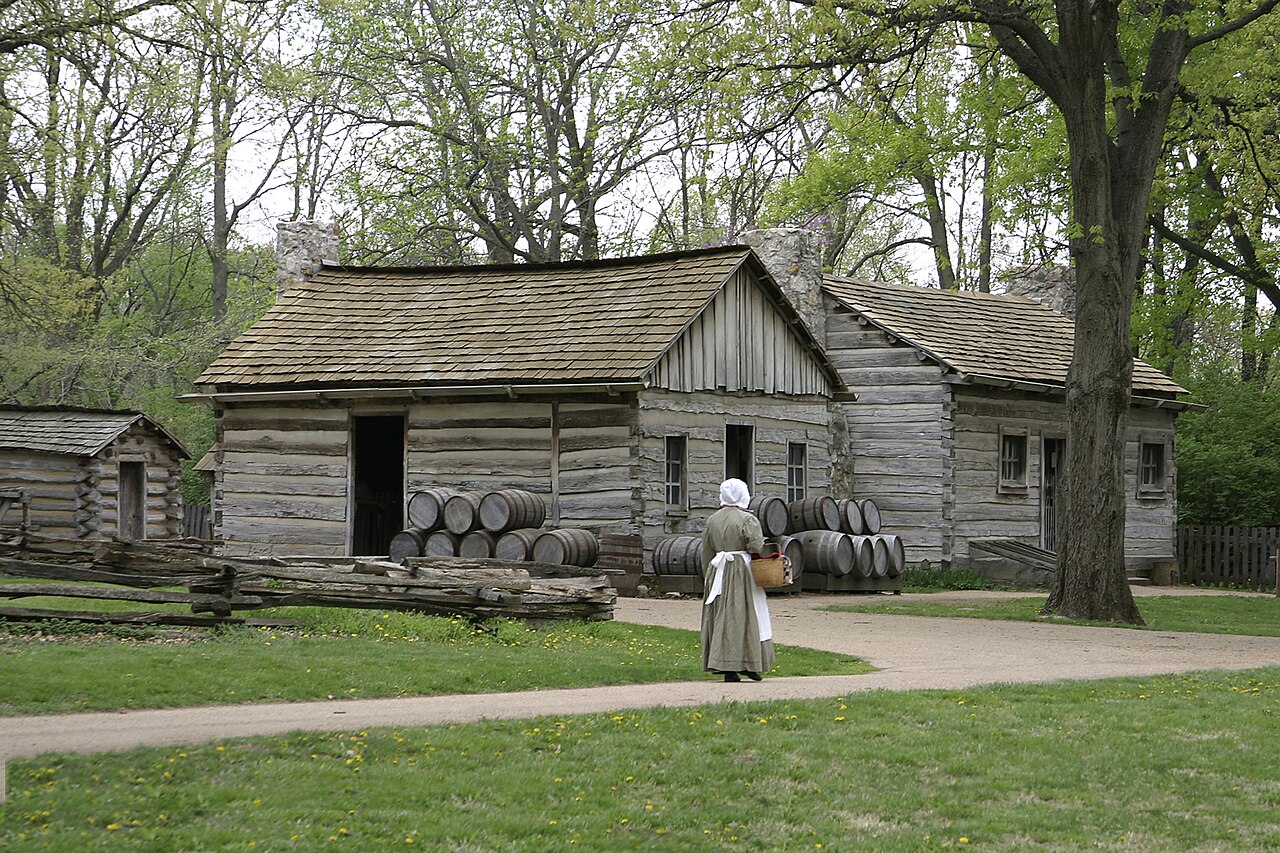
The story starts in a cornfield. One day in 1817, John Bell Sr., a successful farmer and deacon of the Red River Baptist Church, was roaming his property when he observed an animal that made no sense. The accounts describe it as resembling, in the accounts, a giant dog with the head of a rabbit. Bell lifted his rifle and shot. And the thing went away. Soon other family members began reporting their own weird sightings. His son Drew approached a bird of peculiar proportions on a fence. Betsy, his daughter, observed a girl in a green dress swinging on a branch of an oak tree. Dean, a man who was held in bondage on the Bell farm, reported that a giant black dog accompanied him on the nights he walked to see his wife. At first, none of these experiences seemed related. They weren’t scary; they were just weird.
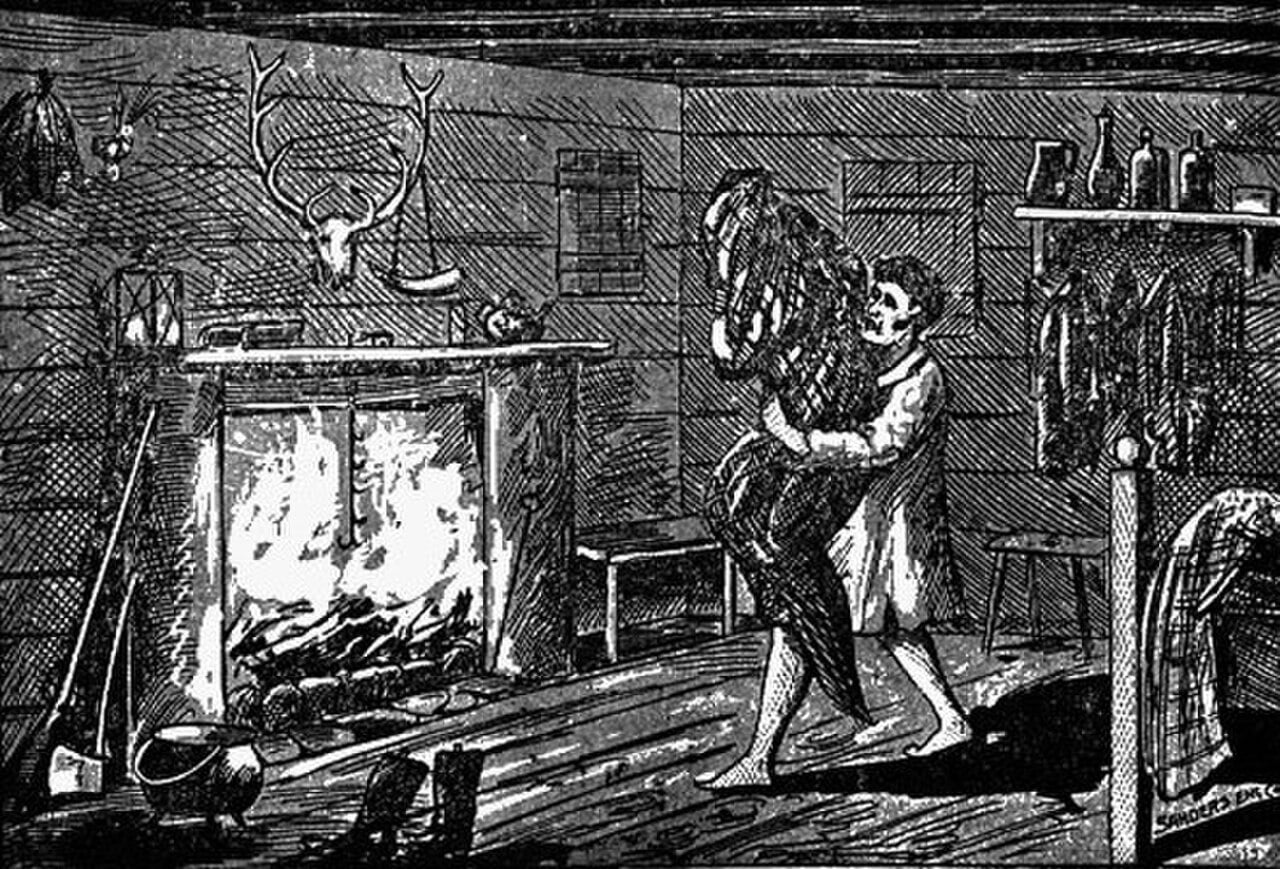
And then the sounds went in. The family heard knocks on the doors and on the outer walls, which always ceased when someone went to investigate. They heard the biting of the bedposts, the clatter of chains against the floor, and the snarling of phantom dogs battling in the dark. The blankets were pulled off the beds while the youngsters slept. Her hair was tied so tight it lifted her head up from the pillow. In the dark, small hands slapped faces. The children woke up with scratches on their skin and welts growing on their arms. Betsy took the biggest hit. She was about twelve or thirteen when it started. Witnesses stated she was struck so hard that the sound reverberated across the room and her cheeks remained crimson for hours. She was pinched, pricked with pins, and yanked by the hair. About the same time, John Bell experienced a peculiar paralysis in his mouth and jaw, which made eating and talking difficult.
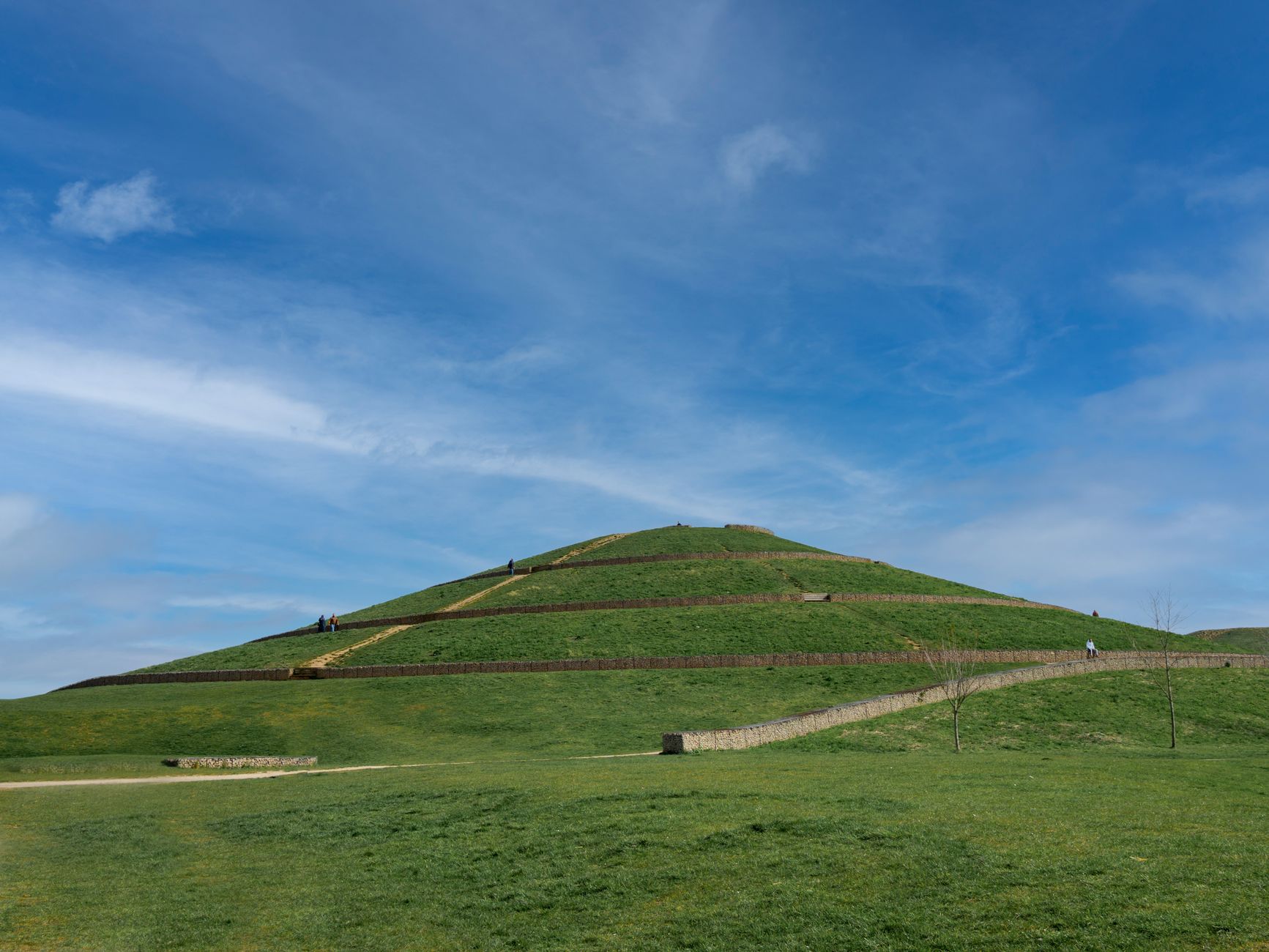
The Bells were afraid and ashamed, and they kept the trouble to themselves for a time. Eventually John Bell confided in a family friend, James Johnston, who spent a night in the house and was awoken by the same event. His verdict was harsh and dogmatic. ‘Like in the Bible,’ he said to Bell, ‘the entity is a spirit.’ The word got out and from then on the Bell Farm became a destination. Night after night neighbors, clergymen, and curious travelers poured into the house. The creature seemed to enjoy the crowd. It found a voice, faint and then distinct, and it spoke. When asked who it was and what it wanted, it said it was a spirit, once joyous, now upset. That was just the first of many answers. It said it was the spirit of someone buried in a Native American mound on the site. It was said to be a spirit guarding buried treasure, which sent two young men on a fruitless dig. In another passage, it stated that the witch of a live neighbor, Kate Batts, a woman locally accused of witchcraft, felt John Bell had tricked her in a business deal. The family began calling the item Kate and it enthusiastically responded to the moniker.

Deception, Scriptural Knowledge, and Blasphemy
The stories that matter change. The classic tale in Christian demonology involves deception about identity. Scripture speaks of a spirit that masquerades as an angel of light, and the folktales of possession and infestation nearly invariably involve an entity that misrepresents itself, provides many contradictory explanations of its origins, and thrives on the attention it attracts. The Bell Witch exhibited this same pattern of deception. It also demonstrated powers that no local ghost story could explain. It repeated two lectures spoken at the same hour, thirteen miles apart, word for word. It shared gossip from distant families and could leave and return within minutes. She argued theology with visiting preachers, seemingly enjoying the dispute, and sang hymns wonderfully one hour, then swore with obscene fluency the next. This combination of scriptural knowledge and blasphemy is one of the oldest signs of demonic involvement in the historical record.
Christian and Jewish tradition teaches that demonic activity on earth is not mainly about scaring people. It’s about rot. In the Gospels, demons are shown as dwelling in the places of the dead, causing dumbness, convulsions, and self-mutilation, speaking through human mouths, possessing supernatural knowledge, and being entirely antagonistic to God. Medieval and early modern narratives follow the same pattern of infestation, persecution, infatuation, and finally possession. The activity intensifies. It strikes the defenseless, especially children and teenagers. It separates a household. It wears out its members. It ridicules their religion. It tries to despair or die. In folk belief a ghost is caught. A demon has a purpose and that goal is destruction.
Escalating Violence and the Death of John Bell
The violence associated with the Bell Witch matches that growing trend with an eerie accuracy. It started with noises, went to mild harassment and ended up in constant physical abuse. Betsy was so often beaten that she had moments of fainting, times when she could not breathe. The entity had a strange and harsh interest in her engagement to a young neighbor, Joshua Gardner, and harassed the couple until the match was broken off. That detail is crucial, because the attack was on a girl’s future, not just her body. Visitors were no exception, either. One member of Andrew Jackson’s party, who claimed to be a witch tamer, was reputedly lifted up by an unseen force and flung from the house, and Jackson is said to have said he would rather battle the British again than spend another night with the Bells. Worse was to come for John Bell himself. His face was now paralyzed with headaches, convulsions, and long spells of helplessness when the voice openly exulted in his pain and vowed to murder him. He lapsed into a coma in December 1820 and died the following day. The family uncovered an unknown bottle of dark liquid in the pantry, and when they placed it on a cat’s tongue, the animal died instantly. When they placed it on a cat’s tongue, the animal perished instantly. The speaker apparently bragged about giving John Bell a heavy amount while he was sleeping. According to the narrative, he sang drinking songs over the grave at his funeral. Killing a father and then mocking his funeral is not mourning. It is malice in a scheme.
Alternative Explanations and Cultural Legacy
But not everyone reads the case like that and the alternative ideas deserve a hearing. The most prevalent, central skeptical explanation is Betsy. She was a teenage girl in a troubled home, the very demographic most typically linked with claims of poltergeists around the world. Some say she faked the events or that she manufactured them by unconscious psychological means. Another legend is that Richard Powell, a local schoolteacher, loved Betsy and married her years later. He is said to have orchestrated the haunting to end her engagement. Medical theories suggest John Bell died of a nervous condition or was slowly poisoned by someone in the household with arsenic. The sharpest theory is that the whole business is literary and not history, because the first complete description of it is Martin V. Ingram’s An Authenticated History of the Bell Witch, issued in 1894, more than seventy years after the happenings, and critics have always questioned its sources. There are also folk explanations, such as the curse of Kate Batts and the defilement of an ancient burial ground. Each theory accounts for some aspect of the record. None of these theories satisfactorily explain the entire phenomenon. The phenomenon includes not only the intelligent voice heard by dozens of independent witnesses but also the verified recital of faraway sermons and the orchestrated four-year campaign against one particular individual.
The Bell Witch has affected popular culture and media depictions of American paranormal mythology. The collective discussion of haunted areas and sensationalized or exaggerated representations of local stories (including Tennessee-based hauntings) echoes wider views regarding ghost tourism and morbid tourism in haunted sites (Bird, 2018). Although not every source fully itemizes the direct, explicit narrative artifacts of the Bell Witch, the pattern of inclusion of Tennessee-based haunt narratives in discussions of American witchcraft and haunting lends support to the claim that the Bell Witch participates in such cultural representations (Bird, 2018; Ramírez, 2023).
Conclusion
The advantage of the demonic reading is coherence. If the thing in the Bell house was a demon, then all the false names, the scriptural fluency, the obscenity, the cruelty to a child, the interest in destroying a marriage, the slow poisoning of a church deacon, and the mockery at the graveside were not a series of coincidences but a single recognizable pattern. The events will probably never be settled as stated. Honest readers must accept that the documentation trail is scant and late. But the community that had experienced those years did not speak of a sorrowful ghost in need of rest. They told of a thing hating them, watching them, and working patiently for a death. The first and most elementary opinion, and still the most convincing that there is, was that of their neighbor James Johnston, who had spent one night in that residence. “It was a spirit,” he added. “Just like in the Bible. The Bible names spirits that do stuff like that.”
References
Bird, S. E. (2018). 5 Playing with Fear. 112–128. https://doi.org/10.7330/9781607328087.c005
Ingram, M. V. (1894). An authenticated history of the famous Bell Witch. W. P. Titus.
Monsters, Murders and Vampires. (2012). 101–123. https://doi.org/10.5040/9781849666718.ch-005
Ramírez, P. (2023). Building Silver Bridges: Paranormal Apparitions, Settler Heritage, and Indigenous Erasure in the Ohio River Valley. American Indian Culture and Research Journal, 46(2). https://doi.org/10.17953/aicrj.46.2.ramirez
Waters, T. (2015). Magic and the British Middle Classes, 1750–1900. Journal of British Studies, 54(3), 632–653. https://doi.org/10.1017/jbr.2015.56


Leave a Reply