
Welcome to another episode of Connect Paranormal where today we ask, “How many Bigfoot were on Noah’s Ark?”
One of the most enigmatic creatures of modern folklore is Bigfoot, a giant humanoid that allegedly lurks in remote forests. Its elusiveness and the myriad of stories surrounding its existence have intrigued generations. On a similar note, the biblical tale of Noah’s Ark captivates believers and skeptics alike, narrating a world-engulfing flood and an ark containing a pair of every living creature. This video seeks to combine these two fascinating narratives, posing the question: If Bigfoot exists, how many of them would have been on Noah’s Ark?
Noah’s Ark
The biblical story of Noah’s Ark describes how Noah was instructed by God to build a large ark to hold himself, his family, and representative pairs of every animal on earth. This was done in preparation for a great flood that would wipe out all life that was not on the ark. An interesting question to consider is whether the legendary creature known as Bigfoot or Sasquatch would have been present on the ark. While the existence of Bigfoot has never been proven, here we will examine the possibility and estimate how many Bigfoots would have joined Noah on his voyage.
According to the Book of Genesis, God was angry with the wickedness of mankind and decided to send a great flood to wipe out all life on earth. However, God showed favor to Noah, instructing him to build a 300 cubit long ark to hold himself, his wife, his three sons, their wives, and breeding pairs (usually interpreted as two) of every kind of creature on the earth. Noah did as commanded, bringing the creatures onto the ark. It then rained for 40 days and 40 nights, flooding the earth. After one year and ten days, the flood waters receded enough for the ark to ground on the mountains of Ararat. Noah, his family, and all the creatures then disembarked to repopulate the earth.
Bigfoot
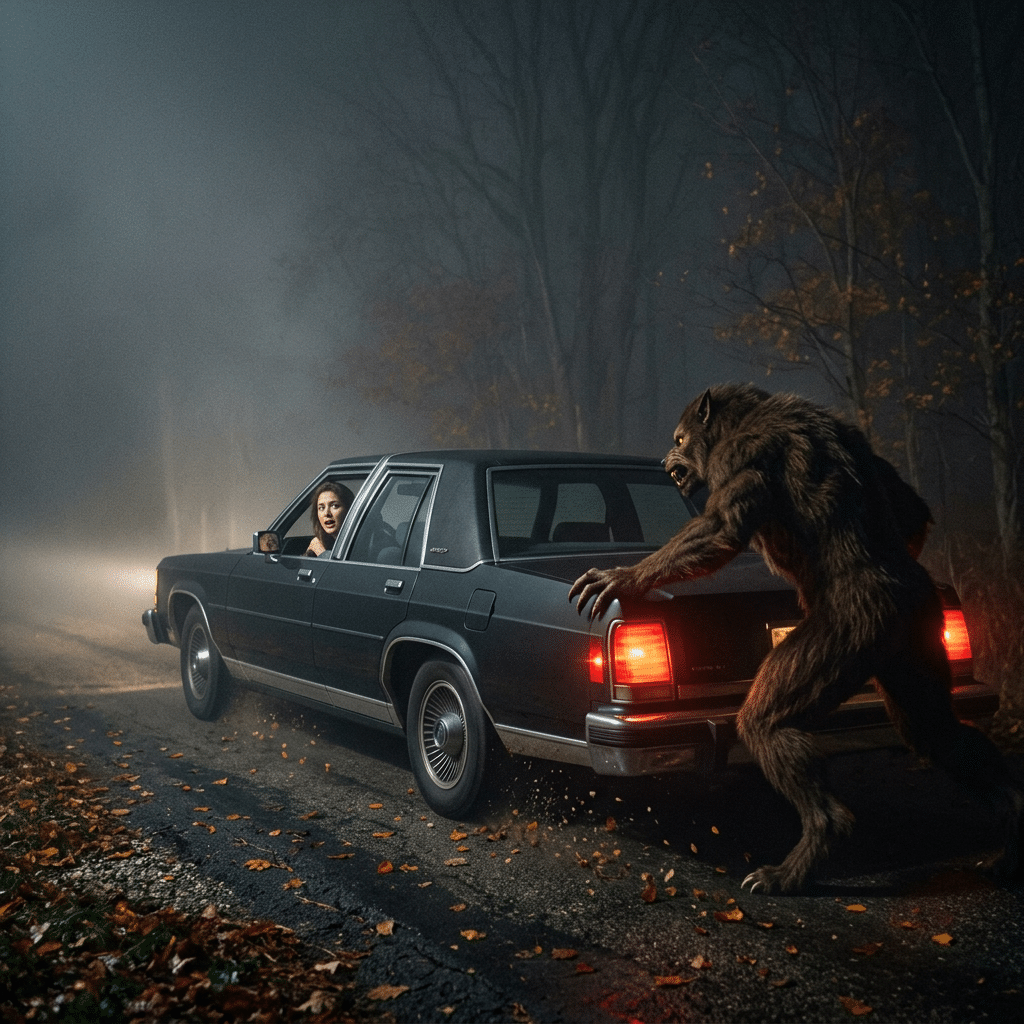
Bigfoot is a famous cryptid, or creature whose existence has been alleged but never proven. Bigfoot is most often described as a large, hairy, bipedal humanoid that dwells in remote forests in the Pacific Northwest region of North America. Though sightings have been reported across the continent, Bigfoot is most frequently associated with the dense woods of northern California, Oregon, Washington, and British Columbia. Other Bigfoot creatures exist worldwide too such as the Yeti in Asia and the Yowie in Australia.
Some key characteristics of Bigfoot include their height, estimated from 6 to 10 feet tall, their thick reddish-brown or black fur, and their large feet, from which their name derives. While many pictures and casts of footprints exist, clear photographic evidence of Bigfoot remains elusive and science has yet to confirm their existence. Various theories suggest Bigfoot could be a missing link in human evolution, an undiscovered primate, or simply the stuff of legends. Still, Bigfoot remains an icon of cryptozoology and a fixture in folklore.

Considerations
First, we must operate under the assumption that Bigfoot existed at the time of Noah. Since no historical or archaeological evidence from that era mentions such a creature, this is purely speculative.
Second, we have to operate under the assumption there was a Biblical flood and the Noah’s Ark account is accurate.
When considering which animals were present on Noah’s Ark, a distinction was made between clean and unclean animals. Clean animals were taken onto the ark in sets of seven, while only one pair of unclean animals was brought.
Specifically, Genesis 7:2-3 says:
“Take with you seven pairs of every kind of clean animal, a male and its mate, and one pair of every kind of unclean animal, a male and its mate, and also seven pairs of every kind of bird, male and female, to keep their various kinds alive throughout the earth.” (New International Translation.)
This verse indicates that Noah was to take more of the clean animals (seven pairs) than the unclean animals (one pair). The concept of clean vs. unclean animals would later be elaborated upon in the Levitical laws, particularly in Leviticus 11 and Deuteronomy 14, which provide guidelines on which animals were considered clean (and therefore edible) and which were not.
Under these laws, mammals like sheep and cattle were clean while creatures that ate other animals or dead things were unclean. As primates related to humans, Bigfoot would likely have been considered clean animals. In this case, seven pairs of Bigfoot would have been on the ark for a total of fourteen Bigfoot.
As Bigfoot is not mentioned in the biblical text, we have to make assumptions about whether they would be considered clean or unclean. As such, their hairy appearance and mysterious, wild nature may have caused ancient people to classify them as unclean animals.
Working then from the assumption that Bigfoot would have been considered unclean, only one breeding pair (two individuals) would have been present on the ark. However, this raises further questions.
First, we have to assume that Bigfoot was confined to one location during Noah’s time, as he was instructed to gather two of every animal according to its kind. This may point to Bigfoot only existing in one region at that time. Second, Bigfoot creatures are relatively rare, with only isolated sightings reported over decades. Having the entire population stem from just two individuals raises doubts about the legend’s continuity. However, this is not unique to Bigfoot. It is hard to imagine enough genetic diversity for any species resulting from limited Ark populations. Nevertheless, within the context of the biblical story, it is reasonable to conclude that just a single Bigfoot pair or seven Bigfoot pairs were present onboard to survive the flood and repopulate the species.
Assuming that the Biblical flood happened, and that Bigfoot is real, we have to assume that there were either two Bigfoot or fourteen Bigfoot on Noah’s Ark.
Conclusion
While there is no concrete evidence that Bigfoot was on Noah’s Ark, it is possible that it could have been one of the creatures that was on the Ark, given its size and description. However, it is also possible that Bigfoot was not on the Ark because doesn’t exist, due to the lack of sightings and reports throughout history. Regardless of whether Bigfoot was on the Ark or not, the story of Noah’s Ark remains an important part of many religious traditions and serves as a reminder of the importance of faith, perseverance, and the relationship between humans and the natural world.
References
Coleman, L. (2009). Bigfoot!: The True Story of Apes in America. Simon and Schuster.
Elliott, E. (2023). Bigfoot in the Bible?: An Ethnological Study of Spiritual and Religious Beliefs Connected to a Folkloristic Creature.
Loxton, D., & Prothero, D. R. (2013). Abominable science: origins of the yeti, Nessie, and other famous cryptids. Columbia University Press.
Montgomery, J. W. (2018). The quest for Noah’s Ark. New Reformation Publications.
Zink, R. M. (2025). Noah’s Ark: a saga of science denial. Evolution: Education and Outreach, 18(1), 5.


Leave a Reply