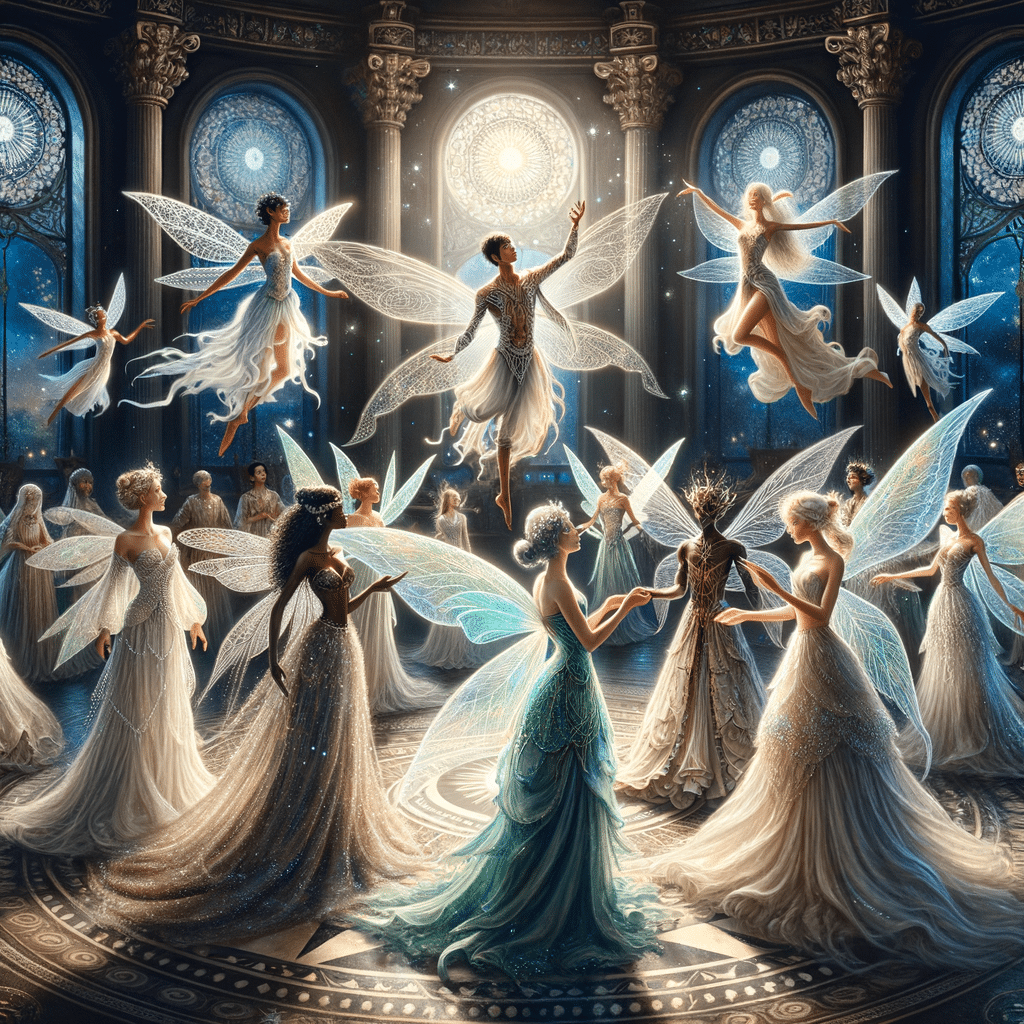
The world of faerie lore is as vast and diverse as the cultures that have given birth to these wondrous beings. Among the most intriguing and mysterious elements of the fae world are the Seely and Unseely Courts. These courts represent two opposing factions of the faerie realm, embodying the duality between light and dark, benevolent and malevolent. This video will explore the nature of these courts, the fairies that reside within, and the behaviors that distinguish them from one another.
The Seely Court, also known as the Seelie Court, is often characterized as the realm of the more benevolent and amiable fairies. Associated with light and positive energies, the inhabitants of the Seely Court are known to engage in acts of kindness and protect the natural world. They are bound by a sense of honor and duty, and their interactions with humans are generally well-intentioned.
The fairies of the Seely Court are diverse in their appearance and abilities. Among them, one might find the classic winged fairies, the Tuatha Dé Danann of Irish mythology, and even the graceful and beautiful elves from various European folklore. These beings are often depicted with an ethereal beauty and grace, symbolizing the light and purity they embody.
While the fairies of the Seely Court are generally regarded as benevolent, it is crucial to remember that they are still unpredictable and can be mischievous. They may play harmless pranks or engage in tests of character for those who encounter them, but they seldom cause lasting harm.
Unseely Court
In stark contrast to the Seely Court, the Unseely Court is home to the darker, more malevolent fairies. These beings revel in chaos, mischief, and destruction, and are often associated with the darker aspects of nature, such as decay and death. Their actions are frequently driven by a desire for personal gain, and they harbor little concern for the consequences of their actions on others.
The inhabitants of the Unseely Court are as varied as those in the Seely Court but are often depicted with more sinister and grotesque features. Among their ranks, one might encounter goblins, redcaps, and banshees. These creatures are not bound by any code of honor, and their interactions with humans tend to be malevolent or harmful in nature.
It is essential to note that while the Unseely Court is often seen as a force of darkness, not all its inhabitants are entirely evil. Some may simply prefer the company of like-minded beings or have been banished from the Seely Court due to some misdeed or perceived transgression.
The rulers of the Seely and Unseely Courts, much like the inhabitants themselves, can vary depending on the cultural traditions and folklore from which they are drawn. In general, the Seely Court is ruled by a king or queen, who is considered wise and benevolent, while the Unseely Court is governed by a darker, more sinister sovereign. Both courts have complex hierarchies and systems of governance that reflect their respective values and behaviors.
Contrasts
The Seely Court, also known as the Seelie Court, is often ruled by a king or queen, who embodies the values of wisdom, justice, and benevolence. In Scottish folklore, the Seelie Court is said to be ruled by Queen Titania and King Oberon, the former being known for her beauty and grace, and the latter for his wisdom and strength. These rulers may have different names in various cultural traditions, but their roles and characteristics tend to be consistent.

The Unseely Court, by contrast, is ruled by a more sinister and malevolent sovereign, who represents the darker aspects of the faerie realm. In Scottish folklore, the Unseely Court is led by the dark Queen Nicnevin, a powerful and fearsome figure known for her association with witchcraft, death, and decay. The ruler of the Unseely Court may have a variety of names and forms depending on the culture, but they are consistently portrayed as a figure of darkness and chaos.
Fairy politics within the Seely and Unseely Courts are as complex and diverse as the beings themselves. Both courts have their own intricate systems of governance, with hierarchies and roles that vary depending on the specific cultural context. However, some general themes can be found in faerie politics across various traditions.
In the Seely Court, politics are typically characterized by a focus on diplomacy, cooperation, and the protection of the natural world. This court upholds values such as honor, loyalty, and justice. Members of the Seely Court may engage in negotiations, form alliances, and mediate disputes both within their own ranks and with other supernatural beings.
The Unseely Court, on the other hand, often engages in politics driven by power, ambition, and personal gain. Intrigue, deception, and manipulation are common tools used by the inhabitants of this court to advance their agendas. Conflicts within the Unseely Court can be fierce, with alliances shifting frequently as members vie for power and influence.
The relationship between the Seely and Unseely Courts is one of tension and mistrust, with occasional skirmishes or conflicts arising between them. However, there are also instances where the two courts are forced to cooperate, such as when facing a common enemy or threat. These alliances are usually temporary and fragile, as the fundamental differences between the courts’ values and goals make lasting cooperation difficult to achieve.
The politics of the faerie realm are intricate and multifaceted, reflecting the complexities of the beings that inhabit it. The Seely and Unseely Courts each have their own unique systems of governance, driven by distinct values and goals. These complex political dynamics serve to enrich the tapestry of faerie lore and underscore the diverse and fascinating nature of this supernatural world.
Conclusion
The concept of the seely and unseely courts represented the duality between light and dark, good and evil in Scottish folklore. They were an attempt to explain both the good and bad fortune that people experience in their lives. The rules of etiquette that governed interactions with both fairy courts also promoted a code of conduct for how people should behave to ensure luck and avoid misfortune in their lives. The seely and unseely courts have endured as an important part of Scottish folk belief and remain influential in modern depictions of fairies and fairy mythology.


Leave a Reply