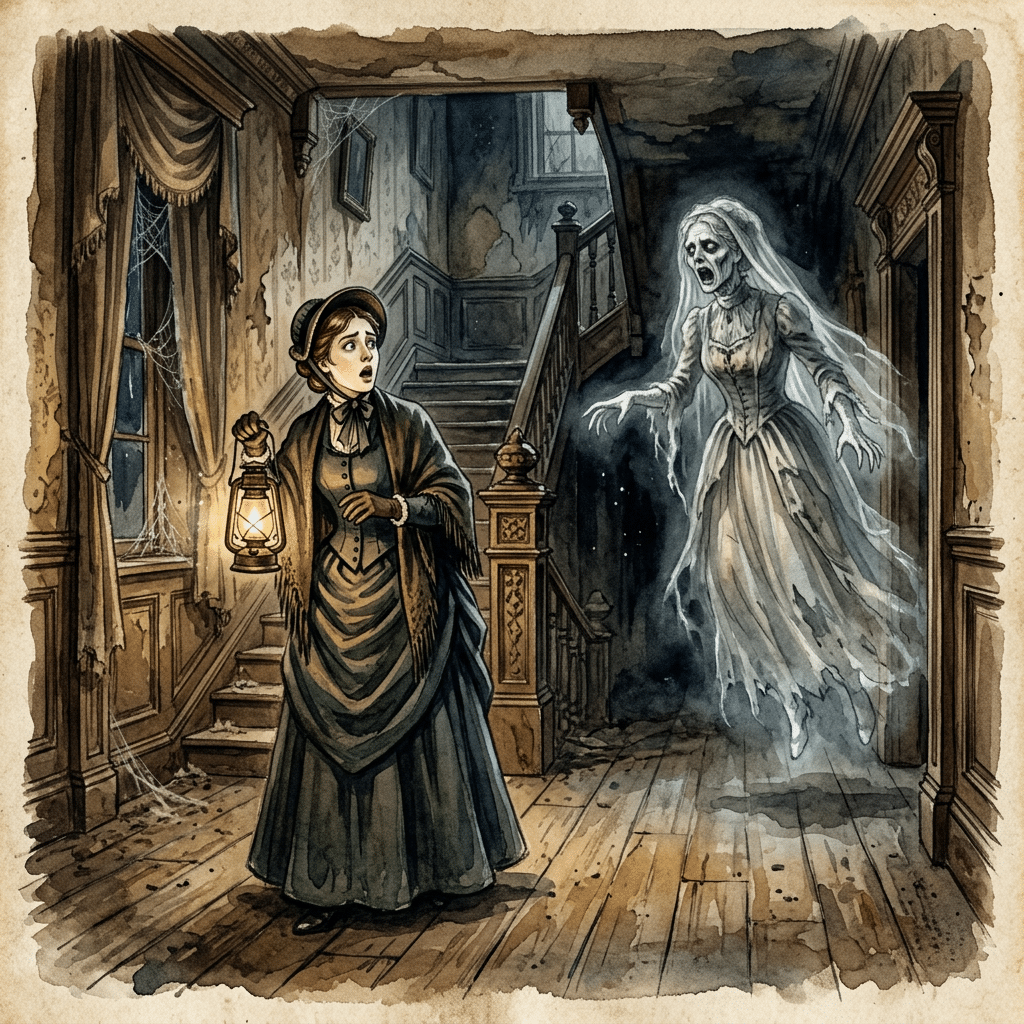
Within the larger field of paranormal research, the study of hauntings fills a special niche by fusing scientific investigation with personal accounts to examine occurrences that frequently defy explanation. Real-life hauntings are typically softer and more nuanced than the dramatic portrayals that are frequent in popular culture, offering a variety of manifestations that are as fascinating as they are confusing.
Common Signs of Hauntings Across Cultures and Ages
Unexpected noises are one of the most common indicators of a haunting. These noises range from clear sounds like footsteps, knocks, and bangs to more enigmatic sounds like scratches, creaks, or the sound of objects moving. When scientists look into these disturbances, they usually try to pinpoint their natural origins, which could be external environmental noises, plumbing problems, or sinking in buildings. Still, some sounds are inexplicable, which heightens the story of the otherworldly.
The feeling of a presence—which many have described as feeling watched or not alone—is another quality that is often experienced. According to psychological study, people have a keen sense of other people’s presence, and some environments might intensify this sense. This feeling enters the conversation about hauntings when it happens in environments where paranormal activity is known to occur or in people who are not easily frightened.
Spots of cold or abrupt temperature reductions that seem to have no explanation are also frequently connected to hauntings. There are nevertheless situations where natural explanations—like drafts or inadequate insulation—don’t quite cut it. Although the scientific community is still split on the origins and significance of these temperature anomalies, the use of thermal cameras and other technology has documented them.
Unaccounted-for shadows or apparitions are two examples of visual manifestations that may offer the strongest proof of hauntings. Ghost stories associated with particular locations or sad incidents abound in historical and cultural narratives. One of the biggest challenges facing researchers is telling the difference between real paranormal encounters and optical illusions or the brain’s natural predisposition to see patterns, or pareidolia.
The phenomenon of objects moving mysteriously confuses the paranormal story even further. Examples of these phenomena include doors and windows that open and close on their own, as well as objects being hurled or displaced. Usually, the goal of an investigation is to rule out natural sources like wind, vibrations, or uneven surfaces. When these answers are insufficient, the events support the theory of a haunting.

Modern Paranormal Signs and Their Implications
Electrical interference has become a modern signature of paranormal activity in settings. Lights flickering, appliances turning on or off, and electronic gadgets breaking down for no apparent reason are common complaints. While some of these episodes can be attributed to electrical problems, in haunted surroundings, these kinds of phenomena frequently occur with regularity and under circumstances that defy explanations.
These events have a strong emotional influence on the people who experience them. Physical symptoms like headaches or nausea are frequently present along with these sensations, which can include dread, grief, or general unease. These could be a result of environmental factors like pollution or psychological suggestion, but they frequently coexist with other haunting symptoms, adding another layer of complexity to the haunted experience.

Scientific and Interdisciplinary Approaches to Hauntings
In addition to looking for natural answers, the scientific method of comprehending hauntings takes into account the episodes’ historical, cultural, and psychological backgrounds. The subjective character of human experiences and the difficulty of reproducing paranormal occurrences under controlled conditions add to this complex dilemma. However, the field is still developing, delving deeper into the secrets of hauntings with the help of cutting-edge technology and interdisciplinary approaches.
In conclusion, the study of hauntings involves a sophisticated synthesis of folklore and science, with each unexplained occurrence prompting further investigation into the paranormal. Though human imagination is still drawn to the mysterious, our understanding of these unsettling events is growing along with technology and methodology.
Further Reading
Radford, B. (2007). Scientific Paranormal Investigation: How to Solve Unexplained Mysteries. Rhombus Publishing Company.
Included for its rigorous approach to paranormal investigations, Benjamin Radford’s book is essential for those interested in a scientific methodology to study unexplained phenomena. Radford, a well-known skeptic and investigator, provides a step-by-step guide on how to use scientific tools and logic to evaluate claims of the paranormal. This book is particularly valuable for readers looking to discern fact from fiction in the realm of ghostly encounters and hauntings.
Holzer, H. (2008). Ghosts: True Encounters with the World Beyond. Black Dog & Leventhal Publishers.
Hans Holzer, a pioneer in paranormal research, offers a comprehensive collection of ghost stories and investigations in this book. Holzer’s work is notable for its blend of historical context with personal narratives and is included here for its in-depth exploration of various haunted locations around the world. Readers interested in both the history of paranormal studies and anecdotal evidence of hauntings will find this book intriguing.
Mackenzie, A. (2009). Haunted: A Social History of Ghosts. Palgrave Macmillan.
This book is included for its unique social and cultural perspective on the phenomenon of ghosts and hauntings. Andrew Mackenzie examines how societal beliefs and attitudes towards the paranormal have evolved over time. This work is crucial for understanding the impact of cultural factors on the perception and reporting of hauntings. It provides a broader context to the studies of paranormal phenomena, making it a valuable resource for anyone interested in the social dynamics that influence ghostly tales.
Leave a Reply