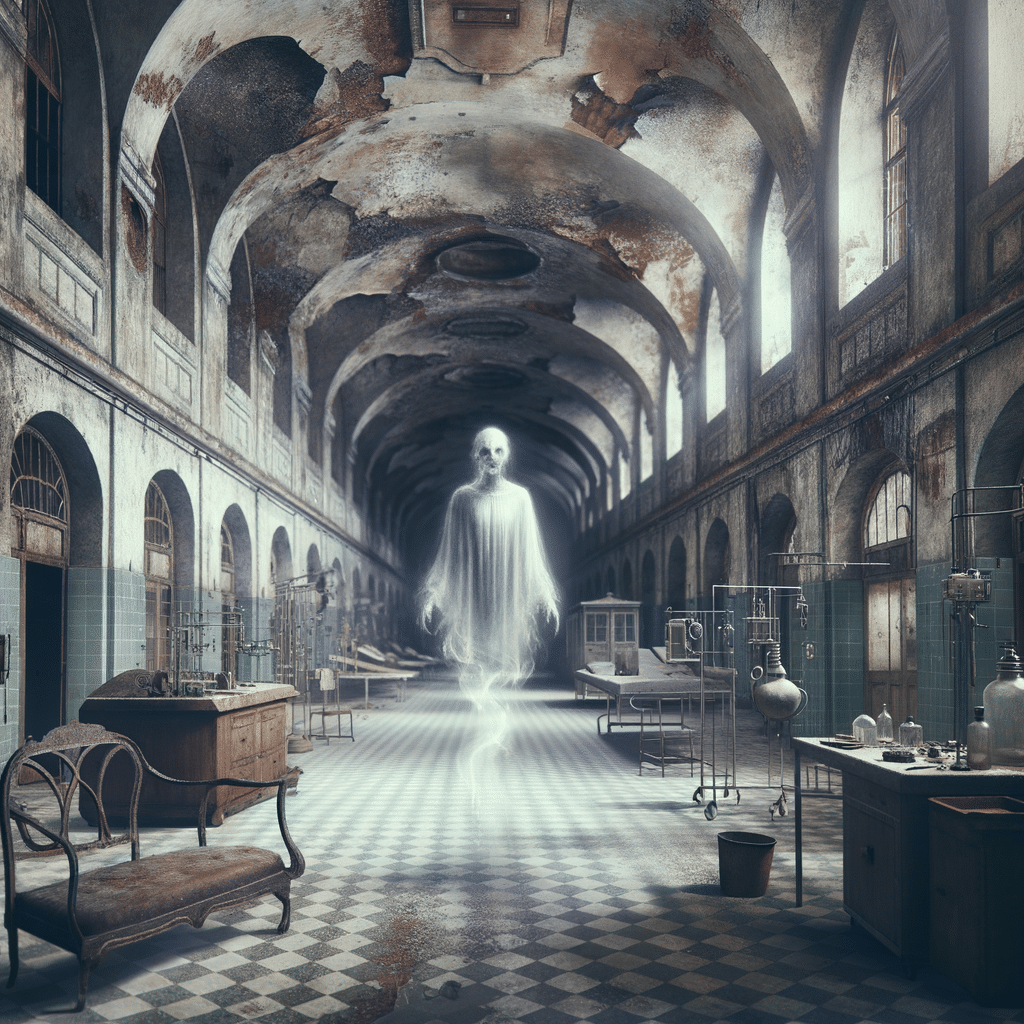
Due to its tumultuous past and multiple accounts of hauntings, the Trans-Allegheny Lunatic Asylum, a historic facility in Weston, West Virginia, has drawn the attention of paranormal investigators. Originally built to house 250 patients, this old psychiatric hospital’s population grew to over 2,400 by the 1950s, resulting in extreme overcrowding and inadequate conditions. Tales of horrific deaths and patient maltreatment have further strengthened its image as a center of paranormal activity. This essay provides a comprehensive overview of the asylum’s history, examines professional viewpoints on the observed paranormal events, and showcases noteworthy investigations conducted by Ghost Adventures and Paranormal Lockdown.
History
Between 1858 and 1881, the Trans-Allegheny Lunatic Asylum, also known as Weston State Hospital, underwent construction. Renowned architect Richard Andrews followed the Kirkbride Plan, which placed a strong emphasis on natural light and ventilation. However, the utopian notion of the asylum as a therapeutic setting rapidly disintegrated. Poor circumstances were the result of underfunding and overcrowding by the middle of the 20th century. There were several reports of physical abuse, cruel restraints, and experimental treatments involving patients. These terrible facets of the asylum’s past play a major role in the perception of lingering spirits and the spooky aura surrounding it.
Scientists generally view the discipline of paranormal investigation with skepticism because it deals with occurrences that are challenging to test or replicate. Prominent parapsychologist Dr. Loyd Auerbach and other experts on the subject stress the significance of a methodical approach. Before attributing any action to the paranormal, Auerbach advocates the use of controlled circumstances and the exclusion of natural explanations.
Experts speculate that the strong emotional energy and horrific events that took place inside the walls of the Trans-Allegheny Lunatic Asylum may have contributed to the phenomenon known as a “residual haunt.” This kind of haunting is similar to a taped history that rewinds under specific circumstances. Furthermore, some think that the profound psychological mark that the afflicted patients left behind could lead to “active hauntings,” in which ghosts communicate with the living.

Investigation of Ghost Adventures
Under the direction of Zak Bagans, the Ghost Adventures crew investigated the asylum in a widely reported manner, drawing attention to its reputation as a haunted place. They searched for signs of paranormal activity using night vision cameras, digital recorders, and electromagnetic field (EMF) detectors. The video they captured of mysterious shadows and individuals moving in the hallways—which at the time were invisible to the unaided eye—was one of the most remarkable findings from their study. They reportedly recorded several EVPs, with voices screaming things like “Get out” and “I’m going to kill you.”
The echoing hallways of the asylum, which could transmit sound from one end of the structure to the other, presented the crew with formidable obstacles, making it more difficult to identify the source of disturbances. In addition, skeptics sometimes point out that the psychological effects of their surroundings could have shaped their impressions.
Investigation of Paranormal Lockdown
Another investigative team from the television show Paranormal Lockdown, under the direction of Nick Groff and Katrina Weidman, conducted a more thorough investigation of the asylum and spent a full 72 hours imprisoned there. They employed thermal imaging cameras to find temperature fluctuations that might indicate hidden spirit manifestations. They recorded notable, inexplicable temperature reductions in several places that they were unable to link to natural causes. Additionally, they tracked strange movements inside the building using motion sensors.
The crew faced the challenge of differentiating between sounds resulting from the building’s inherent decay and possible eerie occurrences. During their examination, they also had to consider how the wind and weather affected the big, drafty structure. Although their extended stay allowed for a more in-depth analysis, there was a greater chance that psychological factors would influence their conclusions.

Broader Context of Paranormal Investigation
The field of paranormal investigation lies on the border between science and pseudoscience. Even though technological developments have given investigators access to advanced instruments like digital recorders, thermal cameras, and EMF detectors, the area still lacks the kind of rigorous scientific validation that is present in other disciplines. Experts such as psychologist Dr. Christopher French, who specializes in paranormal beliefs, attribute many reported experiences to psychological elements, contextual effects, and the power of suggestion.
Despite this skepticism, society’s fascination with the paranormal endures. Sites such as the Trans-Allegheny Lunatic Asylum serve as magnets for thrill-seekers and dedicated investigators alike, underscoring the persistent human fascination with the paranormal. The popularity of television programs, literature, and documentaries that investigate haunted places and paranormal activity is a reflection of this curiosity.
There are several obstacles for investigators at the Trans-Allegheny Lunatic Asylum to overcome. It is challenging to provide thorough coverage with cameras and other equipment due to the building’s enormous size and intricate layout. The old building’s creaking and settling, or the sounds of invading animals, are among the environmental elements that easily confuse for paranormal activity. In addition, the psychological effects of being in a location with such a troubled past can affect how investigators see and understand the events.
These studies highlight how crucial environmental control is to paranormal research. In order to prevent commonplace explanations from tainting any potential proof of paranormal activity, teams must take into account and neutralize natural environmental influences. This procedure entails extensive prior evaluations of the research site, ongoing environmental condition monitoring, and meticulous data analysis to discern between plausible paranormal events and natural phenomena.
Conclusion
The Trans-Allegheny Lunatic Asylum studies bring to light the intricacies and difficulties that come with conducting paranormal research, particularly in sizable, deserted locations with extensive histories. They also show how investigative methods are always changing and how the hazy field of paranormal inquiry is always in search of clarity. The discoveries and tales from locations such as the Trans-Allegheny Lunatic Asylum enthrall and fascinate the public and investigators alike, even as methods improve and our comprehension broadens.
Further Reading
Auerbach, L. (2004). Ghost hunting: How to investigate the paranormal. Ronin Publishing.
Bagans, Z., & Crigger, K. (2019). Ghost-hunting for dummies. John Wiley & Sons.
French, C., & Stone, A. (2014). Anomalistic psychology: Exploring paranormal belief and experience. Palgrave Macmillan.


Leave a Reply