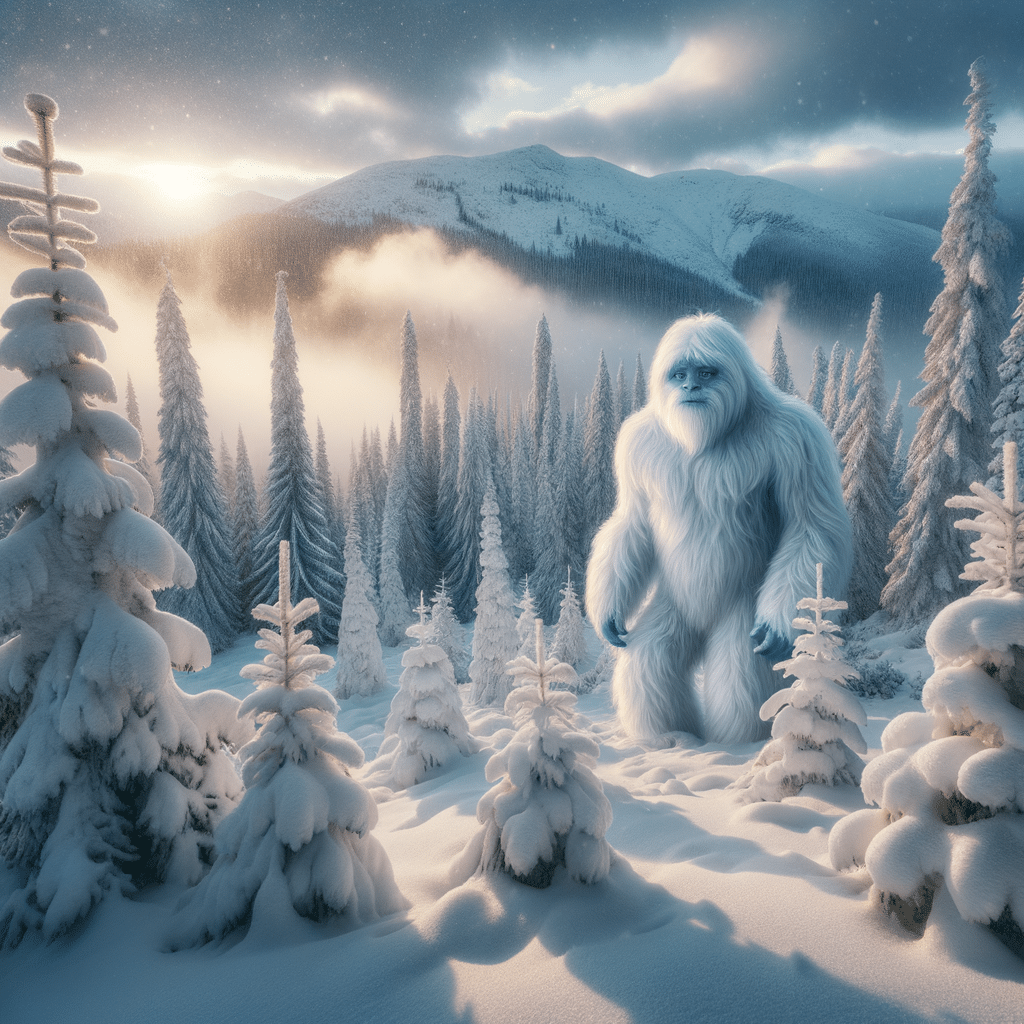
A podcast about the book Abominable Snowmen, Legend Come to Life can be accessed above. This episode was part of several podcasts generated with Google NotebookLM and is the product of AI.
The podcast is about Ivan Sanderson’s book Abominable Snowmen, Legend Come to Life, a book dedicated to exploring the existence of the elusive Abominable Snowman or Yeti, a creature known by many names and sighted across the globe. The text is a collection of eyewitness accounts from various regions, ranging from the Himalayas to North America and South America. Sanderson presents these accounts, often with accompanying maps and sketches, to argue for the plausibility of the Abominable Snowman’s existence. He analyzes the various descriptions and evidence, including footprints and physical features, to propose that these sightings may be attributed to a species of large, bipedal primates, distinct from known human species. The book seeks to challenge the traditional skepticism towards such claims, offering a reasoned and scientific analysis of the evidence to support the existence of these enigmatic creatures.

[Tammy]
All right, get ready to dive deep into the world of Abominable Snowmen, or you know, we’ll just call them ABSMs for short. We’ve got some excerpts here from Ivan Sanderson’s book, Abominable Snowmen, Legend Come to Life. And I’m really excited to dig into this one with you.
This is a book that takes us all over the globe, not just, you know, those classic Yeti stories from the Himalayas. But Sanderson looks at reports and evidence from North America, even South America, Africa. It’s kind of mind-blowing the scope of this.
[Joe]
Yeah, and it’s not just about the legends either. He really goes in depth with, like, first-hand accounts, you know, local folklore from different cultures. He even gets into the nitty gritty of footprints and physical descriptions and stuff.
It’s a serious attempt to try and separate fact from fiction.
[Tammy]
Yeah, this isn’t just like, you know, monster movie stuff. This is real deep dive into what people have been seeing and experiencing. And speaking of experiences, I got to say the story of Albert Osman, who claimed he was kidnapped by a Sasquatch family in British Columbia.
That one really caught my eye. Like, wow.
[Joe]
Oh, yeah. Osman’s story is it’s so detailed, too. He describes this creature with reddish brown fur, these long arms, you know, built for climbing and like human-like feet, but with these crazy long toes.
It’s those kind of details that really make you think twice.
[Tammy]
Yeah. And it’s not just the visual sightings either. Right.
There’s all these reports of these weird vocalizations, like a whinnying sound. It’s definitely not your average bear growl, that’s for sure.
[Joe]
Right. Exactly. And it suggests something more than just, you know, a simple animal call.
Like there could be some complex communication going on there. It makes you wonder about the level of intelligence we might be dealing with.
[Tammy]
Gives me chills just thinking about it. Then we’ve got the Omas from Northern California, which are described as even larger and, well, more devilish, I guess you could say, than the typical Sasquatch. And those giant footprints they supposedly left behind.
Back in the day, that caused a whole media frenzy.
[Joe]
Oh, yeah. Ray Wallace and his construction crew stumbled across those tracks back in 58. I mean, they were huge, up to 20 inches long with like a five foot stride.
Of course, there was a lot of debate about whether it was real or a hoax. Especially since Wallace, you know, later admitted to faking some tracks. But even so, there’s all these other reports from seemingly credible sources that kept popping up about similar footprints.
[Tammy]
It makes you wonder, like, how many hoaxes can there be before you start to think? Maybe there’s some truth to it all, you know. And then there’s the strength and agility these creatures supposedly have.
I mean, moving heavy objects, navigating really difficult terrain, even outrunning vehicles. It’s pretty mind boggling.
[Joe]
It really pushes the limits of what we think is possible in the animal world. And it’s not just North America, either. Sanderson takes us down to the Amazon rainforest, where we encounter this creature called the Mapinguari, known for its incredible strength and, well, a taste for cattle tongues, apparently.
[Tammy]
Oh, yeah, that’s a little gruesome. But that detail comes up in quite a few accounts, including one from this Brazilian explorer named Inocencio, who had a terrifying run-in with a Mapinguari in the Mato Grosso region, which is pretty remote.
[Joe]
Oh, his description is, it’s chilling. He talks about this black, hairy body, a deafening roar, and this truly awful stench that it left behind. What’s really striking is how similar these descriptions are across different cultures and continents.
You know, it suggests maybe we’re dealing with something more than just imagination or folklore.
[Tammy]
Right, like there’s some sort of shared reality underlying these stories. And speaking of global reach, we can’t forget the Tualdes of Guyana. These large, tailless primates that are said to build these crude shelters and throw things at anyone who comes too close.
It seems like every continent has its own version of the wild man myth. But getting solid evidence in places like the Amazon rainforest, it’s got to be incredibly challenging.
[Joe]
Oh, absolutely. The density of the rainforest, the lack of accessibility, it makes scientific study a real nightmare. So we’re often left with those local stories and fleeting glimpses, which are really hard to verify.
It’s that constant tug of war between skepticism and the tantalizing possibility that something truly unknown is out there.
[Tammy]
It really makes you wonder if there’s some kind of connection between these creatures and the specific places they’re seen. I mean, it’s not like they’re popping up in Central Park, right?
[Joe]
That’s actually a point Sanderson makes in the book. He noticed that a lot of the reports tend to cluster around very specific types of vegetation, you know, dense mountainous forests, often at higher elevations.
[Tammy]
So it’s not just that these areas are remote and unexplored. There’s something about the environment itself that might be key. Is it the food sources, the shelter or something else entirely?
[Joe]
That’s a great question. And honestly, I don’t think we have a clear answer yet. But it definitely adds another layer of intrigue to the whole mystery, doesn’t it?
It’s like these creatures, if they exist, they seem to thrive in the fringes, you know, the edges of what we know and where we typically venture.
[Tammy]
And that brings us to the big challenge, proving or disproving the existence of these things. We’re dealing with creatures that are incredibly elusive, often sighted in these remote, hard to reach areas. And the physical evidence is, well, let’s just say it’s debatable at best.
[Joe]
Yeah, the lack of that smoking gun, a clear photograph or a captured specimen, that’s definitely what fuels a lot of the debate. Skeptics often point to things like misidentification, hoaxes and the influence of folklore and imagination.
[Tammy]
But on the other hand, you’ve got these consistent details that keep popping up, like the descriptions of their physical features, the strange vocalizations we talked about, those footprints that just don’t seem to match any known animal. It’s hard to dismiss it all as pure fabrication.
[Joe]
It is. It’s that tension, that push and pull between doubt and the possibility of something truly extraordinary. That keeps drawing us back to this topic.
And let’s be honest, a part of us wants to believe, right, the idea that there are these unknown creatures sharing our planet. It’s both exhilarating and a little humbling.
[Tammy]
Absolutely. It reminds us that we don’t have all the answers, that nature still holds some secrets. So what are some of the big takeaways from Sanderson’s work for you?
And what questions do you think we should be asking ourselves as we continue to explore this topic?
[Joe]
One of the key messages Sanderson drives home is the importance of keeping an open mind. He really encourages us to consider the evidence from multiple angles, you know, scientific, cultural, historical, and not dismiss things outright just because they sound strange or unbelievable at first glance.
[Tammy]
He also reminds us that the absence of proof isn’t proof of absence. Just because we haven’t captured an abominable snowman doesn’t mean they don’t exist.
[Joe]
Exactly. It just means we haven’t found the right evidence yet. Or maybe we haven’t been looking in the right way.
[Tammy]
So for those of us who are intrigued by this whole mystery, what’s the next step? Should we all be packing our bags and heading into the wilderness to search for these elusive creatures?
[Joe]
Well, while an expedition might be tempting, I think the more practical and immediate takeaway is to really hone our critical thinking skills. We should approach this subject with a healthy dose of skepticism, sure, but also a willingness to entertain different possibilities.
[Tammy]
So carefully examine the evidence, weigh the arguments, and avoid jumping to conclusions.
[Joe]
Precisely. And perhaps most importantly, stay open to the idea that there’s still so much we don’t know about our own planet. The mystery of the abominable snowman is a powerful reminder of that, I think.
[Tammy]
Okay, now I’m even more hooked. I’m picturing myself out there analyzing footprints, listening for strange calls in the woods.
[Joe]
Well, hold on there, remember. Not every unexplained sound or strange footprint means you’ve stumbled upon an abominable snowman. There are plenty of other explanations, and it’s important to be discerning.
[Tammy]
Right, right. Got a little carried away there. But the point is, this stuff is fascinating.
And you’re right, the more we explore this topic, the more questions seem to pop up.
[Joe]
Speaking of questions, let’s shift our focus to the Himalayas. You know, the traditional home of the abominable snowman. Or Yeti, as it’s known there.
This is really where the legend took hold in Western culture. And it’s a place where that line between myth and reality gets especially blurry.
[Tammy]
Yeah, I’ve always been fascinated by the Sherpa people and their deep-rooted belief in the Yeti. It’s not just a story for them. It’s an integral part of their culture and their relationship with the mountains.
[Joe]
Absolutely. And their accounts go beyond that typical image of just a big hairy creature. They describe different types of Yetis.
You know, a bear-like variety and a more ape-like one. And they have these stories about them raiding villages and livestock. It highlights the real and perceived danger these creatures represent in their worldview.
[Tammy]
It’s definitely a far cry from the cute, cuddly Yeti we sometimes see in movies and cartoons. And there have been some pretty chilling encounters reported by Westerners too, right? Yes.
[Joe]
One that stands out is the experience of two American doctors, George Moore and George K. Brooks. Back in 1952, they were descending the Gosanthan Pass in Nepal, and they saw this tall, hairy creature with a very distinctive, pungent odor.
[Tammy]
You know that pungent odor seems to be a recurring theme in a lot of these reports. It’s often described as musky or sulfurous, something distinctly non-human.
[Joe]
You’re right. That olfactory detail adds a very visceral element. To these accounts, it makes them feel all the more real and unsettling.
And it reinforces that idea that whatever these creatures are, they’re not just misidentified bears or other known animals.
[Tammy]
Then you’ve got the almas of Central Asia, particularly in the Caucasus Mountains in the Palmer region. These creatures are described as being more human-like than some of the others. And there are even reports of them wearing primitive clothing and interacting with local villagers.
[Joe]
And some Russian scientists actually took these reports seriously enough to launch expeditions. They collected footprints, hair samples, eyewitness accounts. It’s fascinating to see that level of scientific interest in a topic that’s often dismissed as fringe or pseudoscience.
[Tammy]
Yeah, it’s a reminder that there are researchers out there who are willing to push the boundaries and explore the unknown, even when it means facing ridicule or skepticism from their peers. But speaking of footprints, those are often at the center of these investigations, and they can be incredibly difficult to interpret, right?
[Joe]
Absolutely. There’s always the potential for misidentification or even hoaxing. People can mistake bear tracks for something more exotic, you know, or deliberately create fake footprints to stir up excitement.
And there are natural phenomena that can create unusual impressions in the ground, like melting snow, refreezing in odd shapes.
[Tammy]
So we have to approach footprint evidence with a healthy dose of caution and consider all the possible explanations before jumping to conclusions about unknown primates.
[Joe]
Exactly. But even with all that said, there are some footprint casts that continue to baffle researchers. It features that just don’t neatly fit into any known animal category.
And that’s where things get really interesting. It’s like we have this giant puzzle and we have some of the pieces, but we’re still missing the crucial ones to see the full picture.
[Tammy]
And just when you think you’ve got a handle on the different types of abominable snowmen out there, you come across something like the Mete, which is reported from China and Southeast Asia. What sets this one apart?
[Joe]
Well, the Mete is said to have these large, distinctly non-human feet with a seemingly semi-opposed second toe. It’s a detail that sets it apart from other abominable snowman descriptions and adds another layer of complexity to the whole phenomenon.
[Tammy]
It’s like we’re peeling back the layers of a global onion and each region reveals a new and fascinating piece of the abominable snowman puzzle.
[Joe]
And with each new piece, more questions arise. Sanderson’s book doesn’t give us all the answers, but it does something perhaps even more valuable. It makes us rethink our assumptions and pushes us to delve deeper into the mysteries that still surround us.
[Tammy]
You know, we’ve covered so much ground in this deep dive, from the Sasquatch in the Pacific Northwest to the Mapinguari in the Amazon. And yet the big question still lingers. If these creatures are real, why haven’t we found definitive proof?
[Joe]
It’s the question that keeps both skeptics and believers engaged, isn’t it? Why, with all our technology and exploration, haven’t we captured one or at least gotten that crystal clear photograph everyone’s waiting for?
[Tammy]
I imagine it comes down to a few things. First, these creatures are reported to be incredibly elusive. Think about the environments they’re supposedly inhabiting.
Dense forests, rugged mountains, places that are difficult for even humans to navigate.
[Joe]
And then there’s the element of intelligence, or at least cunning. Many accounts describe abominable snowmen as being highly aware of their surroundings, able to avoid humans and seemingly vanish into thin air. It’s as if they’re masters of camouflage and stealth.
[Tammy]
It makes me think of those nature documentaries, where they’re trying to film a rare snow leopard or something. It can take weeks, even months, just to get a few fleeting glimpses. And we’re talking about creatures that may have evolved to avoid detection over centuries, if not longer.
[Joe]
Exactly. Their survival may depend on their ability to stay hidden. And there’s another factor we have to consider, the human element.
Think about the stigma associated with these creatures. People who report sightings are often ridiculed or dismissed as crazy. Even scientists might hesitate to speak out for fear of damaging their reputations.
[Tammy]
Yeah, it’s like there’s this invisible wall of disbelief that prevents us from fully acknowledging the possibility, even when faced with compelling evidence. It’s easier to just say, oh, that must have been a bear or it’s just a legend.
[Joe]
And that’s where Sanderson’s work is so important, I think. He encourages us to challenge that wall of disbelief, to look at the evidence with open minds, and to consider that maybe, just maybe, there’s more to our world than we currently understand.
[Tammy]
So what’s the takeaway for our listeners today? It’s not just about abominable snowmen, is it? It’s about how we approach the unknown, how we balance skepticism with curiosity, and how we grapple with the possibility that there are still mysteries out there waiting to be uncovered.
[Joe]
Well said. This exploration has taken us from the snowy peaks of the Himalayas to the depths of the Amazon rainforest. And along the way, we’ve encountered not just tales of strange creatures, but also the very human stories of those who believe in them, those who seek them out, and those who try to make sense of it all.
[Tammy]
And while definitive proof remains elusive, the sheer volume and consistency of the reports, combined with those intriguing bits of physical evidence, leave us with more questions than answers. But isn’t that the essence of true exploration? The journey is just as important as the destination.
And sometimes, the most valuable discoveries are the ones that make us re-examine our assumptions and expand our sense of wonder.
[Joe]
So as we wrap up this deep dive, we encourage you to keep an open mind, consider the possibilities, and continue your own exploration of the world around you. Who knows what mysteries you might uncover? Maybe someday the Abominable Snowman will step out of the shadows and into the light of scientific understanding.
But until then, the quest continues.
[Tammy]
And on that note, we’ll leave you to ponder the possibilities. Thanks for joining us on this deep dive into the world of Abominable Snowmen.




Leave a Reply