These four ghost stories were retrieved from Archives and Special Collections at Western Illinois University in Macomb, IL.

Margaret “Peggy” Chen-Williams
I kept the events of that fall evening in 1968 to myself. Now that I’m 73 years old and sitting in my retirement home in Florida in 2023, I think it’s time to tell my story.
Margaret “Peggy” Chen-Williams is my name. My birth in 1950 to a Chinese immigrant father and an Illinois farmgirl mother left me constantly torn between two cultures. My father, who supported us by working two jobs, greatly encouraged me to pursue my dream of becoming a teacher while I was growing up in Peoria. Western Illinois University admitted me on a partial scholarship, making me the first person in my family to attend college.
When I arrived as a student in 1968, Sherman Hall was already a formidable sight. That red-brick, white-trimmed Georgian structure housed my evening session in Educational Psychology. Being one of only three Asian-American students on campus presented challenges, but I remained focused on achieving my goals.
It took place in October during the week of the midterms. My second-floor classroom with tall windows overlooking the quad was where I studied late at night. I heard footsteps in the hallway about 10:30 p.m.; they were the clear clicks of hard-soled shoes on the wood floors. The footsteps continued to move rhythmically past my door, without any anomalies.
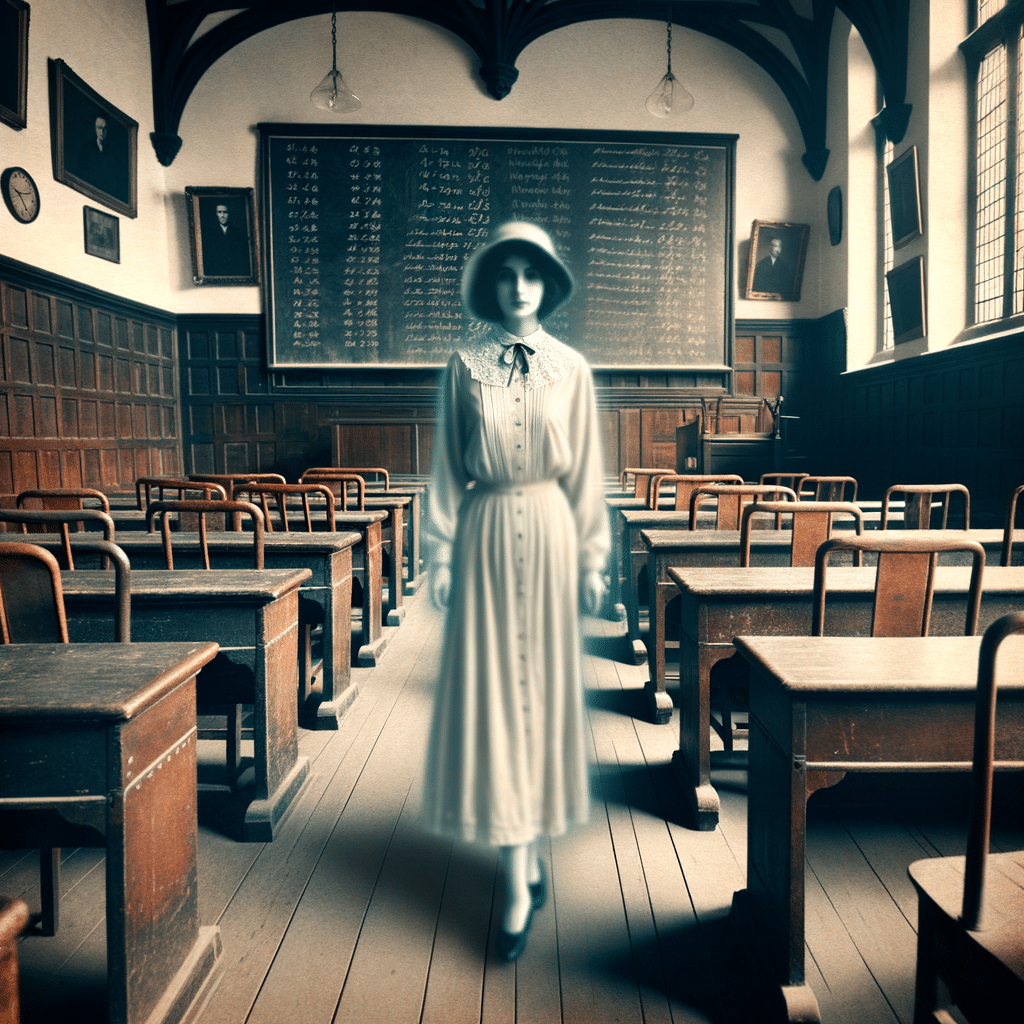
I opened the door after the eighth pass. The footsteps continued, now behind me, but the corridor was empty. The temperature plummeted sharply. Then I caught sight of her, a young woman, her face contorted with agony, dressed in clothing from the 1920s. mouth moved silently as she reached for me. Before she disappeared, I noticed what appeared to be chalk lines on her neck, and the papers on my desk were all over the place.
I ran all the way back to my dorm.
I conducted an investigation and found that a student named Elizabeth Morton had died in that classroom in 1922. There were rumors that she had committed suicide. The matter was never settled.
That experience altered the course of my life. Despite becoming a teacher and graduating in 1972, my interest in recording oral histories intensified, particularly those of underrepresented groups often overlooked. During my thirty years as a high school history teacher in Chicago, I urged my pupils to explore beyond the official narratives and discover untold tales.
I eventually obtained my Ph.D. in Educational History in 1985 after getting married to David Williams in 1975 and having two kids. The forgotten tales of minority students attending Midwestern universities in the early 20th century were the subject of my dissertation. Even though I never spoke about my own experience, I wrote a chapter about Elizabeth Morton.
I’m still thinking about that night in 2023. My granddaughter’s news of her acceptance to WIU hit me like a familiar cold. I told her to listen to the stories that reverberate through those ancient corridors, but I didn’t discourage her. Books chronicle not all history, and the stories we fear to share can sometimes impart the most valuable lessons.
I learned from the experience that everyone has a story worth sharing and that every location has secrets. Giving voice to the voiceless, whether they are still alive or have passed away, has been my life’s work. I often question whether Elizabeth decided to come out to me because she knew I would know what it was like to be an outsider with a story that people might attempt to hide.
Over the years, I’ve heard from people who have had similar experiences, but I’ve never been back to that Sherman Hall classroom. Every time, I pay close attention and write down their tales. That night in 1968, I discovered that all stories, no matter how amazing, should be told.
The Sherman Hall ghost taught me that history is about voices that never end, echoes that reverberate, and the bravery to listen when they do. That’s the true lesson I’ve learned throughout the years, one that has influenced not only my work but also my life in general.
Bobby Ray Miller
I’ll share with you what happened to me in May 2022. Since most people believe I’m already a little loose from doing that night shift at the hog farm outside of Colchester and everything, I haven’t told many people.
His name is Bobby Ray Miller, and he was born in McDonough County in 1985. He struggled academically and departed from Macomb High in 2003. I did okay for myself, despite Mama’s constant criticism that I had more muscle than intelligence. After earning my CDL, I worked for a while driving trucks before deciding to work on farms since it seemed more like home.
Anyway, this incident occurred at roughly 2:30 in the morning when I was leaving work at home and using the back road shortcut through the woods of Spring Creek. You know the area beside the old Thompson house where the creek bends? Where are the trees that loom so large over the road that the sky is obscured?
When my cousin Billy attempted to back up with the trailer, I was in my old Ford F-150, the blue one with the dent in the tailgate. It was really silent that night, only my tires on the gravel, because the radio wasn’t working.
Then my truck simply… passed away. In those woods, just there. Just died, no splutter, no nothing. Even though I’m not Mr. Fix-It, I know enough to examine the fundamentals. Nothing happened when I turned the key a few times. I opened the hood and used my flashlight to check the area, and everything appeared to be normal.
I heard it then—a strange singing that sounded like someone humming an old hymn, but it was all wrong. It sounded as though it was coming from the creek. No one ever accused me of being sensible, but any reasonable person would have remained in their truck.
With my boots crunching on dead leaves, I approached that sound. That night, the moon shone brightly, casting strange shadows across the woods. I swear on my mother’s Bible that I saw something moving in the creek as the singing grew louder.
The woman appeared to be wearing old-fashioned clothing straight out of a history book. However, she was… incorrect. There was a dark blur where her face should have been, and her feet were off the ground. Something, possibly a baby or a bundle, was in her arms.
Then she turned to face me, and I heard a sound that sounded at a hundred times the volume of dragging a metal rake across concrete. When my flashlight died, I experienced a chill that penetrated my bones and into my spirit.
I ran faster than I had ever run before, all the way back to my pickup. As if there had never been a problem, Key immediately rolled over. I left so quickly that I almost hit that truck twice in the ditch.
The strange thing is that I questioned old Tim about it at the gas station the next day. He became very silent and told me of a woman who lost her baby in that creek during a flood back in the 1890s. Three days later, they discovered her still looking for the water, but the cold had killed her. According to Tim, on spring evenings, his grandfather would relate stories about seeing her.
Even though it takes me twenty minutes more to get home, I haven’t chosen that route since. If I’m being honest, it completely changed my life. resumed attending church. Give up drinking. In an attempt to prove that Mama was mistaken about my intellect, I even enrolled in some evening classes at the community college.
I say a small prayer each time I pass that turnoff to Spring Creek Road. Not only for me, but also for her—that miserable mom who has been searching for her child for years. It forces you to consider what matters most, don’t you think?
Some people don’t think I’m telling this story. That’s okay; if it hadn’t happened to me, I wouldn’t have believed it either. However, I am aware of what I witnessed that evening, and I will never forget it. Whether you’re prepared for them or not, these woods have stories, old stories, and occasionally they reach out and grab hold of you.
I continue to drive the same old truck and work the same job. However, since that night, I have changed as a person. According to Pastor Mike, sometimes the scariest things in life can lead you down a better road. My only knowledge is that these ancient woods have more depth than most people think, and on certain evenings when the moon is full and the wind is blowing just right, I can still hear the humming coming from the creek.

Ruth Ann Miller
I was born in McDonough County in 1936 and have lived here for my entire eighty-seven years, but I have never shared this tale with anyone outside of my family. However, I believe that people should be aware of what transpired at the former Larson location during the summer of 1955.
Before I married Harold, may God rest his soul, I was Ruth Ann Peterson. My name is Ruth Ann Miller. With the exception of the two years I attempted working as a secretary in Macomb, I have lived on our family farm just outside of Good Hope since I was born. I wasn’t cut out for city life. My father used to remark that rather than blood, I had dirt in my veins.
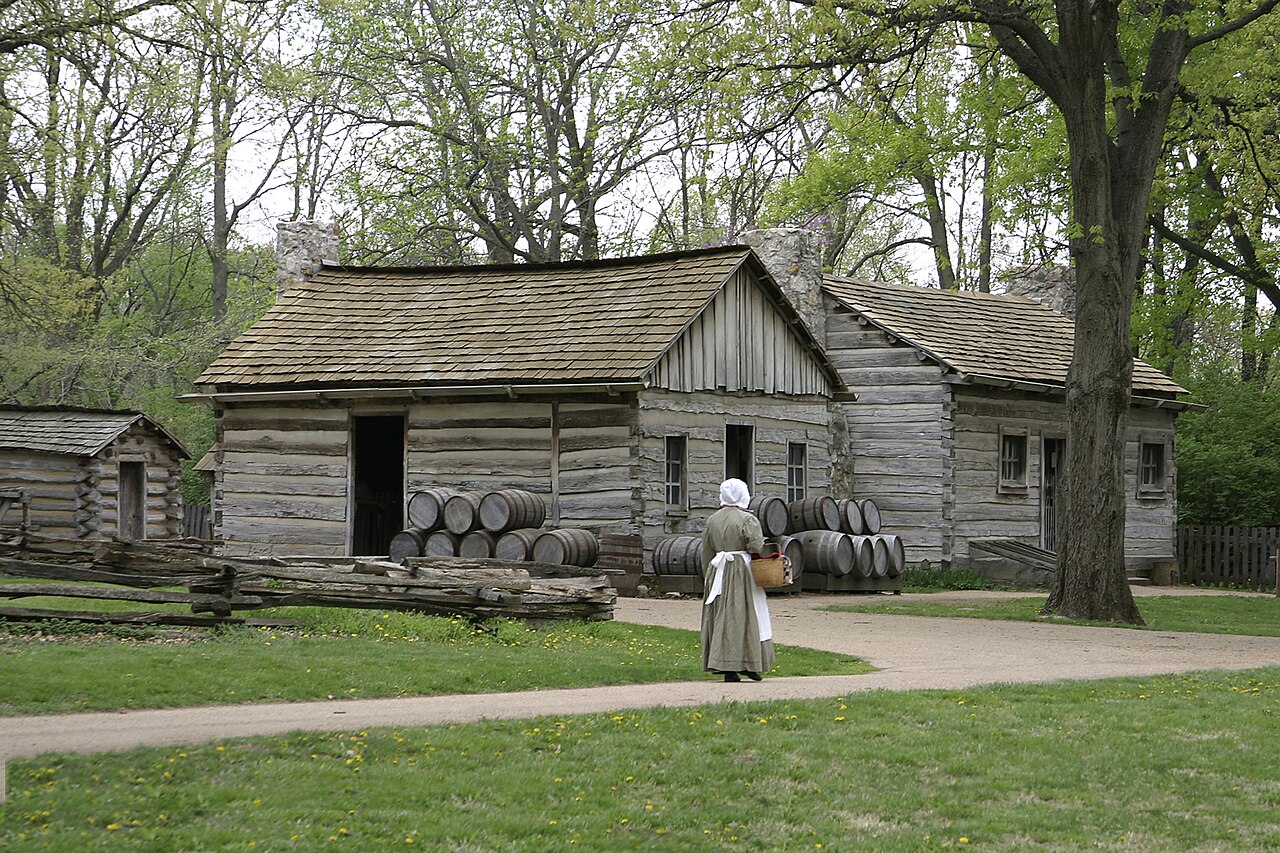
It wasn’t always the Larson residence, that large white farmhouse with the wraparound porch located about a mile down Cooper Road. Prior to the bank acquiring it in 1939, it belonged to the Whitakers. Since Old Man Larson’s death in 1998, it has been vacant. All the windows were boarded up, and the paint was flaking horribly. It’s a shame how time can ruin a nice home.
That summer, I was nineteen and watching my younger sisters and assisting Mama with our garden while Daddy worked in the fields. That spring, Erik Larson, his wife Betty, and their three young children had moved in. They had traveled from Kentucky and purchased the property at a discount after it had been vacant for about sixteen years.
I was walking home after seeing my friend Martha one evening in July. Because it was such a pleasant evening, we decided to take the longer route past the Larson residence. Everything was turning gold as the sun began to set. I noticed the young girl on the porch at that moment.
She was seated in an old porch swing, wearing one of those pinafore dresses, like the ones from Little House on the Prairie. Something appeared strange, but I assumed she must be one of the Larson children. Even though the swing was stationary, I could clearly hear its creaking.
I yelled, “Hello there!” in keeping with our upbringing as neighbors. Lord have compassion, she turned to face me. Her face was as hazy and faded as if you were viewing an old photograph. Then she simply… was no longer present. But without any breeze or anything, that swing began to move something fierce.
I told Mama what I observed as I ran home. She became quite silent before telling me something that wasn’t spoken often. Emily Whitaker, the Whitaker family’s youngest daughter, passed away on that porch back in 1918 during that terrible flu outbreak. One evening, after she had been ill for days, they discovered her in the swing, seemingly sleeping soundly.
I plucked up the nerve to ask Betty Larson if they had noticed anything odd at church the next Sunday. In the vestibule, she broke down in tears. They moved out by Christmas, and their youngest, Katie, told me that she had been talking about playing with a little girl on the porch who “looked like an old picture.”
It has now been sixty-eight years since then. Over the years, I’ve witnessed a lot more outside that house, including lights in the windows when there is no electricity and the swing moving on the calmest evenings. Harold, who used to claim that I was only seeing things, was never able to explain why the horses would not approach that location.
I currently have thirteen grandkids and six great-grandchildren, having raised five children in this county. Sometimes the children inquire why no one lives at the Larson property when they come to visit and we drive by it. I simply inform them that some homes would rather be left alone.
People today wish to demolish all the old buildings and construct new homes equipped with high-tech smart devices. However, I believe that some things should remain intact. For some memories to endure, they require their own place.
I still occasionally drive by it, generally around dusk. I occasionally say a little prayer for Emily Whitaker when I watch the swing in motion. I’ve been doing that for almost 70 years. I suppose I’ll continue till I’m with her and all the others who have died.
What’s humorous, do you? Jenny, my great-granddaughter, is a history student at WIU and wants to publish a book about all the historic homes in the area. asked if I had any stories to share with her. Most of them I told her, but this one… Well, I’m saying it correctly for the first time. There are some tales you keep for as long as it seems appropriate.
Particularly in those old farmhouses, our county has more stories than people these days. Most people simply drive past, too preoccupied with their phones and other gadgets to pay attention. However, if you slow down, pay close attention to such historic locations at dusk. The past isn’t always as distant as we believe.
Tom Reeves
It’s likely that you’ve seen that large Victorian with the turret and all the gingerbread trim on East Carroll Street a hundred times. My family moved into the house when I was nine years old in 1974, and the events that year permanently altered who I am.
My name is Tom Reeves, and I grew up in Macomb. Mom worked at the hospital, while Dad was a biology teacher at Western. Mom always wanted a “real Victorian,” as she termed it, so we had relocated from a small ranch house on Adams Street. It should have been our first warning, and I got it for a great price as well.
Before we purchased the house, it had been vacant for nearly ten years. It was once owned by the Hendersons, who were old Macomb money. Since its construction in 1890, it had belonged to their family. By Christmas, Dad was no longer laughing when he joked that we acquired three ghosts for the price of one house.
We dubbed her the Lady, and she was the first. She always showed up on the main staircase with her hair up in a bun and wearing one of those long skirts from the 1890s. She watched us with a sad expression on her face and never did anything frightening. She was later identified as Margaret Henderson, who passed away in 1893 while giving birth. The first lady of the house was her.
The soldier came next. He was usually found at the window-side corner of my brother’s room. complete World War II-style uniform. Margaret’s grandson, Robert Henderson, was killed in France in 1944. You could smell the tobacco when he smoked these phantom cigarettes, but you couldn’t see the smoke.
The Kid, however, was the one that truly affected us. appeared to be around my age, constantly sporting a cap and underwear, as seen in vintage photos. At night, he would bounce a ball in the attic, thumping it repeatedly. The ball would be motionless in the corner when we got up there. In 1927, Tommy Henderson passed away from polio. He was the great-grandson of Margaret.
They appeared to have their own routines, which was strange. The lady would always come down the stairs at dusk. Around three in the morning, military time, the soldier arrived, according to Dad. The kid, well, whenever us kids got home from school, he was active.
I recall this particular evening in October of 1974. My older sister Karen was watching while my parents attended a faculty dinner. The lady showed up on the stairs when we were watching TV. She pointed up rather than simply standing there. Then, louder than ever, we heard the ball bouncing in the attic.
I ignored Karen’s advice that we should remain where we were. When I went upstairs, the kid was bouncing that red rubber ball and was as transparent as day. He grinned as he stared directly at me. The soldier then materialized, and the three ghosts were united for the first and last time. They appeared to be attempting to demonstrate something to us.
Pointing to a loose floorboard, the child said. We pried it open, and Karen emerged. A silver locket containing an image of the Lady was found inside, along with a box filled with old letters and pictures. Following that evening, the ghosts appeared to be… more tranquil. As if all they wanted was for their story to be remembered.
Before Dad acquired a job at the University of Illinois in 1980, we lived there. As far as I can tell, the spirits never left. Within a year, the family that purchased it after us left. Since then, the house has undergone numerous changes.
My entire life was molded by that encounter. went on to Western to study history as a member of the class of ’87. I currently document local history at the McDonough County Historical Society. I have an entire file on the Henderson family, and it appears that they would want their tale to be shared as well.
My own children are now grown and reside in St. Louis and Chicago. Every time they come to Macomb, they drive by that house extremely slowly, yet they roll their eyes when I tell them this story. Sarah, my youngest, claims that last Christmas, she saw a woman in an antique outfit in the turret window.
What’s humorous, do you? No book could ever make me adore history the way that house did. Gave it a genuine, intimate feel. I occasionally find images of the Hendersons while cataloguing old photos at the historical society after hours. All three of them—the Lady, the Soldier, and the Child—are present and appear exactly as I recall them.
Some people claim that I made it all up and that children’s minds are deceptive. But to prove it wasn’t my imagination, I have the silver locket in my workplace drawer. The lady in the window is still watching, waiting for someone to remember, and occasionally I can still see her as I drive by that house at dusk.
Leave a Reply