
From the 1830s until the late 1800s, Spring-heeled Jack, one of the most mysterious and terrible urban legends in Victorian England, captivated the public’s imagination. Known for his amazing leaping skills and frightful look, this enigmatic apparition was the focus of countless newspaper articles, eyewitness testimony, and thrilling tales that still captivate people today. Sightings even occurred in other parts of the world.

Description
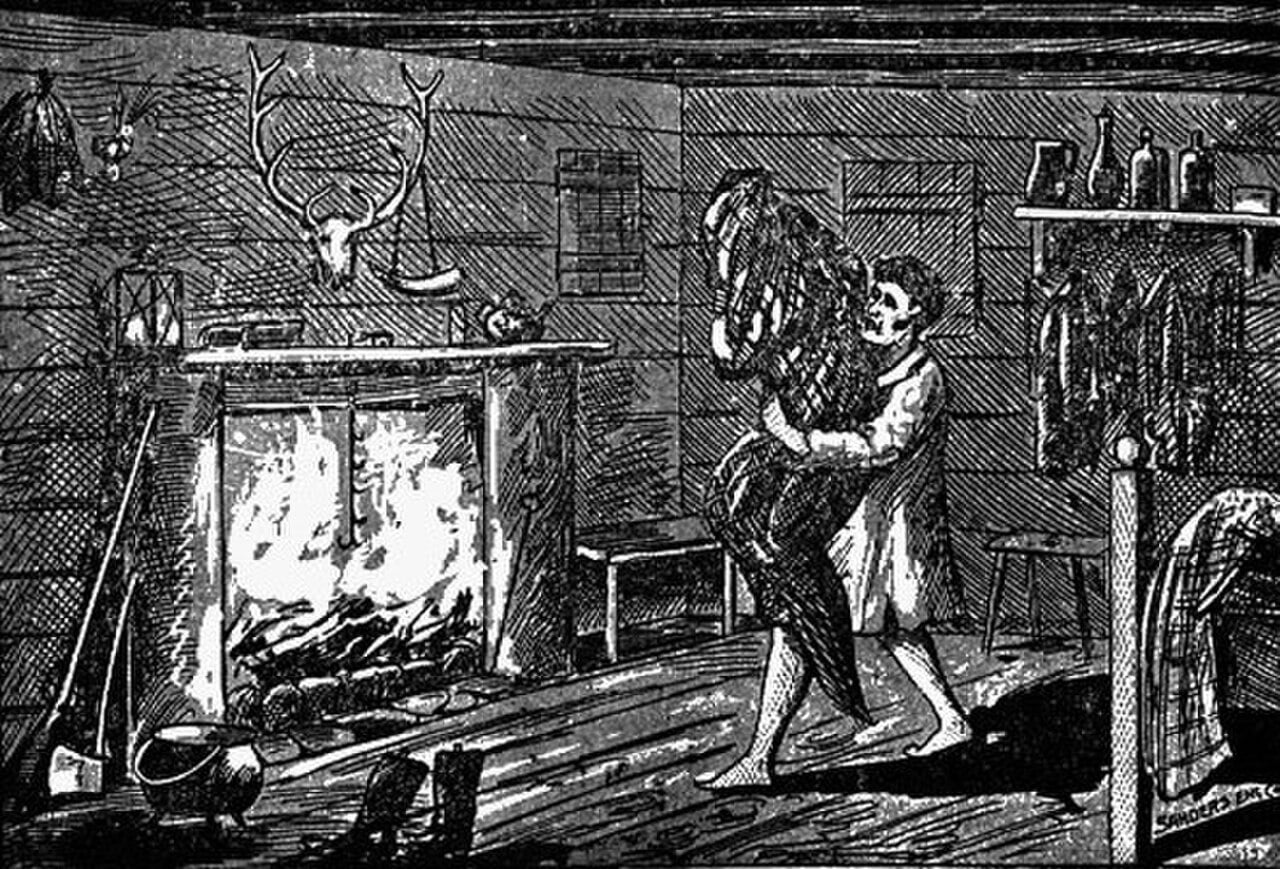
The earliest known sightings of Spring-heeled Jack were in London in 1837, when a number of people—especially young women—reported seeing an odd, violent creature with superhuman leaping abilities. According to witnesses, he was tall and slender and wore a dark cloak or tight-fitting white oilskin garments. His ability to breathe blue flames, eyes that looked like red balls of fire, and metallic claws were his most unusual attributes. His capacity to make huge leaps and escape—reportedly effortlessly navigating hedges and fences as high as 20 feet—was perhaps his most amazing quality (Bell, 2012).
The most well-known interactions took place between two young ladies in February 1838. When Jane Alsop answered the door, a man posing as a police officer was waiting for her. He then used metal claws to attack her, tearing at her skin and clothing. Lucy Scales recounted a similar attack where a blue flame spray purportedly blinded her. Vigilante groups formed in an attempt to apprehend the enigmatic attacker as a result of these incidents, which prompted widespread terror (Mackley, 2016).
According to reports, Spring-heeled Jack displayed a pattern of confrontation, followed by flight. He would often appear unexpectedly on quiet streets or in isolated areas, terrorize or attack his victims, particularly young women, before swiftly fleeing. Several tales claim he laughed uncontrollably during these encounters, further enhancing his reputation as a dangerous person.
Various theories have explained the Spring-heeled Jack phenomenon. Because of his propensity for mischief, the Marquess of Waterford was often proposed as a candidate, and several of his peers thought he was an aristocrat playing cruel pranks. Some suggested he was a mystical being, an escaped animal, or perhaps an alien guest. According to contemporary historians, a number of people, perhaps including imitators of the original accounts, may have been involved.

Media Coverage
Through sensationalized reporting and imaginative storytelling that made it difficult to distinguish reality from fiction, the media significantly contributed to the transformation of Spring-heeled Jack from local episodes into a national phenomenon. The 1830s London newspapers, especially The Times and The London Morning Herald, were the ones that initially made Spring-heeled Jack well-known. Their coverage of the first attacks, particularly those on Jane Alsop and Lucy Scales, set the fundamental narrative and physical description that would later become canonical. In addition to giving the claims legitimacy, the newspaper’s thorough descriptions of his looks, skills, and attacks added dramatic flair (Bell, 2020).
The Victorian era’s inexpensive serialized publications, known as penny dreadfuls, played a significant role in creating and disseminating the mythology. These books, like Spring-heeled Jack: The Terror of London, gave the enigmatic assailant a more nuanced personality, occasionally even presenting him as a misunderstood hero or aristocrat out for vengeance. The original accounts gained depth from these fictionalizations, which also produced a more complex mythology that endures to this day.
These tales reached a previously unheard-of audience thanks to the printing revolution of the time and rising literacy rates. Every local newspaper in Britain started publishing stories about their own sightings of Spring-heeled Jacks, adding additional details and variants to the myth. Media attention sparked copycat acts, which in turn sparked further incidents, establishing a feedback cycle.
Journalists of the Victorian era frequently put sensationalism ahead of factual truth, which had a big influence on how the tale evolved. Often, they would add dramatic details, inflate witness reports, or tie unconnected situations to the story of Spring-heeled Jack. During a time of tremendous industrialization and social change, this media strategy both reflected and capitalized on the public’s obsession with the paranormal and the strange. The Spring-heeled Jack phenomenon serves as an example of how popular literature and journalism can create and sustain urban legends, transforming local events into timeless cultural myths that mirror and impact society’s interests and anxieties.
The End?
The last widely documented sightings of Spring-heeled Jack took place in Liverpool in 1904, as reported encounters gradually decreased in the late Victorian era. Nonetheless, there were intermittent sightings in various regions of England, and sporadic accounts continued into the early 20th century. Visitors reported seeing him jump across roofs during visits to Lincolnshire in 1877 and Sheffield in 1873, among other notable subsequent sightings.
Several witnesses to the Liverpool incident in 1904 reported seeing a figure perform amazing leaps across the city’s streets and up onto a church roof. Although sporadic allegations of comparable figures persisted, stories were less frequent and reliable after 1904. Improved street lighting in cities, heightened police presence, and a growing skepticism towards supernatural explanations as society grew more scientifically oriented were some of the factors that contributed to the reduction in sightings.
There have been reports of comparable beings to Spring-heeled Jack in other parts of the world, although most folklorists believe these to be either independent stories or copycat phenomena that have traits in common with the original London figure. A number of noteworthy incidents surfaced in the United States, such as the 1939 Phantom Leaper in Cape Cod, Massachusetts; the 1953 Bat Man of Houston in Texas, which sparked numerous sightings; and the 1960s reports of a jumping humanoid figure from South Hempstead, New York.
English-speaking nations weren’t the only ones affected by the pandemic. Reports surfaced in South Africa in the 1880s about the Ghost of Uniondale, which had traits strikingly similar to those of Spring-heeled Jack, such as the capacity for remarkable leaps. In the 1950s, sightings of Perak (Spring Man), a leaping figure that frightened Prague, gave the Czech Republic its own version (Janecek, 2022). In the 1990s, reports of a Monkey Man leaping from building to building caused panic in New Delhi, India.
It’s crucial to remember that, despite certain parallels to Spring-heeled Jack, these cases frequently had distinctive regional traits and cultural components. Compared to the original London event, none of these worldwide variations were as well-known or maintained in the public consciousness. Additionally, the distinctive characteristics that set Spring-heeled Jack apart—such as the blue flames and metallic claws—are usually absent from these international reports, indicating that they might be more influenced by people’s general fascination with enigmatic leaping figures than by accurate replicas of the London legend.
Skeptics have proposed numerous theories to explain the sightings of the Spring-heeled Jack. Skeptics cite mass hysteria, inflated claims, and the dim lighting of Victorian London as contributing elements to the mythology. People credit the seemingly superhuman leaping skills to the employment of spring-loaded boots, despite the absence of such gadgets at the time. Proposals suggest that the trick of breathing blue flames relies on chemicals that were widely available during that era (Clarke, 2006).
Conclusion
Spring-heeled Jack has had a significant and long-lasting influence on popular culture. He was the focus of countless penny dreadful books, plays, and dramatic newspaper articles during the Victorian era. A wide range of contemporary media, including video games, movies, comic books, and novels, demonstrate his impact. The figure has shaped other fictional villains and anti-heroes, especially those with supernatural powers or enigmatic identities. This enigmatic character, whether real or imagined, has permanently influenced British folklore and continues to captivate people who are curious about historical secrets and paranormal activity.
References
Bell, K. (2012). The legend of Spring-heeled Jack: Victorian urban folklore and popular cultures. Boydell Press.
Bell, K. (2020). Gothicizing Victorian folklore: Spring-heeled Jack and the enacted Gothic. Gothic Studies, 22(1), 14-30.
Clarke, D. (2006). Unmasking Spring-heeled Jack: A case study of a 19th century ghost panic. Contemporary legend, 9, 28-52.
Janecek, P. (2022). Spring Man: A Belief Legend Between Folklore and Popular Culture. Rowman & Littlefield.
Mackley, J. S. (2016). Spring-heeled Jack: the Terror of London. Aeternum: the Journal of Contemporary Gothic Studies, 3(2), 1-20.

Leave a Reply