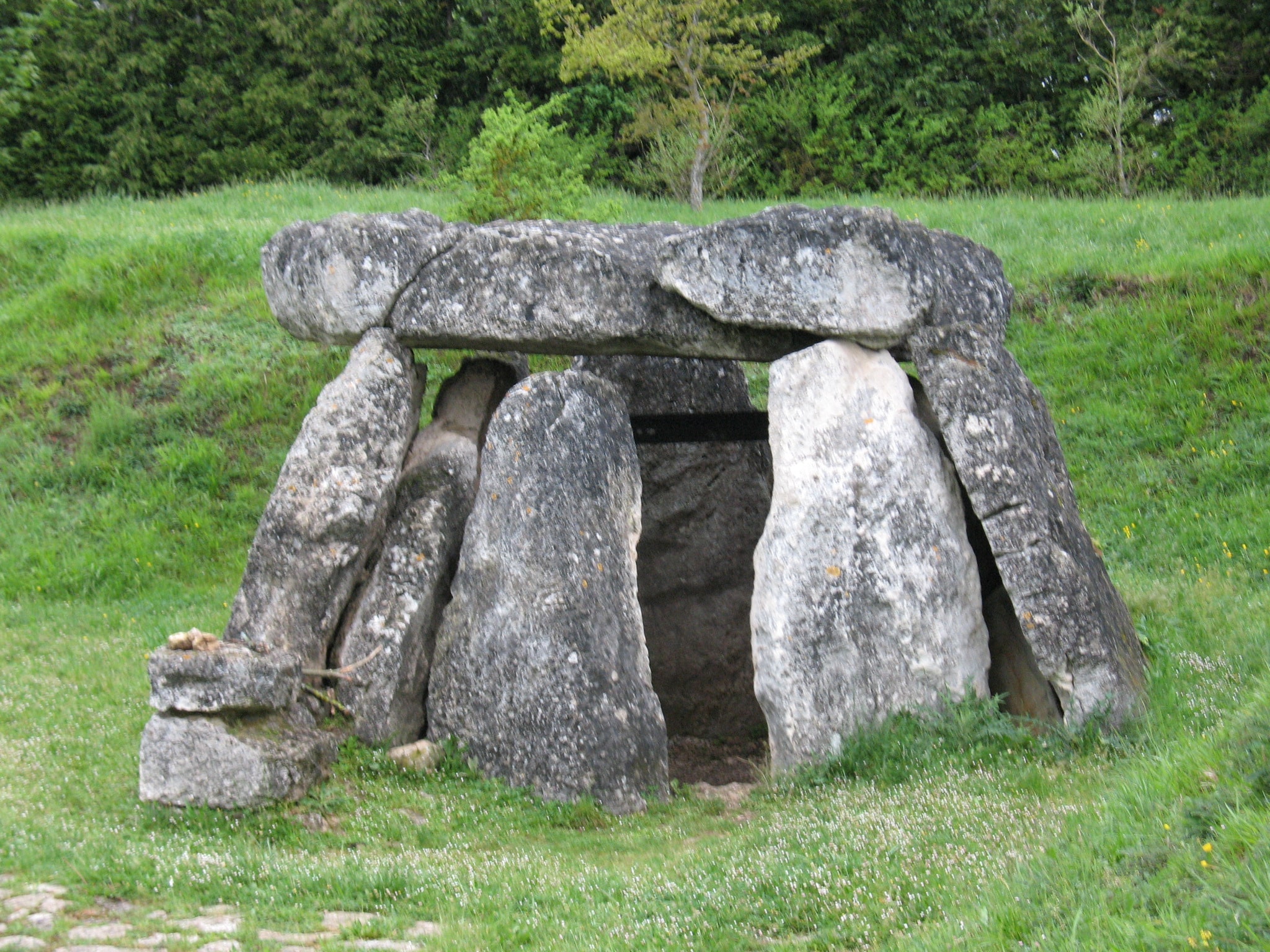
Key Points About Dolmen de Aizkomendi
-
This 5,000-year-old Basque Country megalithic tomb has huge stone slabs, one of which weighs 70 tons.
-
It was in the province of Álava and served as both a burial place and a marker for territory.
-
We remain uncertain about the engineering process, the potential astronomical alignments, and the meaning of the stone engravings.
-
Local stories link it to otherworldly beings, while paranormal ideas say it could be energy vortices or doorways to other dimensions.
-
Reports have indicated the presence of strange electromagnetic and sound waves.
-
In Basque heritage, the monument connects archeological evidence with cultural myths.

Introduction
The Dolmen de Aizkomendi is one of the most important megalithic structures in the Basque Country. Its history and meaning are still a mystery. This Neolithic burial chamber lies in the province of Álava in northern Spain. For years, archaeologists, historians, and paranormal fans have been fascinated by it. Scientific archaeology has revealed much about the monument’s construction and use, but many unknowns remain, leading to speculation. When you mix archeological evidence with local legends and paranormal notions, you get a complicated picture of what this ancient stone construction might mean.
Description
The Dolmen de Aizkomendi is located in the Llanada Alavesa, a flat plain surrounded by mountains that serves as a natural gateway between the Mediterranean and Atlantic areas. It is close to the village of Eguilaz in the Álava province. Huge stone slabs form the monument, creating a burial chamber approximately 5 meters long and 3 meters broad. It is capped by a huge capstone that is thought to weigh more than 70 tons. An earthen mound, or tumulus, used to cover the whole building. Today, remnants of it remain visible. The dolmen’s strategic location shows that it was put there on purpose along old transit routes. It may have served as both a burial site and a territory marker for Neolithic societies (Martínez-Torres, 2017).
The history of Dolmen de Aizkomendi goes back about 5,000 years to the Late Neolithic period, circa 3000 BC, when megalithic culture was strong in Western Europe. Excavations from the 19th and 20th centuries found the bones of several people, which suggests that it served as a communal burial site for a long time. Archaeological discoveries, including stone tools, pottery shards, and personal decorations, provide us with a glimpse into the lives of the people who built the dolmen. The building itself is an amazing feat of engineering for a society that didn’t have contemporary technology, especially when you think about how heavy the stones were and how carefully they were placed. The dolmen was still being used in the Chalcolithic period and maybe even the Bronze Age, showing how important it was to people over the years (Rodríguez et al, 2023).
There are still many questions about the Dolmen de Aizkomendi that academics are trying to figure out. The biggest question is how the Neolithic people moved and placed the huge capstone, since there is no clear answer for how they did this with only simple tools and human power. People wonder how and where they moved some stones, which appear to have come from quarries located several kilometers distant (Kalb, 2011). Another mystery is the structure’s astronomical alignments. Scholars continue to debate whether the dolmen’s orientation aligns with significant solar or lunar events. Strange marks and possible symbols, which are difficult to explain, are also present on some of the stones. It’s still unclear if these markings are natural or intentional art or symbolism.

Theories
Over hundreds of years, local tradition has attributed many paranormal beliefs and myths to the dolmen. Basque mythology refers to the dolmen as a “fairy house” or a location where mysterious beings known as “jentilak” resided prior to the arrival of Christianity in the area (White, 2013). Paranormal investigators have found strange electromagnetic readings near the site, which has led to theories that energy vortices or ley lines cross at the monument. Some people say they have felt time change, been observed, or heard strange sounds when they went to the dolmen, especially at the solstices or equinoxes. Some of the more complex theories suggest that the building served as a doorway or communication device to other dimensions. They point to the chamber’s strange sound qualities as proof of this.
Modern parapsychological beliefs about the Dolmen de Aizkomendi frequently center on the idea of “stone tape theory,” which says that the limestone parts might soak up and play back emotional energy from events that happened in the past. People who support this idea cite tourists who say they have strong memories or images of ancient ceremonies when they touch the stones. Another modern paranormal interpretation suggests that the dolmen was built on purpose in a place where electromagnetic anomalies naturally occur and that ancient people could perceive these anomalies. Some paranormal researchers have conducted sessions where they attempted to communicate with entities they believe remain connected to the site. They say they have captured electronic voice phenomena (EVP) and other proof of spectral presence. Mainstream archaeology has ignored these findings, but these alternative theories have created a different narrative about the monument that continues to attract people interested in supernatural explanations.
To look at these hypotheses, you need to use a balanced approach that takes into account both scientific data and cultural meaning. From an archaeological perspective, many of the engineering “mysteries” probably have practical explanations that involve things like counterweights, timber rollers, earthen ramps, and the work of many people working together. Archaeologists have demonstrated these methods in experiments during their study of megalithic structure construction. The astronomical alignment ideas are intriguing; however, they typically use selective data interpretation and don’t have strong statistical support. However, disregarding all non-scientific explanations overlooks the significance of these monuments to the spiritual and cosmological beliefs of their builders. Psychological processes, including anticipation effects, heightened sensitivity in culturally important places, and the power of suggestion in atmospherically imposing environments, can help explain the paranormal encounters that tourists have described.
Despite the lack of scientific validity, we shouldn’t discount these alternative interpretations due to their cultural significance. The strange stories about the Dolmen de Aizkomendi show how ancient monuments still fascinate people and meet psychological requirements in modern culture. Although the specific content of these stories changes over time, they still maintain connections to the beliefs and practices of their ancestors. They show how megalithic monuments are strong symbols that each generation uses to ask its questions about where people came from, death, and the potential of powers that are beyond normal perception. These tales, whether people believe them literally or not, help people in the area feel like they belong and connect with the past. They create a sense of place that goes beyond just knowing the facts or history (Alday-Ruiz, Rodríguez-Lejarza, & Mejías-García, 2023).
Conclusion
The Dolmen de Aizkomendi is a wonderful example of how many ancient structures are both historically accurate and still have mysteries around them. Archaeology is giving us more advanced ways to learn about the monument’s construction, use, and cultural significance. However, it still has an air of mystery that makes people wonder and speculate. The fact that both scientific and paranormal explanations exist shows how people connect with their archeological past in many different ways, such as through reason, imagination, spiritual intuition, and cultural identity. As further research is done, the dolmen will probably divulge more of its secrets, but it seems certain that this amazing stone sentinel will never give up all of its mysteries. The mystery will make it captivating for tourists for many years to come. Monuments like Aizkomendi may be most valuable because they connect us with our distant ancestors not simply through facts and artifacts, but also through the shared human experience of facing the unknown.
References
Alday-Ruiz, A., Rodríguez-Lejarza, A., & Mejías-García, J. C. (2023). ‘Plus ça change, plus c’est la même chose’? Continuities and discontinuities in the funerary record of the northern half of Iberia. Documenta Praehistorica, 50, 178-204.
Kalb, P. (2011). Rare rocks in the megalithic monuments of Vale de Rodrigo, Portugal. Menga: Revista de prehistoria de Andalucía, (1), 371-381.
Martínez-Torres, L. M. (2017). Building Materials of Neolithic Tombs in Alava, Northern Spain. The Open Construction & Building Technology Journal, 11(1).
Rodríguez, J. A. L., Sanjuán, L. G., Álvarez-Valero, A. M., Jiménez-Espejo, F., Arrieta, J. M., Fraile-Nuez, E., & Martínez-Sevilla, F. (2023). The provenance of the stones in the Menga dolmen reveals one of the greatest engineering feats of the Neolithic. Scientific reports, 13(1), 21184.
White, L. (2013). Basque Storytelling and the Living Oral Tradition. In Traditional Storytelling Today (pp. 185-189). Routledge.

Leave a Reply