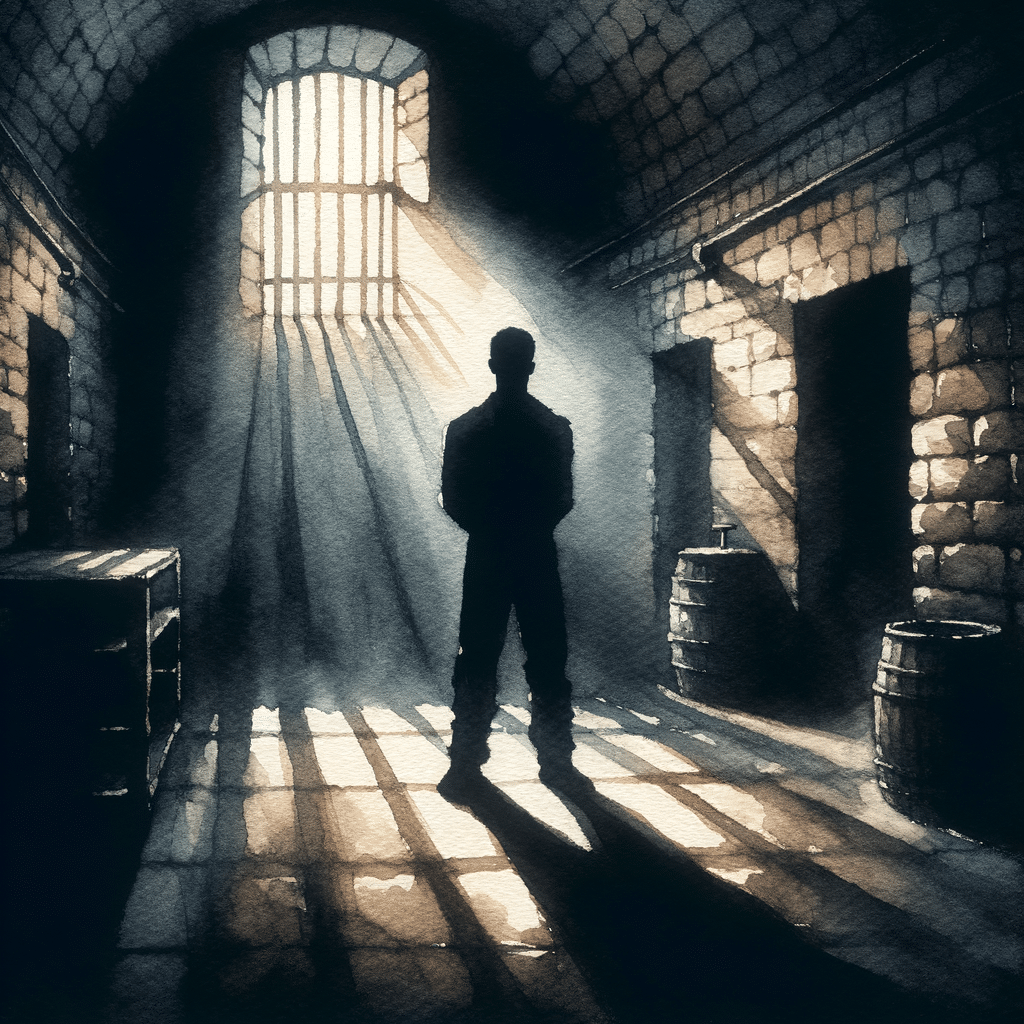
Six Key Points About Prison Ghosts
-
People who see prison ghosts usually see them in chains or uniforms and hear cell doors and footsteps that aren’t there.
-
Most hauntings come from prisoners who died in a violent way, including by execution, murder, or suicide.
-
Some of the most haunted jails are Alcatraz, Eastern State Penitentiary, and Ohio State Reformatory.
-
These stories are like analogies for how the judicial system doesn’t work and how punishment goes on after death.
-
Ghosts in prisons affect the media, tourism, and economics of areas surrounding old prisons.
-
Ghost stories preserve forgotten aspects of correctional history, documenting abuses that official records might overlook.

Introduction
Folklore and paranormal fans say that prison walls not only keep people alive, but they also keep the spirits of people who perished inside. Ghost stories are excellent for correctional facilities because of their long histories of pain, brutality, and misery. These institutional hauntings are a unique part of paranormal history that shows how interested we are in the hereafter and how worried we are about retribution, justice, and redemption in our culture.
Overview
There are a few things that make the traditional jail ghost different from other types of ghosts. People sometimes say that these beings keep the traits that made them prisoners—some wear striped uniforms or shackles, which will always remind them of their time in jail, even after they die. The sounds that haunt them most often are those that are common in prisons, such as the sound of cell doors slamming shut, footsteps that seem to come from nowhere, or discussions that reverberate from far away where no living convicts are present. Prison ghosts don’t seem to desire to talk to live people directly like residential ghosts do. Instead, they seem to be stuck in continuous loops of mundane or traumatic events, which makes it seem like these spirits are still institutionalized even after death (Williams, 2014).
Many of the stories about prison ghosts come from the brutal deaths of guards and inmates in these places. These stories are mostly about prisoners who were executed, murdered by other inmates, or killed themselves. Witnesses say these spirits stay around because of unsolved injustice or unfinished business. In many stories, prisoners maintain their innocence until their death, and their souls continue to protest unresolvable wrongs. Some cultures see these ghosts as warnings or moral lessons about the costs of crime, while others see them as a sign that the justice system has failed and that prison dehumanizes people even after they die (Wilson, 2008).

Famous Haunted Prisons
Alcatraz Federal Penitentiary is one of the most haunted prisons in the world. Many people, both former guards and visitors now, have reported seeing ghosts there. Cell 14D, where an inmate reportedly wailed all night about a creature with glowing eyes before being found strangled the next morning, is still a place where cold spots and disembodied wails happen. Utility corridors and the prison hospital are also busy places, where ghosts of former inmates getting medical care or wandering about like they are still on work detail can be seen. Researchers in the paranormal field say that residual emotional energy from the prison’s terrible past causes many visitors to feel awful and angry in some places (Auerbach & Martin, 2011).
The Eastern State Penitentiary in Philadelphia is a wonderful place for ghosts to hang out because of its scary gothic architecture and its pioneering but ultimately terrible system of solitary incarceration that was meant to make people think and repent. Former guards and maintenance personnel have written about dark figures who walk the halls, ghostly faces that show up in cell windows, and disembodied crying that can be heard throughout the cellblocks. Visitors to cell block 12 say they have felt or been touched by unknown hands. Some people say they can hear banjo music, which was Capone’s favorite thing to do while he was in prison, in his old cell, which was nicer than the others.
The Ohio State Reformatory, where The Shawshank Redemption was filmed, attracts paranormal investigators who record everything from electronic voice phenomena to full-bodied ghosts of previous guards and inmates. People see the “shadow man” who wanders the east cell blocks a lot. They think he is a former inmate who was killed in the shower area. The ghost of a former warden’s wife who accidentally shot herself in the living quarters lives in the administration wing. People who go to the chapel regularly say they hear singing and feel strange temperature drops. Paranormal enthusiasts claim that the prison’s history of suicide and violence, coupled with over a century of agony within its walls, creates an ideal environment for paranormal activity (Grady, & Magistrale, 2016).
The West Virginia Penitentiary in Moundsville is known for being haunted because of its very violent past, which featured primitive living conditions, overcrowding, and more than ninety executions that took place on its grounds. The “sugar shack,” a place for inmates to hang out without supervision, is the site of several murders and has some of the most persistent paranormal reports, with visitors reporting nausea, dizziness, and the feeling of being watched. The ghost of a maintenance guy named R.D. Wall, who was killed by three convicts in the late 1920s, is the most well-known ghost at the jail. His voice has been recorded many times begging people to “get out.” People say that cameras don’t work right and that photos show strange light patterns near the North Wagon Gate region, where public hangings used to take place.
The Tower of London is mostly known as a royal palace and historic stronghold, but it was also a terrible jail for almost 800 years and is home to some of the most famous prison spirits in the world. People say that the ghost of Anne Boleyn, Henry VIII’s second wife who was beheaded in 1536, walks around the grounds with her head in her hands. There are stories that the Bloody Tower is home to the spirits of Edward V and his brother Richard, Duke of York, who went missing in 1483 and were probably killed on the instructions of their uncle, Richard III. Both guards and guests say they hear kids laughing and see little shadowy creatures running around corners. The ghost of Guy Fawkes haunts the White Tower, where he was tortured following the Gunpowder Plot of 1605. People have heard screaming and chains dragging there (Abbott, 2012).
Impact
Prison ghost stories have a societal impact that goes beyond just being fun or superstitious. These stories are strong symbols of how our justice system works—or doesn’t work—in society. The trapped souls stand for worries about whether punishment really ends with death or if some kind of cosmic justice goes on after our earthly punishments. For the relatives of victims, the idea that the people who hurt them are still suffering after they die could provide them a sense of ultimate justice. For people who want to change the way prisons work, these stories show how adverse things have been in prisons in the past. These hauntings also make us contemplate whether institutions can hold on to the emotional energy of the misery that happened inside them.
Popular culture has embraced ghost stories about prisons. Many movies, TV shows, and books feature them, prompting us to reflect on our prison systems while remaining entertaining. Ghost hunting shows often include episodes set in abandoned jails, which bring in millions of viewers and encourage dark tourism to these places. Many historical prison buildings embrace their haunted reputations and offer ghost tours that teach people about history while telling scary stories about the supernatural. The commercialization of prison hauntings provides communities with an opportunity to generate income, but it can also raise ethical concerns regarding profiting from the suffering of individuals who lived and died in these locations (Hodgkinson & Urquhart, 2016).
When explaining the popularity and impact of jail hauntings, we cannot overlook the psychological aspect. Saying that ghosts cause strange noises or feelings may help ex-prisoners and prison workers cope with the trauma of being in these high-stress places. People’s minds naturally look for patterns and explanations, and in the emotionally charged environment of a jail, supernatural explanations can help make sense of scary things that happen. The isolation, lack of sensory input, and environmental problems that are frequent in older jails, such as hazardous lighting and dramatic temperature changes, can cause hallucinations or misinterpretations of normal things. This just adds to the cycle of ghost stories.
Prison ghost stories keep significant parts of our criminal history alive, even if you don’t believe in the supernatural. These stories help us remember not only the renowned prisoners but also the countless unnamed people who suffered and died in these systems, sometimes without being recognized or remembered. The haunting legends are like unofficial historical records that keep alive accounts of prison uprisings, medical experiments on prisoners, corruption, and cruelty that official histories could downplay or leave out completely. In this way, prison ghosts act as ghostly witnesses to problems in the system that society might want to forget.
Conclusion
In the end, jail hauntings say more about the living than the dead. The fact that so many of us are interested in these stories shows how deeply worried we are about justice, death, and how people can be both cruel and kind. Prison ghosts are potent symbols in our ongoing conversation about how society handles its most problematic people and what happens when systems meant to help people get better instead make them suffer over and over again. As long as prisons exist, the spirits of the people who lived and died in them will continue to haunt not only the cell blocks and execution chambers but also our collective conscience as we try to understand the complicated history of imprisonment in human civilization.
References
Abbott, G. (2012). Ghosts of the Tower of London. David & Charles.
Auerbach, L., & Martin, A. (2011). Ghost Detectives’ Guide to Haunted San Francisco. Linden Publishing.
Grady, M., & Magistrale, T. (2016). In the Belly of the Beast: Ohio State Reformatory and The Shawshank Redemption. In The Shawshank Experience: Tracking the History of the World’s Favorite Movie (pp. 27-85). New York: Palgrave Macmillan US.
Hodgkinson, S., & Urquhart, D. (2016). Ghost hunting in prison: Contemplating death through sites of incarceration and the commodification of the penal past. In The Palgrave Handbook of Prison Tourism (pp. 559-582). London: Palgrave Macmillan UK.
Williams, D. (2014). Haunted Prisons. Bearport Publishing.
Wilson, J. Z. (2008). Prison: Cultural memory and dark tourism. Peter Lang.


Leave a Reply