Fairies of the Black Forest: Key Points
- Black Forest fairy traditions developed around the region’s dense woods, mountains, caves, streams, and mysterious lakes, where supernatural beings were believed to inhabit wild places.
- Forest spirits such as Waldleute, Moosleute, and Waldschrate could help respectful people but might punish those who mistreated the forest or ignored supernatural warnings.
- Dwarflike Erdmännlein were believed to live underground or in hidden places, sometimes helping humans while guarding their homes, secrets, and treasures.
- The Mummelsee became famous for legends of water fairies and beautiful supernatural women who emerged from the lake, danced along its shores, and could be dangerous to curious humans.
- Fairy legends may have developed from older Germanic beliefs, attempts to explain mysterious natural events, and later Christian reinterpretations of ancient nature spirits.
- Black Forest fairy lore remains important today through literature, tourism, hiking trails, local traditions, and the region’s continuing reputation as a mysterious fairy-tale landscape.

Introduction
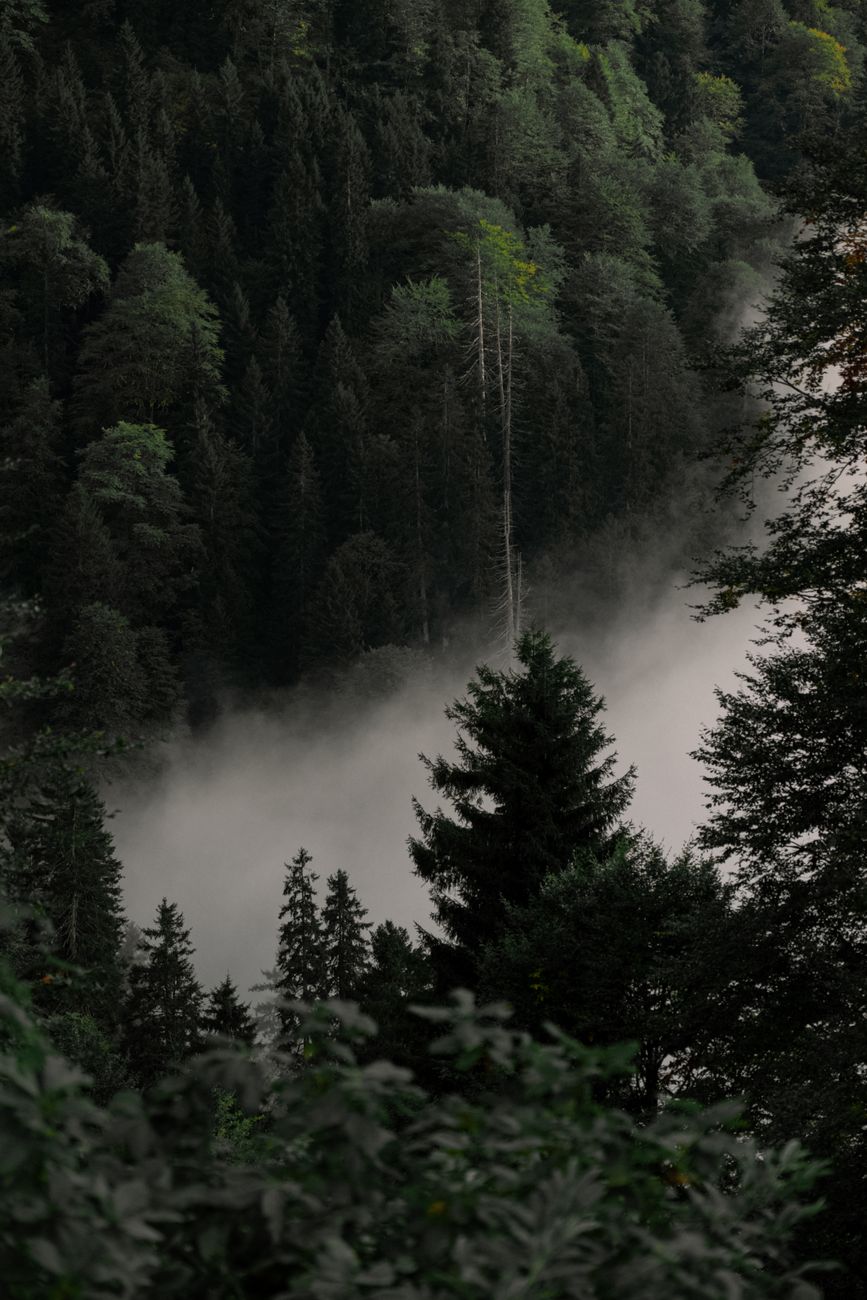
The Black Forest of southwest Germany has long been associated with mystery and the occult, as well as with legends of people encountering entities beyond the ordinary world. Heavily forested mountains, steep valleys, streams, caverns, and dark glacial lakes characterize the region, known as Schwarzwald in German. The scenery of such places provided a perfect setting for legends of fae living in trees, lakes, rocks, and underground places. However, the fairies of the Black Forest should not be confused with the small, winged beings familiar from contemporary fiction. German folklore has a significantly larger supernatural population, including forest spirits, water women, nymphs, dwarfs, Erdmännlein, and other beings that would frequently be classified as fairies in English-language folklore. They could be helpful or dangerous, beautiful or frightening, but they often embodied the mysterious relationship between human communities and the natural environment (Grimm, 1883).
The traditions were also shaped by the Black Forest itself. For most of its history, the forest was a landscape of both utility and danger for travelers and inhabitants. People relied on its timber and other natural resources while facing genuine risks from steep terrain, severe weather, isolation, and becoming lost. In this way, German folklore transformed the forest into something more than a physical landscape. It became a boundary dividing the familiar human world from a magical wilderness. According to German woodland tales, ghosts, witches, dwarfs, giants, and other beings inhabited such places and might either help humans or punish them for inappropriate behavior (Fischer, 2022). The Black Forest remains closely linked to ancient traditions, and legends still surround particular lakes, mountains, caves, ruins, and communities throughout the region (Bizzarri, 2024).
Forest Spirits and Earth Dwellers
Forest people, variously known as Waldleute, Holzleute, or Moosleute, meaning forest people, wood people, or moss people, are among the most important fairy-like entities in German tradition. Waldschrats are sometimes considered related beings. Jacob Grimm described German traditions concerning wild people, wood people, and moss people who lived apart from conventional human society. They were often depicted as small, hairy, ancient-looking individuals wearing moss or primitive clothing. Female forest beings were sometimes believed to be more approachable than males. Some helped with household work, offered advice, possessed knowledge of plants and remedies, or approached woodcutters for food (Grimm, 1883). These characteristics make them similar to fairies in other European cultures, especially because their relationships with humans are based on respect and reciprocity.
A somewhat wilder form of forest spirit is the Waldschrat. In modern versions of Black Forest folklore, the Waldschrat is represented as a small humanoid forest spirit associated with protecting the forest and maintaining the balance of nature (Bizzarri, 2024). Such figures reflect the idea that the forest has its own inhabitants and guardians. Thus, a traveler entering the woods was entering a region governed by forces that did not necessarily follow human laws. Respecting the forest could lead to assistance. Abusing the forest, mocking its inhabitants, or ignoring supernatural warnings could lead to dire consequences. Fairy lore thus expressed the idea that people were visitors rather than absolute masters of the forest.
Another noteworthy category is the Erdmännlein, or “little earth men.” Northern Black Forest folklore includes collections of stories about Erdmännlein and Erdweible, including traditions associated with places such as Loffenau, Hirsau, Dornhan, and Herzogsweiler (Burkhardt, 1990). These creatures are part of a broader German tradition of dwarfish underground dwellers. They could live in caverns, mountains, or underground chambers and sometimes interact with nearby humans. Their subterranean dwellings connected them with mysterious natural formations and, according to some stories, hidden riches. As with many European fairy legends, encounters with these spirits could begin pleasantly but go awry when humans became greedy, disrespectful, or excessively curious.

Water Spirits and Enchanted Women
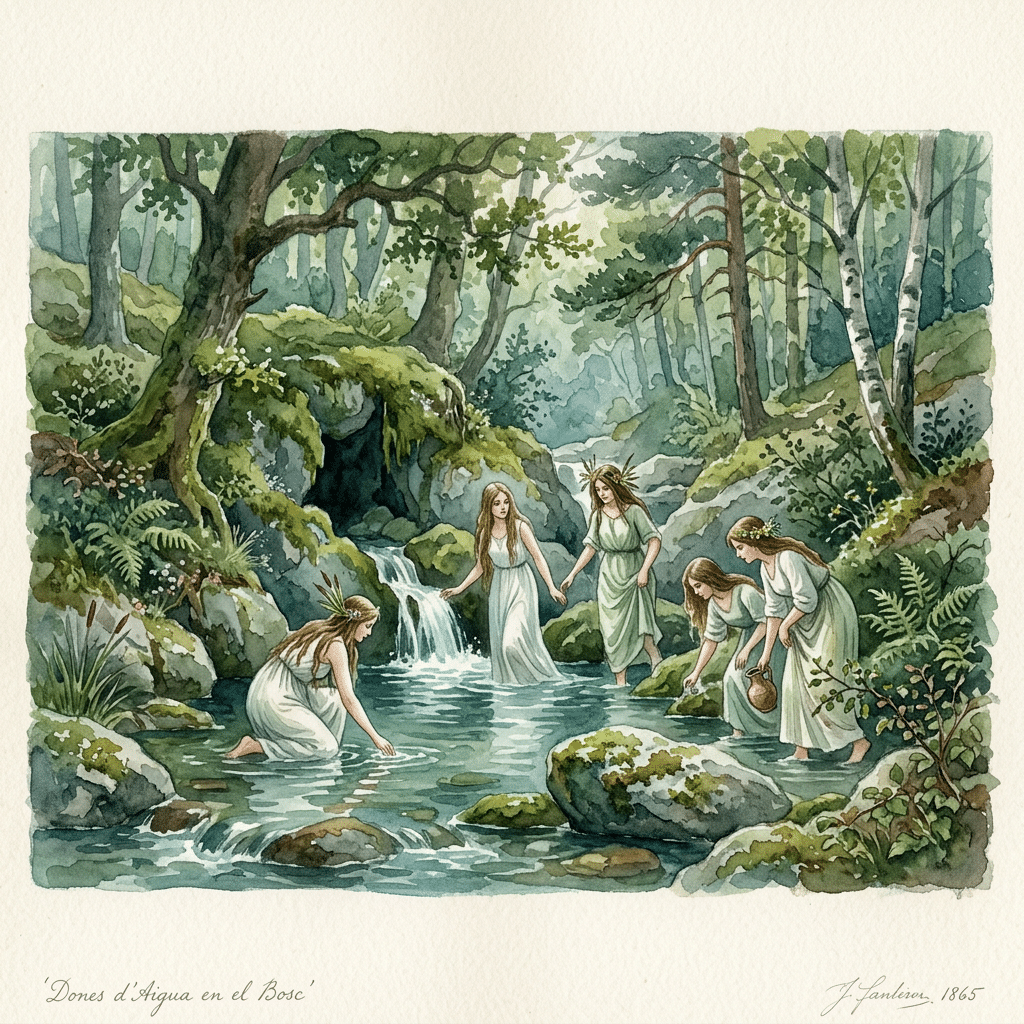
Water fairies stand out as some of the most striking supernatural beings closely associated with the Black Forest. The best-known tradition concerns the Mummelsee, a small glacial lake below the Hornisgrinde in the northern Black Forest. Over time, the lake acquired numerous traditions concerning its otherworldly inhabitants. Jacob Grimm identified a connection between lakes named Mummelsee and legends surrounding Nixen, or water spirits (Grimm, 1883). The beings associated with the Black Forest lake have been called Mümmelchen, Seefräulein, Seeweiblein, nymphs, and Nixen. In nineteenth-century literary versions of the legends, mysterious water women emerged from the lake and danced before retreating into its depths (Schnezler, 1833).
The legends of the Mummelsee demonstrate how fairy lore can combine beauty with danger. The water women might appear as alluring young women and occasionally interact with humans. However, the lake was to be approached with caution. Legends told of supernatural vengeance against anyone who disturbed its waters. According to one tradition, throwing stones into the lake could provoke powerful storms. Other stories described men becoming obsessed with water women, following them, and ultimately meeting terrible fates (Evans, 1894). The moral is characteristic of fairy lore throughout Europe. The mystery of the supernatural world is alluring, but crossing its boundaries without invitation can be dangerous.
The female water spirits also exhibit a major characteristic of fairy belief: metamorphosis. In folkloric and literary versions of the Mummelsee stories, the women are sometimes associated with water lilies, with otherworldly maidens rising from or transforming into flowers on the lake. In Ferdinand August Schnezler’s nineteenth-century account, lilies become water women who play in the lake until their mysterious father calls them back (Schnezler, 1833). Stories like these blur the boundaries between humans, spirits, plants, and the landscape. The fairy is not simply a being that dwells in nature. She can be nature itself.
Other magical women appearing in the Black Forest and neighboring traditions of southwestern Germany include white ladies, enchanted maidens, and swan maidens. The northern Black Forest has its own collections of legends, including the White Maiden of Hohennagold, the White Maiden of Durlach Turmberg, and a swan maiden, as well as tales of dwarfs and Erdmännlein (Burkhardt, 1990). Not every magical woman in these traditions should automatically be classified as a fairy. Some are ghosts, other spirits, or enchanted humans. They do, however, share important characteristics with European fairy lore, including mysterious appearances, metamorphosis, hidden riches, enchanted places, and encounters that test human behavior.
Black Forest folklore also includes beings that demonstrate how difficult it can be to distinguish fairies from ghosts and religious supernatural figures. One example is the Moospfaff of the Mooswald near Nordrach. The Moospfaff is usually regarded as a wandering spirit rather than a fairy. In various traditions, he is described as a monk, a dishonest abbot cursed to wander, or a religious figure perpetually searching for a missing consecrated host (Tourismus Marketing GmbH Baden-Württemberg, 2026). His story is important because it demonstrates how older traditions of haunted forests could blend with Christian ideas about sin, punishment, and restless spirits. The supernatural inhabitants of the Black Forest were never divided into the neat categories familiar from modern fantasy novels.
Literary Tradition and Theories
The Black Forest is a place where fairy motifs are woven into regional folklore, travel literature, and literary traditions. In scholarly discussions, the Black Forest is not merely a backdrop but a space in which authors such as Mörike and Hebel, as well as later regional scholars, engage with local landscapes, stories, and “sagen” that merge the natural world with supernatural entities. This regional framing fits within a broader German cultural fascination with fairy-associated settings and the Romantic adoption of folk beliefs as expressions of national identity (Bausinger, 2023; Florian & Wegner, 2024; Bubner et al., 2019). In monographic and popular writing about the Schwarzwald, fairy imagery is used to convey regional history and memory. Fairy figures are often associated with local lakes, wells, and grottoes connected with water spirits or nixes, which resemble undines. Fairy motifs are explicitly depicted in the literature as part of a living regional culture that continues through oral tradition and is adopted by writers and historians (Bausinger, 2023; Florian & Wegner, 2024; Mayer, 1985; Bubner et al., 2019).
There are several possible explanations for the association of fairy traditions with forests such as the Black Forest. One theory is that these entities are personifications of natural forces. Water spirits represent the unpredictable nature of lakes and rivers, while forest beings reflect the hidden life and dangers of the woods. Grimm (1883) linked elves, dwarfs, water spirits, domestic spirits, and forest creatures to older Germanic mythical beliefs. Thus, remnants of pre-Christian beliefs may survive in fairy lore in which natural locations possess supernatural significance.
Another possible explanation for changes in the character of these entities is Christianization. Sacred landscapes and supernatural beings did not simply disappear when Christianity spread across German-speaking Europe. Instead, older beings could be reinterpreted as dangerous spirits, demons, ghosts, or creatures associated with the devil. Folklorist Heinz Rölleke explains that German forests were once considered sacred in religious terms, but later Christian traditions increasingly portrayed their supernatural inhabitants as threatening or evil (Fischer, 2022). This distinction helps explain why German woodland spirits are beneficial in some narratives and dangerous in others. Folk beliefs changed as religious attitudes changed.
A psychological and environmental explanation is also possible. Dense woodlands naturally obscure vision, distort sounds, cast unusual shadows, and leave travelers uncertain of their surroundings. Lakes covered in mist might look entirely different from one hour to the next. In a world where modern scientific explanations were not yet widely available, strange noises, unexpected changes in weather, animal calls, echoes, and mysterious shapes could all be interpreted as supernatural. Tales of fairies and spirits provided familiar characters and explanations for otherwise inexplicable events. They transformed an uncertain environment into a meaningful landscape inhabited by creatures that followed rules humans could attempt to understand.
Fairy stories also served social functions. Many of the stories emphasize proper relationships with strangers, animals, woodlands, and supernatural outsiders. Kindness is rewarded, while greed, mockery, arrogance, and excessive curiosity are punished. Tales of forest spirits caution against irresponsible behavior toward nature. Stories of water spirits discourage careless behavior around dangerous lakes. Tales about subterranean creatures warn humans against entering places that do not belong to them. The value of these traditions did not depend entirely on whether listeners actually believed in fairies. The stories also communicated expectations about how individuals should behave.
Cultural Impact and Modern Legacy
These traditions have had a lasting impact even after the period when supernatural explanations were widely accepted. German woodlands became an important part of the country’s literary and cultural imagination, particularly through the collection and dissemination of folk narratives during the nineteenth century. The brothers Jacob and Wilhelm Grimm did much to preserve and popularize German folklore, although it would be incorrect to assume that all Grimm fairy tales originated in the Black Forest. Nevertheless, the Black Forest became internationally associated with the atmosphere of German fairy tales. This association developed because its wooded mountains, isolated villages, castles, lakes, and traditional architecture closely resemble the landscapes modern audiences associate with such stories (Bizzarri, 2024).
The scholarly debate about the classification of “Märchen” (fairy tales), whether Volksmärchen (folk tales) or Kunstmärchen (literary fairy tales), influences our understanding of Black Forest fairy motifs. Wieland and Musäus are identified with the origins of the German literary fairy tale, and their works are typically regarded as predecessors of the Grimm fairy tales, influencing contemporary views of fairy figures as cultural objects and rhetorical devices (Klotz, 1985; Yang, 2018). Several studies suggest that fairy beings in German literature can function as “topoi” of Bildung, moral psychology, and national memory, as well as narrative tools for investigating desire, power, and social norms. This more sophisticated interpretation helps reconcile the many portrayals of fairies within a single regional tradition and across generations (Lecouteux, 1996; Hönes, 2022; Arendt, 2002).
Fairy and supernatural traditions continue to form part of the contemporary cultural identity and tourism of the Black Forest. Old legends connect hiking trails, lakes, ruins, museums, festivals, and local attractions. For example, the Gernsbach Myths and Legends Trail uses local stories to interpret the landscape for modern tourists (Tourismus Marketing GmbH Baden-Württemberg, 2026). Nordrach still celebrates the Moospfaff tradition through seasonal events and locally themed food and drink (Tourismus Marketing GmbH Baden-Württemberg, 2026). Mummelsee remains known for both its scenic beauty and the tales of mysterious water dwellers associated with it. Folklore has significantly influenced both the cultural and economic value of the region.
Modern popular culture has further transformed the image of Black Forest fairies. Later literature and visual art have largely shaped the familiar image of fairies as diminutive, attractive, winged humanoids. Traditional German woodland spirits are far less uniform. Some resemble dwarfs, others resemble hairy wild people, some appear as beautiful women, and others are more like specters or nature spirits. Their morality is equally ambiguous. They can reward compassion but punish intrusion. They can show travelers the way or deliberately lead them astray. This uncertainty is one of the most enduring characteristics of traditional fairy belief and distinguishes older folklore from the more predictable fairies of modern children’s entertainment.
Conclusion
In the end, the fairies of the Black Forest represent a complicated blend of Germanic mythology, local legend, Christian interpretation, literary tradition, and responses to the natural environment. Water women dance in stories about the Mummelsee. Erdmännlein inhabit hidden places. Forest spirits such as the Waldschrat contribute to the forest’s mysterious character. Other beings, such as white ladies and wandering spirits, occupy the uncertain boundary between fairy, ghost, and enchanted human. These traditions can be explained scientifically or historically as personifications of nature, remnants of ancient belief systems, responses to environmental uncertainty, or stories intended to reinforce social norms. They do not have to prove that supernatural entities actually inhabit the Black Forest to possess cultural significance. The legends helped people make sense of forests, lakes, caves, and mountains. Even today, mythology has helped make the Black Forest a place where visitors might imagine that something mysterious is still watching from beyond the trees.
References
Arendt, D. (2002). Christoph Martin Wielands Märchen ‘Pervonte oder die Wünsche’ oder: Ein Aufklärer und Didaktiker als Märchenerzähler. Orbis Litterarum, 57(2), 81–102. https://doi.org/10.1034/j.1600-0730.2002.570201.x
Bausinger, H. (2004). Von Orplid nach Blaubeuren. Schwäbische Heimat, 55(4), 445–452. https://doi.org/10.53458/sh.v55i4.5872
Bizzarri, A. (2024, August 27). From sprites to schnapps, take a spirited trip through Germany’s Black Forest. Smithsonian Magazine. https://www.smithsonianmag.com/travel/from-sprites-to-schnaps-take-a-spirited-trip-through-germanys-black-forest-180984950/
Bubner, B., Buchheit, R., Kummer, V., & Scholler, M. (2019). Species identification of European forest pathogens of the genus Milesina (Pucciniales) using urediniospore morphology and molecular barcoding including M. woodwardiana sp. nov. MycoKeys, 48, 1–40. https://doi.org/10.3897/mycokeys.48.30350
Burkhardt, M. (Ed.). (1990). Märchen, Sagen und Schwänke aus dem nördlichen Schwarzwald. Silberburg-Verlag.
Evans, C. S. (1894). Nymphs, nixies and naiads: Legends of the Rhine. Macmillan and Co.
Fischer, K. (2022, April 21). Wie aus Furcht Märchen wurden: Der deutsche Wald und seine Fabelwesen. National Geographic Deutschland.
Florian, C., & Wegner, T. (2024). Rezension von: Wegner, Tjark, Handlungswissen, Kommunikation und Netzwerke. Schwäbische Heimat, 75(2), 85–86. https://doi.org/10.53458/sh.v75i2.13376
Grimm, J. (1883). Teutonic mythology (J. S. Stallybrass, Trans.; Vol. 2). George Bell & Sons. (Original work published 1835)
Hönes, J. (2017). Poetische Volks-Sagen: Sagendichtung um Ludwig Uhland und Gustav Schwab. Schwäbische Heimat, 68(1), 55–61. https://doi.org/10.53458/sh.v68i1.1658
Klotz, V. (1985). Christoph Martin Wieland. In Das europäische Kunstmärchen: 25 Kapitel seiner Geschichte von der Renaissance bis zur Moderne (pp. 94–106). J. B. Metzler. https://doi.org/10.1007/978-3-476-03204-1_7
Lecouteux, C. (1996). Die Volkserzählung als Bewahrerin früherer Glaubensvorstellungen: Felix Karlinger zum 74. Geburtstag. Fabula, 37(3–4), 193–215. https://doi.org/10.1515/fabl.1996.37.3-4.193
Mayer, A. (1985). See- und Teichrosengewächse (Nymphaeaceen). Der Palmengarten, 49(1), 38–46. https://doi.org/10.21248/palmengarten.649
Schnezler, A. (1833). Zehn Romanzen vom Mummelsee im Schwarzwald. Herder.
Tourismus Marketing GmbH Baden-Württemberg. (2026). Myths and legends in Baden-Württemberg: Discover mysterious places steeped in history.
Yang, Z. (2018). Märchenadaptionen in Romanen und Novellen von Christoph Martin Wieland zu Thomas Mann: Eine exemplarische Untersuchung. Universitätsverlag Göttingen. https://doi.org/10.17875/gup2018-1105
Leave a Reply