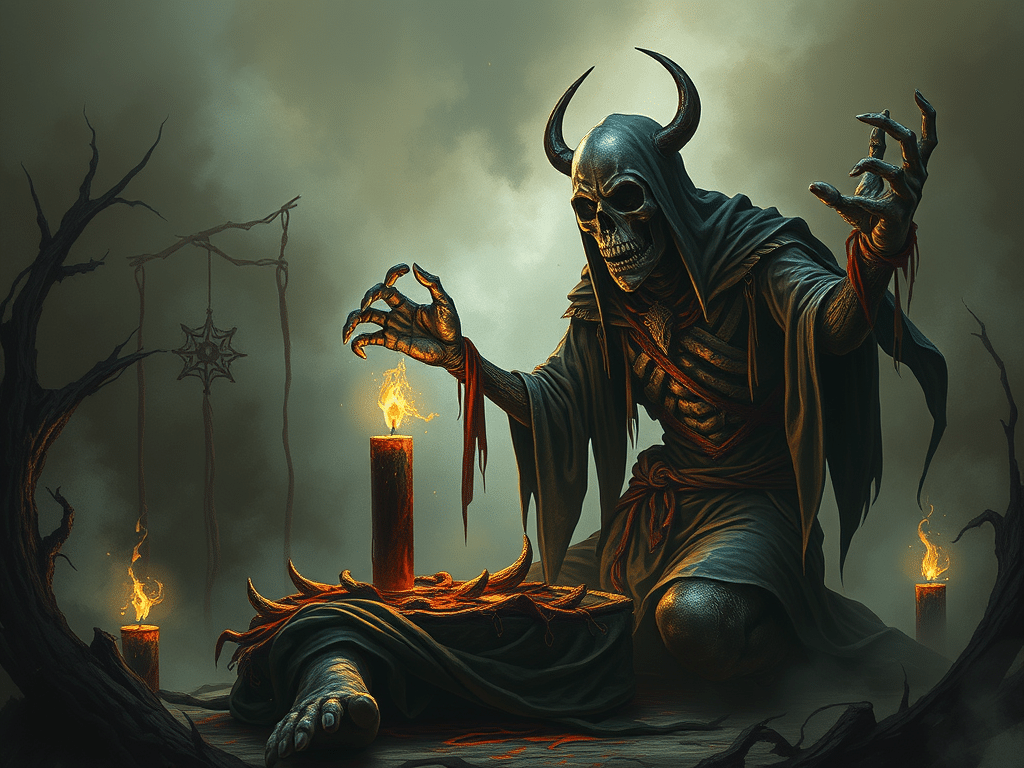
Representing our shared desire to master death itself, the mystical art of necromancy has both captivated and horrified mankind throughout recorded history. With zombies maybe the best-known result of such prohibited arts, ancient writings, folklore, and contemporary fiction all investigate the idea of restoring a semblance of undead life to the dead by magical means. This essay explores the theoretical underpinnings of necromancy, the character of zombies as magical creations, the various ways they could be produced, and the many theories different magical traditions have proposed on animating the dead.

Necromancy and Zombies
Traditionally described as the manipulation of death forces and contact with the deceased, necromancy is among the oldest and most dreaded forms of magical activity. Unlike divination or elemental magics, necromancy directly engages with the boundary between life and death, utilizing energies from the other side of the veil to affect changes in the material world. Historical writings from Mesopotamia, Egypt, Greece, and medieval Europe all mention necromantic practices, despite the usual cautions about the spiritual corruption such arts may cause in their practitioners. The necromancer has to acquire a particular understanding of death energies, spirit binding, and the exact magical formulas that can bind a dead soul or draw a fresh animating power to occupy a lifeless vessel (Sekoff, 2005).
Though they vary greatly from their depictions in popular culture, zombies are the corporeal manifestation of effective necromantic practice. A zombie in magical theory is not just a reanimated corpse but rather a complicated magical creation whereby a physical body has been linked with an animating power, whether that be the original soul, a piece thereof, or a completely separate spiritual being. Usually, these creations follow their creator’s orders and have limited cognitive abilities because of the magical bindings applied during the reanimation procedure. Being more correctly described as corpses animated by ritual to serve as perpetual laborers, possessing no identity or volition of their own, traditional zombies from Haitian Vodou differ from the flesh-eating monsters of contemporary cinema (Steiger, 2010).
The process of creating zombies through theoretical necromancy consists of several separate magical procedures functioning together. The necromancer must first retain the physical vessel with alchemical preparations, usually including particular plants, minerals, and magical solutions preventing more decomposition and preserving the body’s ability to move. The next step is the difficult soul-binding or spirit attraction ceremony, usually held during astrologically important seasons when the barrier between realms thins. Often pulled from the necromancer’s own life force or from sacrifices, the last and most perilous phase is the infusion of magical energy that jumpstarts the reanimation process, therefore creating a magical circuit between the practitioner and their creation.
Different theoretical methods of zombie generation have emerged from several magical traditions, each with its interpretation of what defines effective reanimation. According to the hermetic tradition, zombies are the results of tainted life energy, where natural vitality is replaced with death essence, therefore producing a being that exists in both spheres at once. Particularly in some Taoist alchemical writings, Eastern necromantic rituals describe zombies as corpses possessed by lower spirits or demons bound by intricate sigils and spells to serve the necromancer. African and Caribbean customs, on the other hand, stress the division of various soul aspects; zombification is the capture and manipulation of certain spiritual parts rather than total reanimation (Kanerva& Koski, 2019).

Analysis
Ethical issues color any theoretical debate on necromancy, as the production of zombies clearly disrupts natural order and personal autonomy. Most magical customs around the world have taboos against such activities, not only due to religious prohibitions but also because of the recognized metaphysical hazards. Creating zombies exposes the practitioner to tainted spiritual influences, creates tears in the fabric between worlds, and potentially harms the soul’s natural post-death path. The magical energy needed to keep zombies also causes a continuous drain on the natural energy of the surrounding region, possibly generating areas of deterioration and spiritual contamination where such beings live for long durations (Datta, 2021).
Modern magical theorists have suggested that rather than following a single legacy, successful zombie production could need synchronization among several magical systems. This syncretic method could mix the soul manipulation ideas from African traditions with the spirit-binding procedures of Eastern practices and the exact alchemical preparations of Western traditions. Considering factors including the state of the corpse, the time passed since death, and the spiritual connection between the necromancer and their subject, theoretical complexity rises. Some theoretical writings imply that people who had a close relationship with the necromancer in life would produce the strongest zombies since these spiritual ties offer more channels for the reanimation energy to travel.
Necromantic magic’s environmental consequences provide another speculative angle on zombie production. Ancient writings caution that places where necromancy is routinely performed acquire particular magical qualities, turning into nexus locations where the boundary between life and death thins continuously. These sites could see odd events, including spontaneous minor reanimations, abnormal plant growth patterns, and attractions for ghosts and other supernatural beings. Some theoretical schools of thought contend that especially strong necromancers could one day turn their environment into a necropolis, a zone where the laws of death are fundamentally changed, maybe enabling more sophisticated and autonomous zombie creations needing less direct magical maintenance (McCullough, 2011).
Conclusion
Ultimately, although necromancy’s zombie generation stays squarely in the domain of legend and fiction, the theoretical magical frameworks underlying such acts expose much about humanity’s relationship with death and our need to overcome its finality. The intricate interaction of physical preservation, spiritual manipulation, and magical energies that would hypothetically be needed for zombie generation reveals the advanced metaphysical systems created across civilizations throughout history. Though we might never see actual necromantic reanimation, the idea develops in our shared imagination as both a warning story about the boundaries that should not be crossed and a captivating thought experiment about the essence of life, death, and the enigmatic forces that separate them.
References
Datta, A. (2021). Zombies and Diseased Bodies: A Discourse on the Living Dead. Studies in the Fantastic, 11(1), 95-116.
Kanerva, K., & Koski, K. (2019). Beings of Many Kinds–Introduction for the Theme Issue “Undead”. Thanatos, 8(1).
McCullough, J. A. (2011). Zombies: A hunter’s guide. Bloomsbury Publishing.
Sekoff, J. (2005). The undead: Necromancy and the inner world. In The Dead Mother (pp. 111-130). Routledge.
Steiger, B. (2010). Real zombies, the living dead, and creatures of the Apocalypse. Visible Ink Press.
Leave a Reply