
Fylgja in Norse Mythology: Key Points
- The fylgja was a personal spirit in Norse folklore whose name means “follower” or “fetch,” believed to accompany a person throughout life and be bound to their fate and soul.
- It could appear either as a female figure, often a protective guardian tied to an entire family line, or as an animal linked to a single individual.
- The animal form reflected the person’s inner nature and social standing, with a bear suggesting strength, a fox cunning, and an eagle nobility.
- The fylgja usually remained unseen, and for a person to glimpse their own was considered an omen of approaching death.
- It most often appeared in dreams as a symbolic messenger, sometimes revealing the arrival or intentions of others before they came to pass.
- Scholars have proposed various theories about its meaning, including that it was an external soul, a product of ancestor worship, or a remnant of shamanic traditions, though no single explanation is universally accepted.

Introduction
In the vastorld of Norse myth and folklore, few figures are so well known, and yet so mysterious, as the fylgja. This spirit, whose name translates roughly as “follower” or “fetch”, was thought to follow a person through life, tied to their fate and soul. The fylgja was not part of the grand cosmological dramas of gods and giants, but it held a very personal place in Norse beliefs. It was neither fully a deity nor a ghost but something nearer an extension of the self. To grasp the fylgja is to glimpse how the mediaeval Scandinavian mind conceived the invisible threads of identity, destiny and the unseen world.
Forms and Appearances
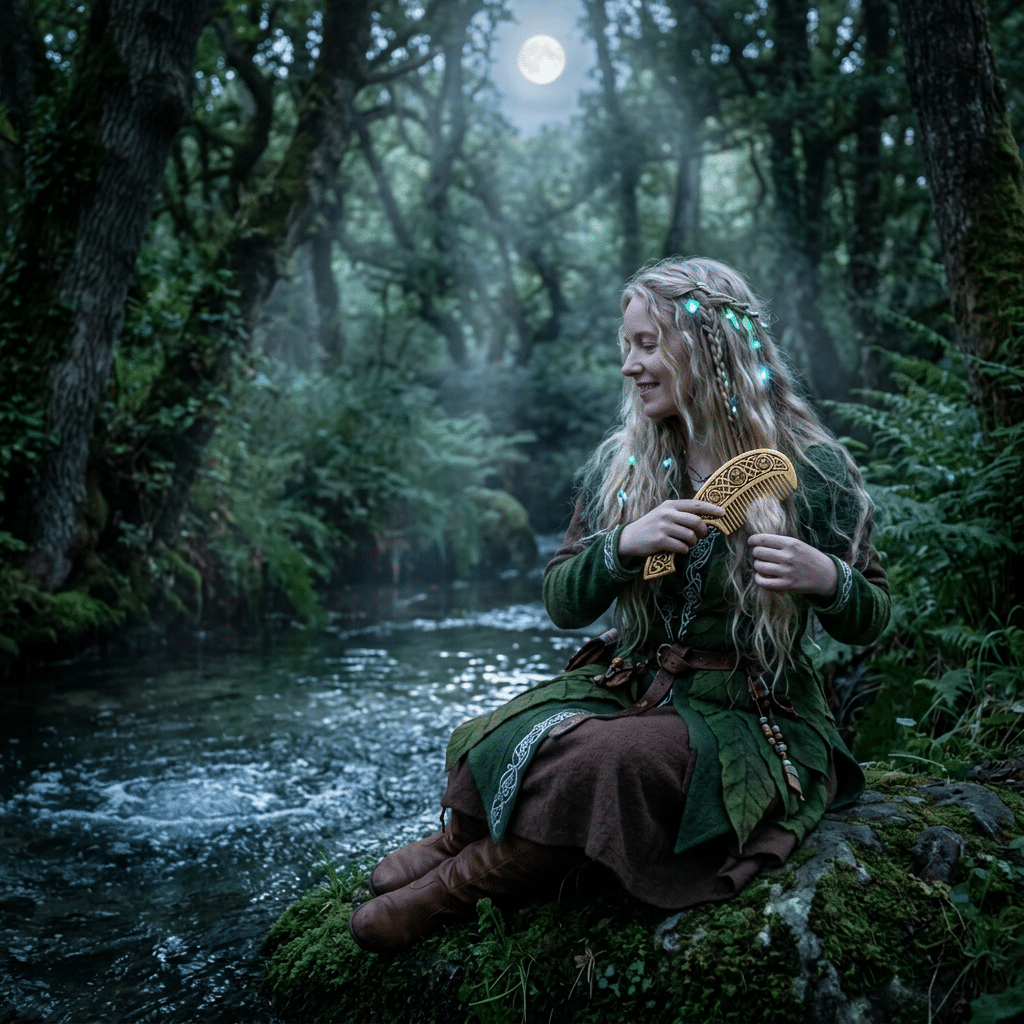
Physically, the fylgja was often fluid. It can be a human, usually a woman, or an animal. In its female form it was often said to be a guardian, a protective female spirit, sometimes identified with the dís or the idea of a family attendant. These female fylgjur were typically connected with a complete family line and not just with one individual. They might be passed down through generations, attaching themselves to a new member when an older one died. The animal fylgja, however, was an individual’s and mirrored that individual’s inner essence.
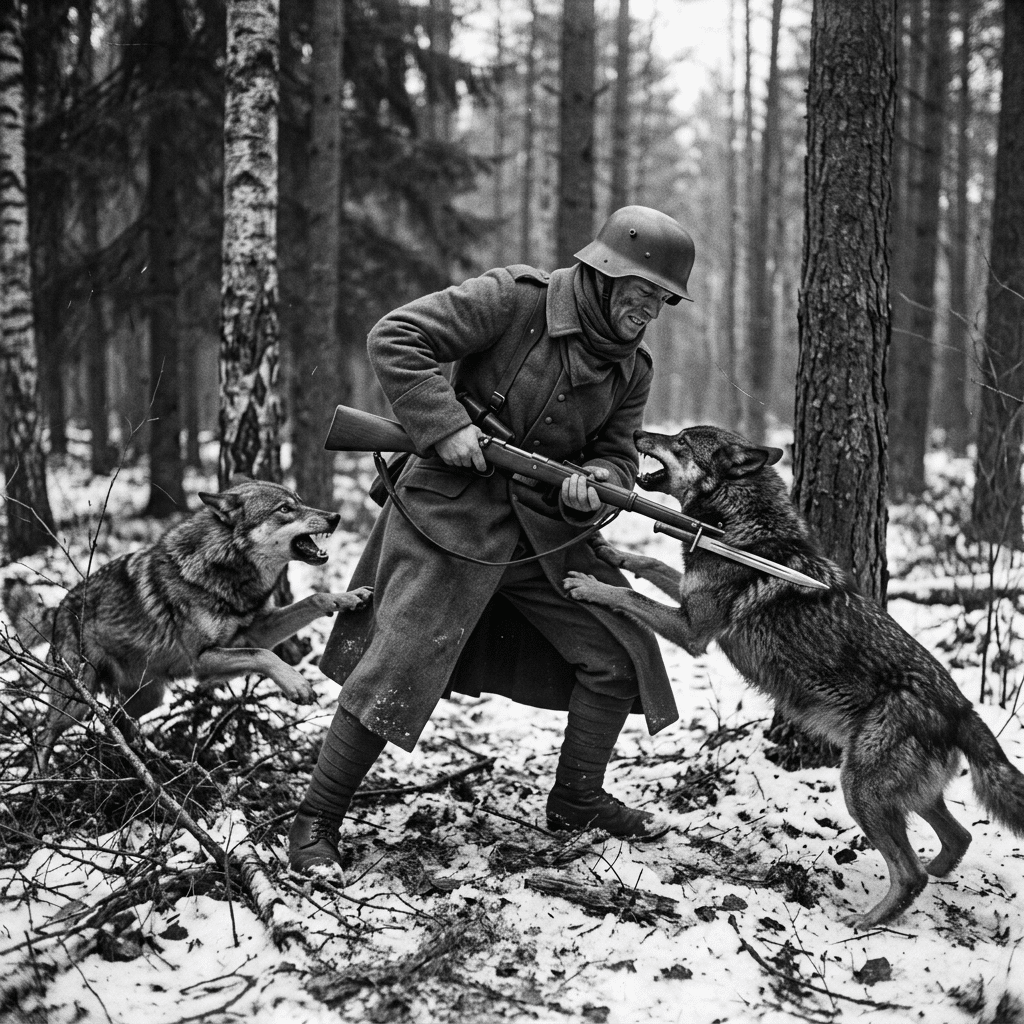
The animal forms are probably the most colourful feature of the concept. A fylgia may shape itself into a bear, a wolf, an eagle, an ox, a boar or a fox. The species said something vital about the man it followed. A bear, a symbol of strength and authority, might accompany a great chieftain. The clever man might have a fox. The eagle may fly over the head of the nobility. The animal was not selected at random. It spoke of character, temperament and social standing, practically serving as a spiritual mirror. The fylgja was, in this way, a secret portrait of the soul, viewable only under exceptional circumstances.

Behavior and Omens
The fylgja’s behavior was subtle and often ominous. The spirit was unseen during the great part of a man’s life. The name ‘follower’ was given because it was supposed to stroll immediately in front of its owner or directly behind him. Ordinary folk were unable to see their own fylgja, and seeing one’s fylgja was a bad sign. Many stories say that a person who saw their own fylgja was near death. The spirit was alerting the bond, and the bond was about to snap. Sensitive people or those with prophetic gifts may see others’ fylgjur and discern their owners’ destinies from their look and condition.
In the Norse mythic complex, fylgjur are described as personal guardians, whose presence may indicate impending events or reveal the inner state of the protagonist. Scholarly literature indicates that fylgja, along with hamingja (personal fate), is part of a triad of fate-related forces, along with the senses of hamr (mind/spirit) and hugr (thinking), and implies a layered cosmology in which attested spirits negotiate human life and destiny (Manea, 2016). Price’s exploration of fylgja and kindred notions in the Viking worldview supports this theory, highlighting how guardian spirits and related beings are interwoven in the Norse symbolic economy of fate, dream, and prophecy (Manea, 2016).
A number of accounts relate fylgja not just to individuals but also to families or homes, where a single fylgja may accompany several related individuals, thus expanding its protective or signalling function beyond a single carrier. Tuoriniemi’s exploration of prevalent patterns in popular media and research illustrates the cultural continuity of fylgja-like notions across narratives and generations (Bryan, 2021). The author also addresses social-symbolic meanings of dream visions and protective myths. Doja (anthropological framing) likewise embeds fylgja-like motifs within broader mythological schemas of fate and social life, showing how dream-vision networks write community memory of protective power and threatened futures (Bäckman, 1982).
Dreams and Prophecy
And the fylgja is where dreams enter the tale. The fylgja most often manifested itself to people during sleep, coming as a symbolic messenger. If a man dreamt of a large bear coming to his hall, he might know that a great visitor was on the way, for the bear might be the fylgja of that visitor, going before its master. Dreams about injured or fleeing animals foreshadowed death or treachery. Plenty of similar times in the sagas. The animals in those dreams are often interpreted as the fylgjur of themselves or others. The characters are very careful with interpreting their dreams. The dream was the doorway through which the invisible companion might at last be glimpsed.
Dream visions in fornaldarsögur and other epic literature are sign-reading exercises in which the protagonist interprets a dream or a message from an attendant to determine a course of action. Together the material shows a common pattern: a dream figure (typically feminine or divine) provides direction, the fylgja or similar attendant is the intermediary, and the hero’s reaction is influenced by the prophecy. The occurrence of valkyrie-like characters in dream settings or as dream visitors signifies the moral or martial importance of the dream’s content (Sayers, 2009; Ots, 1998). A dream with a fylgja is frequently the catalyst for or an explanation of a later decision, combat readiness, or voyage, thus strengthening the dream’s causative role in the plot. Academic conversations highlight that these dream episodes are not simple decoration but elements of the prophecy-based reasoning of the mythic world, with the content of dreams frequently corresponding to wider predestined courses (e.g., Baldr’s doom and Gudrun/Sigurd-type fates) (Woolf, 2017; Ots, 1998; Näsström, 1996; Ström, 1970).
Norse folklore, particularly the Icelandic sagas, retains many stories of these entities. A notable example is a character who has dreams about animals and properly predicts the coming and intentions of some guys. Both warriors and seers encounter fylgjur in the old sagas. Fylgjur are omens of disaster or good fortune. The belief sometimes overlaps with the hamingja, a spirit of luck and positive fortune, which may also be passed from one family member to another. The line between these ideas was not always clear. In folklore, the fylgja was a personal protector and omen, a creature of comfort and horror in equal measure. Its presence confirmed that one was never alone, yet the companionship it provided was inextricably linked with the moment of death.
Scholarly Interpretations
There have been many scholarly hypotheses about the fylgja’s nature within the Norse worldview. Some say it was a sort of external soul, a part of the person who lived outside the body. This concept is similar to ideas found in different cultures around the world. Others relate it to ancestor worship, claiming the female fylgja was derived from the worship of protective female ancestors who cared for their progeny. The link between the animal and human forms of the fylgja is also considered, with some scholars arguing they were originally distinct conceptions which subsequently coalesced into a single term. Another hypothesis relates the fylgja to shamanic practices, where the soul could journey in the body of an animal. This belief is also expressed in the related concept of the shape-shifting warrior. No single theory has gained general approval, and the ambiguity itself is indicative of the complex character of oral tradition.
Conclusion
The fylgja is still one of the more unsettling inventions of the Norse imagination, a ghost that embodies the ancient sense that each existence carries an invisible shadow. It linked the individual to his family, to his destiny, and to the animal world in one silent figure. The fylgja, whether as guardian, soul, or omen, expressed a concept that human identity went beyond the physical body to encompass symbols and dreams. There is a lingering poignancy in the idea that death is the time when this companion finally shows its face. The fylgja is the meeting place of folklore and philosophy, the site where the self is protected, disclosed and, finally, mortal.
References
Bäckman, L. (1982). The Noajdie and his ecstasy: a contribution to the discussion. Scripta Instituti Donneriani Aboensis, 11, 122–127. https://doi.org/10.30674/scripta.67134
Bryan, E. S. (2021). Icelandic Folklore and the Cultural Memory of Religious Change. https://doi.org/10.17302/bl-9781641893763
Manea, I.-M. (2016). Norse Myth and Identity in Swedish Viking Metal: Imagining Heritage and a Leisure Community. Sociology and Anthropology, 4(2), 82–91. https://doi.org/10.13189/sa.2016.040205
Näsström, B.-M. (1996). Magical Music in Old Norse Literature. Scripta Instituti Donneriani Aboensis, 16, 229–240. https://doi.org/10.30674/scripta.67231
Ots, L. (1998). The Position of the Woman in the Poetic Edda. Folklore Electronic Journal of Folklore, 07, 7–30. https://doi.org/10.7592/fejf1998.07.llone1
Sayers, W. (2009). Snorri’s Trollwives. Scandinavian-Canadian Studies, 18, 12–22. https://doi.org/10.29173/scancan30
Ström, Å. (1970). Formes de mystique dans le Nord préchrétien. Scripta Instituti Donneriani Aboensis, 5, 220–248. https://doi.org/10.30674/scripta.67629
Woolf, J. (2017). The Spaewife’s Prophecy: A Verse Translation of the Norse Poem Vǫluspá, with an Introduction and Notes. Scandinavian-Canadian Studies, 24, 40–88. https://doi.org/10.29173/scancan137


Leave a Reply