Psychic Archaeology: Key Points
- Psychic archaeology is a fringe discipline claiming that paranormal abilities like clairvoyance and intuition can locate and interpret ancient sites and artifacts. Mainstream archaeologists reject it as pseudoscience due to its lack of reproducibility.
- Its main methods include psychometry (reading an object’s history by touch), map dowsing with pendulums, automatic writing during trances, and remote viewing. Impressions are generated first and only afterward tested against actual excavation.
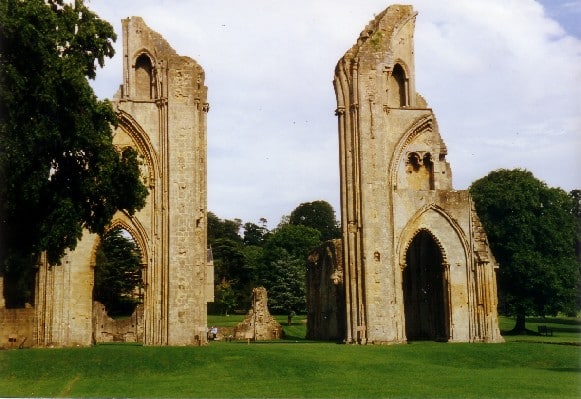
- Frederick Bligh Bond located lost chapels at Glastonbury Abbey in the early 1900s, later revealing in The Gate of Remembrance (1918) that automatic writing from supposed dead monks had guided him, which damaged his reputation.
- J. Norman Emerson, a respected University of Toronto archaeologist, lent the field academic credibility in the 1970s by working with psychic George McMullen, who wrote about their collaborations in books like One White Crow and Red Snake.
- American writers expanded the ideas, with Jeffrey Goodman’s Psychic Archeology: Time Machine to the Past (1977) and Stephan Schwartz’s The Secret Vaults of Time (1978) and The Alexandria Project (1983), the latter emphasizing recording predictions in advance for testing.
- The underlying theories drew on spiritualist concepts like the akashic records, the idea that matter retains traces of past events, and the collective unconscious, all resting on the unfalsifiable premise that the past somehow endures and can be perceived.

Introduction
Psychic archaeology is a fringe field that promises to locate, analyze, and recreate the material remnants of the past by psychic means, rather than through the logic of conventional excavation alone. Practitioners say intuition, clairvoyance and other extrasensory abilities can help diggers to locate buried sites and reveal data about ancient peoples that standard science cannot restore. But mainstream archaeologists have mainly regarded the discipline as pseudoscience, citing its lack of reproducibility and reliance on unverifiable assertions. But the movement did create a peculiar literature, a few devoted champions, and some incidents to which its followers now point. To study psychic archaeology is to study how it works, who backs it, and what practitioners believe about the nature of time, memory, and the mind.
Defining the Field and Its Boundaries
The field makes a distinction between recognized archaeological techniques and claims involving psychic processes. The public and scientific discussion understands pseudoarchaeology as a set of claims, frequently outside institutional structures, that utilize problematic methods and insufficient evidence to explain the past. This boundary work is crucial for understanding how archaeologists arbitrate opposing knowledge claims (Fallon & Guimont, 2024; González, 2016). The pseudoarchaeology literature highlights that, regardless of the assertions of methodological validity by the proponents, the absence of verifiable, replicable evidence stays a crucial vulnerability in evaluating such claims (Fallon & Guimont, 2024; González, 2016; Moorthekai, 2018; Pruitt et al., 2016).

Methods of Psychic Archaeology
Methods linked with the field vary, but some repeat in most accounts: Many of them are psychometry-based. Psychometry is the claimed ability to read an object’s history by touch, allowing a sensitive person to identify its builder, use, and owner’s feelings. Another method is map dowsing, in which the dowsing practitioner holds a pendulum or rod over a chart and waits for it to react above a likely spot. Some psychics claimed to enter into trance states and generate automatic writing, jotting down messages that they attributed to the spirits of the dead or to some kind of cosmic record. Remote seeing was partly developed in Cold War intelligence studies and later hijacked by archaeological hobbyists who claimed the mind could see distant places without the need to physically visit them. In most cases the psychic would provide the impressions first and the investigators would later verify the impressions with physical excavation.
Key Figures and Foundational Cases
One of the oldest and best known cases is one relating to Frederick Bligh Bond, an English architect who excavated at Glastonbury Abbey in the early twentieth century. Bond found two lost chapels and, following his triumph, claimed he had been led in these by automatic writing sessions in which he believed long-dead monks spoke to him. He wrote these down in his book The Gate of Remembrance (1918). His revelation damaged his professional reputation because church authorities were concerned that spirits, rather than surveys, had guided the excavation. by spirits rather than surveys. His tale became a founding myth for later believers who regarded him as a pioneer who was punished for his honesty. for honesty.
The chief person in giving the name respectability was J. Norman Emerson, a distinguished Canadian archaeologist of the University of Toronto. In the early 1970s, Emerson began working with a psychic, George McMullen, who claimed he could handle artefacts and recount the lives of the Iroquois and others who had built them. Emerson was impressed by what he thought was a high rate of accurate hits, and he submitted his findings to the Canadian Archaeological Association, which gave the subject an appearance of academic seriousness it had never before received. In subsequent years McMullen wrote about his experiences in works such as One White Crow and Red Snake, chronicling his partnerships and his sense of kinship with the vanishing cultures. Still, Emerson’s endorsement is the strongest institutional support the field has ever got.
American writers took the themes even further. In his 1977 book Psychic Archaeology: Time Machine to the Past, Jeffrey Goodman stated that trained sensitives may greatly reduce the search for major sites, even extending the recognized time frame of human colonization in the Americas. The most important writings on the subject were produced by Stephan Schwartz, who is known for his significant contributions to this field. by Stephan Schwartz, who is known for his significant contributions to this field. In his 1978 book The Secret Vaults of Time, he traced the history of intuitive discoveries and examined various psychics who had helped searchers. In 1983, Schwartz published The Alexandria Project, which documented an expedition that used remote viewing to direct underwater and land searches in Egypt. In 1983, Schwartz published The Alexandria Project, which is an account of an expedition that used remote viewing to guide underwater and land searches in Egypt. Schwartz, who described his work as experimental, insisted on making predictions beforehand to verify the results of his experiments. beforehand to verify his experimental work. Schwartz insisted on making predictions beforehand so that they could be verified. Such a method, Schwartz felt, distinguished genuine study from simply telling stories.
Metaphysical Foundations and Empirical Criticism
A major empirical criticism concerns the absence of consistent, reproducible findings in investigations claiming to use psychic approaches to obtain archaeological knowledge. The literature tends to emphasize that strong evidence should be characterized by systematic relationships that are replicable and falsifiable, rather than by isolated examples or post hoc explanations (NICHOLL, 1986; Fallon & Guimont, 2024). Proponents argue that it could yield information about archaeological sites or objects within the context of remote viewing and other related psychic approaches, while critics note that many of the successes that have been recorded do not stand up under controlled settings, have no preregistered processes, or are muddled by confirmation bias. The body of work on pseudoarchaeology often stresses the importance of strong methodological standards, preregistered hypotheses and independent replication to advance claims from speculation to credible science (Fallon & Guimont, 2024; Moorthekai, 2018; Pruitt et al., 2016). Some discussions provide constructive approaches to considering unconventional claims without viewing them as science, such as examining how such claims are made, how they are presented to the public, and how professional archaeologists can discuss them with lay audiences ethically and with methodological rigour (Pruitt et al., 2016; Moorthekai, 2018).
These methods were mainly based on previous spiritualist and philosophical notions. Many practitioners cited something like the akashic records, a notion derived from theosophy, that every occurrence and idea is recorded in a global field that talented minds can tune into. Some practitioners believed that matter itself retains a trace of its past experiences. A stone or a bone is nearly a recording. Some took refuge in the idea of a collective unconscious, that the memories of the ancestors are stored in the minds of the living. These hypotheses had in common the premise that the past is not really gone but somehow persists and remains available to the correct kind of perceiver. Critics argued that such assertions are unfalsifiable, apparent successes are ambiguous words and selective recall, and no controlled test has ever shown the abilities involved.
The histories of psychic and parapsychological claims place them within larger disputes over scientific methodology, standards of evidence, and the sociology of knowledge. For instance, research on boundary work in archaeology demonstrates how amateur or nonstandard claims can gain momentum in public discourse by challenging established authority and how professional communities counter such challenges by emphasizing evidence-based reasoning and reproducibility (González, 2016; Fallon & Guimont, 2024). This is supplemented by discussions of pseudoarcheology as a social phenomenon that interacts with media representations and popular interpretation of the past (Fallon & Guimont, 2024; Pruitt et al., 2016).
Conclusion
Psychic archaeology has a curious little niche in the history of ideas, somewhere between real science and wishful thinking. It attracted at least one credentialed academic and inspired works that were earnest in their objectives but never provided the repeated results that would have won them acceptance. Its techniques, from psychometry to remote vision, depend on faculties that have not survived careful examination. Its beliefs are based on metaphysical premises beyond the grasp of common proof. But the trend tells us something about the human yearning to touch the past personally, to feel rather than merely deduce the lives of those who came before. The longing is reasonable, even poignant. Archaeology satisfies it not with visions but with painstaking labor, meticulous measurement, and the steady accretion of evidence that enables the dead to speak in their own material voices.
References
Bond, F. B. (1918). The gate of remembrance. B. H. Blackwell.
Fallon, R. H., & Guimont, E. (2024). Introduction: Conceptualising heterodox palaeoscience. Interdisciplinary Science Reviews, 49(3–4), 307–315. https://doi.org/10.1177/03080188241275300
González, P. A. (2016). Between Certainty and Trust: Boundary-Work and the Construction of Archaeological Epistemic Authority. Cultural Sociology, 10(4), 483–501. https://doi.org/10.1177/1749975516640569
Goodman, J. (1977). Psychic archaeology: Time machine to the past. G. P. Putnam’s Sons.
McMullen, G. (1994). One white crow. Hampton Roads Publishing.
McMullen, G. (1996). Red snake. Hampton Roads Publishing.
Moorthekai, P. (2018). Philosophies for Palaeosciences – A Review. Proceedings of the Indian National Science Academy, 98(0). https://doi.org/10.16943/ptinsa/2018/49476
NICHOLL, E. (1986). Trouble on the farm. Nature, 322(6081), 680–680. https://doi.org/10.1038/322680c0
Pruitt, T., Normark, J., Richardson, L., Rey, B. C., Carver, G., Holtorf, C., & Hilton, J. (2016). The limits of collaboration. Osmanagic in the campus. Ap Online Journal in Public Archaeology, 2, 24. https://doi.org/10.23914/ap.v2i0.18
Schwartz, S. A. (1978). The secret vaults of time. Grosset & Dunlap.
Schwartz, S. A. (1983). The Alexandria project. Delacorte Press.

Leave a Reply