Fairies of Bavaria: Key Points
- Bavarian fairies are older, stranger, and more dangerous than the delicate winged fairies of English tradition, and they reflect people’s uneasy relationship with the wild land around them.
- They look very different from one another: the moss women are small and bark-faced, the Salige maidens are tall and glowing, and the Bilwis, the Drude, and the two-faced Perchta are frightening figures.
- How they behave depends on how humans treat them. Some reward kindness with gifts that never run out, while others bring nightmares, steal grain, or punish laziness and broken promises.
- Scholars see these beings as faded pre-Christian gods, as explanations for things like sleep paralysis and damaged crops, and as moral lessons that encouraged safety and hard work.
- Much of what we know comes from nineteenth-century collectors such as the Brothers Grimm and Franz Xaver von Schönwerth, who preserved the lore but also shaped it to fit their ideas of German folk identity.
- The lore lives on in the Perchtenlauf parades, Schönwerth’s rediscovered tales, horror and fantasy media, and even Disney’s castle, which was inspired by Neuschwanstein.

Introduction
When most people think of a fairy, they generally image a small, sparkling figure with dragonfly wings darting around an English garden. There is little room for that image in Bavaria. The fairies of the dark spruce forests, the marshy valleys, and the steep Alpine meadows of Bavaria are older, stranger, and frequently more dangerous. They include the quiet moss women of the forests, the brilliant Salige maidens of the mountains, the nightmare-bringing Drude, the grain-cutting Bilwis, and the wild figures who stalk the winter nights in Perchta’s train. Their look and actions, the ideas that researchers have put out about their origins, and their endurance in today’s culture reveal that Bavarian fairy tales are more than just fantasy. They express the troubled relationship that people have with the wild country around them.
Scholarly Context of Bavarian Fairy Lore
Scholars have widely referenced the Bavarian fairy tale within the broader framework of German and Alpine folk traditions. Scholarly literature on German folklore emphasizes the role of fairy beings, elves, dwarfs, and other supernatural entities within a broader Northern/Central European mythic context. The examination of fairy-related entities and their cultural purposes in German-speaking regions, for instance, provides a context for the unique manifestations and themes of Bavarian culture (Zipes, 2014; Linke, 1990; Leerssen, 2016). These sources view fairy and associated figure types as part of a transregional Alpine and Germanic folklore corpus that informs Bavarian narratives, rites, and art (Zipes, 2014; Leerssen, 2016; Linke, 1990).
Appearance and Behavior of Bavarian Fairies
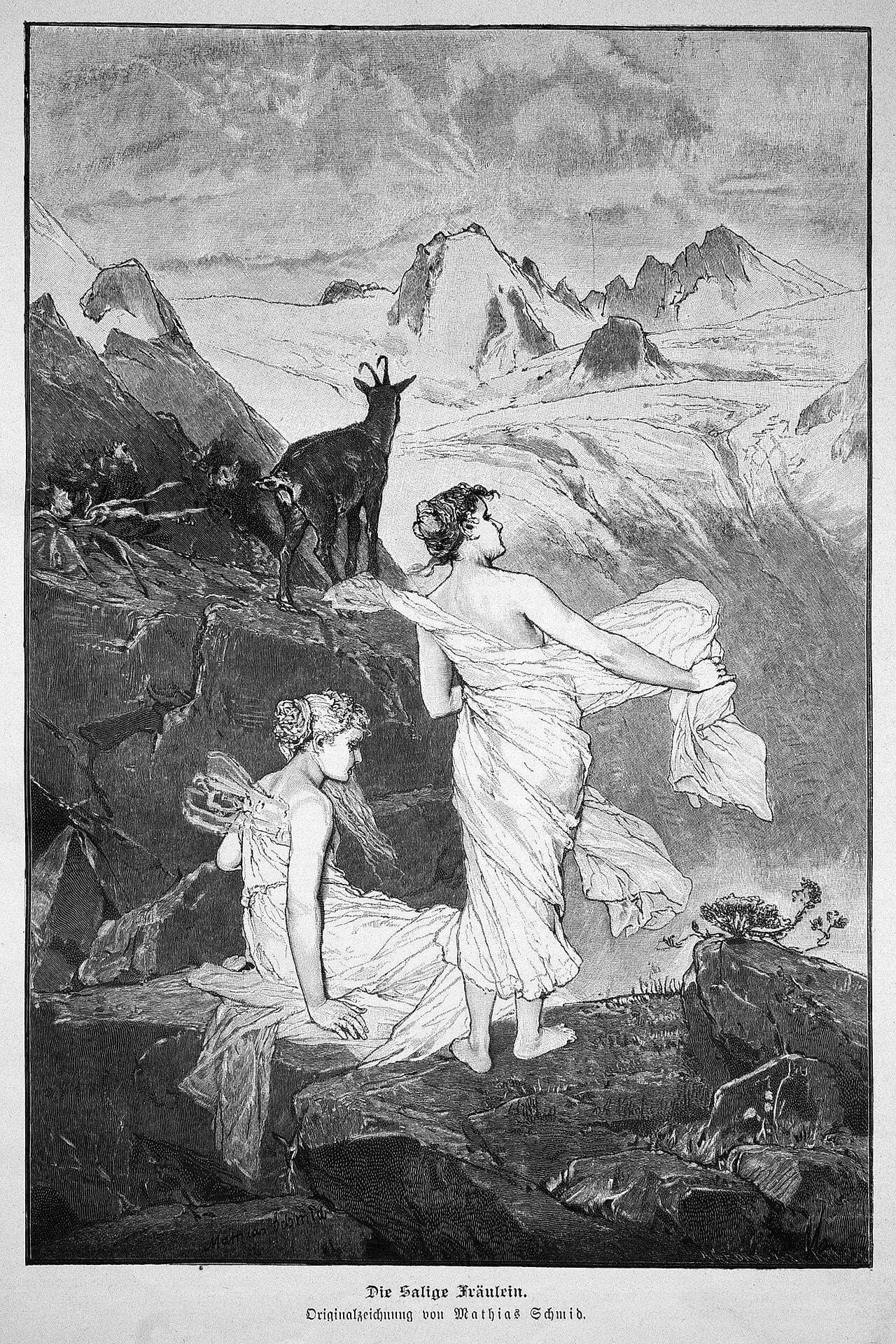
Bavarian fairies are as varied in looks as the terrain. The Moosweiblein, or moss women, and their cousins, the Holzfräulein, or wood maidens, often appear as diminutive, wizened, and child-sized figures. Their skin is gray or greenish, and their bodies are covered or clad in moss and lichen. Some tellers assign them faces like bark on an ancient tree. In the Upper Palatinate and Franconia, they are believed to be practically identical to the forest floor, such that one might walk straight past them without knowing it. The Salige Fräulein of the Alpine borderlands with Tyrol and Salzburg are entirely unique in appearance. They are tall and radiant, clad in white or silver, with long flowing hair, frequently blond. Those who said they had seen them described a beauty that seemed to glimmer dimly in the twilight. And then there are the scary numbers. Occasionally, the Drude is imagined as a hag, other times as a shapeless weight or a night spirit. The Bilwis (sometimes called the Bilmesschnitter) are little guys with sickles attached to their large toes, and occasionally they ride a goat. In traditional folklore, Frau Perchta, who presides over the darkest nights of winter, is depicted as having two faces. One is bright and gorgeous. The other is a monster, with a long iron nose, and in some tales, a single giant goose foot.
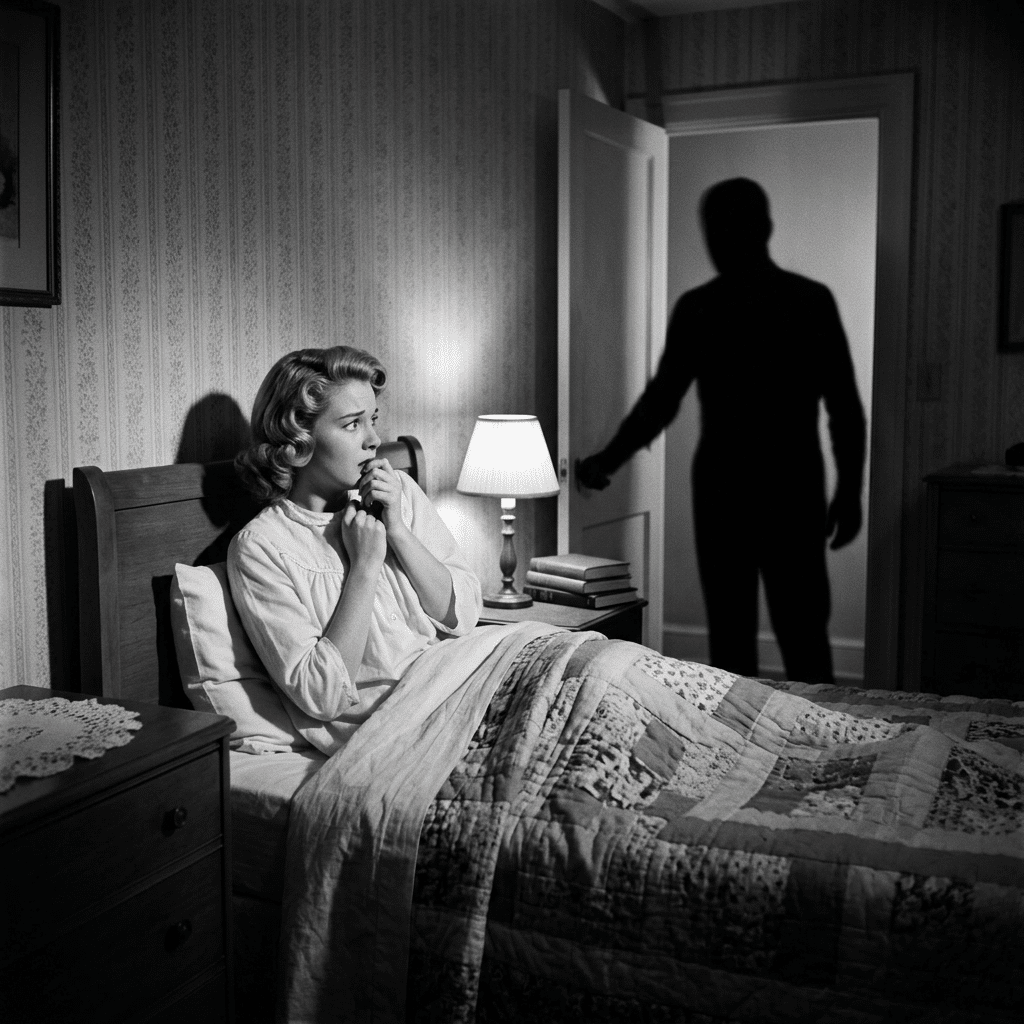
Their behavior is as diverse, and it is virtually always determined by humans’ treatment of them. The moss women are almost all kind. They could borrow household goods, help with housework, or leave loaves of bread that never run out, providing no one insults the gift. They have one terrible fear: They are pursued by the Wild Hunt, a ghostly band of riders who race across the sky on stormy nights. In regions of Bavaria and Bohemia, woodcutters were reported to carve three crosses on the stump of a freshly felled tree so that a fleeing moss woman may sit there in safety. The Salige maidens guard the chamois and other animals of the mountain and reward poor shepherds with presents such as balls of yarn that do not run out or cheese that replenishes itself. They are easily offended as well. A farmer who betrays a vow, utters their names thoughtlessly, or damages a protected animal could lose everything. The Drude will enter the bedroom at night and position itself on the chest of the sleeper until they can scarcely breathe. Bavarian families defended themselves by carving a five-pointed star, the Drudenfuß, onto doorways and cradles, or by hanging holed stones, Drudensteine, near their beds. The bilvis cause damage during the summer. It tramples over fields of maturing corn, and with its shears it cuts long, narrow lanes through the grain and steals part of the harvest. Finally, Perchta is a judge. She inspects households during the Rauhnächte, the twelve nights between Christmas and Epiphany. She rewards industrious spinners and neat dwellings and punishes lazy folk with dreadful harshness.

Theories of Origin
Why did these beings obtain such a grip in Bavaria? Scholars and fans present various theories. Several of them could be correct at the same time. The prevailing assumption is that many of these characters are survivals from pre-Christian belief. For instance, Perchta is sometimes likened to Holda and other Germanic deities associated with spinning, winter, and the household. Christianization may have allowed the previous deities to survive. They might have become fairies, demons, and bogeys. At times, the Church facilitated this transition by reinterpreting such beings as fallen angels or the souls of unbaptized children. The latter is more practical. It employs fairies to explain things that men could not otherwise explain. The Drude closely resembles sleep paralysis, a condition characterized by a feeling of pressure on the chest and a frightening sense that someone is present in the room. Wind, rain, or animals could have flattened or damaged sections of grain, and people could have easily blamed the Bilwis for the damage. A third view is social function. Tales of frightening water spirits kept children from the waterways. Salige legends advised hunters against overhunting. Perchta’s visits reaffirmed the benefits of diligent effort at a time of year when sloth was most enticing. Finally, some historians note that much of what we “know” about these fairies was created in the nineteenth century, when Romantic collectors such as the Brothers Grimm and Franz Xaver von Schönwerth documented rural customs. They saved a tremendous amount. But they also selected, altered, and occasionally polished the material to fit their views of the German folk identity.
The study of European mythic beings—fairies, sprites, and kindred creatures—tends to locate Bavaria in a transregional frame. Studies of fairy lore in Europe have looked at the distribution and localization of fairy motifs. Bavaria has been mentioned as part of the wider Germanic area where fairy belief continues, changes, or is reinterpreted in current times (Leerssen, 2016; Zipes, 2014; Silver, 1986). This cross-regional perspective can illuminate how Bavarian tales may imitate or differ from the surrounding Bavarian, Tyrolean, Austrian, and Swiss alpine traditions. The mythologizing of a modern national identity and rise of nationalism in 19th- and early 20th-century Germany also contributed to the shaping of Bavarian fairy imagery, which researchers describe as a nexus of folklore, myth, and national symbols, intersecting with education, politics, and cultural production. Bavarian folklore did not exist in a vacuum from these wider currents. Bavarian sites and narratives typically engage in the empire-wide mythical repertoire that researchers trace (Leerssen, 2016; Piwowarczyk, 2019; Coe, 2000).
Bavarian Fairies in Popular Culture
Bavarian fairy tales have had a consistent influence, sometimes surprising, on popular culture. A prime example is the live tradition of the Perchtenlauf, in which men in shaggy fur, carved wooden masks, and hefty cowbells parade through Alpine communities in winter, and which is still practiced today. Every year they attract enormous crowds and photographers. In the Berchtesgaden neighborhood you will see Saint Nicholas next to the straw-covered Buttnmandl in early December. Tourist stores all around the region stock carved spirits, Drudenfuß charms, and pictures of the Wolpertinger, the funny horned rabbit of Bavarian mythology, which occupies a space between fairy tale and bar joke. In 2009, an archive in Regensburg unearthed around five hundred of Schönwerth’s forgotten tales, drastically resurrecting interest in literature. This resurgence of interest occurred when around five hundred of Schönwerth’s forgotten tales were unearthed in an archive in Regensburg. It was published in English in 2015 as The Turnip Princess, in a translation by Maria Tatar. It offered worldwide audiences a rougher, earthier Bavarian tale than the familiar Grimm corpus. Perchta and the Krampus-like figures of Alpine winter customs have also featured in horror films, fantasy novels, and video games. The fairy-tale castle, ubiquitous in modern fantasy, even owes a debt to Bavaria. Neuschwanstein, erected by King Ludwig II in a spirit of Romanticism, is commonly acknowledged as an inspiration for Disney’s Sleeping Beauty Castle.
Conclusion
The Bavarian fairies are not ornamental things. They are mossy exiles from the Wild Hunt, glittering guards of the high meadows, tormentors of the night, thieves of corn, and severe inspectors of winter families. Their appearances and actions reflect a world where the forest, the mountain, and darkness were real entities, capable of both rewarding and destroying. Whether we read them as faded gods or as explanations for weird encounters or as teachings dressed up as folklore, they tell us how rural Bavarians made sense of their circumstances. Nor do they want to be invisible. The Perchten still march each winter, and every unearthed legend brings them fresh vitality. The old Bavarian fairies are still with us, assuming new shapes, as they have always done.
References
Coe, C. (2000). The Education of the Folk: Peasant Schools and Folklore Scholarship. Journal of American Folklore, 113(447), 20–43. https://doi.org/10.2307/541264
Leerssen, J. (2016). Gods, Heroes, and Mythologists: Romantic Scholars and the Pagan Roots of Europe’s Nations. History of Humanities, 1(1), 71–100. https://doi.org/10.1086/685061
Linke, U. (1990). Folklore, Anthropology, and the Government of Social Life. Comparative Studies in Society and History, 32(1), 117–148. https://doi.org/10.1017/s0010417500016352
Piwowarczyk, D. J. (2019). National Civil Religion in the German Empire (1871-1918). Roczniki Teologiczne, 66(9), 93–108. https://doi.org/10.18290/rt.2019.66.9-7
Schönwerth, F. X. von. (2015). The turnip princess and other newly discovered fairy tales (E. Eichenseer, Ed.; M. Tatar, Trans.). Penguin Classics.
Silver, C. (1986). On the Origin of Fairies: Victorians, Romantics, and Folk Belief. Browning Institute Studies, 14, 141–156. https://doi.org/10.1017/s0092472500003503
Zipes, J. (2014). Two Hundred Years After Once Upon a Time: The Legacy of the Brothers Grimm and Their Tales in Germany. Marvels & Tales, 28(1), 54. https://doi.org/10.13110/marvelstales.28.1.0054

Leave a Reply